Chromatin Remodeling in Cancer Stemness, Plasticity, and Therapeutic Resistance: Mechanisms and Targeted Strategies
DOI:
https://doi.org/10.66505/cbtt.v1i4.60Keywords:
Chromatin remodeling, epigenetics, SWI/SNF complex, cancer stem cell, stemness regulation, tumor cell plasticity, targeted therapy, therapeutic resistanceAbstract
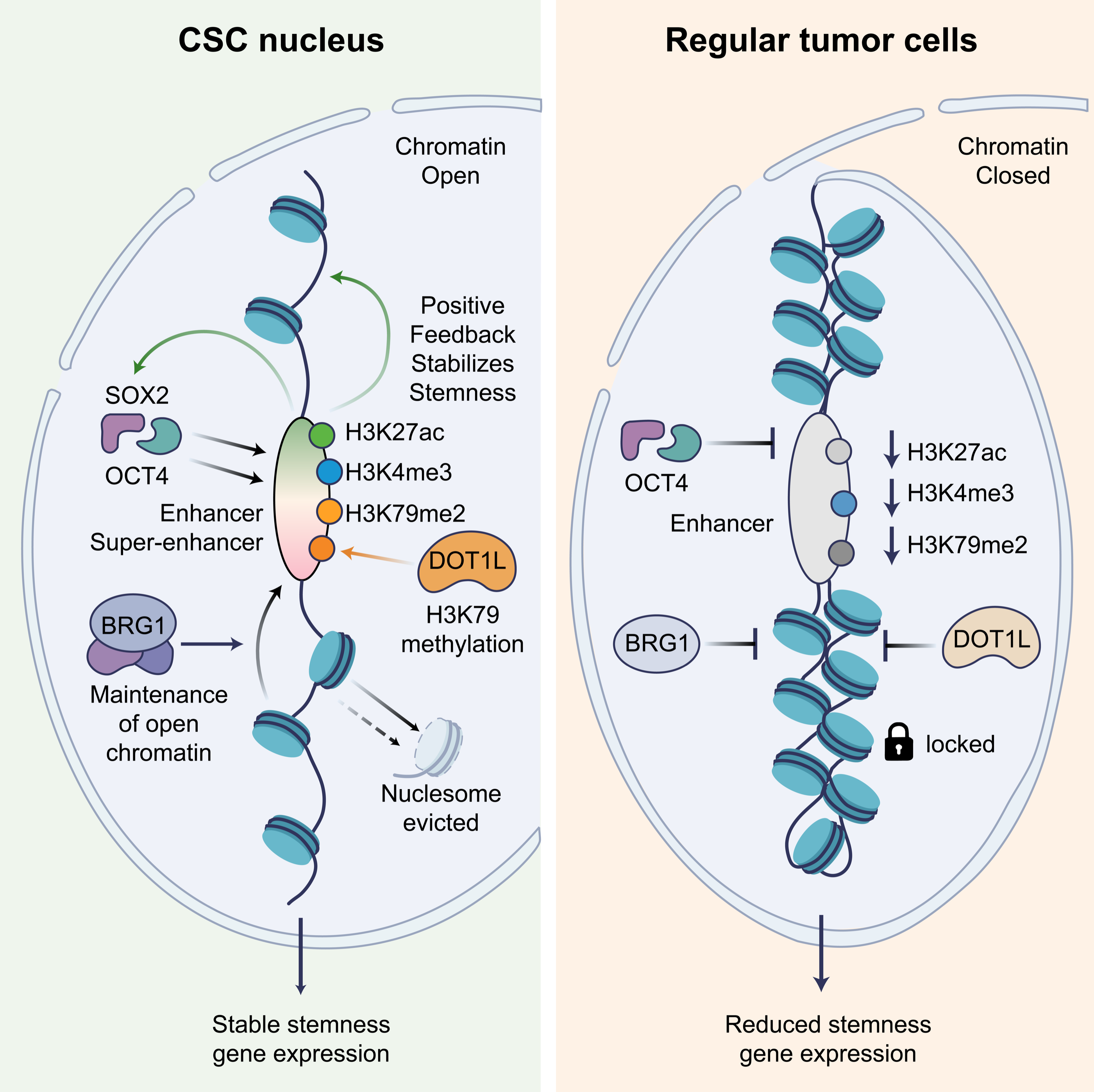
Cancer stem cells (CSCs) comprise phenotypically plastic tumor-cell states associated with tumor propagation, recurrence, and resistance to therapy. Their self-renewal, differentiation potential, and phenotypic plasticity are shaped by genetic, transcriptional, metabolic, and epigenetic mechanisms, including ATP-dependent chromatin remodeling. This article reviews recent research on how chromatin remodeling regulates CSC characteristics. It first summarizes current research on how chromatin remodeling profoundly affects core stemness-related transcriptional networks and key signaling pathways through mechanisms such as changes in chromatin accessibility, nucleosome positioning, and histone variant exchange. Furthermore, this article explores how chromatin remodeling endows CSCs with plasticity, enabling them to adapt to microenvironmental stress and leading to therapy resistance. Finally, it analyzes emerging therapeutic strategies targeting specific chromatin remodeling complexes or factors to investigate CSC-associated vulnerabilities and potential approaches to treatment resistance, aiming to provide new theoretical foundations and potential intervention targets for developing more effective precision cancer therapies. Although these regulatory dependencies identify potential therapeutic vulnerabilities across several tumor types, most evidence remains preclinical, and their therapeutic relevance likely depends on tumor lineage, remodeling-complex composition, genomic context, and the extent to which CSC-selective dependencies can be separated from chromatin-remodeling requirements in normal tissues.
References
1. Schepers AG, Snippert HJ, Stange DE, van den Born M, van Es JH, van de Wetering M, et al. Lineage tracing reveals Lgr5+ stem cell activity in mouse intestinal adenomas. Science. 2012;337(6095):730-735. doi:10.1126/science.1224676
2. Dakal TC, Bhushan R, Xu C, Gadi BR, Cameotra SS, Yadav V, et al. Intricate relationship between cancer stemness, metastasis, and drug resistance. MedComm (2020). 2024;5(10):e710. doi:10.1002/mco2.710
3. Chaffer CL, Marjanovic ND, Lee T, Bell G, Kleer CG, Reinhardt F, et al. Poised chromatin at the ZEB1 promoter enables breast cancer cell plasticity and enhances tumorigenicity. Cell. 2013;154(1):61-74. doi:10.1016/j.cell.2013.06.005
4. Eustermann S, Patel AB, Hopfner KP, He Y, Korber P. Energy-driven genome regulation by ATP-dependent chromatin remodellers. Nat Rev Mol Cell Biol. 2024;25(4):309-332. doi:10.1038/s41580-023-00683-y
5. Chen HM, Nikolic A, Singhal D, Gallo M. Roles of chromatin remodelling and molecular heterogeneity in therapy resistance in glioblastoma. Cancers (Basel). 2022;14(19):4942. doi:10.3390/cancers14194942
6. Shi J, Whyte WA, Zepeda-Mendoza CJ, Milazzo JP, Shen C, Roe JS, et al. Role of SWI/SNF in acute leukemia maintenance and enhancer-mediated Myc regulation. Genes Dev. 2013;27(24):2648-2662. doi:10.1101/gad.232710.113
7. Portney BA, Arad M, Gupta A, Brown RA, Khatri R, Lin PN, et al. ZSCAN4 facilitates chromatin remodeling and promotes the cancer stem cell phenotype. Oncogene. 2020;39(26):4970-4982. doi:10.1038/s41388-020-1333-1
8. Suvà ML, Rheinbay E, Gillespie SM, Patel AP, Wakimoto H, Rabkin SD, et al. Reconstructing and reprogramming the tumor-propagating potential of glioblastoma stem-like cells. Cell. 2014;157(3):580-594. doi:10.1016/j.cell.2014.02.030
9. Lu X, Maturi NP, Jarvius M, Yildirim I, Dang Y, Zhao L, et al. Cell-lineage controlled epigenetic regulation in glioblastoma stem cells determines functionally distinct subgroups and predicts patient survival. Nat Commun. 2022;13(1):2236. doi:10.1038/s41467-022-29912-2
10. Bhattacharya A, Fushimi A, Yamashita N, Hagiwara M, Morimoto Y, Rajabi H, et al. MUC1-C dictates JUN and BAF-mediated chromatin remodeling at enhancer signatures in cancer stem cells. Mol Cancer Res. 2022;20(4):556-567. doi:10.1158/1541-7786.MCR-21-0672
11. Hagiwara M, Fushimi A, Yamashita N, Bhattacharya A, Rajabi H, Long MD, et al. MUC1-C activates the PBAF chromatin remodeling complex in integrating redox balance with progression of human prostate cancer stem cells. Oncogene. 2021;40(30):4930-4940. doi:10.1038/s41388-021-01899-y
12. Ghasemi S, Xu S, Nabavi SM, Amirkhani MA, Sureda A, Tejada S, et al. Epigenetic targeting of cancer stem cells by polyphenols (cancer stem cells targeting). Phytother Res. 2021;35(7):3649-3664. doi:10.1002/ptr.7059
13. Gaspar-Maia A, Alajem A, Polesso F, Sridharan R, Mason MJ, Heidersbach A, et al. Chd1 regulates open chromatin and pluripotency of embryonic stem cells. Nature. 2009;460(7257):863-868. doi:10.1038/nature08212
14. Malone HA, Roberts CWM. Chromatin remodellers as therapeutic targets. Nat Rev Drug Discov. 2024;23(9):661-681. doi:10.1038/s41573-024-00978-5
15. Sun F, Zou B, Li H, Xu C, Luo Q, Wang C, et al. Structural basis for BCL7B-mediated ncBAF-nucleosome engagement. Nucleic Acids Res. 2026;54(4):gkag092. doi:10.1093/nar/gkag092
16. Zhu P, Wang Y, Wu J, Huang G, Liu B, Ye B, et al. LncBRM initiates YAP1 signalling activation to drive self-renewal of liver cancer stem cells. Nat Commun. 2016;7:13608. doi:10.1038/ncomms13608
17. Bonilla B, Patty BJ, Sambare SV, Dekker J, Fazzio TG, Hainer SJ. esBAF and INO80C fine-tune subcompartments and differentially regulate enhancer-promoter interactions. Genetics. 2026;232(4):iyag037. doi:10.1093/genetics/iyag037
18. Sahu RK, Singh S, Tomar RS. The mechanisms of action of chromatin remodelers and implications in development and disease. Biochem Pharmacol. 2020;180:114200. doi:10.1016/j.bcp.2020.114200
19. Oliver L, Lalier L, Salaud C, Heymann D, Cartron PF, Vallette FM. Drug resistance in glioblastoma: are persisters the key to therapy? Cancer Drug Resist. 2020;3(3):287-301. doi:10.20517/cdr.2020.29
20. Bao S, Wu Q, McLendon RE, Hao Y, Shi Q, Hjelmeland AB, et al. Glioma stem cells promote radioresistance by preferential activation of the DNA damage response. Nature. 2006;444(7120):756-760. doi:10.1038/nature05236
21. Li Y, Gong H, Wang P, Zhu Y, Peng H, Cui Y, et al. The emerging role of ISWI chromatin remodeling complexes in cancer. J Exp Clin Cancer Res. 2021;40(1):346. doi:10.1186/s13046-021-02151-x
22. Sesé B, Ensenyat-Mendez M, Iñiguez S, Llinàs-Arias P, Marzese DM. Chromatin insulation dynamics in glioblastoma: challenges and future perspectives of precision oncology. Clin Epigenetics. 2021;13(1):150. doi:10.1186/s13148-021-01139-w
23. Cui T, Bell EH, McElroy J, Liu K, Sebastian E, Johnson B, et al. A novel miR-146a-POU3F2/SMARCA5 pathway regulates stemness and therapeutic response in glioblastoma. Mol Cancer Res. 2021;19(1):48-60. doi:10.1158/1541-7786.MCR-20-0353
24. Mills AA. The chromodomain helicase DNA-binding chromatin remodelers: family traits that protect from and promote cancer. Cold Spring Harb Perspect Med. 2017;7(4):a026450. doi:10.1101/cshperspect.a026450
25. Li S, Ma Q, Lian K, Jiang Z, Ma Y. Role of CHD4 in tumor progression, DNA damage response and treatment resistance (Review). Oncol Rep. 2026;55(6):107. doi:10.3892/or.2026.9112
26. Hata T, Rajabi H, Takahashi H, Yasumizu Y, Li W, Jin C, et al. MUC1-C activates the NuRD complex to drive dedifferentiation of triple-negative breast cancer cells. Cancer Res. 2019;79(22):5711-5722. doi:10.1158/0008-5472.CAN-19-1034
27. Xiao G, Lu W, Yuan J, Liu Z, Wang P, Fan H. Fbxw7 suppresses carcinogenesis and stemness in triple-negative breast cancer through CHD4 degradation and Wnt/β-catenin pathway inhibition. J Transl Med. 2024;22(1):99. doi:10.1186/s12967-024-04897-2
28. Barjij I, Meliani M. Cancer stem cells and post-therapy tumour recurrence: a systematic review of mechanistic pathways and translational gaps. Ecancermedicalscience. 2025;19:2016. doi:10.3332/ecancer.2025.2016
29. Feng Y, Liu X, Pauklin S. 3D chromatin architecture and epigenetic regulation in cancer stem cells. Protein Cell. 2021;12(6):440-454. doi:10.1007/s13238-020-00819-2
30. Zhou W, Liu X, Li Z, Jia B, Lei X, Sun K, et al. Epigenetic crosstalk between stem cells and tumors: mechanisms and emerging perspectives. Am J Stem Cells. 2025;14(3):98-133. doi:10.62347/gqzh3508
31. Yu H, Wang J, Lackford B, Bennett B, Li JL, Hu G. INO80 promotes H2A.Z occupancy to regulate cell fate transition in pluripotent stem cells. Nucleic Acids Res. 2021;49(12):6739-6755. doi:10.1093/nar/gkab476
32. Yuan Y, Tang Y, Fang Z, Wen J, Wicha MS, Luo M. Long non-coding RNAs: key regulators of tumor epithelial/mesenchymal plasticity and cancer stemness. Cells. 2025;14(3):227. doi:10.3390/cells14030227
33. Wang Y, Zhu P, Luo J, Wang J, Liu Z, Wu W, et al. LncRNA HAND2-AS1 promotes liver cancer stem cell self-renewal via BMP signaling. EMBO J. 2019;38(17):e101110. doi:10.15252/embj.2018101110
34. Rawal Y, Qiu H, Hinnebusch AG. Distinct functions of three chromatin remodelers in activator binding and preinitiation complex assembly. PLoS Genet. 2022;18(7):e1010277. doi:10.1371/journal.pgen.1010277
35. Loesch R, Chenane L, Colnot S. ARID2 chromatin remodeler in hepatocellular carcinoma. Cells. 2020;9(10):2152. doi:10.3390/cells9102152
36. Dreier MR, de la Serna IL. SWI/SNF chromatin remodeling enzymes in melanoma. Epigenomes. 2022;6(1):10. doi:10.3390/epigenomes6010010
37. Chakraborty P, Kurkalang S, Ghatak S, Das S, Palodhi A, Sarkar S, et al. Deep sequencing reveals recurrent somatic mutations and distinct molecular subgroups in gastric cancer in Mizo population, North East India. Genomics. 2023;115(6):110741. doi:10.1016/j.ygeno.2023.110741
38. Shah AM, Guo L, Morales MG, Jaichander P, Chen K, Huang H, et al. TWIST2-mediated chromatin remodeling promotes fusion-negative rhabdomyosarcoma. Sci Adv. 2023;9(17):eade8184. doi:10.1126/sciadv.ade8184
39. Bayona-Feliu A, Barroso S, Muñoz S, Aguilera A. The SWI/SNF chromatin remodeling complex helps resolve R-loop-mediated transcription-replication conflicts. Nat Genet. 2021;53(7):1050-1063. doi:10.1038/s41588-021-00867-2
40. Hozumi C, Iizuka A, Ikeya T, Miyata H, Maeda C, Ashizawa T, et al. Impact of mutations in subunit genes of the mammalian SWI/SNF complex on immunological tumor microenvironment. Cancer Genomics Proteomics. 2024;21(1):88-101. doi:10.21873/cgp.20432
41. Zhou D, Alver BM, Li S, Hlady RA, Thompson JJ, Schroeder MA, et al. Distinctive epigenomes characterize glioma stem cells and their response to differentiation cues. Genome Biol. 2018;19(1):43. doi:10.1186/s13059-018-1420-6
42. Gimple RC, Kidwell RL, Kim LJY, Sun T, Gromovsky AD, Wu Q, et al. Glioma stem cell-specific superenhancer promotes polyunsaturated fatty-acid synthesis to support EGFR signaling. Cancer Discov. 2019;9(9):1248-1267. doi:10.1158/2159-8290.CD-19-0061
43. Rheinbay E, Suvà ML, Gillespie SM, Wakimoto H, Patel AP, Shahid M, et al. An aberrant transcription factor network essential for Wnt signaling and stem cell maintenance in glioblastoma. Cell Rep. 2013;3(5):1567-1579. doi:10.1016/j.celrep.2013.04.021
44. Hall AW, Battenhouse AM, Shivram H, Morris AR, Cowperthwaite MC, Shpak M, et al. Bivalent chromatin domains in glioblastoma reveal a subtype-specific signature of glioma stem cells. Cancer Res. 2018;78(10):2463-2474. doi:10.1158/0008-5472.CAN-17-1724
45. Singh DK, Kollipara RK, Vemireddy V, Yang XL, Sun Y, Regmi N, et al. Oncogenes activate an autonomous transcriptional regulatory circuit that drives glioblastoma. Cell Rep. 2017;18(4):961-976. doi:10.1016/j.celrep.2016.12.064
46. Kurani H, Razavipour SF, Harikumar KB, Dunworth M, Ewald AJ, Nasir A, et al. DOT1L is a novel cancer stem cell target for triple-negative breast cancer. Clin Cancer Res. 2022;28(9):1948-1965. doi:10.1158/1078-0432.CCR-21-1299
47. Guilhamon P, Chesnelong C, Kushida MM, Nikolic A, Singhal D, MacLeod G, et al. Single-cell chromatin accessibility profiling of glioblastoma identifies an invasive cancer stem cell population associated with lower survival. Elife. 2021;10:e64090. doi:10.7554/eLife.64090
48. Yoshikawa T, Fukuda A, Omatsu M, Namikawa M, Sono M, Fukunaga Y, et al. Brg1 is required to maintain colorectal cancer stem cells. J Pathol. 2021;255(3):257-269. doi:10.1002/path.5759
49. Kadoch C, Crabtree GR. Mammalian SWI/SNF chromatin remodeling complexes and cancer: mechanistic insights gained from human genomics. Sci Adv. 2015;1(5):e1500447. doi:10.1126/sciadv.1500447
50. Singh A, Modak SB, Chaturvedi MM, Purohit JS. SWI/SNF chromatin remodelers: structural, functional and mechanistic implications. Cell Biochem Biophys. 2023;81(2):167-187. doi:10.1007/s12013-023-01140-5
51. Wagner FR, Dienemann C, Wang H, Stützer A, Tegunov D, Urlaub H, et al. Structure of SWI/SNF chromatin remodeller RSC bound to a nucleosome. Nature. 2020;579(7799):448-451. doi:10.1038/s41586-020-2088-0
52. Tseng YC, Crodian JS, Cabot R. Depletion of SMARCB1 and BRD7, two SWI/SNF chromatin remodelling complex subunits, differentially impact porcine embryo development. Reprod Fertil Dev. 2022;34(7):549-559. doi:10.1071/RD21251
53. Ganguly D, Sims M, Cai C, Fan M, Pfeffer LM. Chromatin remodeling factor BRG1 regulates stemness and chemosensitivity of glioma initiating cells. Stem Cells. 2018;36(12):1804-1815. doi:10.1002/stem.2909
54. Wanior M, Krämer A, Knapp S, Joerger AC. Exploiting vulnerabilities of SWI/SNF chromatin remodelling complexes for cancer therapy. Oncogene. 2021;40(21):3637-3654. doi:10.1038/s41388-021-01781-x
55. Centore RC, Sandoval GJ, Soares LMM, Kadoch C, Chan HM. Mammalian SWI/SNF chromatin remodeling complexes: emerging mechanisms and therapeutic strategies. Trends Genet. 2020;36(12):936-950. doi:10.1016/j.tig.2020.07.011
56. Zhao Q, Zong H, Zhu P, Su C, Tang W, Chen Z, et al. Crosstalk between colorectal CSCs and immune cells in tumorigenesis, and strategies for targeting colorectal CSCs. Exp Hematol Oncol. 2024;13(1):6. doi:10.1186/s40164-024-00474-x
57. Liu C, Li Y, Semenov M, Han C, Baeg GH, Tan Y, et al. Control of beta-catenin phosphorylation/degradation by a dual-kinase mechanism. Cell. 2002;108(6):837-847. doi:10.1016/S0092-8674(02)00685-2
58. Nordin A, Chakraborty C, Jonasson M, Dano O, Zambanini G, Pagella P, et al. Wnt signaling activation induces CTCF binding and loop formation at cis-regulatory elements of target genes. Genome Res. 2025;35(8):1701-1716. doi:10.1101/gr.279684.124
59. Zhang C, Wu S. RUVBL1-modulated chromatin remodeling alters the transcriptional activity of oncogenic CTNNB1 in uveal melanoma. Cell Death Discov. 2023;9(1):132. doi:10.1038/s41420-023-01429-7
60. Wang H, Bienz M, Yan XX, Xu W. Structural basis of the interaction between BCL9-Pygo and LDB-SSBP complexes in assembling the Wnt enhanceosome. Nat Commun. 2023;14(1):3702. doi:10.1038/s41467-023-39439-9
61. Barker N, Hurlstone A, Musisi H, Miles A, Bienz M, Clevers H. The chromatin remodelling factor Brg-1 interacts with β-catenin to promote target gene activation. EMBO J. 2001;20(17):4935-4943. doi:10.1093/emboj/20.17.4935
62. Vaicekauskaitė I, Dabkevičienė D, Šimienė J, Žilovič D, Čiurlienė R, Jarmalaitė S, et al. ARID1A, NOTCH and WNT signature in gynaecological tumours. Int J Mol Sci. 2023;24(6):5854. doi:10.3390/ijms24065854
63. Bhal S, Kundu CN. Targeting crosstalk of signaling pathways in cancer stem cells: a promising approach for development of novel anti-cancer therapeutics. Med Oncol. 2023;40(2):82. doi:10.1007/s12032-022-01905-7
64. Vasilaki E, Bai Y, Ali MM, Sundqvist A, Moustakas A, Heldin CH. ΔNp63 bookmarks and creates an accessible epigenetic environment for TGFβ-induced cancer cell stemness and invasiveness. Cell Commun Signal. 2024;22(1):411. doi:10.1186/s12964-024-01794-5
65. Gélabert C, Papoutsoglou P, Golán I, Ahlström E, Ameur A, Heldin CH, et al. The long non-coding RNA LINC00707 interacts with Smad proteins to regulate TGFβ signaling and cancer cell invasion. Cell Commun Signal. 2023;21(1):271. doi:10.1186/s12964-023-01273-3
66. Mani SA, Guo W, Liao MJ, Eaton EN, Ayyanan A, Zhou AY, et al. The epithelial-mesenchymal transition generates cells with properties of stem cells. Cell. 2008;133(4):704-715. doi:10.1016/j.cell.2008.03.027
67. Peñuelas S, Anido J, Prieto-Sánchez RM, Folch G, Barba I, Cuartas I, et al. TGF-beta increases glioma-initiating cell self-renewal through the induction of LIF in human glioblastoma. Cancer Cell. 2009;15(4):315-327. doi:10.1016/j.ccr.2009.02.011
68. Anido J, Sáez-Borderías A, Gonzàlez-Juncà A, Rodón L, Folch G, Carmona MA, et al. TGF-β receptor inhibitors target the CD44(high)/Id1(high) glioma-initiating cell population in human glioblastoma. Cancer Cell. 2010;18(6):655-668. doi:10.1016/j.ccr.2010.10.023
69. Kim K, Ryu TY, Jung E, Han TS, Lee J, Kim SK, et al. Epigenetic regulation of SMAD3 by histone methyltransferase SMYD2 promotes lung cancer metastasis. Exp Mol Med. 2023;55(5):952-964. doi:10.1038/s12276-023-00987-1
70. Birch JL, Coull BJ, Spender LC, Watt C, Willison A, Syed N, et al. Multifaceted transforming growth factor-beta (TGFβ) signalling in glioblastoma. Cell Signal. 2020;72:109638. doi:10.1016/j.cellsig.2020.109638
71. Naik A, Dalpatraj N, Thakur N. Global gene expression regulation mediated by TGFβ through H3K9me3 mark. Cancer Inform. 2022;21:11769351221115135. doi:10.1177/11769351221115135
72. Sun S, Sun Y, Lan L, Luan S, Zhou J, Deng J, et al. Tumor cell plasticity in cancer: signaling pathways and pharmaceutical interventions. MedComm (2020). 2025;6(12):e70541. doi:10.1002/mco2.70541
73. Johann PD. Invited review: dysregulation of chromatin remodellers in paediatric brain tumours - SMARCB1 and beyond. Neuropathol Appl Neurobiol. 2020;46(1):57-72. doi:10.1111/nan.12616
74. Verdikt R, Thienpont B. Epigenetic remodelling under hypoxia. Semin Cancer Biol. 2024;98:1-10. doi:10.1016/j.semcancer.2023.10.005
75. Sharma SV, Lee DY, Li B, Quinlan MP, Takahashi F, Maheswaran S, et al. A chromatin-mediated reversible drug-tolerant state in cancer cell subpopulations. Cell. 2010;141(1):69-80. doi:10.1016/j.cell.2010.02.027
76. Ma S, Zhang B, LaFave LM, Earl AS, Chiang Z, Hu Y, et al. Chromatin potential identified by shared single-cell profiling of RNA and chromatin. Cell. 2020;183(4):1103-1116.e20. doi:10.1016/j.cell.2020.09.056
77. Roesch A, Fukunaga-Kalabis M, Schmidt EC, Zabierowski SE, Brafford PA, Vultur A, et al. A temporarily distinct subpopulation of slow-cycling melanoma cells is required for continuous tumor growth. Cell. 2010;141(4):583-594. doi:10.1016/j.cell.2010.04.020
78. Chaffer CL, Brueckmann I, Scheel C, Kaestli AJ, Wiggins PA, Rodrigues LO, et al. Normal and neoplastic nonstem cells can spontaneously convert to a stem-like state. Proc Natl Acad Sci U S A. 2011;108(19):7950-7955. doi:10.1073/pnas.1102454108
79. Neftel C, Laffy J, Filbin MG, Hara T, Shore ME, Rahme GJ, et al. An integrative model of cellular states, plasticity, and genetics for glioblastoma. Cell. 2019;178(4):835-849.e21. doi:10.1016/j.cell.2019.06.024
80. Gupta PB, Fillmore CM, Jiang G, Shapira SD, Tao K, Kuperwasser C, et al. Stochastic state transitions give rise to phenotypic equilibrium in populations of cancer cells. Cell. 2011;146(4):633-644. doi:10.1016/j.cell.2011.07.026
81. Dubey R, Lebensohn AM, Bahrami-Nejad Z, Marceau C, Champion M, Gevaert O, et al. Chromatin-remodeling complex SWI/SNF controls multidrug resistance by transcriptionally regulating the drug efflux pump ABCB1. Cancer Res. 2016;76(19):5810-5821. doi:10.1158/0008-5472.CAN-16-0716
82. Zhang HB, Hu Y, Deng JL, Fang GY, Zeng Y. Insights into the involvement of long non-coding RNAs in doxorubicin resistance of cancer. Front Pharmacol. 2023;14:1243934. doi:10.3389/fphar.2023.1243934
83. Zhang J, Sun Y, Wang L, Gu J, Hua Y, Shao J, et al. HMGB3: a pivotal orchestrator of therapy resistance and cancer stemness in human malignancies (Review). Oncol Rep. 2026;55(6):104. doi:10.3892/or.2026.9109
84. Cabrera-Licona A, Pérez-Añorve IX, Flores-Fortis M, Moral-Hernández OD, González-de la Rosa CH, Suárez-Sánchez R, et al. Deciphering the epigenetic network in cancer radioresistance. Radiother Oncol. 2021;159:48-59. doi:10.1016/j.radonc.2021.03.012
85. Yoshikawa T, Fukuda A, Omatsu M, Namikawa M, Sono M, Fukunaga Y, et al. JNK pathway plays a critical role for expansion of human colorectal cancer in the context of BRG1 suppression. Cancer Sci. 2022;113(10):3417-3427. doi:10.1111/cas.15520
86. Pan D, Kobayashi A, Jiang P, Ferrari de Andrade L, Tay RE, Luoma AM, et al. A major chromatin regulator determines resistance of tumor cells to T cell-mediated killing. Science. 2018;359(6377):770-775. doi:10.1126/science.aao1710
87. Reyes AA, Marcum RD, He Y. Structure and function of chromatin remodelers. J Mol Biol. 2021;433(14):166929. doi:10.1016/j.jmb.2021.166929
88. Vaswani RG, Huang DS, Anthony N, Xu L, Centore R, Schiller S, et al. Discovery of FHD-286, a first-in-class, orally bioavailable, allosteric dual inhibitor of the Brahma homologue (BRM) and Brahma-related gene 1 (BRG1) ATPase activity for the treatment of SWItch/Sucrose Non-Fermentable (SWI/SNF) dependent cancers. J Med Chem. 2025;68(2):1772-1792. doi:10.1021/acs.jmedchem.4c02535
89. Shah JA, Miao Y, Chu J, Chen W, Zhao Q, Cai C, et al. Feedback modulation between human INO80 chromatin remodeling complex and miR-372 in HCT116 cells. Int J Mol Sci. 2023;24(13):10685. doi:10.3390/ijms241310685
90. Bowman GD. Mechanistic insights into INO80-type chromatin remodelers. Curr Opin Struct Biol. 2025;92:103030. doi:10.1016/j.sbi.2025.103030
91. Issa GC, Aldoss I, DiPersio J, Cuglievan B, Stone R, Arellano M, et al. The menin inhibitor revumenib in KMT2A-rearranged or NPM1-mutant leukaemia. Nature. 2023;615(7954):920-924. doi:10.1038/s41586-023-05812-3
92. Clapier CR, Iwasa J, Cairns BR, Peterson CL. Mechanisms of action and regulation of ATP-dependent chromatin-remodelling complexes. Nat Rev Mol Cell Biol. 2017;18(7):407-422. doi:10.1038/nrm.2017.26
93. Dzhokova SK, Hristova RH, Botev PS, Guecheva TN, Gospodinov AG. Srcap chromatin remodeler is required for efficient replication dynamics in mammalian cells. Int J Mol Sci. 2025;26(24):12189. doi:10.3390/ijms262412189
94. DiNardo CD, Fathi AT, Kishtagari A, Bhalla KN, Quintás-Cardama A, Reilly SA, et al. A phase I study of FHD-286, a dual BRG1/BRM (SMARCA4/SMARCA2) inhibitor, in patients with advanced myeloid malignancies. Clin Cancer Res. 2025;31(12):2327-2338. doi:10.1158/1078-0432.CCR-24-3790
95. Swaminathan SK, Roger E, Toti U, Niu L, Ohlfest JR, Panyam J. CD133-targeted paclitaxel delivery inhibits local tumor recurrence in a mouse model of breast cancer. J Control Release. 2013;171(3):280-287. doi:10.1016/j.jconrel.2013.07.014
96. Hafez DA, Hassanin IA, Teleb M, Khattab SN, Elkhodairy KA, Elzoghby AO. Recent advances in nanomedicine-based delivery of histone deacetylase inhibitors for cancer therapy. Nanomedicine (Lond). 2021;16(25):2305-2325. doi:10.2217/nnm-2021-0196
97. Ishimoto T, Nagano O, Yae T, Tamada M, Motohara T, Oshima H, et al. CD44 variant regulates redox status in cancer cells by stabilizing the xCT subunit of system xc(-) and thereby promotes tumor growth. Cancer Cell. 2011;19(3):387-400. doi:10.1016/j.ccr.2011.01.038
98. Batlle E, Clevers H. Cancer stem cells revisited. Nat Med. 2017;23(10):1124-1134. doi:10.1038/nm.4409
99. Deka D, Scarpa M, Das A, Pathak S, Banerjee A. Current understanding of epigenetics driven therapeutic strategies in colorectal cancer management. Endocr Metab Immune Disord Drug Targets. 2021;21(10):1882-1894. doi:10.2174/1871530321666210219155544
100. Parveen R, Harihar D, Chatterji BP. Recent histone deacetylase inhibitors in cancer therapy. Cancer. 2023;129(21):3372-3380. doi:10.1002/cncr.34974
101. Patel AA, Cahill K, Saygin C, Odenike O. Cedazuridine/decitabine: from preclinical to clinical development in myeloid malignancies. Blood Adv. 2021;5(8):2264-2271. doi:10.1182/bloodadvances.2020002929
102. Rago F, Rodrigues LU, Bonney M, Sprouffske K, Kurth E, Elliott G, et al. Exquisite sensitivity to dual BRG1/BRM ATPase inhibitors reveals broad SWI/SNF dependencies in acute myeloid leukemia. Mol Cancer Res. 2022;20(3):361-372. doi:10.1158/1541-7786.MCR-21-0390
103. Michael DC, Mehdipour P. DNA methyltransferase inhibitors in oncology: clinical progress, limitations and future directions. Epigenomics. 2026;18(4):463-491. doi:10.1080/17501911.2026.2637418
104. Freire NH, Jaeger MDC, de Farias CB, Nör C, Souza BK, Gregianin L, et al. Targeting the epigenome of cancer stem cells in pediatric nervous system tumors. Mol Cell Biochem. 2023;478(10):2241-2255. doi:10.1007/s11010-022-04655-2
105. Hubert CG, Bradley RK, Ding Y, Toledo CM, Herman J, Skutt-Kakaria K, et al. Genome-wide RNAi screens in human brain tumor isolates reveal a novel viability requirement for PHF5A. Genes Dev. 2013;27(9):1032-1045. doi:10.1101/gad.212548.112
106. Setton J, Zinda M, Riaz N, Durocher D, Zimmermann M, Koehler M, et al. Synthetic lethality in cancer therapeutics: the next generation. Cancer Discov. 2021;11(7):1626-1635. doi:10.1158/2159-8290.CD-20-1503
107. Yuan S, Stewart KS, Yang Y, Abdusselamoglu MD, Parigi SM, Feinberg TY, et al. Ras drives malignancy through stem cell crosstalk with the microenvironment. Nature. 2022;612(7940):555-563. doi:10.1038/s41586-022-05475-6
108. Ogden S, Metic N, Leylek O, Smith EA, Berner AM, Baker AM, et al. Phenotypic heterogeneity and plasticity in colorectal cancer metastasis. Cell Genom. 2025;5(7):100881. doi:10.1016/j.xgen.2025.100881
109. Tome-Garcia J, Erfani P, Nudelman G, Tsankov AM, Katsyv I, Tejero R, et al. Analysis of chromatin accessibility uncovers TEAD1 as a regulator of migration in human glioblastoma. Nat Commun. 2018;9(1):4020. doi:10.1038/s41467-018-06258-2
110. Farnaby W, Koegl M, Roy MJ, Whitworth C, Diers E, Trainor N, et al. BAF complex vulnerabilities in cancer demonstrated via structure-based PROTAC design. Nat Chem Biol. 2019;15(7):672-680. doi:10.1038/s41589-019-0294-6
111. Truong AS, Zhou M, Krishnan B, Utsumi T, Manocha U, Stewart KG, et al. Entinostat induces antitumor immune responses through immune editing of tumor neoantigens. J Clin Invest. 2021;131(16):e138560. doi:10.1172/JCI138560
112. Murphy S, Rahmy S, Gan D, Liu G, Zhu Y, Manyak M, et al. Ketogenic diet alters the epigenetic and immune landscape of prostate cancer to overcome resistance to immune checkpoint blockade therapy. Cancer Res. 2024;84(10):1597-1612. doi:10.1158/0008-5472.CAN-23-2742
Published
How to Cite
Issue
Section
License
Copyright (c) 2026 Shasha Li, Huixia Zhang, Mengyuan Hu, Xiaolei Huo, Wei Xiong, Hao Zhang, Yiqiang Zhang

This work is licensed under a Creative Commons Attribution 4.0 International License.
Copyright
Authors publishing in Cancer Biome and Targeted Therapy retain full copyright of their work. By submitting a manuscript, authors grant the publisher (GCINC Press) a non-exclusive license to publish, distribute, and archive the article, and to identify itself as the original publisher.
License
All articles are published open access under the terms of the Creative Commons Attribution 4.0 International License (CC BY 4.0).
https://creativecommons.org/licenses/by/4.0/. This license permits unrestricted use, distribution, reproduction, and adaptation in any medium, including for commercial purposes, provided that:
- Proper attribution is given to the original author(s) and source,
- A link to the license is provided, and
- Any changes made are clearly indicated.
Author Rights
Authors retain the right to:
- Use their article in future works (e.g., books, theses, lectures)
- Share and archive the final published version on institutional repositories or personal websites
- Adapt or translate their work, or authorize others to do so, with proper citation
Reuse by Third Parties
Content is licensed under the Creative Commons Attribution 4.0 International License (CC BY 4.0). Third parties may copy, redistribute, remix, transform, and build upon the material for any purpose, including commercial use, provided that appropriate credit is given to the original author(s).
Archiving and Preservation
All articles are made freely available immediately upon publication, without embargo. Cancer Biome and Targeted Therapy is hosted on the Open Journal Systems (OJS) platform, developed by the Public Knowledge Project (PKP). The journal participates in long-term digital preservation through the PKP Preservation Network (PKP PN) using the LOCKSS system. Authors are encouraged to self-archive in institutional repositories, disciplinary archives, and preprint servers in accordance with the license terms.