Exosomal Non-Coding RNAs Orchestrate Immune-Metabolic Networks in Triple-Negative Breast Cancer
DOI:
https://doi.org/10.66505/cbtt.v1i3.53Keywords:
Triple-negative breast cancer, exosomes, non-coding RNAs, tumor microenvironment, immune-metabolic networks, therapeutic resistance, liquid biopsyAbstract
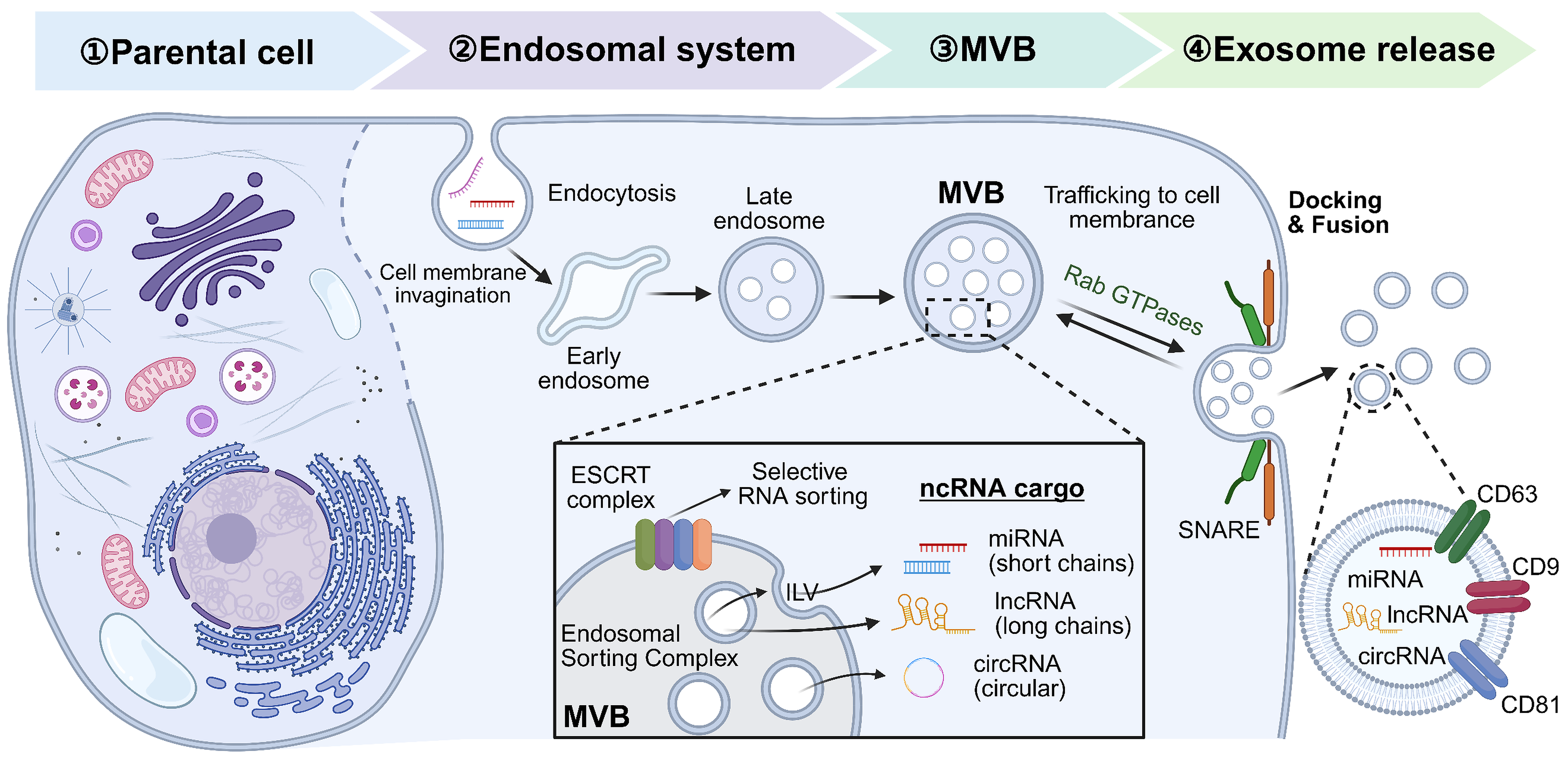
Triple-negative breast cancer (TNBC) is characterized by the absence of estrogen receptor (ER), progesterone receptor (PR), and human epidermal growth factor receptor 2 (HER2) expression, limiting the applicability of endocrine and HER2-targeted therapies. Clinically, TNBC exhibits marked molecular heterogeneity, aggressive behavior, early metastatic dissemination, and poor prognosis relative to other breast cancer subtypes. Increasing evidence indicates that the tumor microenvironment (TME) plays a central role in TNBC progression and therapeutic resistance, with exosomes serving as key mediators of intercellular communication. Exosomes, extracellular vesicles measuring 30–150 nm in diameter, are enriched in non-coding RNAs (ncRNAs), including microRNAs (miRNAs), long non-coding RNAs (lncRNAs), and circular RNAs (circRNAs), which regulate interconnected signaling pathways governing proliferation, apoptosis, invasion, epithelial-mesenchymal transition (EMT), angiogenesis, immune evasion, metabolic reprogramming, and therapy resistance. This review synthesizes current evidence on how exosomal ncRNAs orchestrate immune-metabolic networks that shape TNBC evolution and highlights their emerging clinical applications as liquid biopsy biomarkers for diagnosis, prognostic stratification, and therapeutic monitoring, as well as their potential as therapeutic targets via antisense oligonucleotides (ASOs), antagomirs, and engineered exosome-based delivery platforms. Finally, we discuss current translational challenges, including exosome heterogeneity, analytical standardization, and clinical validation, and outline future directions for integrating exosomal ncRNAs into precision management strategies for TNBC.
References
1. Unuofin JO, Adefisan-Adeoye AO, Paimo OK, Maphetu N, Lebelo SL. Breast cancer: epidemiology, molecular classification, diagnostics and evolving treatment paradigms. Molecules. 2026;31(14):2551. doi:10.3390/molecules31142551
2. Mei J, Hao L, Wang H, Xu R, Liu Y, Zhu Y, et al. Systematic characterization of non-coding RNAs in triple-negative breast cancer. Cell Prolif. 2020;53(5):e12801. doi:10.1111/cpr.12801
3. Bianchini G, Balko JM, Mayer IA, Sanders ME, Gianni L. Triple-negative breast cancer: challenges and opportunities of a heterogeneous disease. Nat Rev Clin Oncol. 2016;13(11):674-690. doi:10.1038/nrclinonc.2016.66
4. Shah M, Osgood CL, Amatya AK, Fiero MH, Pierce WF, Nair A, et al. FDA approval summary: pembrolizumab for neoadjuvant and adjuvant treatment of patients with high-risk early-stage triple-negative breast cancer. Clin Cancer Res. 2022;28(24):5249-5253. doi:10.1158/1078-0432.Ccr-22-1110
5. Rugo HS, Ettl J, Hurvitz SA, Gonçalves A, Lee KH, Fehrenbacher L, et al. Outcomes in clinically relevant patient subgroups from the EMBRACA study: talazoparib vs physician's choice standard-of-care chemotherapy. JNCI Cancer Spectr. 2020;4(1):pkz085. doi:10.1093/jncics/pkz085
6. Tolaney SM, de Azambuja E, Kalinsky K, Loi S, Kim SB, Yam C, et al. Sacituzumab govitecan plus pembrolizumab for advanced triple-negative breast cancer. N Engl J Med. 2026;394(4):354-366. doi:10.1056/NEJMoa2508959
7. Kudelova E, Smolar M, Holubekova V, Hornakova A, Dvorska D, Lucansky V, et al. Genetic heterogeneity, tumor microenvironment and immunotherapy in triple-negative breast cancer. Int J Mol Sci. 2022;23(23):14937. doi:10.3390/ijms232314937
8. Panada E, Kuznetsova T, Hamilton S. Unlocking the tumor microenvironment: innovative strategies for cancer therapy and translational insights. Cell Rep Med. 2025;6(11):102468. doi:10.1016/j.xcrm.2025.102468
9. Peng X, Zheng J, Liu T, Zhou Z, Song C, Geng Y, et al. Tumor microenvironment heterogeneity, potential therapeutic avenues, and emerging therapies. Curr Cancer Drug Targets. 2024;24(3):288-307. doi:10.2174/1568009623666230712095021
10. Goh CY, Wyse C, Ho M, O'Beirne E, Howard J, Lindsay S, et al. Exosomes in triple-negative breast cancer: garbage disposals or Trojan horses? Cancer Lett. 2020;473:90-97. doi:10.1016/j.canlet.2019.12.046
11. Tomasetti M, Lee W, Santarelli L, Neuzil J. Exosome-derived microRNAs in cancer metabolism: possible implications in cancer diagnostics and therapy. Exp Mol Med. 2017;49(1):e285. doi:10.1038/emm.2016.153
12. Lakshmi S, Hughes TA, Priya S. Exosomes and exosomal RNAs in breast cancer: a status update. Eur J Cancer. 2021;144:252-268. doi:10.1016/j.ejca.2020.11.033
13. Fan Q, Yang L, Zhang X, Peng X, Wei S, Su D, et al. The emerging role of exosome-derived non-coding RNAs in cancer biology. Cancer Lett. 2018;414:107-115. doi:10.1016/j.canlet.2017.10.040
14. Zhou R, Chen KK, Zhang J, Xiao B, Huang Z, Ju C, et al. The decade of exosomal long RNA species: an emerging cancer antagonist. Mol Cancer. 2018;17(1):75. doi:10.1186/s12943-018-0823-z
15. Di Agostino S, Vahabi M, Turco C, Fontemaggi G. Secreted non-coding RNAs: functional impact on the tumor microenvironment and clinical relevance in triple-negative breast cancer. Noncoding RNA. 2022;8(1):5. doi:10.3390/ncrna8010005
16. Shen HY, Xu JL, Zhang W, Chen QN, Zhu Z, Mao Y. Exosomal circRHCG promotes breast cancer metastasis via facilitating M2 polarization through TFEB ubiquitination and degradation. NPJ Precis Oncol. 2024;8(1):22. doi:10.1038/s41698-024-00507-y
17. Chen F, Chen J, Yang L, Liu J, Zhang X, Zhang Y, et al. Extracellular vesicle-packaged HIF-1α-stabilizing lncRNA from tumour-associated macrophages regulates aerobic glycolysis of breast cancer cells. Nat Cell Biol. 2019;21(4):498-510. doi:10.1038/s41556-019-0299-0
18. Tosar JP, Buck AH. mGem: guides or triggers? Extracellular RNAs beyond vesicular miRNAs. mBio. 2025;16(10):e0312924. doi:10.1128/mbio.03129-24
19. Peng J, Liu W, Tian J, Shu Y, Zhao R, Wang Y. Non-coding RNAs as key regulators of epithelial-mesenchymal transition in breast cancer. Front Cell Dev Biol. 2025;13:1544310. doi:10.3389/fcell.2025.1544310
20. Márton É, Varga A, Domoszlai D, Buglyó G, Balázs A, Penyige A, et al. Non-coding RNAs in cancer: structure, function, and clinical application. Cancers (Basel). 2025;17(4):579. doi:10.3390/cancers17040579
21. Bartel DP. MicroRNAs: target recognition and regulatory functions. Cell. 2009;136(2):215-233. doi:10.1016/j.cell.2009.01.002
22. Yousefi H, Maheronnaghsh M, Molaei F, Mashouri L, Aref AR, Momeny M, et al. Long noncoding RNAs and exosomal lncRNAs: classification and mechanisms in breast cancer metastasis and drug resistance. Oncogene. 2020;39(5):953-974. doi:10.1038/s41388-019-1040-y
23. Xu A, Zhu L, Yao C, Zhou W, Guan Z. The therapeutic potential of circular RNA in triple-negative breast cancer. Cancer Drug Resist. 2024;7:13. doi:10.20517/cdr.2023.141
24. Paul U, Banerjee S. The functional significance and cross-talk of non-coding RNAs in triple-negative and quadruple-negative breast cancer. Mol Biol Rep. 2022;49(7):6899-6918. doi:10.1007/s11033-022-07288-2
25. Scaratti GP, Miranda IMA, Nunes-Souza E, Ruthes MO, Rosolen D, Fonseca AS, et al. Non-coding RNA-based therapeutic strategies in triple-negative breast cancer: a systematic review. Int J Mol Sci. 2026;27(4):1882. doi:10.3390/ijms27041882
26. Stevic I, Müller V, Weber K, Fasching PA, Karn T, Marmé F, et al. Specific microRNA signatures in exosomes of triple-negative and HER2-positive breast cancer patients undergoing neoadjuvant therapy within the GeparSixto trial. BMC Med. 2018;16(1):179. doi:10.1186/s12916-018-1163-y
27. Choudhary A, Poojary SS, Jain P, Chaturvedi H, Das BC. Identification of novel exosomal miRNAs and their role in diagnosis and prognosis of triple-negative breast cancer. BMC Cancer. 2026;26(1):210. doi:10.1186/s12885-025-15499-6
28. Sueta A, Fujiki Y, Goto-Yamaguchi L, Tomiguchi M, Yamamoto-Ibusuki M, Iwase H, et al. Exosomal miRNA profiles of triple-negative breast cancer in neoadjuvant treatment. Oncol Lett. 2021;22(6):819. doi:10.3892/ol.2021.13080
29. Eichelser C, Stückrath I, Müller V, Milde-Langosch K, Wikman H, Pantel K, et al. Increased serum levels of circulating exosomal microRNA-373 in receptor-negative breast cancer patients. Oncotarget. 2014;5(20):9650-9663. doi:10.18632/oncotarget.2520
30. Xing L, Tang X, Wu K, Huang X, Yi Y, Huan J. LncRNA HAND2-AS1 suppressed the growth of triple-negative breast cancer via reducing secretion of MSC-derived exosomal miR-106a-5p. Aging (Albany NY). 2021;13(1):424-436. doi:10.18632/aging.202148
31. Wang X, Jian Q, Zhang Z, Gu J, Wang X, Wang Y. Effect of tumor-derived extracellular vesicle-shuttled lncRNA MALAT1 on proliferation, invasion and metastasis of triple-negative breast cancer by regulating macrophage M2 polarization via the POSTN/Hippo/YAP axis. Transl Oncol. 2024;49:102076. doi:10.1016/j.tranon.2024.102076
32. Wang ZW, Yang HS, Guo HS, Li YY, Zhong JY, Jiang S, et al. Tumor-derived exosomal lncRNA SNHG4 promotes triple-negative breast cancer progression by targeting XPO5. Front Oncol. 2025;15:1593827. doi:10.3389/fonc.2025.1593827
33. Feng L, Wang Y, Wang X, Li B, Liu Y, Zhang W, et al. Exosomal lncRNA MIR210HG derived from hypoxic TAMs promotes the metastasis of triple-negative breast cancer. Int Immunopharmacol. 2025;165:115416. doi:10.1016/j.intimp.2025.115416
34. Li J, Kang J, Liu W, Liu J, Pan G, Mao A, et al. Docetaxel-resistant triple-negative breast cancer cell-derived exosomal lncRNA LINC00667 reduces the chemosensitivity of breast cancer cells to docetaxel via targeting miR-200b-3p/Bcl-2 axis. Eur J Histochem. 2022;66(4):3529. doi:10.4081/ejh.2022.3592
35. Lian B, Li J, Tang S, Li T, Li J. Targeting LINC02544/miR-497-5p/CAPRIN1 axis via exosome-based siRNA to overcome immunotherapy resistance in triple-negative breast cancer. Mol Med. 2025;31(1):278. doi:10.1186/s10020-025-01336-w
36. Lan F, Zhang X, Li H, Yue X, Sun Q. Serum exosomal lncRNA XIST is a potential non-invasive biomarker to diagnose recurrence of triple-negative breast cancer. J Cell Mol Med. 2021;25(16):7602-7607. doi:10.1111/jcmm.16009
37. Na-Er A, Xu YY, Liu YH, Gan YJ. Upregulation of serum exosomal SUMO1P3 predicts unfavorable prognosis in triple-negative breast cancer. Eur Rev Med Pharmacol Sci. 2021;25(1):154-160. doi:10.26355/eurrev_202101_24379
38. Song H, Zhao Z, Ma L, Zhao W, Hu Y, Song Y. Novel exosomal circEGFR facilitates triple-negative breast cancer autophagy via promoting TFEB nuclear trafficking and modulating miR-224-5p/ATG13/ULK1 feedback loop. Oncogene. 2024;43(11):821-836. doi:10.1038/s41388-024-02950-4
39. Lyu L, Zhang S, Deng Y, Wang M, Deng X, Yang S, et al. Regulatory mechanisms, functions, and clinical significance of CircRNAs in triple-negative breast cancer. J Hematol Oncol. 2021;14(1):41. doi:10.1186/s13045-021-01052-y
40. Yang SJ, Wang DD, Zhong SL, Chen WQ, Wang FL, Zhang J, et al. Tumor-derived exosomal circPSMA1 facilitates the tumorigenesis, metastasis, and migration in triple-negative breast cancer (TNBC) through miR-637/Akt1/β-catenin (cyclin D1) axis. Cell Death Dis. 2021;12(5):420. doi:10.1038/s41419-021-03680-1
41. Liang Y, Ye F, Luo D, Long L, Wang Y, Jin Y, et al. Exosomal circSIPA1L3-mediated intercellular communication contributes to glucose metabolic reprogramming and progression of triple-negative breast cancer. Mol Cancer. 2024;23(1):125. doi:10.1186/s12943-024-02037-4
42. Ji J, Li M, Yan K, Ma J, Wei D, Zhang F, et al. circSTIL mediates pirarubicin inhibiting the malignant phenotype of triple-negative breast cancer and acts as a biomarker in plasma exosomes. Mol Immunol. 2025;180:86-95. doi:10.1016/j.molimm.2025.02.014
43. Cole C, Sobala A, Lu C, Thatcher SR, Bowman A, Brown JWS, et al. Filtering of deep sequencing data reveals the existence of abundant Dicer-dependent small RNAs derived from tRNAs. RNA. 2009;15(12):2147-2160. doi:10.1261/rna.1738409
44. Yamasaki S, Ivanov P, Hu GF, Anderson P. Angiogenin cleaves tRNA and promotes stress-induced translational repression. J Cell Biol. 2009;185(1):35-42. doi:10.1083/jcb.200811106
45. Thompson DM, Lu C, Green PJ, Parker R. tRNA cleavage is a conserved response to oxidative stress in eukaryotes. RNA. 2008;14(10):2095-2103. doi:10.1261/rna.1232808
46. Anderson P, Ivanov P. tRNA fragments in human health and disease. FEBS Lett. 2014;588(23):4297-4304. doi:10.1016/j.febslet.2014.09.001
47. Feng W, Li Y, Chu J, Li J, Zhang Y, Ding X, et al. Identification of tRNA-derived small noncoding RNAs as potential biomarkers for prediction of recurrence in triple-negative breast cancer. Cancer Med. 2018;7(10):5130-5144. doi:10.1002/cam4.1761
48. Tosar JP, Gámbaro F, Sanguinetti J, Bonilla B, Witwer KW, Cayota A. Assessment of small RNA sorting into different extracellular fractions revealed by high-throughput sequencing of breast cell lines. Nucleic Acids Res. 2015;43(11):5601-5616. doi:10.1093/nar/gkv432
49. Hussain MS, Zhang L, Ashique S. Extracellular vesicles-associated tRFs as emerging biomarkers in breast cancer. Curr Cancer Drug Targets. 2025;25(10):1200-1209. doi:10.2174/0115680096388071250527074008
50. Pan S, Zhao X, Shao C, Fu B, Huang Y, Zhang N, et al. STIM1 promotes angiogenesis by reducing exosomal miR-145 in breast cancer MDA-MB-231 cells. Cell Death Dis. 2021;12(1):38. doi:10.1038/s41419-020-03304-0
51. Wang M, Zheng Y, Hao Q, Mao G, Dai Z, Zhai Z, et al. Hypoxic BMSC-derived exosomal miR-210-3p promotes progression of triple-negative breast cancer cells via NFIX-Wnt/β-catenin signaling axis. J Transl Med. 2025;23(1):39. doi:10.1186/s12967-024-05947-5
52. Wang B, Mao JH, Wang BY, Wang LX, Wen HY, Xu LJ, et al. Exosomal miR-1910-3p promotes proliferation, metastasis, and autophagy of breast cancer cells by targeting MTMR3 and activating the NF-κB signaling pathway. Cancer Lett. 2020;489:87-99. doi:10.1016/j.canlet.2020.05.038
53. Li Y, Jiang B, Zeng L, Tang Y, Qi X, Wan Z, et al. Adipocyte-derived exosomes promote the progression of triple-negative breast cancer through circCRIM1-dependent OGA activation. Environ Res. 2023;239(Pt 1):117266. doi:10.1016/j.envres.2023.117266
54. Lan M, Lei X, Lin Y, Mazur M, Ning J, Lee J, et al. Exosome circ_0076611-mediated macrophage M2 polarization to improve triple-negative breast cancer metastasis and the intervention of baicalin nano prodrugs. Colloids Surf B Biointerfaces. 2026;259:115333. doi:10.1016/j.colsurfb.2025.115333
55. Xun X, Hu H, Liu Q, Su R, Ai J. CAFs exosomal circFOXO1 promotes TNBC autophagy and radioresistance via miR-27a-3p/BNIP3 axis. Sci Rep. 2025;15(1):29273. doi:10.1038/s41598-025-13876-6
56. Razaviyan J, Sirati-Sabet M, Tafti A, Hadavi R, Karima S, Rajabibazl M, et al. Inhibition of miR-155 using exosomal delivery of antagomir can up-regulate PTEN in triple-negative breast cancer. Endocr Metab Immune Disord Drug Targets. 2024;24(14):1664-1676. doi:10.2174/0118715303289859240214103350
57. Wilson BE, Gorrini C, Cescon DW. Breast cancer immune microenvironment: from pre-clinical models to clinical therapies. Breast Cancer Res Treat. 2022;191(2):257-267. doi:10.1007/s10549-021-06431-0
58. Chen X, Song E. Turning foes to friends: targeting cancer-associated fibroblasts. Nat Rev Drug Discov. 2019;18(2):99-115. doi:10.1038/s41573-018-0004-1
59. Chen B, Sang Y, Song X, Zhang D, Wang L, Zhao W, et al. Exosomal miR-500a-5p derived from cancer-associated fibroblasts promotes breast cancer cell proliferation and metastasis through targeting USP28. Theranostics. 2021;11(8):3932-3947. doi:10.7150/thno.53412
60. Ye F, Liang Y, Wang J, Song J, Jin Y, Wang L, et al. A novel peptide MIB1-223aa encoded by exosomal circMIB1 from cancer-associated fibroblasts drives triple-negative breast cancer metastasis and stemness via stabilizing MIB1 to activate Notch signaling. J Adv Res. 2026;81:329-348. doi:10.1016/j.jare.2025.06.023
61. Sung JS, Kang CW, Kang S, Jang Y, Chae YC, Kim BG, et al. ITGB4-mediated metabolic reprogramming of cancer-associated fibroblasts. Oncogene. 2020;39(3):664-676. doi:10.1038/s41388-019-1014-0
62. Scognamiglio I, Cocca L, Puoti I, Palma F, Ingenito F, Quintavalle C, et al. Exosomal microRNAs synergistically trigger stromal fibroblasts in breast cancer. Mol Ther Nucleic Acids. 2022;28:17-31. doi:10.1016/j.omtn.2022.02.013
63. Qiao L, Dong C, Jia W, Sun G. RAB5A in triple-negative breast cancer: a critical role in macrophage reshaping in an exosomal miR-21-dependent manner. Endocr Relat Cancer. 2024;31(5):e230257. doi:10.1530/erc-23-0257
64. Shojaei S, Hashemi SM, Ghanbarian H, Sharifi K, Salehi M, Mohammadi-Yeganeh S. Delivery of miR-381-3p mimic by mesenchymal stem cell-derived exosomes inhibits triple-negative breast cancer aggressiveness: an in vitro study. Stem Cell Rev Rep. 2021;17(3):1027-1038. doi:10.1007/s12015-020-10089-4
65. Khazaei-Poul Y, Shojaei S, Koochaki A, Ghanbarian H, Mohammadi-Yeganeh S. Evaluating the influence of human umbilical cord mesenchymal stem cell-derived exosomes loaded with miR-3182 on metastatic performance of triple-negative breast cancer cells. Life Sci. 2021;286:120015. doi:10.1016/j.lfs.2021.120015
66. Farhadi S, Mohammadi-Yeganeh S, Kiani J, Hashemi SM, Koochaki A, Sharifi K, et al. Exosomal delivery of 7SK long non-coding RNA suppresses viability, proliferation, aggressiveness and tumorigenicity in triple-negative breast cancer cells. Life Sci. 2023;322:121646. doi:10.1016/j.lfs.2023.121646
67. Li W, Han G, Li F, Bu P, Hao Y, Huang L, et al. Cancer cell-derived exosomal miR-20a-5p inhibits CD8+ T-cell function and confers anti-programmed cell death 1 therapy resistance in triple-negative breast cancer. Cancer Sci. 2024;115(2):347-356. doi:10.1111/cas.16036
68. Wu Y, Han W, Dong H, Liu X, Su X. The rising roles of exosomes in the tumor microenvironment reprogramming and cancer immunotherapy. MedComm (2020). 2024;5(4):e541. doi:10.1002/mco2.541
69. Rocha KCE, Ying W, Olefsky JM. Exosome-mediated impact on systemic metabolism. Annu Rev Physiol. 2024;86:225-253. doi:10.1146/annurev-physiol-042222-024535
70. Yang L, Zhao S, Liu X, Zhang Y, Zhao S, Fang X, et al. Hypoxic cancer-associated fibroblast exosomal circSTAT3 drives triple-negative breast cancer stemness via miR-671-5p/NOTCH1 signaling. J Transl Med. 2025;23(1):814. doi:10.1186/s12967-025-06794-8
71. Li H, Fan J, Ma J, Qiao L, Sha T, Ma B. Exosomal miR-182-5p from breast cancer cells reprogram tumor-associated macrophages and promote triple-negative breast cancer progression by targeting Notch1 in macrophages. Arch Med Sci. 2025;21(4):1471-1486. doi:10.5114/aoms/187080
72. Hoshino A, Kim HS, Bojmar L, Gyan KE, Cioffi M, Hernandez J, et al. Extracellular vesicle and particle biomarkers define multiple human cancers. Cell. 2020;182(4):1044-1061.e18. doi:10.1016/j.cell.2020.07.009
73. Kim HI, Park J, Zhu Y, Wang X, Han Y, Zhang D, et al. Recent advances in extracellular vesicles for therapeutic cargo delivery. Exp Mol Med. 2024;56(4):836-849. doi:10.1038/s12276-024-01201-6
74. Torralba D, Baixauli F, Villarroya-Beltri C, Fernández-Delgado I, Latorre-Pellicer A, Acín-Pérez R, et al. Priming of dendritic cells by DNA-containing extracellular vesicles from activated T cells through antigen-driven contacts. Nat Commun. 2018;9(1):2658. doi:10.1038/s41467-018-05077-9
75. Salvador-Coloma C, Santaballa A, Sanmartín E, Calvo D, García A, Hervás D, et al. Immunosuppressive profiles in liquid biopsy at diagnosis predict response to neoadjuvant chemotherapy in triple-negative breast cancer. Eur J Cancer. 2020;139:119-134. doi:10.1016/j.ejca.2020.08.020
76. Wu H, Wang Q, Zhong H, Li L, Zhang Q, Huang Q, et al. Differentially expressed microRNAs in exosomes of patients with breast cancer revealed by next-generation sequencing. Oncol Rep. 2020;43(1):240-250. doi:10.3892/or.2019.7401
77. Di Modica M, Regondi V, Sandri M, Iorio MV, Zanetti A, Tagliabue E, et al. Breast cancer-secreted miR-939 downregulates VE-cadherin and destroys the barrier function of endothelial monolayers. Cancer Lett. 2017;384:94-100. doi:10.1016/j.canlet.2016.09.013
78. Koh MZ, Ho WY, Yeap SK, Mohd Ali N, Yong CY, Boo L, et al. Exosomal-microRNA transcriptome profiling of parental and CSC-like MDA-MB-231 cells in response to cisplatin treatment. Pathol Res Pract. 2022;233:153854. doi:10.1016/j.prp.2022.153854
79. Zhou Y, Yamamoto Y, Takeshita F, Yamamoto T, Xiao Z, Ochiya T. Delivery of miR-424-5p via extracellular vesicles promotes the apoptosis of MDA-MB-231 TNBC cells in the tumor microenvironment. Int J Mol Sci. 2021;22(2):844. doi:10.3390/ijms22020844
80. Gong C, Tian J, Wang Z, Gao Y, Wu X, Ding X, et al. Functional exosome-mediated co-delivery of doxorubicin and hydrophobically modified microRNA 159 for triple-negative breast cancer therapy. J Nanobiotechnology. 2019;17(1):93. doi:10.1186/s12951-019-0526-7
81. Yu S, Zhou Y, Niu L, Qiao Y, Yan Y. Mesenchymal stem cell-derived exosome miR-342-3p inhibits metastasis and chemo-resistance of breast cancer through regulating ID4. Genes Genomics. 2022;44(5):539-550. doi:10.1007/s13258-021-01200-1
82. Liu X, Zhang G, Yu T, Liu J, Chai X, Yin D, et al. CL4-modified exosomes deliver lncRNA DARS-AS1 siRNA to suppress triple-negative breast cancer progression and attenuate doxorubicin resistance by inhibiting autophagy. Int J Biol Macromol. 2023;250:126147. doi:10.1016/j.ijbiomac.2023.126147
83. Shao H, Im H, Castro CM, Breakefield X, Weissleder R, Lee H. New technologies for analysis of extracellular vesicles. Chem Rev. 2018;118(4):1917-1950. doi:10.1021/acs.chemrev.7b00534
84. Shi W, Jin X, Wang Y, Zhang Q, Yang L. High serum exosomal long non-coding RNA DANCR expression confers poor prognosis in patients with breast cancer. J Clin Lab Anal. 2022;36(3):e24186. doi:10.1002/jcla.24186
85. Qiu P, Guo Q, Lin J, Pan K, Chen J, Ding M. An exosome-related long non-coding RNAs risk model could predict survival outcomes in patients with breast cancer. Sci Rep. 2022;12(1):22322. doi:10.1038/s41598-022-26894-5
86. Yang Q, Cai X, Qian Y, Yang T, Xia W, Zhong M, et al. Implication of an exosome-based gene signature for estimating clinical outcomes of triple-negative breast cancer and assisting in individualized therapy. Sci Rep. 2025;15(1):37774. doi:10.1038/s41598-025-16751-6
87. Szymanowska A, Rodriguez-Aguayo C, Lopez-Berestein G, Amero P. Non-coding RNAs: foes or friends for targeting tumor microenvironment. Noncoding RNA. 2023;9(5):52. doi:10.3390/ncrna9050052
88. Youssef JR, Elgammal EM, Mahdy DM, Ghazi NF, Bebawy G. Recent progress in exosome-derived nanocarriers for breast cancer therapy: advances, translational barriers, and scale-up considerations. Pharm Res. 2026;43(6):1935-1977. doi:10.1007/s11095-026-04095-3
89. Yu M, Gai C, Li Z, Ding D, Zheng J, Zhang W, et al. Targeted exosome-encapsulated erastin induced ferroptosis in triple negative breast cancer cells. Cancer Sci. 2019;110(10):3173-3182. doi:10.1111/cas.14181
90. Yang P, Cao X, Cai H, Feng P, Chen X, Zhu Y, et al. The exosomes derived from CAR-T cell efficiently target mesothelin and reduce triple-negative breast cancer growth. Cell Immunol. 2021;360:104262. doi:10.1016/j.cellimm.2020.104262
91. Li K, Lin H, Liu A, Qiu C, Rao Z, Wang Z, et al. SOD1-high fibroblasts derived exosomal miR-3960 promotes cisplatin resistance in triple-negative breast cancer by suppressing BRSK2-mediated phosphorylation of PIMREG. Cancer Lett. 2024;590:216842. doi:10.1016/j.canlet.2024.216842
92. Théry C, Amigorena S, Raposo G, Clayton A. Isolation and characterization of exosomes from cell culture supernatants and biological fluids. Curr Protoc Cell Biol. 2006;Chapter 3:Unit 3.22. doi:10.1002/0471143030.cb0322s30
93. Gámez-Valero A, Monguió-Tortajada M, Carreras-Planella L, la Franquesa M, Beyer K, Borràs FE. Size-exclusion chromatography-based isolation minimally alters extracellular vesicles' characteristics compared to precipitating agents. Sci Rep. 2016;6:33641. doi:10.1038/srep33641
94. Busatto S, Vilanilam G, Ticer T, Lin WL, Dickson DW, Shapiro S, et al. Tangential flow filtration for highly efficient concentration of extracellular vesicles from large volumes of fluid. Cells. 2018;7(12):273. doi:10.3390/cells7120273
95. Gurunathan S, Kang MH, Jeyaraj M, Qasim M, Kim JH. Review of the isolation, characterization, biological function, and multifarious therapeutic approaches of exosomes. Cells. 2019;8(4):307. doi:10.3390/cells8040307
96. Lener T, Gimona M, Aigner L, Börger V, Buzás EI, Camussi G, et al. Applying extracellular vesicles based therapeutics in clinical trials - an ISEV position paper. J Extracell Vesicles. 2015;4:30087. doi:10.3402/jev.v4.30087
97. Pomatto MAC, Bussolati B, D’Antico S, Ghiotto S, Tetta C, Brizzi MF, et al. Improved loading of plasma-derived extracellular vesicles to encapsulate antitumor miRNAs. Mol Ther Methods Clin Dev. 2019;13:133-144. doi:10.1016/j.omtm.2019.01.001
98. Kooijmans SAA, Stremersch S, Braeckmans K, de Smedt SC, Hendrix A, Wood MJA, et al. Electroporation-induced siRNA precipitation obscures the efficiency of siRNA loading into extracellular vesicles. J Control Release. 2013;172(1):229-238. doi:10.1016/j.jconrel.2013.08.014
99. Rahgoshay M, Atashi A, Vaezi M, Ajorloo M, Amini-Kafiabad S, Ahmadvand M. Engineered exosomes: advanced nanocarriers for targeted therapy and drug delivery in hematological malignancies. Cancer Nanotechnol. 2025;16(1):33. doi:10.1186/s12645-025-00334-1
100. Li L, Wang S, Xue J, Lin Y, Su L, Xue C, et al. Development of spectral nano-flow cytometry for high-throughput multiparameter analysis of individual biological nanoparticles. Anal Chem. 2023;95(6):3423-3433. doi:10.1021/acs.analchem.2c05159
101. Lai CP, Mardini O, Ericsson M, Prabhakar S, Maguire C, Chen JW, et al. Dynamic biodistribution of extracellular vesicles in vivo using a multimodal imaging reporter. ACS Nano. 2014;8(1):483-494. doi:10.1021/nn404945r
102. Hindson BJ, Ness KD, Masquelier DA, Belgrader P, Heredia NJ, Makarewicz AJ, et al. High-throughput droplet digital PCR system for absolute quantitation of DNA copy number. Anal Chem. 2011;83(22):8604-8610. doi:10.1021/ac202028g
103. Gholizadeh S, Draz MS, Zarghooni M, Sanati-Nezhad A, Ghavami S, Shafiee H, et al. Microfluidic approaches for isolation, detection, and characterization of extracellular vesicles: current status and future directions. Biosens Bioelectron. 2017;91:588-605. doi:10.1016/j.bios.2016.12.062
104. Willms E, Cabañas C, Mäger I, Wood MJA, Vader P. Extracellular vesicle heterogeneity: subpopulations, isolation techniques, and diverse functions in cancer progression. Front Immunol. 2018;9:738. doi:10.3389/fimmu.2018.00738
105. Sork H, Corso G, Krjutskov K, Johansson HJ, Nordin JZ, Wiklander OPB, et al. Heterogeneity and interplay of the extracellular vesicle small RNA transcriptome and proteome. Sci Rep. 2018;8(1):10813. doi:10.1038/s41598-018-28485-9
106. Yang D, Jones MG, Naranjo S, Rideout WM 3rd, Min KHJ, Ho R, et al. Lineage tracing reveals the phylodynamics, plasticity, and paths of tumor evolution. Cell. 2022;185(11):1905-1923.e25. doi:10.1016/j.cell.2022.04.015
107. Luisotti L, Germelli L, Piccarducci R, Giacomelli C, Marchetti L, Martini C. Extracellular vesicles as vehicles for small non-coding RNA therapeutics: standardization challenges for clinical translation. Extracell Vesicles Circ Nucl Acids. 2025;6(3):403-432. doi:10.20517/evcna.2025.33
108. Duan H, Xu B, Luo P, Chen T, Zou J. Exosomal non-coding RNAs: orchestrators of intercellular crosstalk in the prostate cancer tumor microenvironment. Front Immunol. 2025;16:1644861. doi:10.3389/fimmu.2025.1644861
109. Meng W, Hao Y, He C, Li L, Zhu G. Exosome-orchestrated hypoxic tumor microenvironment. Mol Cancer. 2019;18(1):57. doi:10.1186/s12943-019-0982-6
110. Welsh JA, Goberdhan DCI, O'Driscoll L, Buzas EI, Blenkiron C, Bussolati B, et al. Minimal information for studies of extracellular vesicles (MISEV2023): from basic to advanced approaches. J Extracell Vesicles. 2024;13(2):e12404. doi:10.1002/jev2.12404
111. Parra A, Barranco I, Martínez-Díaz P, González E, Albóniga OE, Cabrera D, et al. Cryogenic electron microscopy reveals morphologically distinct subtypes of extracellular vesicles among porcine ejaculate fractions. Sci Rep. 2024;14(1):16175. doi:10.1038/s41598-024-67229-w
112. Baldasici O, Pileczki V, Cruceriu D, Gavrilas LI, Tudoran O, Balacescu L, et al. Breast cancer-delivered exosomal miRNA as liquid biopsy biomarkers for metastasis prediction: a focus on translational research with clinical applicability. Int J Mol Sci. 2022;23(16):9371. doi:10.3390/ijms23169371
113. Chen H, Yao H, Chi J, Li C, Liu Y, Yang J, et al. Engineered exosomes as drug and RNA co-delivery system: new hope for enhanced therapeutics? Front Bioeng Biotechnol. 2023;11:1254356. doi:10.3389/fbioe.2023.1254356
114. Tofolo MV, Berti FCB, Nunes-Souza E, Ruthes MO, Berti LF, Fonseca AS, et al. Non-coding RNAs as modulators of radioresponse in triple-negative breast cancer: a systematic review. J Biomed Sci. 2024;31(1):93. doi:10.1186/s12929-024-01081-y
115. O'Brien K, Breyne K, Ughetto S, Laurent LC, Breakefield XO. RNA delivery by extracellular vesicles in mammalian cells and its applications. Nat Rev Mol Cell Biol. 2020;21(10):585-606. doi:10.1038/s41580-020-0251-y
116. Jiang YZ, Ma D, Suo C, Shi J, Xue M, Hu X, et al. Genomic and transcriptomic landscape of triple-negative breast cancers: subtypes and treatment strategies. Cancer Cell. 2019;35(3):428-440.e5. doi:10.1016/j.ccell.2019.02.001
117. Lehmann BD, Bauer JA, Chen X, Sanders ME, Chakravarthy AB, Shyr Y, Pietenpol JA. Identification of human triple-negative breast cancer subtypes and preclinical models for selection of targeted therapies. J Clin Invest. 2011;121(7):2750-2767. doi:10.1172/JCI45014
118. Liu Y, Zhu XZ, Xiao Y, Wu SY, Zuo WJ, Yu Q, et al. Subtyping-based platform guides precision medicine for heavily pretreated metastatic triple-negative breast cancer: the FUTURE phase II umbrella clinical trial. Cell Res. 2023;33(5):389-402. doi:10.1038/s41422-023-00795-2
Published
How to Cite
Issue
Section
License
Copyright (c) 2026 Huixin Chen, Rong Luo, Jiakang Ma, Weiheng Cui, Hongzheng Ren, Shuyao Zhang, Yunlong Pan, Ruijun Zhao, Wei Xiong, Hao Zhang, Hongmei Dong

This work is licensed under a Creative Commons Attribution 4.0 International License.
Copyright
Authors publishing in Cancer Biome and Targeted Therapy retain full copyright of their work. By submitting a manuscript, authors grant the publisher (GCINC Press) a non-exclusive license to publish, distribute, and archive the article, and to identify itself as the original publisher.
License
All articles are published open access under the terms of the Creative Commons Attribution 4.0 International License (CC BY 4.0).
https://creativecommons.org/licenses/by/4.0/. This license permits unrestricted use, distribution, reproduction, and adaptation in any medium, including for commercial purposes, provided that:
- Proper attribution is given to the original author(s) and source,
- A link to the license is provided, and
- Any changes made are clearly indicated.
Author Rights
Authors retain the right to:
- Use their article in future works (e.g., books, theses, lectures)
- Share and archive the final published version on institutional repositories or personal websites
- Adapt or translate their work, or authorize others to do so, with proper citation
Reuse by Third Parties
Content is licensed under the Creative Commons Attribution 4.0 International License (CC BY 4.0). Third parties may copy, redistribute, remix, transform, and build upon the material for any purpose, including commercial use, provided that appropriate credit is given to the original author(s).
Archiving and Preservation
All articles are made freely available immediately upon publication, without embargo. Cancer Biome and Targeted Therapy is hosted on the Open Journal Systems (OJS) platform, developed by the Public Knowledge Project (PKP). The journal participates in long-term digital preservation through the PKP Preservation Network (PKP PN) using the LOCKSS system. Authors are encouraged to self-archive in institutional repositories, disciplinary archives, and preprint servers in accordance with the license terms.




Funding data
-
National Natural Science Foundation of China
Grant numbers 82273183;82572981;82472810 -
Natural Science Foundation of Guangdong Province
Grant numbers 2022A1515010925;2021A1515011028;2022A1515011739