Targeting Mitosis to Reprogram the Tumor Microenvironment: Combination Strategies for Cancer Immunotherapy
DOI:
https://doi.org/10.66505/cbtt.v1i4.62Keywords:
Mitotic stress, Chromosomal instability, Tumor microenvironment, cGAS–STING signaling, Cancer immunotherapy, Immune resistance, Combination therapy, Predictive biomarkersAbstract
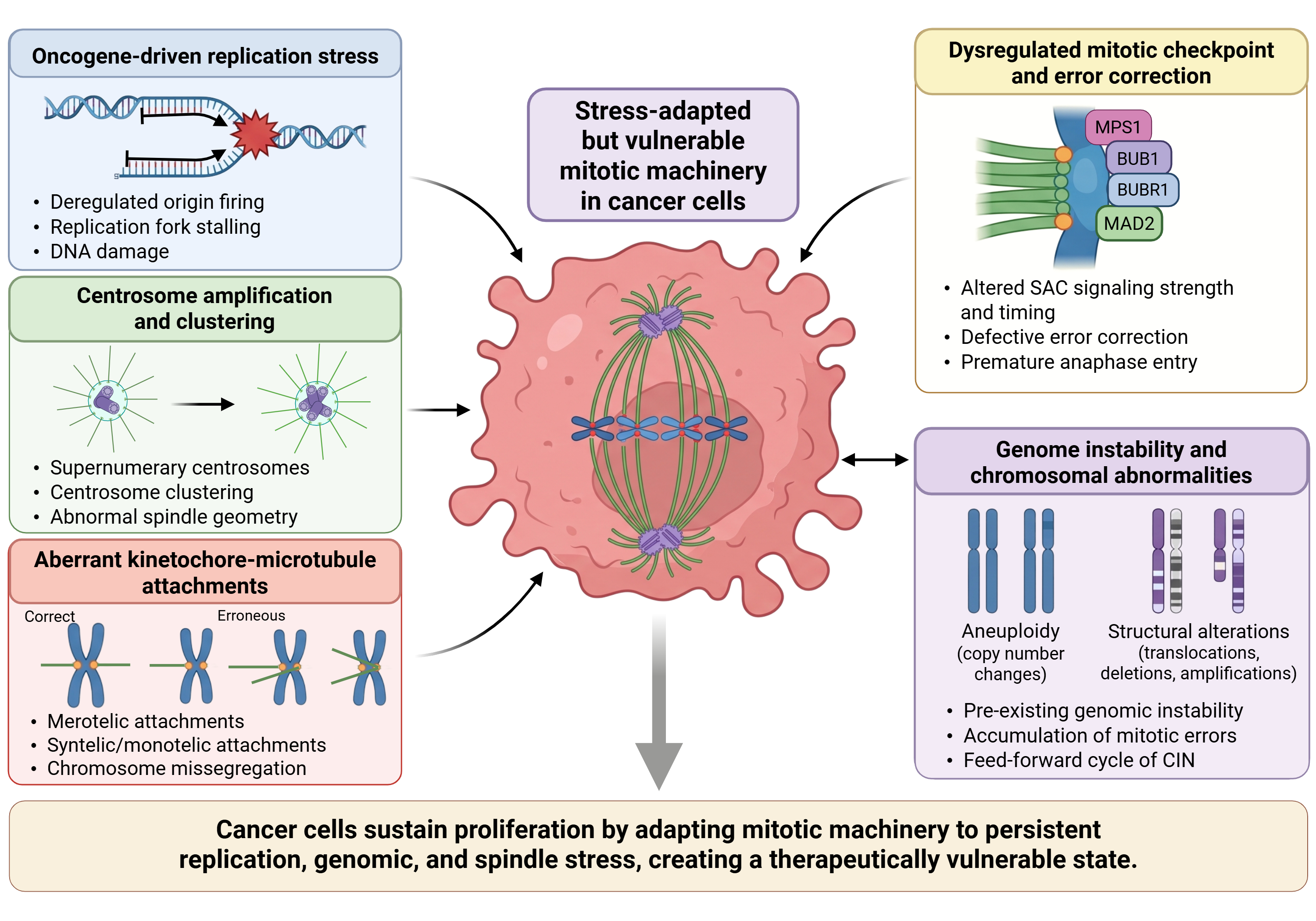
Dysregulated mitosis is a therapeutic vulnerability in cancer, but the consequences of mitotic targeting extend beyond tumor-cell death. Chromosome missegregation, micronucleus formation, and chromatin-bridge exposure can activate cytosolic DNA sensing and alter inflammatory signaling, immune recognition, and stromal interactions within the tumor microenvironment (TME). These responses are not uniformly antitumor. Acute mitotic perturbation may enhance innate immune activation and tumor-cell susceptibility to immune elimination, whereas persistent chromosomal instability can promote inflammatory adaptation, myeloid immunosuppression, and immune escape. This distinction has important implications for combining antimitotic agents with immunotherapy. Here, we examine the molecular mechanisms linking mitotic disruption to TME remodeling, with particular emphasis on signaling through cyclic GMP–AMP synthase (cGAS) and stimulator of interferon genes (STING), immune checkpoint regulation, myeloid-cell responses, and stromal reorganization. We evaluate combination strategies involving immune checkpoint blockade, innate immune modulation, myeloid targeting, radiotherapy, and cell-death-enhancing interventions. Although preclinical studies provide mechanistic support for several approaches, clinical evidence remains uneven, and the immune consequences of individual antimitotic agents are difficult to predict across tumor types. We propose a testable framework integrating baseline chromosomal instability, p53 status, innate immune competence, and early treatment-induced biomarkers to guide therapeutic selection and scheduling. Translating this framework into clinical practice will require prospective validation, clearer separation of drug-specific effects from general mitotic stress responses, and evidence that immune remodeling improves patient outcomes.
References
1. Holland AJ, Cleveland DW. Boveri revisited: chromosomal instability, aneuploidy and tumorigenesis. Nat Rev Mol Cell Biol. 2009;10(7):478-487. doi:10.1038/nrm2718
2. Sotillo R, Hernando E, Díaz-Rodríguez E, Teruya-Feldstein J, Cordón-Cardo C, Lowe SW, et al. Mad2 overexpression promotes aneuploidy and tumorigenesis in mice. Cancer Cell. 2007;11(1):9-23. doi:10.1016/j.ccr.2006.10.019
3. Jordan MA, Wilson L. Microtubules as a target for anticancer drugs. Nat Rev Cancer. 2004;4(4):253-265. doi:10.1038/nrc1317
4. Zasadil LM, Andersen KA, Yeum D, Rocque GB, Wilke LG, Tevaarwerk AJ, et al. Cytotoxicity of paclitaxel in breast cancer is due to chromosome missegregation on multipolar spindles. Sci Transl Med. 2014;6(229):229ra43. doi:10.1126/scitranslmed.3007965
5. Nigg EA. Mitotic kinases as regulators of cell division and its checkpoints. Nat Rev Mol Cell Biol. 2001;2(1):21-32. doi:10.1038/35048096
6. Musacchio A, Salmon ED. The spindle-assembly checkpoint in space and time. Nat Rev Mol Cell Biol. 2007;8(5):379-393. doi:10.1038/nrm2163
7. Holland AJ, Cleveland DW. Losing balance: the origin and impact of aneuploidy in cancer. EMBO Rep. 2012;13(6):501-514. doi:10.1038/embor.2012.55
8. Prosser SL, Pelletier L. Mitotic spindle assembly in animal cells: a fine balancing act. Nat Rev Mol Cell Biol. 2017;18(3):187-201. doi:10.1038/nrm.2016.162
9. Weaver BA. How Taxol/paclitaxel kills cancer cells. Mol Biol Cell. 2014;25(18):2677-2681. doi:10.1091/mbc.E14-04-0916
10. Serpico AF, Visconti R, Grieco D. Exploiting immune-dependent effects of microtubule-targeting agents to improve efficacy and tolerability of cancer treatment. Cell Death Dis. 2020;11(5):361. doi:10.1038/s41419-020-2567-0
11. Mackenzie KJ, Carroll P, Martin CA, Murina O, Fluteau A, Simpson DJ, et al. cGAS surveillance of micronuclei links genome instability to innate immunity. Nature. 2017;548(7668):461-465. doi:10.1038/nature23449
12. Harding SM, Benci JL, Irianto J, Discher DE, Minn AJ, Greenberg RA. Mitotic progression following DNA damage enables pattern recognition within micronuclei. Nature. 2017;548(7668):466-470. doi:10.1038/nature23470
13. Bakhoum SF, Ngo B, Laughney AM, Cavallo JA, Murphy CJ, Ly P, et al. Chromosomal instability drives metastasis through a cytosolic DNA response. Nature. 2018;553(7689):467-472. doi:10.1038/nature25432
14. Dou Z, Ghosh K, Vizioli MG, Zhu J, Sen P, Wangensteen KJ, et al. Cytoplasmic chromatin triggers inflammation in senescence and cancer. Nature. 2017;550(7676):402-406. doi:10.1038/nature24050
15. Li J, Hubisz MJ, Earlie EM, Duran MA, Hong C, Varela AA, et al. Non-cell-autonomous cancer progression from chromosomal instability. Nature. 2023;620(7976):1080-1088. doi:10.1038/s41586-023-06464-z
16. Galluzzi L, Buqué A, Kepp O, Zitvogel L, Kroemer G. Immunogenic cell death in cancer and infectious disease. Nat Rev Immunol. 2017;17(2):97-111. doi:10.1038/nri.2016.107
17. Hanahan D. Hallmarks of cancer—then and now, and beyond. Cell. 2026;189(8):2254-2277. doi:10.1016/j.cell.2025.12.049
18. Bakhoum SF, Cantley LC. The multifaceted role of chromosomal instability in cancer and its microenvironment. Cell. 2018;174(6):1347-1360. doi:10.1016/j.cell.2018.08.027
19. Hanahan D. Hallmarks of cancer: new dimensions. Cancer Discov. 2022;12(1):31-46. doi:10.1158/2159-8290.CD-21-1059
20. Drews RM, Hernando B, Tarabichi M, Haase K, Lesluyes T, Smith PS, et al. A pan-cancer compendium of chromosomal instability. Nature. 2022;606(7916):976-983. doi:10.1038/s41586-022-04789-9
21. Shoshani O, Brunner SF, Yaeger R, Ly P, Nechemia-Arbely Y, Kim DH, et al. Chromothripsis drives the evolution of gene amplification in cancer. Nature. 2021;591(7848):137-141. doi:10.1038/s41586-020-03064-z
22. Quinton RJ, DiDomizio A, Vittoria MA, Kotýnková K, Ticas CJ, Patel S, et al. Whole-genome doubling confers unique genetic vulnerabilities on tumour cells. Nature. 2021;590(7846):492-497. doi:10.1038/s41586-020-03133-3
23. Cohen-Sharir Y, McFarland JM, Abdusamad M, Marquis C, Bernhard SV, Kazachkova M, et al. Aneuploidy renders cancer cells vulnerable to mitotic checkpoint inhibition. Nature. 2021;590(7846):486-491. doi:10.1038/s41586-020-03114-6
24. Gemble S, Wardenaar R, Keuper K, Srivastava N, Nano M, Macé AS, et al. Genetic instability from a single S phase after whole-genome duplication. Nature. 2022;604(7904):146-151. doi:10.1038/s41586-022-04578-4
25. Tolcher AW, Quinn DI, Ferrari A, Ahmann F, Giaccone G, Drake T, et al. A phase II study of YM155, a novel small-molecule suppressor of survivin, in castration-resistant taxane-pretreated prostate cancer. Ann Oncol. 2012;23(4):968-973. doi:10.1093/annonc/mdr353
26. Melichar B, Adenis A, Lockhart AC, Bennouna J, Dees EC, Kayaleh O, et al. Safety and activity of alisertib, an investigational aurora kinase A inhibitor, in patients with breast cancer, small-cell lung cancer, non-small-cell lung cancer, head and neck squamous-cell carcinoma, and gastro-oesophageal adenocarcinoma: a five-arm phase 2 study. Lancet Oncol. 2015;16(4):395-405. doi:10.1016/S1470-2045(15)70051-3
27. Ahn DH, Ridinger M, Cannon TL, Mendelsohn L, Starr JS, Hubbard JM, et al. Onvansertib in combination with chemotherapy and bevacizumab in second-line treatment of KRAS-mutant metastatic colorectal cancer: a single-arm, phase II trial. J Clin Oncol. 2025;43(7):840-851. doi:10.1200/JCO-24-01266
28. Gascoigne KE, Taylor SS. Cancer cells display profound intra- and interline variation following prolonged exposure to antimitotic drugs. Cancer Cell. 2008;14(2):111-122. doi:10.1016/j.ccr.2008.07.002
29. Döhner H, Symeonidis A, Deeren D, Demeter J, Sanz MA, Anagnostopoulos A, et al. Adjunctive volasertib in patients with acute myeloid leukemia not eligible for standard induction therapy: a randomized, phase 3 trial. Hemasphere. 2021;5(8):e617. doi:10.1097/hs9.0000000000000617
30. Di Bona M, Bakhoum SF. Micronuclei and cancer. Cancer Discov. 2024;14(2):214-226. doi:10.1158/2159-8290.CD-23-1073
31. Yang R, Kwan W, Du Y, Yan R, Zang L, Li C, et al. Drug-induced senescence by aurora kinase inhibitors attenuates innate immune response of macrophages on gastric cancer organoids. Cancer Lett. 2024;598:217106. doi:10.1016/j.canlet.2024.217106
32. Ogawa Y, Fisher L, Matsumoto T. The impact of polyploid giant cancer cells: the root of stress resilience. Cancer Sci. 2025;116(11):2949-2958. doi:10.1111/cas.70191
33. Liu P, Wang L, Yu H. Polyploid giant cancer cells: origin, possible pathways of formation, characteristics, and mechanisms of regulation. Front Cell Dev Biol. 2024;12:1410637. doi:10.3389/fcell.2024.1410637
34. Vitale I, Galluzzi L, Castedo M, Kroemer G. Mitotic catastrophe: a mechanism for avoiding genomic instability. Nat Rev Mol Cell Biol. 2011;12(6):385-392. doi:10.1038/nrm3115
35. Sistigu A, Yamazaki T, Vacchelli E, Chaba K, Enot DP, Adam J, et al. Cancer cell-autonomous contribution of type I interferon signaling to the efficacy of chemotherapy. Nat Med. 2014;20(11):1301-1309. doi:10.1038/nm.3708
36. Goel S, DeCristo MJ, Watt AC, BrinJones H, Sceneay J, Li BB, et al. CDK4/6 inhibition triggers anti-tumour immunity. Nature. 2017;548(7668):471-475. doi:10.1038/nature23465
37. Deng J, Wang ES, Jenkins RW, Li S, Dries R, Yates K, et al. CDK4/6 inhibition augments antitumor immunity by enhancing T-cell activation. Cancer Discov. 2018;8(2):216-233. doi:10.1158/2159-8290.CD-17-0915
38. Zhang J, Bu X, Wang H, Zhu Y, Geng Y, Nihira NT, et al. Cyclin D-CDK4 kinase destabilizes PD-L1 via cullin 3-SPOP to control cancer immune surveillance. Nature. 2018;553(7686):91-95. doi:10.1038/nature25015
39. Schaer DA, Beckmann RP, Dempsey JA, Huber L, Forest A, Amaladas N, et al. The CDK4/6 inhibitor abemaciclib induces a T cell inflamed tumor microenvironment and enhances the efficacy of PD-L1 checkpoint blockade. Cell Rep. 2018;22(11):2978-2994. doi:10.1016/j.celrep.2018.02.053
40. Hu X, Wang J, Chu M, Liu Y, Wang ZW, Zhu X. Emerging role of ubiquitination in the regulation of PD-1/PD-L1 in cancer immunotherapy. Mol Ther. 2021;29(3):908-919. doi:10.1016/j.ymthe.2020.12.032
41. Yamanaka K, Nakahara T, Yamauchi T, Kita A, Takeuchi M, Kiyonaga F, et al. Antitumor activity of YM155, a selective small-molecule survivin suppressant, alone and in combination with docetaxel in human malignant melanoma models. Clin Cancer Res. 2011;17(16):5423-5431. doi:10.1158/1078-0432.CCR-10-3410
42. Ganem NJ, Godinho SA, Pellman D. A mechanism linking extra centrosomes to chromosomal instability. Nature. 2009;460(7252):278-282. doi:10.1038/nature08136
43. Chen X, Agustinus AS, Li J, DiBona M, Bakhoum SF. Chromosomal instability as a driver of cancer progression. Nat Rev Genet. 2025;26(1):31-46. doi:10.1038/s41576-024-00761-7
44. Wang W, Zhao R, Wang Y, Pan L, Luan F, Fu G. PLK1 in cancer therapy: a comprehensive review of immunomodulatory mechanisms and therapeutic opportunities. Front Immunol. 2025;16:1602752. doi:10.3389/fimmu.2025.1602752
45. Salinas Y, Chauhan SC, Bandyopadhyay D. Small-molecule mitotic inhibitors as anticancer agents: discovery, classification, mechanisms of action, and clinical trials. Int J Mol Sci. 2025;26(7):3279. doi:10.3390/ijms26073279
46. Pinto B, Silva JPN, Silva PMA, Sarmento B, Carvalho-Tavares J, Bousbaa H. Mitotic machinery dysregulation in lung cancer: biological roles, therapeutic targeting, and combination strategies. Pharmaceutics. 2026;18(4):402. doi:10.3390/pharmaceutics18040402
47. Lens SMA, Voest EE, Medema RH. Shared and separate functions of polo-like kinases and aurora kinases in cancer. Nat Rev Cancer. 2010;10(12):825-841. doi:10.1038/nrc2964
48. Doménech E, Malumbres M. Mitosis-targeting therapies: a troubleshooting guide. Curr Opin Pharmacol. 2013;13(4):519-528. doi:10.1016/j.coph.2013.03.011
49. Jackson JR, Patrick DR, Dar MM, Huang PS. Targeted anti-mitotic therapies: can we improve on tubulin agents? Nat Rev Cancer. 2007;7(2):107-117. doi:10.1038/nrc2049
50. Carmena M, Ruchaud S, Earnshaw WC. Making the Auroras glow: regulation of Aurora A and B kinase function by interacting proteins. Curr Opin Cell Biol. 2009;21(6):796-805. doi:10.1016/j.ceb.2009.09.008
51. Krenn V, Musacchio A. The Aurora B kinase in chromosome bi-orientation and spindle checkpoint signaling. Front Oncol. 2015;5:225. doi:10.3389/fonc.2015.00225
52. Vader G, Lens SMA. The Aurora kinase family in cell division and cancer. Biochim Biophys Acta. 2008;1786(1):60-72. doi:10.1016/j.bbcan.2008.07.003
53. Strebhardt K. Multifaceted polo-like kinases: drug targets and antitargets for cancer therapy. Nat Rev Drug Discov. 2010;9(8):643-660. doi:10.1038/nrd3184
54. Compton DA. Mechanisms of aneuploidy. Curr Opin Cell Biol. 2011;23(1):109-113. doi:10.1016/j.ceb.2010.08.007
55. Kuang X, Li J. Chromosome instability and aneuploidy as context-dependent activators or inhibitors of antitumor immunity. Front Immunol. 2022;13:895961. doi:10.3389/fimmu.2022.895961
56. Requesens M, Foijer F, Nijman HW, de Bruyn M. Genomic instability as a driver and suppressor of anti-tumor immunity. Front Immunol. 2024;15:1462496. doi:10.3389/fimmu.2024.1462496
57. Chabanon RM, Danlos FX, Ouali K, Postel-Vinay S. Genome instability and crosstalk with the immune response. Genome Med. 2025;17(1):139. doi:10.1186/s13073-025-01509-6
58. Lee CH, Minh Nguyen T, Lee Y, Choi SG, Nguyen PN, Park JH, et al. Overcoming therapeutic resistance in triple-negative breast cancer: targeting the undrugged kinome. Int J Mol Sci. 2026;27(1):450. doi:10.3390/ijms27010450
59. Joukov V, De Nicolo A. Aurora-PLK1 cascades as key signaling modules in the regulation of mitosis. Sci Signal. 2018;11(543):eaar4195. doi:10.1126/scisignal.aar4195
60. Zitouni S, Nabais C, Jana SC, Guerrero A, Bettencourt-Dias M. Polo-like kinases: structural variations lead to multiple functions. Nat Rev Mol Cell Biol. 2014;15(7):433-452. doi:10.1038/nrm3819
61. McIntosh JR. Mitosis. Cold Spring Harb Perspect Biol. 2016;8(9):a023218. doi:10.1101/cshperspect.a023218
62. Lancaster OM, Baum B. Shaping up to divide: coordinating actin and microtubule cytoskeletal remodelling during mitosis. Semin Cell Dev Biol. 2014;34:109-115. doi:10.1016/j.semcdb.2014.02.015
63. Stewart MP, Helenius J, Toyoda Y, Ramanathan SP, Muller DJ, Hyman AA. Hydrostatic pressure and the actomyosin cortex drive mitotic cell rounding. Nature. 2011;469(7329):226-230. doi:10.1038/nature09642
64. Zhou AS, Tucker JB, Scribano CM, Lynch AR, Carlsen CL, Pop-Vicas ST, et al. Diverse microtubule-targeted anticancer agents kill cells by inducing chromosome missegregation on multipolar spindles. PLoS Biol. 2023;21(10):e3002339. doi:10.1371/journal.pbio.3002339
65. Acebes-Huerta A, Lorenzo-Herrero S, Folgueras AR, Huergo-Zapico L, Lopez-Larrea C, Lopez-Soto A, et al. Drug-induced hyperploidy stimulates an antitumor NK cell response mediated by NKG2D and DNAM-1 receptors. Oncoimmunology. 2016;5(2):e1074378. doi:10.1080/2162402X.2015.1074378
66. Wang RW, Viganò S, Ben-David U, Amon A, Santaguida S. Aneuploid senescent cells activate NF-κB to promote their immune clearance by NK cells. EMBO Rep. 2021;22(8):e52032. doi:10.15252/embr.202052032
67. Serpico AF, Pisauro C, Grieco D. cGAS-dependent proinflammatory and immune homeostatic effects of the microtubule-targeting agent paclitaxel. Front Immunol. 2023;14:1127623. doi:10.3389/fimmu.2023.1127623
68. Schmid P, Adams S, Rugo HS, Schneeweiss A, Barrios CH, Iwata H, et al. Atezolizumab and nab-paclitaxel in advanced triple-negative breast cancer. N Engl J Med. 2018;379(22):2108-2121. doi:10.1056/NEJMoa1809615
69. Miles D, Gligorov J, André F, Cameron D, Schneeweiss A, Barrios C, et al.; IMpassion131 investigators. Primary results from IMpassion131, a double-blind, placebo-controlled, randomised phase III trial of first-line paclitaxel with or without atezolizumab for unresectable locally advanced/metastatic triple-negative breast cancer. Ann Oncol. 2021;32(8):994-1004. doi:10.1016/j.annonc.2021.05.801
70. Cortes J, Rugo HS, Cescon DW, Im SA, Yusof MM, Gallardo C, et al.; KEYNOTE-355 Investigators. Pembrolizumab plus chemotherapy in advanced triple-negative breast cancer. N Engl J Med. 2022;387(3):217-226. doi:10.1056/NEJMoa2202809
71. Ito K, Hamamichi S, Abe T, Akagi T, Shirota H, Kawano S, et al. Antitumor effects of eribulin depend on modulation of the tumor microenvironment by vascular remodeling in mouse models. Cancer Sci. 2017;108(11):2273-2280. doi:10.1111/cas.13392
72. Fletcher GC, Brokx RD, Denny TA, Hembrough TA, Plum SM, Fogler WE, et al. ENMD-2076 is an orally active kinase inhibitor with antiangiogenic and antiproliferative mechanisms of action. Mol Cancer Ther. 2011;10(1):126-137. doi:10.1158/1535-7163.MCT-10-0574
73. Yin T, Zhao ZB, Guo J, Wang T, Yang JB, Wang C, et al. Aurora A inhibition eliminates myeloid cell-mediated immunosuppression and enhances the efficacy of anti-PD-L1 therapy in breast cancer. Cancer Res. 2019;79(13):3431-3444. doi:10.1158/0008-5472.CAN-18-3397
74. Han J, Jiang Z, Wang C, Chen X, Li R, Sun N, et al. Inhibition of Aurora-A promotes CD8+ T-cell infiltration by mediating IL10 production in cancer cells. Mol Cancer Res. 2020;18(10):1589-1602. doi:10.1158/1541-7786.MCR-19-1226
75. Wang X, Huang J, Liu F, Yu Q, Wang R, Wang J, et al. Aurora A kinase inhibition compromises its antitumor efficacy by elevating PD-L1 expression. J Clin Invest. 2023;133(9):e161929. doi:10.1172/JCI161929
76. Li Y, Mahadevan NR, Duplaquet L, Hong D, Durmaz YT, Jones KL, et al. Aurora A kinase inhibition induces accumulation of SCLC tumor cells in mitosis with restored interferon signaling to increase response to PD-L1. Cell Rep Med. 2023;4(11):101282. doi:10.1016/j.xcrm.2023.101282
77. Johnson FM, O'Hara MP, Yapindi L, Jiang P, Tran HT, Reuben A, et al. Phase I/II study of the Aurora kinase A inhibitor alisertib and pembrolizumab in refractory, Rb-deficient head and neck squamous cell carcinomas. Clin Cancer Res. 2025;31(3):479-490. doi:10.1158/1078-0432.CCR-24-2290
78. Li T, Chen ZJ. The cGAS-cGAMP-STING pathway connects DNA damage to inflammation, senescence, and cancer. J Exp Med. 2018;215(5):1287-1299. doi:10.1084/jem.20180139
79. Kitajima S, Tani T, Springer BF, Campisi M, Osaki T, Haratani K, et al. MPS1 inhibition primes immunogenicity of KRAS-LKB1 mutant lung cancer. Cancer Cell. 2022;40(10):1128-1144.e8. doi:10.1016/j.ccell.2022.08.015
80. Bharti V, Kumar A, Wang Y, Roychowdhury N, de Lima Bellan D, Kassaye BB, et al. TTK inhibitor OSU13 promotes immunotherapy responses by activating tumor STING. JCI Insight. 2024;9(15):e177523. doi:10.1172/jci.insight.177523
81. Winter GE, Radic B, Mayor-Ruiz C, Blomen VA, Trefzer C, Kandasamy RK, et al. The solute carrier SLC35F2 enables YM155-mediated DNA damage toxicity. Nat Chem Biol. 2014;10(9):768-773. doi:10.1038/nchembio.1590
82. Sun S, Zhou W, Li X, Peng F, Yan M, Zhan Y, et al. Nuclear Aurora kinase A triggers programmed death-ligand 1-mediated immune suppression by activating MYC transcription in triple-negative breast cancer. Cancer Commun (Lond). 2021;41(9):851-866. doi:10.1002/cac2.12190
83. Haddad TC, Suman VJ, D'Assoro AB, Carter JM, Giridhar KV, McMenomy BP, et al. Evaluation of alisertib alone or combined with fulvestrant in patients with endocrine-resistant advanced breast cancer: the phase 2 TBCRC041 randomized clinical trial. JAMA Oncol. 2023;9(6):815-824. doi:10.1001/jamaoncol.2022.7949
84. Binnewies M, Roberts EW, Kersten K, Chan V, Fearon DF, Merad M, et al. Understanding the tumor immune microenvironment (TIME) for effective therapy. Nat Med. 2018;24(5):541-550. doi:10.1038/s41591-018-0014-x
85. Pitt JM, Marabelle A, Eggermont A, Soria JC, Kroemer G, Zitvogel L. Targeting the tumor microenvironment: removing obstruction to anticancer immune responses and immunotherapy. Ann Oncol. 2016;27(8):1482-1492. doi:10.1093/annonc/mdw168
86. DeNardo DG, Ruffell B. Macrophages as regulators of tumour immunity and immunotherapy. Nat Rev Immunol. 2019;19(6):369-382. doi:10.1038/s41577-019-0127-6
87. Chen S, Saeed AFUH, Liu Q, Jiang Q, Xu H, Xiao GG, et al. Macrophages in immunoregulation and therapeutics. Signal Transduct Target Ther. 2023;8(1):207. doi:10.1038/s41392-023-01452-1
88. Mantovani A, Marchesi F, Malesci A, Laghi L, Allavena P. Tumour-associated macrophages as treatment targets in oncology. Nat Rev Clin Oncol. 2017;14(7):399-416. doi:10.1038/nrclinonc.2016.217
89. Li K, Shi H, Zhang B, Ou X, Ma Q, Chen Y, et al. Myeloid-derived suppressor cells as immunosuppressive regulators and therapeutic targets in cancer. Signal Transduct Target Ther. 2021;6(1):362. doi:10.1038/s41392-021-00670-9
90. Veglia F, Sanseviero E, Gabrilovich DI. Myeloid-derived suppressor cells in the era of increasing myeloid cell diversity. Nat Rev Immunol. 2021;21(8):485-498. doi:10.1038/s41577-020-00490-y
91. Monteran L, Erez N. The dark side of fibroblasts: cancer-associated fibroblasts as mediators of immunosuppression in the tumor microenvironment. Front Immunol. 2019;10:1835. doi:10.3389/fimmu.2019.01835
92. Mao X, Xu J, Wang W, Liang C, Hua J, Liu J, et al. Crosstalk between cancer-associated fibroblasts and immune cells in the tumor microenvironment: new findings and future perspectives. Mol Cancer. 2021;20(1):131. doi:10.1186/s12943-021-01428-1
93. Alvarez R, Musteanu M, Garcia-Garcia E, Lopez-Casas PP, Megias D, Guerra C, et al. Stromal disrupting effects of nab-paclitaxel in pancreatic cancer. Br J Cancer. 2013;109(4):926-933. doi:10.1038/bjc.2013.415
94. Ernsting MJ, Hoang B, Lohse I, Undzys E, Cao P, Do T, et al. Targeting of metastasis-promoting tumor-associated fibroblasts and modulation of pancreatic tumor-associated stroma with a carboxymethylcellulose-docetaxel nanoparticle. J Control Release. 2015;206:122-130. doi:10.1016/j.jconrel.2015.03.023
95. Shen M, Jiang X, Peng Q, Oyang L, Ren Z, Wang J, et al. The cGAS‒STING pathway in cancer immunity: mechanisms, challenges, and therapeutic implications. J Hematol Oncol. 2025;18(1):40. doi:10.1186/s13045-025-01691-5
96. Yue B, Gao W, Lovell JF, Jin H, Huang J. The cGAS-STING pathway in cancer immunity: dual roles, therapeutic strategies, and clinical challenges. Essays Biochem. 2025;69(2):63-75. doi:10.1042/EBC20253006
97. Shi J, Zhang Y, Zhao N, Seki E, Ma L, Kocic G, et al. Precision targeting of STING: challenges, innovations, and clinical outlook for cancer therapy. Innovation (Camb). 2026;7(1):101074. doi:10.1016/j.xinn.2025.101074
98. Beernaert B, Jady-Clark RL, Shah P, Ramon-Gil E, Lawson NM, Brodtman ZD, et al. Chromosomal instability shapes the tumor microenvironment of esophageal adenocarcinoma via a cGAS-chemokine-myeloid axis. Sci Adv. 2026;12(11):eaeb1611. doi:10.1126/sciadv.aeb1611
99. Flynn PJ, Koch PD, Mitchison TJ. Chromatin bridges, not micronuclei, activate cGAS after drug-induced mitotic errors in human cells. Proc Natl Acad Sci U S A. 2021;118(48):e2103585118. doi:10.1073/pnas.2103585118
100. Lebrec V, Kanellou A, Davies LR, Afshar N, Kujirai T, Pickering RJ, et al. A versatile cGAMP reporter reveals principles of cGAS activation by DNA damage and chromosome instability. Nat Cell Biol. 2026;28(9):1957-1971. doi:10.1038/s41556-026-02037-0
101. Glück S, Guey B, Gulen MF, Wolter K, Kang TW, Schmacke NA, et al. Innate immune sensing of cytosolic chromatin fragments through cGAS promotes senescence. Nat Cell Biol. 2017;19(9):1061-1070. doi:10.1038/ncb3586
102. Lu C, Wang W, Fu YX. Opportunities and challenges of targeting cGAS-STING in cancer. Nat Rev Cancer. 2026;26(3):200-216. doi:10.1038/s41568-025-00894-9
103. Sasaki N, Homme M, Murayama T, Osaki T, Tenma T, An T, et al. RNA sensing induced by chromosome missegregation augments anti-tumor immunity. Mol Cell. 2025;85(4):770-786.e7. doi:10.1016/j.molcel.2024.11.025
104. Li WJ, Dong GH, Bi Y, Han YY, Sun LL, Wang T, et al. The cGAS‒STING pathway in colorectal cancer: bridging innate immunity and therapeutic strategies. J Exp Clin Cancer Res. 2025;44(1):286. doi:10.1186/s13046-025-03544-y
105. Fahey CG, Cordova AF, Gedeon PC, Barbie DA. Targeting STING to generate therapeutic anti-tumor immunity. Cancer Cell. 2026;44(2):260-280. doi:10.1016/j.ccell.2025.12.002
106. Hong C, Schubert M, Tijhuis AE, Requesens M, Roorda M, van den Brink A, et al. cGAS-STING drives the IL-6-dependent survival of chromosomally instable cancers. Nature. 2022;607(7918):366-373. doi:10.1038/s41586-022-04847-2
107. Kujirai T, Zierhut C, Takizawa Y, Kim R, Negishi L, Uruma N, et al. Structural basis for the inhibition of cGAS by nucleosomes. Science. 2020;370(6515):455-458. doi:10.1126/science.abd0237
108. Crasta K, Ganem NJ, Dagher R, Lantermann AB, Ivanova EV, Pan Y, et al. DNA breaks and chromosome pulverization from errors in mitosis. Nature. 2012;482(7383):53-58. doi:10.1038/nature10802
109. Senovilla L, Vitale I, Martins I, Tailler M, Pailleret C, Michaud M, et al. An immunosurveillance mechanism controls cancer cell ploidy. Science. 2012;337(6102):1678-1684. doi:10.1126/science.1224922
110. Yamazaki T, Hannani D, Poirier-Colame V, Ladoire S, Locher C, Sistigu A, et al. Defective immunogenic cell death of HMGB1-deficient tumors: compensatory therapy with TLR4 agonists. Cell Death Differ. 2014;21(1):69-78. doi:10.1038/cdd.2013.72
111. Benci JL, Xu B, Qiu Y, Wu TJ, Dada H, Twyman-Saint Victor C, et al. Tumor interferon signaling regulates a multigenic resistance program to immune checkpoint blockade. Cell. 2016;167(6):1540-1554.e12. doi:10.1016/j.cell.2016.11.022
112. Garcia-Diaz A, Shin DS, Moreno BH, Saco J, Escuin-Ordinas H, Rodriguez GA, et al. Interferon receptor signaling pathways regulating PD-L1 and PD-L2 expression. Cell Rep. 2017;19(6):1189-1201. doi:10.1016/j.celrep.2017.04.031
113. Yu F, Zhou Q, Yu W, Zhou T, Cao C, Xie Y, et al. Tumor-associated macrophages promote chemoresistance to paclitaxel via activating NOTCH2-JAG1 juxtacrine signaling. Mol Cancer. 2026;25(1):135. doi:10.1186/s12943-025-02546-w
114. Highfill SL, Cui Y, Giles AJ, Smith JP, Zhang H, Morse E, et al. Disruption of CXCR2-mediated MDSC tumor trafficking enhances anti-PD1 efficacy. Sci Transl Med. 2014;6(237):237ra67. doi:10.1126/scitranslmed.3007974
115. Liu M, Guo J, Liu W, Yang Z, Yu F. Dual targeting of Aurora-A and Bcl-xL synergistically reshapes the immune microenvironment and induces apoptosis in breast cancer. Cancer Sci. 2025;116(7):1823-1835. doi:10.1111/cas.70072
116. Santaguida S, Richardson A, Iyer DR, M'Saad O, Zasadil L, Knouse KA, et al. Chromosome mis-segregation generates cell-cycle-arrested cells with complex karyotypes that are eliminated by the immune system. Dev Cell. 2017;41(6):638-651.e5. doi:10.1016/j.devcel.2017.05.022
117. Zhai J, Gu X, Liu Y, Hu Y, Jiang Y, Zhang Z. Chemotherapeutic and targeted drugs-induced immunogenic cell death in cancer models and antitumor therapy: an update review. Front Pharmacol. 2023;14:1152934. doi:10.3389/fphar.2023.1152934
118. Voorwerk L, Slagter M, Horlings HM, Sikorska K, van de Vijver KK, de Maaker M, et al. Immune induction strategies in metastatic triple-negative breast cancer to enhance the sensitivity to PD-1 blockade: the TONIC trial. Nat Med. 2019;25(6):920-928. doi:10.1038/s41591-019-0432-4
119. Catanzaro E, Beltrán-Visiedo M, Galluzzi L, Krysko DV. Immunogenicity of cell death and cancer immunotherapy with immune checkpoint inhibitors. Cell Mol Immunol. 2025;22(1):24-39. doi:10.1038/s41423-024-01245-8
120. Kalinski P, Kokolus KM, Gandhi S. Paclitaxel, interferons and functional reprogramming of tumor-associated macrophages in optimized chemo-immunotherapy. J Immunother Cancer. 2025;13(5):e010960. doi:10.1136/jitc-2024-010960
121. Coffelt SB, Wellenstein MD, de Visser KE. Neutrophils in cancer: neutral no more. Nat Rev Cancer. 2016;16(7):431-446. doi:10.1038/nrc.2016.52
122. Jaillon S, Ponzetta A, Di Mitri D, Santoni A, Bonecchi R, Mantovani A. Neutrophil diversity and plasticity in tumour progression and therapy. Nat Rev Cancer. 2020;20(9):485-503. doi:10.1038/s41568-020-0281-y
123. Xiong S, Dong L, Cheng L. Neutrophils in cancer carcinogenesis and metastasis. J Hematol Oncol. 2021;14(1):173. doi:10.1186/s13045-021-01187-y
124. Feng Y, Liu G, Li H, Cheng L. Target neutrophil heterogeneity and plasticity in cancer. J Hematol Oncol. 2025;18(1):79. doi:10.1186/s13045-025-01731-0
125. Wang SL, Chan TA. Navigating established and emerging biomarkers for immune checkpoint inhibitor therapy. Cancer Cell. 2025;43(4):641-664. doi:10.1016/j.ccell.2025.03.006
126. Barrett RL, Puré E. Cancer-associated fibroblasts and their influence on tumor immunity and immunotherapy. Elife. 2020;9:e57243. doi:10.7554/eLife.57243
127. Desbois M, Wang Y. Cancer-associated fibroblasts: key players in shaping the tumor immune microenvironment. Immunol Rev. 2021;302(1):241-258. doi:10.1111/imr.12982
128. Kim H, Samuel S, Lopez-Casas P, Grizzle W, Hidalgo M, Kovar J, et al. SPARC-independent delivery of nab-paclitaxel without depleting tumor stroma in patient-derived pancreatic cancer xenografts. Mol Cancer Ther. 2016;15(4):680-688. doi:10.1158/1535-7163.MCT-15-0764
129. Li X, Li Q, Yu X, Li H, Huang G. Reverse of microtubule-directed chemotherapeutic drugs resistance induced by cancer-associated fibroblasts in breast cancer. Onco Targets Ther. 2019;12:7963-7973. doi:10.2147/OTT.S211043
130. Salmon H, Franciszkiewicz K, Damotte D, Dieu-Nosjean MC, Validire P, Trautmann A, et al. Matrix architecture defines the preferential localization and migration of T cells into the stroma of human lung tumors. J Clin Invest. 2012;122(3):899-910. doi:10.1172/JCI45817
131. Ford K, Hanley CJ, Mellone M, Szyndralewiez C, Heitz F, Wiesel P, et al. NOX4 inhibition potentiates immunotherapy by overcoming cancer-associated fibroblast-mediated CD8 T-cell exclusion from tumors. Cancer Res. 2020;80(9):1846-1860. doi:10.1158/0008-5472.CAN-19-3158
132. Weaver BAA, Cleveland DW. Decoding the links between mitosis, cancer, and chemotherapy: the mitotic checkpoint, adaptation, and cell death. Cancer Cell. 2005;8(1):7-12. doi:10.1016/j.ccr.2005.06.011
133. Komlodi-Pasztor E, Sackett DL, Fojo AT. Inhibitors targeting mitosis: tales of how great drugs against a promising target were brought down by a flawed rationale. Clin Cancer Res. 2012;18(1):51-63. doi:10.1158/1078-0432.CCR-11-0999
134. Dominguez-Brauer C, Thu KL, Mason JM, Blaser H, Bray MR, Mak TW. Targeting mitosis in cancer: emerging strategies. Mol Cell. 2015;60(4):524-536. doi:10.1016/j.molcel.2015.11.006
135. Musacchio A. The molecular biology of spindle assembly checkpoint signaling dynamics. Curr Biol. 2015;25(20):R1002-R1018. doi:10.1016/j.cub.2015.08.051
136. Iwai Y, Ishida M, Tanaka Y, Okazaki T, Honjo T, Minato N. Involvement of PD-L1 on tumor cells in the escape from host immune system and tumor immunotherapy by PD-L1 blockade. Proc Natl Acad Sci U S A. 2002;99(19):12293-12297. doi:10.1073/pnas.192461099
137. Sharma P, Allison JP. The future of immune checkpoint therapy. Science. 2015;348(6230):56-61. doi:10.1126/science.aaa8172
138. Topalian SL, Drake CG, Pardoll DM. Immune checkpoint blockade: a common denominator approach to cancer therapy. Cancer Cell. 2015;27(4):450-461. doi:10.1016/j.ccell.2015.03.001
139. Ramos-Casals M, Flores-Chávez A, Brito-Zerón P, Lambotte O, Mariette X. Immune-related adverse events of cancer immunotherapies targeting kinases. Pharmacol Ther. 2022;237:108250. doi:10.1016/j.pharmthera.2022.108250
140. Ablasser A, Chen ZJ. cGAS in action: expanding roles in immunity and inflammation. Science. 2019;363(6431):eaat8657. doi:10.1126/science.aat8657
141. Woo SR, Fuertes MB, Corrales L, Spranger S, Furdyna MJ, Leung MYK, et al. STING-dependent cytosolic DNA sensing mediates innate immune recognition of immunogenic tumors. Immunity. 2014;41(5):830-842. doi:10.1016/j.immuni.2014.10.017
142. Carozza JA, Böhnert V, Nguyen KC, Skariah G, Shaw KE, Brown JA, et al. Extracellular cGAMP is a cancer-cell-produced immunotransmitter involved in radiation-induced anticancer immunity. Nat Cancer. 2020;1(2):184-196. doi:10.1038/s43018-020-0028-4
143. Komlodi-Pasztor E, Sackett D, Wilkerson J, Fojo T. Mitosis is not a key target of microtubule agents in patient tumors. Nat Rev Clin Oncol. 2011;8(4):244-250. doi:10.1038/nrclinonc.2010.228
144. Garcia-Carpio I, Braun VZ, Weiler ES, Leone M, Niñerola S, Barco A, et al. Extra centrosomes induce PIDD1-mediated inflammation and immunosurveillance. EMBO J. 2023;42(20):e113510. doi:10.15252/embj.2023113510
145. Senovilla L, Galluzzi L, Zitvogel L, Kroemer G. Immunosurveillance as a regulator of tissue homeostasis. Trends Immunol. 2013;34(10):471-481. doi:10.1016/j.it.2013.06.005
146. McGranahan N, Swanton C. Clonal heterogeneity and tumor evolution: past, present, and the future. Cell. 2017;168(4):613-628. doi:10.1016/j.cell.2017.01.018
147. Dagogo-Jack I, Shaw AT. Tumour heterogeneity and resistance to cancer therapies. Nat Rev Clin Oncol. 2018;15(2):81-94. doi:10.1038/nrclinonc.2017.166
148. Mou PK, Yang EJ, Shi C, Ren G, Tao S, Shim JS. Aurora kinase A, a synthetic lethal target for precision cancer medicine. Exp Mol Med. 2021;53(5):835-847. doi:10.1038/s12276-021-00635-6
149. Du R, Huang C, Liu K, Li X, Dong Z. Targeting AURKA in cancer: molecular mechanisms and opportunities for cancer therapy. Mol Cancer. 2021;20(1):15. doi:10.1186/s12943-020-01305-3
150. Yu J, Zhang Y, Li L, Xiang Y, Yao X, Zhao Y, et al. Coordination-driven FBXW7 DNAzyme-Fe nanoassembly enables a binary switch of breast cancer cell cycle checkpoint responses for enhanced ferroptosis-radiotherapy. Acta Biomater. 2023;169:434-450. doi:10.1016/j.actbio.2023.07.042
151. Stockwell BR, Friedmann Angeli JP, Bayir H, Bush AI, Conrad M, Dixon SJ, et al. Ferroptosis: a regulated cell death nexus linking metabolism, redox biology, and disease. Cell. 2017;171(2):273-285. doi:10.1016/j.cell.2017.09.021
152. Liang H, Ding Q, Chen J, Zhao S, Zhou Y, Hu Y, et al. Tongguanteng injection induces cell cycle arrest and drives ferroptosis through AURKA/KEAP1/NRF2 axis in breast cancer. Phytomedicine. 2026;156:158250. doi:10.1016/j.phymed.2026.158250
153. Lee H, Horbath A, Kondiparthi L, Meena JK, Lei G, Dasgupta S, et al. Cell cycle arrest induces lipid droplet formation and confers ferroptosis resistance. Nat Commun. 2024;15(1):79. doi:10.1038/s41467-023-44412-7
154. Huang H, van Sligtenhorst M, Smits AMM, Gulersonmez C, Stigter E, Dansen TB, et al. Activation of a FOXO3-induced cell cycle arrest regulates ferroptosis. Cell Death Discov. 2025;11(1):465. doi:10.1038/s41420-025-02760-x
155. Zhang C, Deng Z, Wu J, Ding C, Li Z, Xu Z, et al. HO-1 impairs the efficacy of radiotherapy by redistributing cGAS and STING in tumors. J Clin Invest. 2024;134(23):e181044. doi:10.1172/JCI181044
156. Galluzzi L, Buqué A, Kepp O, Zitvogel L, Kroemer G. Immunological effects of conventional chemotherapy and targeted anticancer agents. Cancer Cell. 2015;28(6):690-714. doi:10.1016/j.ccell.2015.10.012
157. Galluzzi L, Humeau J, Buqué A, Zitvogel L, Kroemer G. Immunostimulation with chemotherapy in the era of immune checkpoint inhibitors. Nat Rev Clin Oncol. 2020;17(12):725-741. doi:10.1038/s41571-020-0413-z
158. Roerden M, Spranger S. Cancer immune evasion, immunoediting and intratumour heterogeneity. Nat Rev Immunol. 2025;25(5):353-369. doi:10.1038/s41577-024-01111-8
159. Atrafi F, van Eerden RAG, van Hylckama Vlieg MAM, Oomen-de Hoop E, de Bruijn P, Lolkema MP, et al. Intratumoral comparison of nanoparticle entrapped docetaxel (CPC634) with conventional docetaxel in patients with solid tumors. Clin Cancer Res. 2020;26(14):3537-3545. doi:10.1158/1078-0432.CCR-20-0008
160. Gradishar WJ, Tjulandin S, Davidson N, Shaw H, Desai N, Bhar P, et al. Phase III trial of nanoparticle albumin-bound paclitaxel compared with polyethylated castor oil-based paclitaxel in women with breast cancer. J Clin Oncol. 2005;23(31):7794-7803. doi:10.1200/JCO.2005.04.937
161. Yang Q, Shi G, Chen X, Lin Y, Cheng L, Jiang Q, et al. Nanomicelle protects the immune activation effects of paclitaxel and sensitizes tumors to anti-PD-1 immunotherapy. Theranostics. 2020;10(18):8382-8399. doi:10.7150/thno.45391
162. Liu Q, Xu R, Shen J, Tao Y, Shao J, Ke Y, et al. In situ chemoimmunotherapy hydrogel elicits immunogenic cell death and evokes efficient antitumor immune response. J Transl Med. 2024;22(1):341. doi:10.1186/s12967-024-05102-0
163. Zhang J, Zhang Y, Zhao B, Lv M, Chen E, Zhao C, et al. Cascade-responsive hierarchical nanosystems for multisite specific drug exposure and boosted chemoimmunotherapy. ACS Appl Mater Interfaces. 2021;13(49):58319-58328. doi:10.1021/acsami.1c16636
164. Zitvogel L, Galluzzi L, Smyth MJ, Kroemer G. Mechanism of action of conventional and targeted anticancer therapies: reinstating immunosurveillance. Immunity. 2013;39(1):74-88. doi:10.1016/j.immuni.2013.06.014
165. Al-Rawi DH, Lettera E, Li J, DiBona M, Bakhoum SF. Targeting chromosomal instability in patients with cancer. Nat Rev Clin Oncol. 2024;21(9):645-659. doi:10.1038/s41571-024-00923-w
166. Giannakakou P, Robey R, Fojo T, Blagosklonny MV. Low concentrations of paclitaxel induce cell type-dependent p53, p21 and G1/G2 arrest instead of mitotic arrest: molecular determinants of paclitaxel-induced cytotoxicity. Oncogene. 2001;20(29):3806-3813. doi:10.1038/sj.onc.1204487
167. Demidenko ZN, Kalurupalle S, Hanko C, Lim CU, Broude E, Blagosklonny MV. Mechanism of G1-like arrest by low concentrations of paclitaxel: next cell cycle p53-dependent arrest with sub G1 DNA content mediated by prolonged mitosis. Oncogene. 2008;27(32):4402-4410. doi:10.1038/onc.2008.82
168. Hu Y, Manasrah BK, McGregor SM, Lera RF, Norman RX, Tucker JB, et al. Paclitaxel induces micronucleation and activates pro-inflammatory cGAS-STING signaling in triple-negative breast cancer. Mol Cancer Ther. 2021;20(12):2553-2567. doi:10.1158/1535-7163.Mct-21-0195
169. Ayers M, Lunceford J, Nebozhyn M, Murphy E, Loboda A, Kaufman DR, et al. IFN-γ-related mRNA profile predicts clinical response to PD-1 blockade. J Clin Invest. 2017;127(8):2930-2940. doi:10.1172/JCI91190
170. Holder AM, Dedeilia A, Sierra-Davidson K, Cohen S, Liu D, Parikh A, et al. Defining clinically useful biomarkers of immune checkpoint inhibitors in solid tumours. Nat Rev Cancer. 2024;24(7):498-512. doi:10.1038/s41568-024-00705-7
171. Pantel K, Masmoudi D, Alix-Panabieres C. Towards liquid biopsy-based analysis of antitumour immunity. Nat Rev Clin Oncol. 2026;23(10):766-791. doi:10.1038/s41571-026-01181-8
172. Ben-David U, Amon A. Context is everything: aneuploidy in cancer. Nat Rev Genet. 2020;21(1):44-62. doi:10.1038/s41576-019-0171-x
173. Santaguida S, Amon A. Short- and long-term effects of chromosome mis-segregation and aneuploidy. Nat Rev Mol Cell Biol. 2015;16(8):473-485. doi:10.1038/nrm4025
174. Otto T, Sicinski P. Cell cycle proteins as promising targets in cancer therapy. Nat Rev Cancer. 2017;17(2):93-115. doi:10.1038/nrc.2016.138
175. Hegde PS, Karanikas V, Evers S. The where, the when, and the how of immune monitoring for cancer immunotherapies in the era of checkpoint inhibition. Clin Cancer Res. 2016;22(8):1865-1874. doi:10.1158/1078-0432.CCR-15-1507
176. Siravegna G, Marsoni S, Siena S, Bardelli A. Integrating liquid biopsies into the management of cancer. Nat Rev Clin Oncol. 2017;14(9):531-548. doi:10.1038/nrclinonc.2017.14
177. Murray JC, Sivapalan L, Hummelink K, Balan A, White JR, Niknafs N, et al. Elucidating the heterogeneity of immunotherapy response and immune-related toxicities by longitudinal ctDNA and immune cell compartment tracking in lung cancer. Clin Cancer Res. 2024;30(2):389-403. doi:10.1158/1078-0432.CCR-23-1469
178. Das S, Johnson DB. Immune-related adverse events and anti-tumor efficacy of immune checkpoint inhibitors. J Immunother Cancer. 2019;7(1):306. doi:10.1186/s40425-019-0805-8
179. Kollareddy M, Zheleva D, Dzubak P, Brahmkshatriya PS, Lepsik M, Hajduch M. Aurora kinase inhibitors: progress towards the clinic. Invest New Drugs. 2012;30(6):2411-2432. doi:10.1007/s10637-012-9798-6
180. Wu J, Waxman DJ. Immunogenic chemotherapy: dose and schedule dependence and combination with immunotherapy. Cancer Lett. 2018;419:210-221. doi:10.1016/j.canlet.2018.01.050
181. Chang CL, Hsu YT, Wu CC, Lai YZ, Wang C, Yang YC, et al. Dose-dense chemotherapy improves mechanisms of antitumor immune response. Cancer Res. 2013;73(1):119-127. doi:10.1158/0008-5472.CAN-12-2225
182. Gao W, Liu J, Shtylla B, Venkatakrishnan K, Yin D, Shah M, et al. Realizing the promise of Project Optimus: challenges and emerging opportunities for dose optimization in oncology drug development. CPT Pharmacometrics Syst Pharmacol. 2024;13(5):691-709. doi:10.1002/psp4.13079
183. He B, Wood KH, Li ZJ, Ermer JA, Li J, Bastow ER, et al. Selective tubulin-binding drugs induce pericyte phenotype switching and anti-cancer immunity. EMBO Mol Med. 2025;17(5):1071-1100. doi:10.1038/s44321-025-00222-6
184. Yang K, Halima A, Chan TA. Antigen presentation in cancer - mechanisms and clinical implications for immunotherapy. Nat Rev Clin Oncol. 2023;20(9):604-623. doi:10.1038/s41571-023-00789-4
185. Zaretsky JM, Garcia-Diaz A, Shin DS, Escuin-Ordinas H, Hugo W, Hu-Lieskovan S, et al. Mutations associated with acquired resistance to PD-1 blockade in melanoma. N Engl J Med. 2016;375(9):819-829. doi:10.1056/NEJMoa1604958
186. Mariathasan S, Turley SJ, Nickles D, Castiglioni A, Yuen K, Wang Y, et al. TGFβ attenuates tumour response to PD-L1 blockade by contributing to exclusion of T cells. Nature. 2018;554(7693):544-548. doi:10.1038/nature25501
Published
How to Cite
Issue
Section
License
Copyright (c) 2026 Fazhi Yu, Shuaishuai Ji, Jing Guo, Zhenye Yang

This work is licensed under a Creative Commons Attribution 4.0 International License.
Copyright
Authors publishing in Cancer Biome and Targeted Therapy retain full copyright of their work. By submitting a manuscript, authors grant the publisher (GCINC Press) a non-exclusive license to publish, distribute, and archive the article, and to identify itself as the original publisher.
License
All articles are published open access under the terms of the Creative Commons Attribution 4.0 International License (CC BY 4.0).
https://creativecommons.org/licenses/by/4.0/. This license permits unrestricted use, distribution, reproduction, and adaptation in any medium, including for commercial purposes, provided that:
- Proper attribution is given to the original author(s) and source,
- A link to the license is provided, and
- Any changes made are clearly indicated.
Author Rights
Authors retain the right to:
- Use their article in future works (e.g., books, theses, lectures)
- Share and archive the final published version on institutional repositories or personal websites
- Adapt or translate their work, or authorize others to do so, with proper citation
Reuse by Third Parties
Content is licensed under the Creative Commons Attribution 4.0 International License (CC BY 4.0). Third parties may copy, redistribute, remix, transform, and build upon the material for any purpose, including commercial use, provided that appropriate credit is given to the original author(s).
Archiving and Preservation
All articles are made freely available immediately upon publication, without embargo. Cancer Biome and Targeted Therapy is hosted on the Open Journal Systems (OJS) platform, developed by the Public Knowledge Project (PKP). The journal participates in long-term digital preservation through the PKP Preservation Network (PKP PN) using the LOCKSS system. Authors are encouraged to self-archive in institutional repositories, disciplinary archives, and preprint servers in accordance with the license terms.




Funding data
-
Natural Science Foundation of Anhui Province
Grant numbers 2508085MH187 -
University of Science and Technology of China
Grant numbers QYPY20220017 -
National Science and Technology Major Project
Grant numbers 2023ZD0507500