Microbiome-Modulating Nanoplatforms for Breast Cancer Therapy
DOI:
https://doi.org/10.66505/cbtt.v1i4.59Keywords:
Breast cancer, intratumoral microbiome, gut microbiome, nanomedicine, microbiome-targeted therapy, therapeutic resistance, tumor microenvironment, precision oncologyAbstract
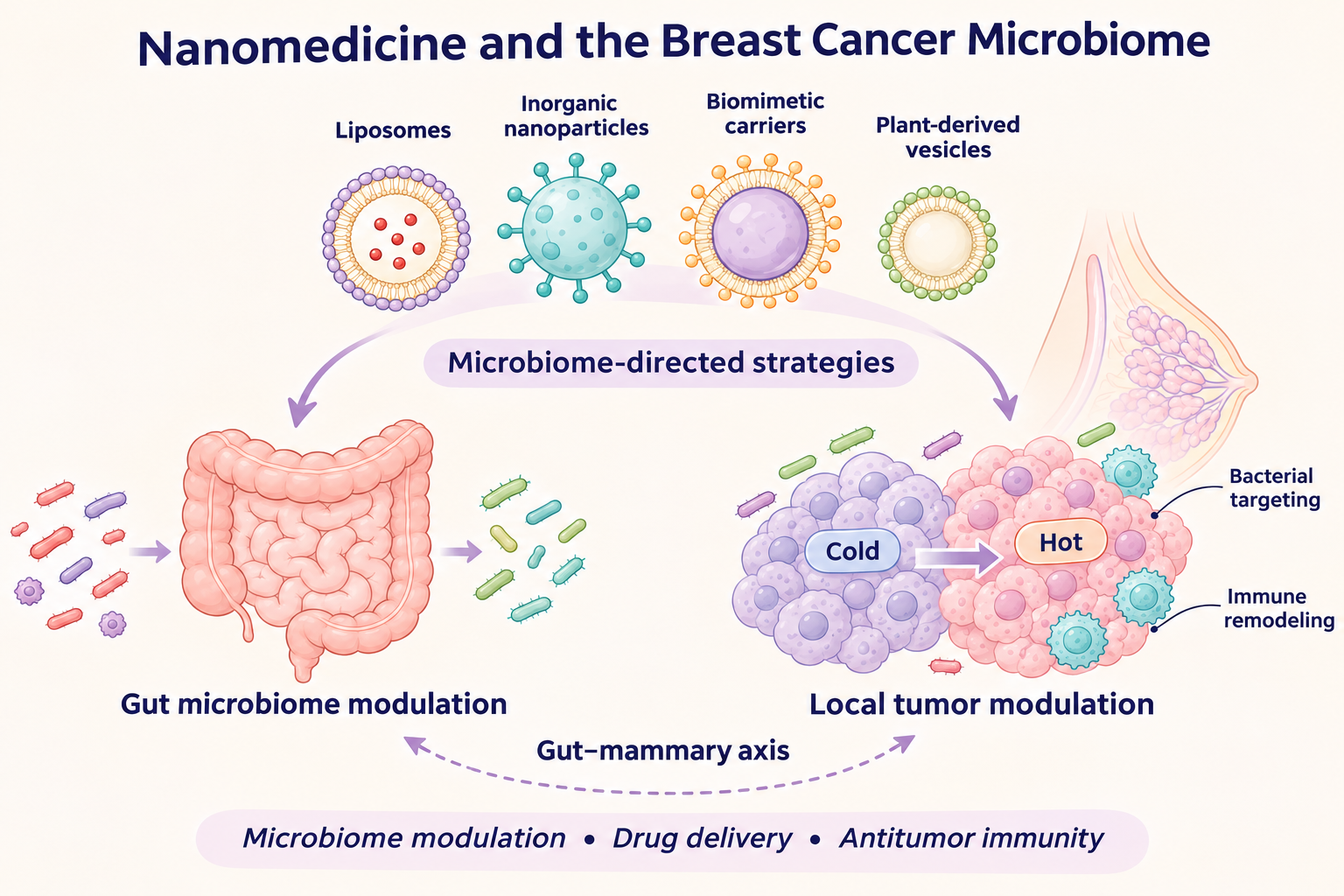
Breast tumors comprise interacting malignant, stromal, immune, and microbial compartments, while gut microbial communities can influence systemic immunity, drug metabolism, and therapeutic response. Emerging evidence therefore positions the microbiome as a potential modifier of breast cancer progression and treatment efficacy rather than merely a passive correlate of disease. Nanotechnology offers experimental approaches to couple tumor-directed drug delivery with selective manipulation of intratumoral or intestinal microbiota. Liposomal, lipid-based, inorganic, biomimetic, and biohybrid platforms have been used to reduce tumor-associated bacteria, alter microbial communities or metabolites, and modify antitumor immune responses. Several platforms further combine microbiota modulation with chemotherapy, immunotherapy, ferroptosis induction, or externally activated treatment. However, improved tumor control cannot necessarily be attributed to microbial modulation because many of these systems independently alter drug exposure, tumor-cell viability, oxidative stress, or immune activity. Evidence for microbiota dependence remains largely preclinical and is frequently derived from experimentally colonized or bacteria-enriched tumor models. Low microbial biomass, contamination risk, interpatient microbiome heterogeneity, methodological variability, ecological consequences of microbial depletion, manufacturing complexity, and the absence of clinical validation further constrain translation. This review critically evaluates microbiome-modulating nanoplatforms in breast cancer, distinguishes microbiota-associated from microbiota-dependent therapeutic effects, and defines the mechanistic, analytical, and clinical evidence needed to establish microbiome targeting as a viable component of precision breast cancer therapy
References
1. Mandapati A, Lukong KE. Triple negative breast cancer: approved treatment options and their mechanisms of action. J Cancer Res Clin Oncol. 2023;149(7):3701-3719. doi:10.1007/s00432-022-04189-6
2. Pont M, Marqués M, Sorolla A. Latest therapeutical approaches for triple-negative breast cancer: from preclinical to clinical research. Int J Mol Sci. 2024;25(24):13518. doi:10.3390/ijms252413518
3. Zhou Z, Zhou Q. Immunotherapy resistance in triple-negative breast cancer: molecular mechanisms, tumor microenvironment, and therapeutic implications. Front Oncol. 2025;15:1630464. doi:10.3389/fonc.2025.1630464
4. Nam AS, Chaligne R, Landau DA. Integrating genetic and non-genetic determinants of cancer evolution by single-cell multi-omics. Nat Rev Genet. 2021;22(1):3-18. doi:10.1038/s41576-020-0265-5
5. Zhang W, Xiang Y, Ren H, Liu Y, Wang Q, Ran M, et al. The tumor microbiome in cancer progression: mechanisms and therapeutic potential. Mol Cancer. 2025;24(1):195. doi:10.1186/s12943-025-02403-w
6. Zheng J, Chen H. Effects of intratumoral microbiota on tumorigenesis, anti-tumor immunity, and microbe-based cancer therapy. Front Oncol. 2024;14:1429722. doi:10.3389/fonc.2024.1429722
7. Coley WB. The treatment of malignant tumors by repeated inoculations of erysipelas. With a report of ten original cases. 1893. Clin Orthop Relat Res. 1991;(262):3-11. PMID: 1984929.
8. Carlson RD, Flickinger JC Jr, Snook AE. Talkin' toxins: from Coley's to modern cancer immunotherapy. Toxins (Basel). 2020;12(4):241. doi:10.3390/toxins12040241
9. Trivanović D, Pavelić K, Peršurić Ž. Fighting cancer with bacteria and their toxins. Int J Mol Sci. 2021;22(23):12980. doi:10.3390/ijms222312980
10. Torres MKDS, Pereira Neto GDS, Cayres Vallinoto IMV, Reis LO, Vallinoto ACR. The impact of oncogenic viruses on cancer development: a narrative review. Biology (Basel). 2025;14(7):797. doi:10.3390/biology14070797
11. Xiao Q, Liu Y, Li T, Wang C, He S, Zhai L, et al. Viral oncogenesis in cancer: from mechanisms to therapeutics. Signal Transduct Target Ther. 2025;10(1):151. doi:10.1038/s41392-025-02197-9
12. Eladwy RA, Vu HT, Shah R, Li CG, Chang D, Bhuyan DJ. The fight against the carcinogenic Epstein-Barr virus: gut microbiota, natural medicines, and beyond. Int J Mol Sci. 2023;24(2):1716. doi:10.3390/ijms24021716
13. Wang Z, Zhang T, Liu Y. Emerging technologies and current challenges in intratumoral microbiota research. Front Cell Infect Microbiol. 2026;15:1685862. doi:10.3389/fcimb.2025.1685862
14. Nejman D, Livyatan I, Fuks G, Gavert N, Zwang Y, Geller LT, et al. The human tumor microbiome is composed of tumor type-specific intracellular bacteria. Science. 2020;368(6494):973-980. doi:10.1126/science.aay9189
15. Xu Y, Wang M-C. The intratumoral microbiota in breast cancer: from basic research to clinical translation. Gut Microbes. 2025;17(1):2560695. doi:10.1080/19490976.2025.2560695
16. Lin A, Xiong M, Jiang A, Huang L, Wong HZH, Feng S, et al. The microbiome in cancer. iMeta. 2025;4(5):e70070. doi:10.1002/imt2.70070
17. Zhang J, You Z, Li X, Hu J, Li J, Jing Z. Harnessing intratumoral microbiota: new horizons in immune microenvironment and immunotherapy. J Transl Med. 2025;23:897. doi:10.1186/s12967-025-06916-2
18. Lombardo C, Fazio R, Sinagra M, Gattuso G, Longo F, Lombardo C, et al. Intratumoral microbiota: insights from anatomical, molecular, and clinical perspectives. J Pers Med. 2024;14(11):1083. doi:10.3390/jpm14111083
19. Galeano Niño JL, Wu H, LaCourse KD, Kempchinsky AG, Baryiames A, Barber B, et al. Effect of the intratumoral microbiota on spatial and cellular heterogeneity in cancer. Nature. 2022;611(7937):810-817. doi:10.1038/s41586-022-05435-0
20. Tan Q, Cao X, Zou F, Wang H, Xiong L, Deng S. Spatial heterogeneity of intratumoral microbiota: a new frontier in cancer immunotherapy resistance. Biomedicines. 2025;13(5):1261. doi:10.3390/biomedicines13051261
21. Ramadan YN, Alatawi MN, Albalawi AS, Hetta HF. Bacterial contributions to cancer development: mechanisms, dysbiosis, and cross-cancer associations. Infect Agent Cancer. 2026;21(1):11. doi:10.1186/s13027-025-00722-7
22. Tao YL, Wu XX, Wang JR, Liu M, Liu YN, Lian YQ, et al. The microbiome: regulating anti-tumor immunity. Front Immunol. 2026;17:1781872. doi:10.3389/fimmu.2026.1781872
23. Sabeel Z, Yang Z. Microbiome-targeted nanoplatforms and engineering approaches in breast cancer therapy. Mol Cancer. 2025;24(1):276. doi:10.1186/s12943-025-02456-x
24. Rad SK, Yeo KKL, Wu F, Li R, Nourmohammadi S, Tomita Y, et al. A systematic review and meta-analysis of 16S rRNA and Cancer Microbiome Atlas datasets to characterize microbiota signatures in normal breast, mastitis, and breast cancer. Microorganisms. 2025;13(2):467. doi:10.3390/microorganisms13020467
25. Urbaniak C, Cummins J, Brackstone M, Macklaim JM, Gloor GB, Baban CK, et al. Microbiota of human breast tissue. Appl Environ Microbiol. 2014;80(10):3007-3014. doi:10.1128/AEM.00242-14
26. Al-Ansari MM, Mahmood SM, Al-Alwan M. The human breast microbiome: from homeostasis to malignancy, mechanistic insights and therapeutic perspectives. Int J Mol Sci. 2026;27(11):4723. doi:10.3390/ijms27114723
27. Urbaniak C, Gloor GB, Brackstone M, Scott L, Tangney M, Reid G. The microbiota of breast tissue and its association with breast cancer. Appl Environ Microbiol. 2016;82(16):5039-5048. doi:10.1128/AEM.01235-16
28. Bose C, Uczkowski NG, Sukla K, Raval N, Haque MM, Zhang Y, et al. Breast cancer and microbiome: a systematic review highlighting challenges for clinical translation. BMC Womens Health. 2025;25(1):416. doi:10.1186/s12905-025-03843-8
29. Fu A, Yao B, Dong T, Chen Y, Yao J, Liu Y, et al. Tumor-resident intracellular microbiota promotes metastatic colonization in breast cancer. Cell. 2022;185(8):1356-1372.e26. doi:10.1016/j.cell.2022.02.027
30. Kang L, Chen H, He C, Li J. Effects of gut microbiota in breast cancer. Front Oncol. 2025;15:1617410. doi:10.3389/fonc.2025.1617410
31. Geller LT, Barzily-Rokni M, Danino T, Jonas OH, Shental N, Nejman D, et al. Potential role of intratumor bacteria in mediating tumor resistance to the chemotherapeutic drug gemcitabine. Science. 2017;357(6356):1156-1160. doi:10.1126/science.aah5043
32. Che C, Zhou Y, Chen L, Li S, Fan D, Lu Y, et al. The role of the microbiota in cancer drug resistance and emerging therapeutic strategies. Cancer Lett. 2026;642:218305. doi:10.1016/j.canlet.2026.218305
33. Xie M, Li X, Lau HCH, Yu J. The gut microbiota in cancer immunity and immunotherapy. Cell Mol Immunol. 2025;22(9):1012-1031. doi:10.1038/s41423-025-01326-2
34. Gradishar WJ, Tjulandin S, Davidson N, Shaw H, Desai N, Bhar P, et al. Phase III trial of nanoparticle albumin-bound paclitaxel compared with polyethylated castor oil-based paclitaxel in women with breast cancer. J Clin Oncol. 2005;23(31):7794-7803. doi:10.1200/JCO.2005.04.937
35. Giri PM, Banerjee A, Layek B. A recent review on cancer nanomedicine. Cancers (Basel). 2023;15(8):2256. doi:10.3390/cancers15082256
36. Dhiman R, Bazad N, Mukherjee R, Himanshu, Gunjan, Leal E, et al. Enhanced drug delivery with nanocarriers: a comprehensive review of recent advances in breast cancer detection and treatment. Discov Nano. 2024;19(1):143. doi:10.1186/s11671-024-04086-6
37. Bartusik-Aebisher D, Przygórzewska A, Woźnicki P, Aebisher D. Nanoparticles for photodynamic therapy of breast cancer: a review of recent studies. Molecules. 2025;30(7):1571. doi:10.3390/molecules30071571
38. Li T, Xiao D, Yin Y, Hu L. Research progress on nano-drug delivery systems for photothermal cancer therapy. Int J Nanomedicine. 2026;21:567551. doi:10.2147/IJN.S567551
39. Yang J, Wang J, Li J, Cui J. Nanotechnology-microbiota synergy in cancer immunotherapy. Crit Rev Oncol Hematol. 2026;217:105018. doi:10.1016/j.critrevonc.2025.105018
40. Zhang Y, Zhang H, Xu J, Xu Z, Lou J, Zheng Q, et al. Recent advances in nanomedicine for modulating intratumoral bacteria in cancer therapy. Mol Pharm. 2025;22(10):5767-5790. doi:10.1021/acs.molpharmaceut.5c00677
41. Mohapatra A, Mohanty A, Park IK. Inorganic nanomedicine-mediated ferroptosis: a synergistic approach to combined cancer therapies and immunotherapy. Cancers (Basel). 2024;16(18):3210. doi:10.3390/cancers16183210
42. Yin W, Chang J, Sun J, Zhang T, Zhao Y, Li Y, et al. Nanomedicine-mediated ferroptosis targeting strategies for synergistic cancer therapy. J Mater Chem B. 2023;11(6):1171-1190. doi:10.1039/D2TB02161G
43. Buchta Rosean C, Bostic RR, Ferey JCM, Feng TY, Azar FN, Tung KS, et al. Preexisting commensal dysbiosis is a host-intrinsic regulator of tissue inflammation and tumor cell dissemination in hormone receptor-positive breast cancer. Cancer Res. 2019;79(14):3662-3675. doi:10.1158/0008-5472.CAN-18-3464
44. Arnone AA, Ansley K, Heeke AL, Howard-McNatt M, Cook KL. Gut microbiota interact with breast cancer therapeutics to modulate efficacy. EMBO Mol Med. 2025;17(2):219-234. doi:10.1038/s44321-024-00185-0
45. Luu M, Riester Z, Baldrich A, Reichardt N, Yuille S, Busetti A, et al. Microbial short-chain fatty acids modulate CD8+ T cell responses and improve adoptive immunotherapy for cancer. Nat Commun. 2021;12(1):4077. doi:10.1038/s41467-021-24331-1
46. Liu H, Xiong X, Zhu W, Wang S, Huang W, Zhu G, et al. Gut microbial metabolites in cancer immunomodulation. Mol Cancer. 2026;25(1):8. doi:10.1186/s12943-025-02521-5
47. Guo H. Interactions between the tumor microbiota and breast cancer. Front Cell Infect Microbiol. 2025;14:1499203. doi:10.3389/fcimb.2024.1499203
48. Little A, Tangney M, Tunney MM, Buckley NE. Fusobacterium nucleatum: a novel immune modulator in breast cancer? Expert Rev Mol Med. 2023;25:e15. doi:10.1017/erm.2023.9
49. Li G, Sun Y, Huang Y, Lian J, Wu S, Luo D, et al. Fusobacterium nucleatum-derived small extracellular vesicles facilitate tumor growth and metastasis via TLR4 in breast cancer. BMC Cancer. 2023;23(1):473. doi:10.1186/s12885-023-10844-z
50. Huang Y, Guo Z, Zeng Z, Shang C, Zhang Y, Ran Z, et al. Fusobacterium nucleatum promotes metastasis of breast cancer via the miR-21-3p/FOXO3 axis. Front Oncol. 2025;15:1530269. doi:10.3389/fonc.2025.1530269
51. Parhi L, Alon-Maimon T, Sol A, Nejman D, Shhadeh A, Fainsod-Levi T, et al. Breast cancer colonization by Fusobacterium nucleatum accelerates tumor growth and metastatic progression. Nat Commun. 2020;11(1):3259. doi:10.1038/s41467-020-16967-2
52. Tingting Y, Xiaoling Z, Yu Z, Yan L, Yang L, Xueqin S, et al. Interaction of intratumoral microbiota with the tumor immune microenvironment and its impact on cancer progression. Front Oncol. 2025;15:1609889. doi:10.3389/fonc.2025.1609889
53. Xia F, Yi Q, Xu Z, Zhou Z, Tang H, Zhang K, et al. Microbial modulation as a game changer: boosting immunotherapy efficacy in breast cancer. Semin Cancer Biol. 2025;117:152-167. doi:10.1016/j.semcancer.2025.10.006
54. Pushalkar S, Hundeyin M, Daley D, Zambirinis CP, Kurz E, Mishra A, et al. The pancreatic cancer microbiome promotes oncogenesis by induction of innate and adaptive immune suppression. Cancer Discov. 2018;8(4):403-416. doi:10.1158/2159-8290.CD-17-1134
55. Routy B, Le Chatelier E, Derosa L, Duong CPM, Alou MT, Daillère R, et al. Gut microbiome influences efficacy of PD-1-based immunotherapy against epithelial tumors. Science. 2018;359(6371):91-97. doi:10.1126/science.aan3706
56. Liu Y, Ning H, Li Y, Li Y, Ma J. The microbiota in breast cancer: dysbiosis, microbial metabolites, and therapeutic implications. Am J Cancer Res. 2025;15(4):1384-1409. doi:10.62347/ZJCF2843
57. Sivan A, Corrales L, Hubert N, Williams JB, Aquino-Michaels K, Earley ZM, et al. Commensal Bifidobacterium promotes antitumor immunity and facilitates anti-PD-L1 efficacy. Science. 2015;350(6264):1084-1089. doi:10.1126/science.aac4255
58. Iida N, Dzutsev A, Stewart CA, Smith L, Bouladoux N, Weingarten RA, et al. Commensal bacteria control cancer response to therapy by modulating the tumor microenvironment. Science. 2013;342(6161):967-970. doi:10.1126/science.1240527
59. Yan J, Qian L, Chen S, Karekad MMA, Wu X, Xu M, et al. Gut microbiota-regulated tryptophan metabolism in breast cancer: mechanisms and therapeutic perspectives. Front Oncol. 2026;16:1765550. doi:10.3389/fonc.2026.1765550
60. Mikó E, Vida A, Kovács T, Ujlaki G, Trencsényi G, Márton J, et al. Lithocholic acid, a bacterial metabolite reduces breast cancer cell proliferation and aggressiveness. Biochim Biophys Acta Bioenerg. 2018;1859(9):958-974. doi:10.1016/j.bbabio.2018.04.002
61. Wang J, Xu D, Hu S, Zheng B, Chen Y, Pan T. The impact of microbiome on breast cancer and regulatory strategies. Microorganisms. 2026;14(1):75. doi:10.3390/microorganisms14010075
62. Arpaia N, Campbell C, Fan X, Dikiy S, van der Veeken J, deRoos P, et al. Metabolites produced by commensal bacteria promote peripheral regulatory T-cell generation. Nature. 2013;504(7480):451-455. doi:10.1038/nature12726
63. Rah B, Shafarin J, Janeeh AS, Rafiq R, Kurabi TMS, Muhammad JS, et al. Short-chain fatty acids modulate iron metabolism and induce oxidative stress and ferroptosis in breast cancer cells. J Biochem Mol Toxicol. 2026;40(3):e70771. doi:10.1002/jbt.70771
64. Wen J, Liang H, Zhao M, Xuan B, Meng X, Liu Y, et al. Harnessing the gut microbiome to modulate ferroptosis: a metabolic strategy for the treatment of digestive tract cancers. Front Immunol. 2025;16:1703964. doi:10.3389/fimmu.2025.1703964
65. Prajnamitra RP, Cheng YY, Beh CY, Lu CY, Lin JH, Ruan SC, et al. Depletion of gut microbiota improves the therapeutic efficacy of cancer nanomedicine. Theranostics. 2022;12(17):7390-7403. doi:10.7150/thno.73873
66. Xu Y, Zhu M, Zhao Y, Chai E, Wu M, Zhang M. Recent advances in gut microbiota-based nanotherapies for cancer treatment. Front Pharmacol. 2025;16:1617942. doi:10.3389/fphar.2025.1617942
67. Tang G, Millar EKA, Graham PH, Beretov J. Interaction between the breast tumor microenvironment and gut microbiome. Gut Microbes. 2025;17(1):2514136. doi:10.1080/19490976.2025.2514136
68. Zhou D, Li Y. Gut microbiota and tumor-associated macrophages: potential in tumor diagnosis and treatment. Gut Microbes. 2023;15(2):2276314. doi:10.1080/19490976.2023.2276314
69. Trejo J, Koegeboehn H, Faizuddin F, Logan R, Toutoungy M, Sheikh A, et al. Microbial modulation: unraveling the influence of gut microbiota on macrophage polarization in tumor microenvironments. Cells. 2026;15(2):136. doi:10.3390/cells15020136
70. Zhao LY, Mei JX, Yu G, Lei L, Zhang WH, Liu K, et al. Role of the gut microbiota in anticancer therapy: from molecular mechanisms to clinical applications. Signal Transduct Target Ther. 2023;8(1):201. doi:10.1038/s41392-023-01406-7
71. Jiang Y, Li Y. Nutrition intervention and microbiome modulation in the management of breast cancer. Nutrients. 2024;16(16):2644. doi:10.3390/nu16162644
72. Nobels A, van Marcke C, Jordan BF, Van Hul M, Cani PD. The gut microbiome and cancer: from tumorigenesis to therapy. Nat Metab. 2025;7(5):895-917. doi:10.1038/s42255-025-01287-w
73. Meena AS, Singh P, Shukla PK. Cancer and microbiome-targeted therapies. Int Rev Cell Mol Biol. 2025;395:99-132. doi:10.1016/bs.ircmb.2024.12.006
74. Elkrief A, Pidgeon R, Maleki Vareki S, Messaoudene M, Castagner B, Routy B. The gut microbiome as a target in cancer immunotherapy: opportunities and challenges for drug development. Nat Rev Drug Discov. 2025;24(9):685-704. doi:10.1038/s41573-025-01211-7
75. Xu K, Cai J, Xing J, Li X, Wu B, Zhu Z, et al. Broad-spectrum antibiotics associated gut microbiome disturbance impairs T cell immunity and promotes lung cancer metastasis: a retrospective study. BMC Cancer. 2022;22(1):1182. doi:10.1186/s12885-022-10307-x
76. Datta S. The conundrum of bacteria-specific antibiotics. J Antimicrob Chemother. 2023;78(6):1354-1358. doi:10.1093/jac/dkad130
77. Dethlefsen L, Relman DA. Incomplete recovery and individualized responses of the human distal gut microbiota to repeated antibiotic perturbation. Proc Natl Acad Sci U S A. 2011;108(Suppl 1):4554-4561. doi:10.1073/pnas.1000087107
78. Cern A, Skoczen SL, Snapp KS, Hod A, Zilbersheid D, Bavli Y, et al. Nano-mupirocin as tumor-targeted antibiotic: physicochemical, immunotoxicological and pharmacokinetic characterization, and effect on gut microbiome. J Control Release. 2024;373:713-726. doi:10.1016/j.jconrel.2024.07.045
79. Xiao S, Shi H, Zhang Y, Fan Y, Wang L, Xiang L, et al. Bacteria-driven hypoxia targeting delivery of chemotherapeutic drug proving outcome of breast cancer. J Nanobiotechnology. 2022;20(1):178. doi:10.1186/s12951-022-01373-1
80. Harbeck N, Saupe S, Jäger E, Schmidt M, Kreienberg R, Müller L, et al. A randomized phase III study evaluating pegylated liposomal doxorubicin versus capecitabine as first-line therapy for metastatic breast cancer: results of the PELICAN study. Breast Cancer Res Treat. 2017;161(1):63-72. doi:10.1007/s10549-016-4033-3
81. Garbati P, Picco C, Magrassi R, Signorello P, Cacopardo L, Dalla Serra M, et al. Targeting the gut: a systematic review of specific drug nanocarriers. Pharmaceutics. 2024;16(3):431. doi:10.3390/pharmaceutics16030431
82. Ghosh R, De M. Liposome-based antibacterial delivery: an emergent approach to combat bacterial infections. ACS Omega. 2023;8(39):35442-35451. doi:10.1021/acsomega.3c04893
83. Geng S, Guo P, Li X, Shi Y, Wang J, Cao M, et al. Biomimetic nanovehicle-enabled targeted depletion of intratumoral Fusobacterium nucleatum synergizes with PD-L1 blockade against breast cancer. ACS Nano. 2024;18(12):8971-8987. doi:10.1021/acsnano.3c12687
84. Torres J, Valenzuela Oses JK, Rabasco-Álvarez AM, González-Rodríguez ML, García MC. Innovations in cancer therapy: endogenous stimuli-responsive liposomes as advanced nanocarriers. Pharmaceutics. 2025;17(2):245. doi:10.3390/pharmaceutics17020245
85. Gao J, Tang L, Fu C, Cao Y, Liu H, Yin Y, et al. A nano-strategy for advanced triple-negative breast cancer therapy by regulating intratumoral microbiota. Nano Lett. 2025;25(15):6134-6144. doi:10.1021/acs.nanolett.5c00298
86. Chen L, Shen J, Kang Z, Zhang Z, Zheng Z, Zhang L, et al. Fusobacterium nucleatum-mimicking nanovehicles to overcome chemoresistance for breast cancer treatment by eliminating tumor-colonizing bacteria. Chem. 2024;10(6):1783-1803. doi:10.1016/j.chempr.2024.01.030
87. Xi J, Wang Y, Gao X, Huang Y, Chen J, Chen Y, et al. Reverse intratumor bacteria-induced gemcitabine resistance with carbon nanozymes for enhanced tumor catalytic-chemo therapy. Nano Today. 2022;43:101395. doi:10.1016/j.nantod.2022.101395
88. Cern A, Bavli Y, Hod A, Zilbersheid D, Mushtaq S, Michael-Gayego A, et al. Therapeutic potential of injectable nano-mupirocin liposomes for infections involving multidrug-resistant bacteria. Pharmaceutics. 2021;13(12):2186. doi:10.3390/pharmaceutics13122186
89. Fathi F, Machado TOX, de A C Kodel H, Portugal I, Ferreira IO, Zielinska A, et al. Solid lipid nanoparticles (SLN) and nanostructured lipid carriers (NLC) for the delivery of bioactives sourced from plants: part II - applications and preclinical advancements. Expert Opin Drug Deliv. 2024;21(10):1491-1499. doi:10.1080/17425247.2024.2410949
90. Mitchell MJ, Billingsley MM, Haley RM, Wechsler ME, Peppas NA, Langer R. Engineering precision nanoparticles for drug delivery. Nat Rev Drug Discov. 2021;20(2):101-124. doi:10.1038/s41573-020-0090-8
91. Zhang L, Chan JM, Gu FX, Rhee JW, Wang AZ, Radovic-Moreno AF, et al. Self-assembled lipid-polymer hybrid nanoparticles: a robust drug delivery platform. ACS Nano. 2008;2(8):1696-1702. doi:10.1021/nn800275r
92. Huang Y, Zhang Z, Xue L, Zhang X, He C. Advances in nanomedicine-mediated modulation of the microbiome for cancer therapy. Int J Nanomedicine. 2025;20:13079-13096. doi:10.2147/IJN.S558099
93. Ahsan A, Thomas N, Barnes TJ, Subramaniam S, Loh TC, Joyce P, et al. Lipid nanocarriers-enabled delivery of antibiotics and antimicrobial adjuvants to overcome bacterial biofilms. Pharmaceutics. 2024;16(3):396. doi:10.3390/pharmaceutics16030396
94. Waheed I, Ali A, Tabassum H, Khatoon N, Lai WF, Zhou X. Lipid-based nanoparticles as drug delivery carriers for cancer therapy. Front Oncol. 2024;14:1296091. doi:10.3389/fonc.2024.1296091
95. Jiang X, Xu Y, Shen B, Ji Y, Shi L, Gao J, et al. Boosting oral chemotherapy efficacy and ameliorating intestinal dysbiosis via a microfluidic-engineered RGD-targeted nanoplatform against breast cancer. Mol Pharm. 2026;23(1):409-425. doi:10.1021/acs.molpharmaceut.5c01256
96. Kalyane D, Choudhary D, Polaka S, Goykar H, Karanwad T, Rajpoot K, et al. Reactive oxygen nano-generators for cancer therapy. Prog Mater Sci. 2022;130:100974. doi:10.1016/j.pmatsci.2022.100974
97. Rajaram J, Kuthati Y. Metal peroxide nanoparticles for modulating the tumor microenvironment: current status and recent prospects. Cancers (Basel). 2024;16(21):3581. doi:10.3390/cancers16213581
98. Liang R, Xie J, Li J, Wang K, Liu L, Gao Y, et al. Liposomes-coated gold nanocages with antigens and adjuvants targeted delivery to dendritic cells for enhancing antitumor immune response. Biomaterials. 2017;149:41-50. doi:10.1016/j.biomaterials.2017.09.029
99. Zeng B, Pian L, Liu Y, Wang S, Wang N, Liu C, et al. Preparation and effects of functionalized liposomes targeting breast cancer tumors using chemotherapy, phototherapy, and immunotherapy. J Nanobiotechnology. 2024;22(1):558. doi:10.1186/s12951-024-02838-1
100. Sun Z, Xu M, Nie L, Wang C, Wu J, Wang W, et al. pH-responsive sparfloxacin/Fe3+ nanoparticles eradicate intratumoral bacteria and activate ferroptosis for enhanced antitumor immunotherapy in breast cancer. Biomaterials. 2026;328:123804. doi:10.1016/j.biomaterials.2025.123804
101. Qi Y, Qiu Y, Zhang Y, Zhang L, Xiong H, Yao J. Ferroptosis-based nano-assembly enhanced breast cancer therapy by inhibiting intratumor bacteria. Acta Pharm Sin B. 2026;16(3):1733-1746. doi:10.1016/j.apsb.2026.01.027
102. Li S, Gao Y, Jiang D, Wu X, Feng Y, Chen F, et al. Ultrasound-activated nanoplatform counteracts triple-negative breast cancer via remodeling intratumoral microbiota-metabolism and inducing ferroptosis. Biomater Res. 2026;30:0317. doi:10.34133/bmr.0317
103. Hirsch LR, Stafford RJ, Bankson JA, Sershen SR, Rivera B, Price RE, et al. Nanoshell-mediated near-infrared thermal therapy of tumors under magnetic resonance guidance. Proc Natl Acad Sci U S A. 2003;100(23):13549-13554. doi:10.1073/pnas.2232479100
104. Liu S, Phillips S, Northrup S, Levi N. The impact of silver nanoparticle-induced photothermal therapy and its augmentation of hyperthermia on breast cancer cells harboring intracellular bacteria. Pharmaceutics. 2023;15(10):2466. doi:10.3390/pharmaceutics15102466
105. Liu Q, Yang Y, Pan M, Shi K, Mo D, Li Y, et al. Camptothecin multifunctional nanoparticles effectively achieve a balance between the efficacy of breast cancer treatment and the preservation of intestinal homeostasis. Bioact Mater. 2024;41:413-426. doi:10.1016/j.bioactmat.2024.07.032
106. Carrasco-Maure K, González-Olivares M, Lobos-González L. DNA aptamers: reloaded tools for breast cancer therapeutics. Cancers (Basel). 2026;18(5):766. doi:10.3390/cancers18050766
107. Wang Y, Fu X, Zhu Y, Lin M, Cai R, Zhu Y, et al. An intratumor bacteria-targeted DNA nanocarrier for multifaceted tumor microenvironment intervention. Mater Today Bio. 2024;27:101144. doi:10.1016/j.mtbio.2024.101144
108. Mehrabi MR, Soltani M, Chiani M, Raahemifar K, Farhangi A. Nanomedicine: new frontiers in fighting microbial infections. Nanomaterials (Basel). 2023;13(3):483. doi:10.3390/nano13030483
109. Xiao S, Mu M, Feng C, Pan S, Chen N. The application of bacteria-nanomaterial hybrids in antitumor therapy. J Nanobiotechnology. 2024;22(1):536. doi:10.1186/s12951-024-02793-x
110. Yang R, Chen L, Wang Y, Zhang L, Zheng X, Yang Y, et al. Tumor microenvironment responsive metal nanoparticles in cancer immunotherapy. Front Immunol. 2023;14:1237361. doi:10.3389/fimmu.2023.1237361
111. Zhang Y, Li X, Tian C, Zhong C, Li W, Shang X, et al. Engineered bacteria-mediated delivery of scorpion venom peptide AGAP for targeted breast cancer therapy. Curr Microbiol. 2025;82(7):323. doi:10.1007/s00284-025-04289-9
112. Ye Z, Liang L, Lu H, Shen Y, Zhou W, Li Y. Nanotechnology-employed bacteria-based delivery strategy for enhanced anticancer therapy. Int J Nanomedicine. 2021;16:8069-8086. doi:10.2147/IJN.S329855
113. Pang Y, Kang R, Shen Z, Luo L, Yu S, Liu F, et al. Self-lytic nano-bacterial biohybrid reprograms intratumoral microbiome-immune interactions for cancer immunotherapy. J Control Release. 2026;390:114511. doi:10.1016/j.jconrel.2025.114511
114. Li M, Li T, Liu Y, Han D, Wu S, Gong J. Dual-targeted biomimetic hybrid nanovesicles for tumor microenvironment reprogramming and intratumoral bacteria eradication in triple-negative breast cancer. Adv Funct Mater. 2026;36(5):e10695. doi:10.1002/adfm.202510695
115. Guo J, Zhu P, Li J, Xu L, Tang Y, Liu X, et al. Fusobacterium nucleatum promotes PD-L1 expression in cancer cells to evade CD8+ T cell killing in breast cancer. Hum Immunol. 2024;85(6):111168. doi:10.1016/j.humimm.2024.111168
116. Zhou X, Pan X, Shen Z, Kang R, Pang Y, Luo L, et al. Eliminating intratumoral bacteria with cGAS-STING-activating nanodrug-bacteria biohybrids potentiates cancer immunotherapy. Biomaterials. 2026;325:123629. doi:10.1016/j.biomaterials.2025.123629
117. Yang L, Hu Q, Huang T. Breast cancer treatment strategies targeting the tumor microenvironment: how to convert "cold" tumors to "hot" tumors. Int J Mol Sci. 2024;25(13):7208. doi:10.3390/ijms25137208
118. Liu YT, Wang YL, Wang S, Li JJ, He W, Fan XJ, et al. Turning cold tumors into hot tumors to ignite immunotherapy. Mol Cancer. 2025;24(1):254. doi:10.1186/s12943-025-02477-6
119. Liu X, Sun M, Pu F, Ren J, Qu X. Transforming intratumor bacteria into immunopotentiators to reverse cold tumors for enhanced immuno-chemodynamic therapy of triple-negative breast cancer. J Am Chem Soc. 2023;145(48):26296-26307. doi:10.1021/jacs.3c09472
120. Zhang X, Fei G, Xiujia S, Ganesan K, Chen J. Natural compound-nanoparticle therapies for breast cancer: a review from 2018-2025. Phytomedicine. 2026;150:157652. doi:10.1016/j.phymed.2025.157652
121. Chen Q, Li Q, Liang Y, Zu M, Chen N, Canup BSB, et al. Natural exosome-like nanovesicles from edible tea flowers suppress metastatic breast cancer via ROS generation and microbiota modulation. Acta Pharm Sin B. 2022;12(2):907-923. doi:10.1016/j.apsb.2021.08.016
122. Yang M, Guo J, Li J, Wang S, Sun Y, Liu Y, et al. Platycodon grandiflorum-derived extracellular vesicles suppress triple-negative breast cancer growth by reversing the immunosuppressive tumor microenvironment and modulating the gut microbiota. J Nanobiotechnology. 2025;23(1):92. doi:10.1186/s12951-025-03139-x
123. Sichetti M, Giuseffi M, Giglio E, Marino G, Mecca M. Effect of natural polyphenols on breast cancer chemoprevention and treatment. Mol Nutr Food Res. 2025;69(16):e70055. doi:10.1002/mnfr.70055
124. Chen Q, Zu M, Gong H, Ma Y, Sun J, Ran S, et al. Tea leaf-derived exosome-like nanotherapeutics retard breast tumor growth by pro-apoptosis and microbiota modulation. J Nanobiotechnology. 2023;21(1):6. doi:10.1186/s12951-022-01755-5
125. Yao Y, Zhu Y, Chen K, Chen J, Li Y, Li D, et al. Microbiota in cancer: current understandings and future perspectives. Signal Transduct Target Ther. 2026;11(1):39. doi:10.1038/s41392-025-02335-3
126. Xu X, Dong Q, Zhao Y, Yang J, Yang K, Fu P, et al. Harnessing nanochaperone-triggered ferritinophagy for targeted protein degradation and breast cancer therapy. Chem Eng J. 2025;525:169802. doi:10.1016/j.cej.2025.169802
127. Wang X, Wang Y, Guo C, Guo R, Zuo W, Liu C, et al. Targeted depletion of intratumoral bacteria using PEGylated metronidazole to augment cancer treatment efficacy. Biomaterials. 2026;327:123772. doi:10.1016/j.biomaterials.2025.123772
128. Zhang J, Wan S, Zhou H, Du J, Li Y, Zhu H, et al. Programmed nanocloak of commensal bacteria-derived nanovesicles amplify strong immunoreactivity against tumor growth and metastatic progression. ACS Nano. 2024;18(13):9613-9626. doi:10.1021/acsnano.3c13194
129. Gerbec ZJ, Serapio-Palacios A, Metcalfe-Roach A, Krekhno Z, Bar-Yoseph H, Woodward SE, et al. Identification of intratumoral bacteria that enhance breast tumor metastasis. mBio. 2025;16(3):e03595-24. doi:10.1128/mbio.03595-24
130. Hou K, Wu ZX, Chen XY, Wang JQ, Zhang D, Xiao C, et al. Microbiota in health and diseases. Signal Transduct Target Ther. 2022;7(1):135. doi:10.1038/s41392-022-00974-4
131. Ratiner K, Ciocan D, Abdeen SK, Elinav E. Utilization of the microbiome in personalized medicine. Nat Rev Microbiol. 2024;22(5):291-308. doi:10.1038/s41579-023-00998-9
132. Arıkan M, Muth T. Integrated multi-omics analyses of microbial communities: a review of the current state and future directions. Mol Omics. 2023;19(8):607-623. doi:10.1039/D3MO00089C
133. Cho YS, Han K, Xu J, Moon JJ. Novel strategies for modulating the gut microbiome for cancer therapy. Adv Drug Deliv Rev. 2024;210:115332. doi:10.1016/j.addr.2024.115332
134. Sandbhor P, Palkar P, Bhat S, John G, Goda JS. Nanomedicine as a multimodal therapeutic paradigm against cancer: on the way forward in advancing precision therapy. Nanoscale. 2024;16(13):6330-6364. doi:10.1039/D3NR06131K
135. Kumar B, Lorusso E, Fosso B, Pesole G. A comprehensive overview of microbiome data in the light of machine learning applications: categorization, accessibility, and future directions. Front Microbiol. 2024;15:1343572. doi:10.3389/fmicb.2024.1343572
136. Porcari S, Mullish BH, Asnicar F, Ng SC, Zhao L, Hansen R, et al. International consensus statement on microbiome testing in clinical practice. Lancet Gastroenterol Hepatol. 2025;10(2):154-167. doi:10.1016/S2468-1253(24)00311-X
137. Rodriguez J, Hassani Z, Alves Costa Silva C, Betsou F, Carraturo F, Fasano A, et al. State of the art and the future of microbiome-based biomarkers: a multidisciplinary Delphi consensus. Lancet Microbe. 2025;6(2):100948. doi:10.1016/j.lanmic.2024.07.011
138. Ciernikova S, Sevcikova A, Mladosievicova B, Mego M. Microbiome in cancer development and treatment. Microorganisms. 2023;12(1):24. doi:10.3390/microorganisms12010024
139. Jimonet P, Druart C, Blanquet-Diot S, Boucinha L, Kourula S, Le Vacon F, et al. Gut microbiome integration in drug discovery and development of small molecules. Drug Metab Dispos. 2024;52(4):274-287. doi:10.1124/dmd.123.001605
140. Salter SJ, Cox MJ, Turek EM, Calus ST, Cookson WO, Moffatt MF, et al. Reagent and laboratory contamination can critically impact sequence-based microbiome analyses. BMC Biol. 2014;12:87. doi:10.1186/s12915-014-0087-z
141. Ross FC, Patangia D, Grimaud G, Lavelle A, Dempsey EM, Ross RP, et al. The interplay between diet and the gut microbiome: implications for health and disease. Nat Rev Microbiol. 2024;22(11):671-686. doi:10.1038/s41579-024-01068-4
142. DeFilipp Z, Bloom PP, Torres Soto M, Mansour MK, Sater MRA, Huntley MH, et al. Drug-resistant E. coli bacteremia transmitted by fecal microbiota transplant. N Engl J Med. 2019;381(21):2043-2050. doi:10.1056/NEJMoa1910437
143. Fehily SR, Basnayake C, Wright EK, Yao CK, Godsell J, Gibson PR, et al. Probiotics: are they beneficial? Intern Med J. 2024;54(6):861-870. doi:10.1111/imj.16388
144. Joyce P, Allen CJ, Alonso MJ, Ashford M, Bradbury MS, Germain M, et al. A translational framework to DELIVER nanomedicines to the clinic. Nat Nanotechnol. 2024;19(11):1597-1611. doi:10.1038/s41565-024-01754-7
145. Microbiome Therapeutics Innovation Group, Barberio D. Navigating regulatory and analytical challenges in live biotherapeutic product development and manufacturing. Front Microbiomes. 2024;3:1441290. doi:10.3389/frmbi.2024.1441290
146. Baruch EN, Youngster I, Ben-Betzalel G, Ortenberg R, Lahat A, Katz L, et al. Fecal microbiota transplant promotes response in immunotherapy-refractory melanoma patients. Science. 2021;371(6529):602-609. doi:10.1126/science.abb5920
147. Gunjur A, Shao Y, Rozday T, Klein O, Mu A, Haak BW, et al. A gut microbial signature for combination immune checkpoint blockade across cancer types. Nat Med. 2024;30:797-809. doi:10.1038/s41591-024-02823-z
148. Zhou Y, Jiang M, Shen K, He T, Zhou S, Shao A, et al. Optimizing breast cancer chemotherapy by harnessing gut microbiota with insights from artificial intelligence. NPJ Biofilms Microbiomes. 2025;11(1):198. doi:10.1038/s41522-025-00825-4
149. Bendani H, Boumajdi N, Belyamani L, Ibrahimi A. Revolutionizing breast cancer immunotherapy by integrating AI and nanotechnology approaches: review of current applications and future directions. Bioelectron Med. 2025;11(1):13. doi:10.1186/s42234-025-00173-w
150. Park D, Ahn KO, Jeong KC, Choi Y. Polypyrrole-based nanotheranostics for activatable fluorescence imaging and chemo/photothermal dual therapy of triple-negative breast cancer. Nanotechnology. 2016;27(18):185102. doi:10.1088/0957-4484/27/18/185102
151. Deng L, Cai X, Sheng D, Yang Y, Strohm EM, Wang Z, et al. A laser-activated biocompatible theranostic nanoagent for targeted multimodal imaging and photothermal therapy. Theranostics. 2017;7(18):4410-4423. doi:10.7150/thno.21283
152. Song WF, Zheng D, Zeng SM, Zeng X, Zhang XZ. Targeting to tumor-harbored bacteria for precision tumor therapy. ACS Nano. 2022;16(10):17402-17413. doi:10.1021/acsnano.2c08555
Published
How to Cite
Issue
Section
License
Copyright (c) 2026 Akanksha Pawar, Muskan Leharwani, Garima Gupta, Khang Wen Goh, Ajay Sharma, Amirhossein Sahebkar, Prashant Kesharwani

This work is licensed under a Creative Commons Attribution 4.0 International License.
Copyright
Authors publishing in Cancer Biome and Targeted Therapy retain full copyright of their work. By submitting a manuscript, authors grant the publisher (GCINC Press) a non-exclusive license to publish, distribute, and archive the article, and to identify itself as the original publisher.
License
All articles are published open access under the terms of the Creative Commons Attribution 4.0 International License (CC BY 4.0).
https://creativecommons.org/licenses/by/4.0/. This license permits unrestricted use, distribution, reproduction, and adaptation in any medium, including for commercial purposes, provided that:
- Proper attribution is given to the original author(s) and source,
- A link to the license is provided, and
- Any changes made are clearly indicated.
Author Rights
Authors retain the right to:
- Use their article in future works (e.g., books, theses, lectures)
- Share and archive the final published version on institutional repositories or personal websites
- Adapt or translate their work, or authorize others to do so, with proper citation
Reuse by Third Parties
Content is licensed under the Creative Commons Attribution 4.0 International License (CC BY 4.0). Third parties may copy, redistribute, remix, transform, and build upon the material for any purpose, including commercial use, provided that appropriate credit is given to the original author(s).
Archiving and Preservation
All articles are made freely available immediately upon publication, without embargo. Cancer Biome and Targeted Therapy is hosted on the Open Journal Systems (OJS) platform, developed by the Public Knowledge Project (PKP). The journal participates in long-term digital preservation through the PKP Preservation Network (PKP PN) using the LOCKSS system. Authors are encouraged to self-archive in institutional repositories, disciplinary archives, and preprint servers in accordance with the license terms.