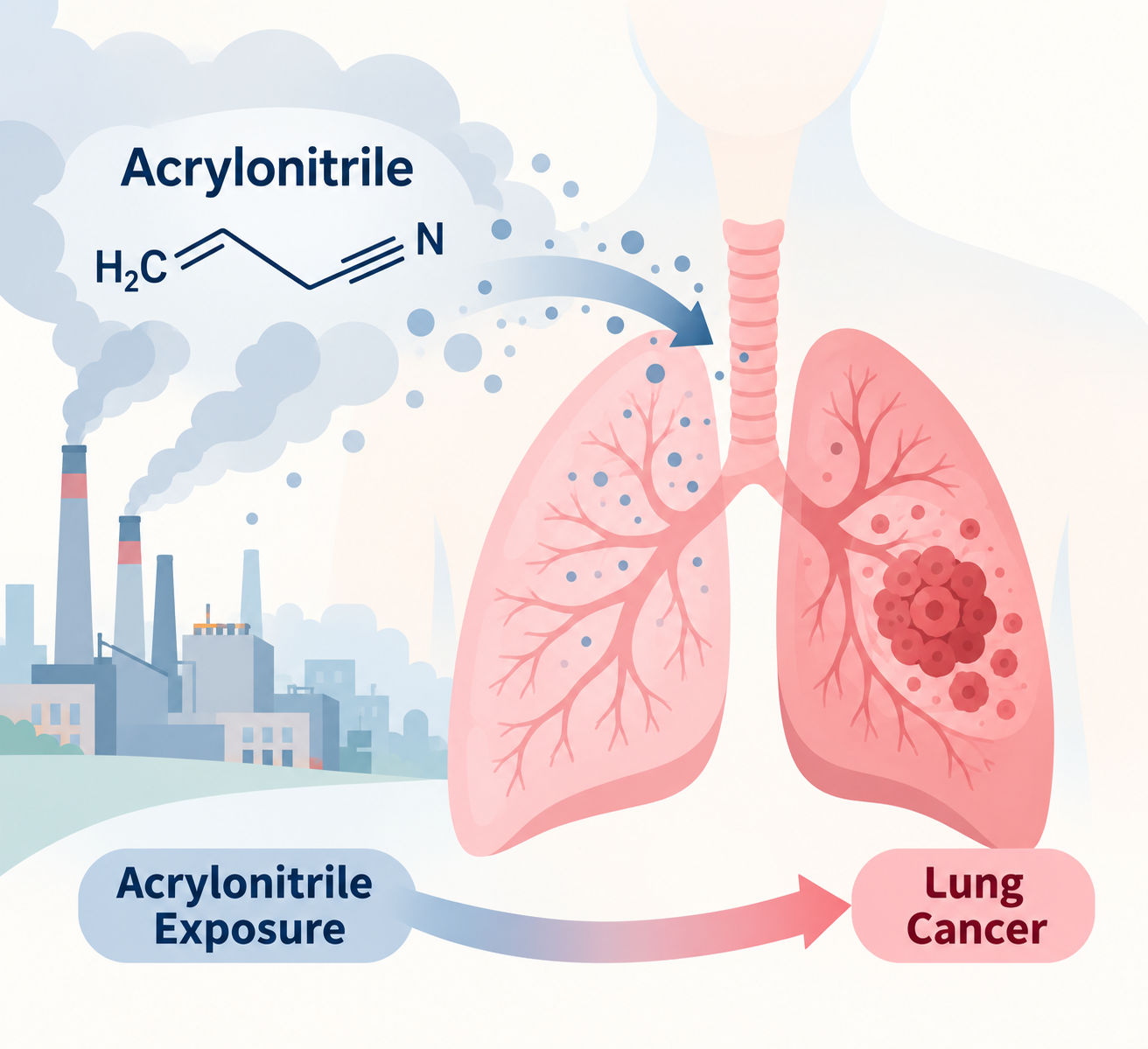
Integrative Network Toxicology and Multi-Omics Analysis Identifies Candidate Molecular Pathways Linking Acrylonitrile Exposure to Lung Cancer
DOI:
https://doi.org/10.66505/cbtt.v1i4.58Keywords:
Acrylonitrile, lung cancer, environmental toxicology, network toxicology, machine learning, transcriptomics, metabolomics, molecular dockingAbstract
Background: Acrylonitrile (AN) is an industrial chemical and environmental pollutant with recognized carcinogenic potential. However, the molecular pathways potentially linking AN exposure to lung cancer remain incompletely characterized.
Methods: We integrated network toxicology, machine learning, SHapley Additive exPlanations (SHAP), molecular docking and dynamics simulations, and transcriptomic–metabolomic profiling to identify candidate pathways associated with AN exposure and lung cancer.
Results: The intersection of predicted AN-associated targets, lung cancer-related genes, and tumor-associated differentially expressed genes identified 103 candidate genes. Enrichment analyses highlighted inflammatory and chemokine signaling, NF-κB, MAPK, and calcium signaling. Complementary machine-learning approaches prioritized EZH2, PPARG, PARP1, CXCR2, and EGFR. For tumor-versus-normal classification, the five-gene logistic regression model yielded descriptive areas under the receiver operating characteristic curve of 0.925 in the training dataset and 0.846 in the evaluation dataset. Molecular simulations generated hypotheses concerning potential AN interactions with EZH2 and EGFR. Separately, transcriptomic and metabolomic profiling of AN-exposed A549 cells identified alterations in xenobiotic metabolism, inflammatory signaling, and carbohydrate and lipid metabolism.
Conclusions: These complementary analyses identify candidate molecular pathways at the intersection of AN toxicology and lung cancer biology. Because the computational analyses primarily used existing lung cancer datasets and experimental profiling was restricted to a single cancer cell line, the findings do not establish AN-specific causal mechanisms or clinically validated biomarkers. Exposure-controlled studies in additional pulmonary models and human populations are needed to evaluate the proposed pathways and their translational relevance.
References
1. Wang S, Xing G, Li F, Yang B, Zhang Y, Aschner M, et al. Fasting enhances the acute toxicity of acrylonitrile in mice via induction of CYP2E1. Toxics. 2022;10(6):337. doi:10.3390/toxics10060337
2. Thier R, Lewalter J, Bolt HM. Species differences in acrylonitrile metabolism and toxicity between experimental animals and humans based on observations in human accidental poisonings. Arch Toxicol. 2000;74(4-5):184-189. doi:10.1007/s002040000109
3. Pu X, Kamendulis LM, Klaunig JE. Acrylonitrile-induced oxidative stress and oxidative DNA damage in male Sprague-Dawley rats. Toxicol Sci. 2009;111(1):64-71. doi:10.1093/toxsci/kfp133
4. Albertini RJ, Kirman CR, Strother DE. Acrylonitrile's genotoxicity profile: mutagenicity in search of an underlying molecular mechanism. Crit Rev Toxicol. 2023;53(2):69-116. doi:10.1080/10408444.2023.2179912
5. Scarselli A, Porzio A, Marinaccio A. Evaluation of occupational exposure risk experienced by a cohort of workers exposed to acrylonitrile using a register-based information system. Ann Work Expo Health. 2025;69(6):602-614. doi:10.1093/annweh/wxaf021
6. Marsh GM, Youk AO, Collins JJ. Reevaluation of lung cancer risk in the acrylonitrile cohort study of the National Cancer Institute and the National Institute for Occupational Safety and Health. Scand J Work Environ Health. 2001;27(1):5-13. doi:10.5271/sjweh.581
7. Alexander DD, Pastula ST, Riordan AS. Epidemiology of lung cancer among acrylonitrile-exposed study populations: a meta-analysis. Regul Toxicol Pharmacol. 2021;122:104896. doi:10.1016/j.yrtph.2021.104896
8. De Jesús VR, Zhang L, Bhandari D, Zhu W, Chang JT, Blount BC. Characterization of acrylonitrile exposure in the United States based on urinary n-acetyl-S-(2-cyanoethyl)-L-cysteine (2CYEMA): NHANES 2011-2016. J Expo Sci Environ Epidemiol. 2021;31(2):377-385. doi:10.1038/s41370-020-00286-1
9. Keil A, Haber G, Graubard B, Stewart PA, Silverman D, Koutros S. Estimating impacts of reducing acrylonitrile exposure on lung cancer mortality in an occupational cohort with the parametric g-formula. Occup Environ Med. 2024;81(5):225-231. doi:10.1136/oemed-2024-109532
10. Zhao Q, Zhao Z, Du K. Exploring the association between air pollutants and non-small cell lung cancer using network toxicology and machine learning. Discov Oncol. 2025;16(1):2327. doi:10.1007/s12672-025-04143-1
11. Wang Z, Wang C, Wan C, Xiang S, Yao J, Sun W, et al. Exploring the mechanisms of Benzo[a]pyrene-induced lung adenocarcinoma based on network toxicology and machine learning. BMC Pharmacol Toxicol. 2025;27(1):19. doi:10.1186/s40360-025-01064-1
12. Kobets T, Iatropoulos MJ, Williams GM. Acrylonitrile induction of rodent neoplasia: potential mechanism of action and relevance to humans. Toxicol Res Appl. 2022;6:1-33. doi:10.1177/23978473211055363
13. Yan M, Yang J, Zhu H, Zou Q, Zhao H, Sun H. Volatile organic compound exposure in relation to lung cancer: insights into mechanisms of action through metabolomics. J Hazard Mater. 2024;480:135856. doi:10.1016/j.jhazmat.2024.135856
14. Stayner LT, Carreón-Valencia T, Demers PA, Fritz JM, Sim MR, Stewart P, et al. Carcinogenicity of talc and acrylonitrile. Lancet Oncol. 2024;25(8):962-963. doi:10.1016/S1470-2045(24)00384-X
15. Toussaint PA, Leiser F, Thiebes S, Schlesner M, Brors B, Sunyaev A. Explainable artificial intelligence for omics data: a systematic mapping study. Brief Bioinform. 2024;25(1):bbad453. doi:10.1093/bib/bbad453
16. Zhang S, You X, Zheng Y, Shen Y, Xiong X, Sun Y. The UBE2C/CDH1/DEPTOR axis is an oncogene and tumor suppressor cascade in lung cancer cells. J Clin Invest. 2023;133(4):e162434. doi:10.1172/JCI162434
17. Youness RA, Elemam NM, Abdelhamid AM, Mohamed AH, Elsherbiny LM, Ramzy A, et al. Macrophage migration inhibitory factor (MIF) and the tumor ecosystem: a tale of inflammation, immune escape, and tumor growth. Front Immunol. 2025;16:1636839. doi:10.3389/fimmu.2025.1636839
18. Wang K, Li J, Zhang H, Ma H, Cui HY, Ju HQ, et al. Tobacco smoking rewires cell metabolism by inducing GAPDH succinylation to promote lung cancer progression. Cancer Res. 2025;85(15):2838-2857. doi:10.1158/0008-5472.CAN-24-3525
19. Zuo B, Wang L, Li X, Li X, Wang J, Xiong Y, et al. Abnormal low expression of SFTPC promotes the proliferation of lung adenocarcinoma by enhancing PI3K/AKT/mTOR signaling transduction. Aging (Albany NY). 2023;15(21):12451-12475. doi:10.18632/aging.205191
20. Sugiyama K, Chau I. Claudins as diagnostic tools and therapeutic targets-glimpse of the horizon. Cancer Treat Rev. 2025;133:102888. doi:10.1016/j.ctrv.2025.102888
21. Han G, Sinjab A, Rahal Z, Lynch AM, Treekitkarnmongkol W, Liu Y, et al. An atlas of epithelial cell states and plasticity in lung adenocarcinoma. Nature. 2024;627(8004):656-663. doi:10.1038/s41586-024-07113-9
22. Halder S, Basu S, Lall SP, Ganti AK, Batra SK, Seshacharyulu P. Targeting the EGFR signaling pathway in cancer therapy: what’s new in 2023? Expert Opin Ther Targets. 2023;27(4-5):305-324. doi:10.1080/14728222.2023.2218613
23. Song L, Gong Y, Wang E, Huang J, Li Y. Unraveling the tumor immune microenvironment of lung adenocarcinoma using single-cell RNA sequencing. Ther Adv Med Oncol. 2024;16:17588359231210274. doi:10.1177/17588359231210274
24. Tan X, Kroneberg M, Sun F, Diaz KA, Flora A, Carey MF. AP-1 promotes oncogenic transcription in lung cancer cells by bridging promoter-enhancer interactions. Cancer Gene Ther. 2026;33(3):301-313. doi:10.1038/s41417-025-00974-w
25. Jung H, Paust S. Chemokines in the tumor microenvironment: implications for lung cancer and immunotherapy. Front Immunol. 2024;15:1443366. doi:10.3389/fimmu.2024.1443366
26. Que Z, Xi Z, Qi D, Dai R, Li Y, Liu M, et al. Src/FN1 pathway activation drives tumor cell cluster formation and metastasis in lung cancer: a promising therapeutic target. Sci Adv. 2025;11(28):eadv7377. doi:10.1126/sciadv.adv7377
27. Zhang L, Ludden CM, Cullen AJ, Tew KD, Branco de Barros AL, Townsend DM. Nuclear factor kappa B expression in non-small cell lung cancer. Biomed Pharmacother. 2023;167:115459. doi:10.1016/j.biopha.2023.115459
28. Akbay EA, Koyama S, Liu Y, Dries R, Bufe LE, Silkes M, et al. Interleukin-17A promotes lung tumor progression through neutrophil attraction to tumor sites and mediating resistance to PD-1 blockade. J Thorac Oncol. 2017;12(8):1268-1279. doi:10.1016/j.jtho.2017.04.017
29. Belluomini L, Cesta Incani U, Smimmo A, Avancini A, Sposito M, Insolda J, et al. Prognostic impact of interleukin-8 levels in lung cancer: a meta-analysis and a bioinformatic validation. Lung Cancer. 2024;194:107893. doi:10.1016/j.lungcan.2024.107893
30. Xu Y, Ding L, Li H, Peng Z, Ding K, Huang Z, et al. Serum cytokine analysis in a cohort of advanced non-small cell lung cancer treated with PD-1 inhibitors reveals predictive markers of CXCL12. Front Immunol. 2023;14:1194123. doi:10.3389/fimmu.2023.1194123
31. Ahmed Z, Wan S, Zhang F, Zhong W. Artificial intelligence for omics data analysis. BMC Methods. 2024;1:4. doi:10.1186/s44330-024-00004-5
32. Yang Y, Fan H, Liu H, Lou X, Xiao N, Zhang C, et al. NOP2 facilitates EZH2-mediated epithelial-mesenchymal transition by enhancing EZH2 mRNA stability via m5C methylation in lung cancer progression. Cell Death Dis. 2024;15(7):506. doi:10.1038/s41419-024-06899-w
33. Zhang J, Tang M, Shang J. PPARγ modulators in lung cancer: molecular mechanisms, clinical prospects, and challenges. Biomolecules. 2024;14(2):190. doi:10.3390/biom14020190
34. Peng J, Zhou J, Liu G, Kang P, Tang X, Luo Z, et al. Alterations and correlation between DNA damage and repair response and PD-L1 expression in non-small cell lung cancers. BMC Cancer. 2025;25(1):1183. doi:10.1186/s12885-025-14065-4
35. Hu S, Yan C, Tian Y, Sun W. Neutrophils in non-small cell lung cancer and immunotherapy with PD-1/PD-L1 inhibitors. J Transl Med. 2025;23(1):1313. doi:10.1186/s12967-025-07084-z
36. Peng L, Li H, Yan W, Liu Y, Zhu H, Hong Y. Integrative profiling of lung cancer biomarkers EGFR, ALK, KRAS, and PD-1 with emphasis on nanomaterials-assisted immunomodulation and targeted therapy. Front Immunol. 2025;16:1649445. doi:10.3389/fimmu.2025.1649445
37. Karim MR, Islam T, Shajalal M, Beyan O, Lange C, Cochez M, et al. Explainable AI for bioinformatics: methods, tools and applications. Brief Bioinform. 2023;24(5):bbad236. doi:10.1093/bib/bbad236
38. Osterman-Golkar SM, MacNeela JP, Turner MJ, Walker VE, Swenberg JA, Sumner SJ, et al. Monitoring exposure to acrylonitrile using adducts with N-terminal valine in hemoglobin. Carcinogenesis. 1994;15(12):2701-2707. doi:10.1093/carcin/15.12.2701
39. Zhang Q, Shi Y, Liu S, Yang W, Chen H, Guo N, et al. EZH2/G9a interact to mediate drug resistance in non-small-cell lung cancer by regulating the SMAD4/ERK/c-Myc signaling axis. Cell Rep. 2024;43(2):113714. doi:10.1016/j.celrep.2024.113714
40. Hänzelmann S, Castelo R, Guinney J. GSVA: gene set variation analysis for microarray and RNA-seq data. BMC Bioinformatics. 2013;14:7. doi:10.1186/1471-2105-14-7
41. Yi M, Li T, Niu M, Zhang H, Wu Y, Wu K, et al. Targeting cytokine and chemokine signaling pathways for cancer therapy. Signal Transduct Target Ther. 2024;9(1):176. doi:10.1038/s41392-024-01868-3
42. Qiang M, Chen Z, Liu H, Dong J, Gong K, Zhang X, et al. Targeting the PI3K/AKT/mTOR pathway in lung cancer: mechanisms and therapeutic targeting. Front Pharmacol. 2025;16:1516583. doi:10.3389/fphar.2025.1516583
43. Han L, Chen Y, Huang N, Zhou X, Lv Y, Li H, et al. Cancer-educated neutrophils promote lung cancer progression via PARP-1-ALOX5-mediated MMP-9 expression. Cancer Biol Med. 2024;21(2):175-192. doi:10.20892/j.issn.2095-3941.2023.0248
44. Fan K, Zhang BH, Han D, Sun YC. EZH2 as a prognostic-related biomarker in lung adenocarcinoma correlating with cell cycle and immune infiltrates. BMC Bioinformatics. 2023;24(1):149. doi:10.1186/s12859-023-05271-7
45. Kuhlmann-Hogan A, Cordes T, Xu Z, Kuna RS, Traina KA, Robles-Oteíza C, et al. EGFR-driven lung adenocarcinomas coopt alveolar macrophage metabolism and function to support EGFR signaling and growth. Cancer Discov. 2024;14(3):524-545. doi:10.1158/2159-8290.CD-23-0434
46. Lin G, Lin L, Chen X, Chen L, Yang J, Chen Y, et al. PPAR-γ/NF-kB/AQP3 axis in M2 macrophage orchestrates lung adenocarcinoma progression by upregulating IL-6. Cell Death Dis. 2024;15(7):532. doi:10.1038/s41419-024-06919-9
47. Cheng Y, Mo F, Li Q, Han X, Shi H, Chen S, et al. Targeting CXCR2 inhibits the progression of lung cancer and promotes therapeutic effect of cisplatin. Mol Cancer. 2021;20(1):62. doi:10.1186/s12943-021-01355-1
48. Bae T, Hallis SP, Kwak MK. Hypoxia, oxidative stress, and the interplay of HIFs and NRF2 signaling in cancer. Exp Mol Med. 2024;56(3):501-514. doi:10.1038/s12276-024-01180-8
49. Bigos KJA, Quiles CG, Lunj S, Smith DJ, Krause M, Troost EGC, et al. Tumour response to hypoxia: understanding the hypoxic tumour microenvironment to improve treatment outcome in solid tumours. Front Oncol. 2024;14:1331355. doi:10.3389/fonc.2024.1331355
50. Li B, Wang D, Wang Y, Huang Z, Liu Q, Zheng Z, et al. Distinct metabolic profiles in lung adenocarcinomas presenting as solid or ground-glass opacities. NPJ Precis Oncol. 2026;10(1):174. doi:10.1038/s41698-026-01378-1
Published
How to Cite
Issue
Section
License
Copyright (c) 2026 Wenjing Li, Yaqi Hu, Chaofan Zhang, Tiansong Cao, Louis Zizhao Wang, Yanqing Liu, Hongzhi Yu, Yang Cao, Jinrui Dong

This work is licensed under a Creative Commons Attribution 4.0 International License.
Copyright
Authors publishing in Cancer Biome and Targeted Therapy retain full copyright of their work. By submitting a manuscript, authors grant the publisher (GCINC Press) a non-exclusive license to publish, distribute, and archive the article, and to identify itself as the original publisher.
License
All articles are published open access under the terms of the Creative Commons Attribution 4.0 International License (CC BY 4.0).
https://creativecommons.org/licenses/by/4.0/. This license permits unrestricted use, distribution, reproduction, and adaptation in any medium, including for commercial purposes, provided that:
- Proper attribution is given to the original author(s) and source,
- A link to the license is provided, and
- Any changes made are clearly indicated.
Author Rights
Authors retain the right to:
- Use their article in future works (e.g., books, theses, lectures)
- Share and archive the final published version on institutional repositories or personal websites
- Adapt or translate their work, or authorize others to do so, with proper citation
Reuse by Third Parties
Content is licensed under the Creative Commons Attribution 4.0 International License (CC BY 4.0). Third parties may copy, redistribute, remix, transform, and build upon the material for any purpose, including commercial use, provided that appropriate credit is given to the original author(s).
Archiving and Preservation
All articles are made freely available immediately upon publication, without embargo. Cancer Biome and Targeted Therapy is hosted on the Open Journal Systems (OJS) platform, developed by the Public Knowledge Project (PKP). The journal participates in long-term digital preservation through the PKP Preservation Network (PKP PN) using the LOCKSS system. Authors are encouraged to self-archive in institutional repositories, disciplinary archives, and preprint servers in accordance with the license terms.




Funding data
-
Tianjin Municipal Education Commission
Grant numbers 2025ZXZD009