The Tumor Microenvironment in Large B-cell Lymphoma: Cellular Ecosystems, Spatial Organization, and Therapeutic Implications
DOI:
https://doi.org/10.66505/cbtt.v1i4.57Keywords:
Large B-cell lymphoma, LBCL, diffuse large B-cell lymphoma, tumor microenvironment, spatial transcriptomics, immune escape, tumor-associated macrophages, CAR T-cell therapyAbstract
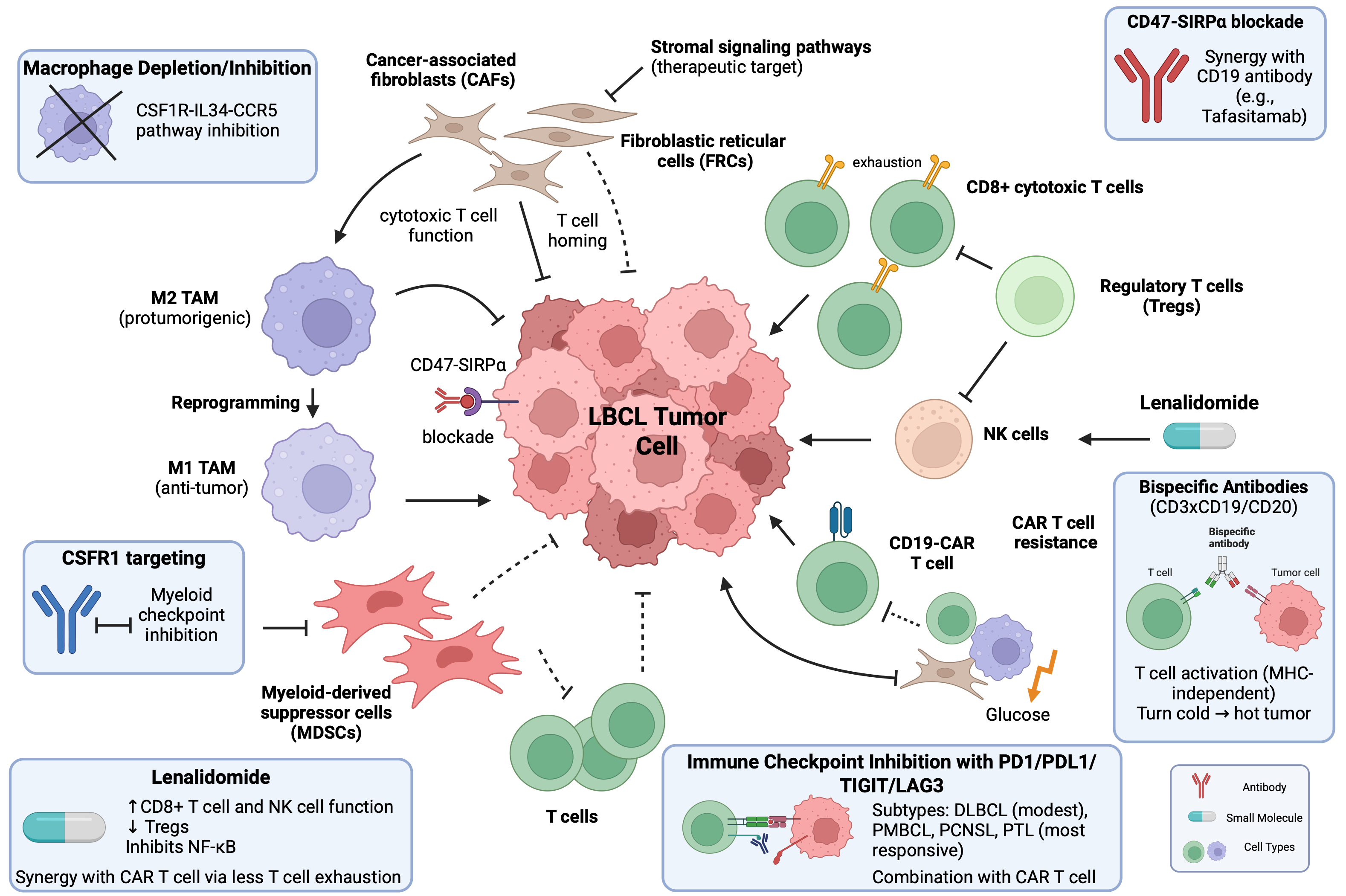
Large B-cell lymphomas (LBCLs) comprise biologically heterogeneous malignancies whose clinical behavior reflects interactions between malignant B cells and their surrounding immune and stromal compartments. Single-cell sequencing, spatial transcriptomics, and multiplex imaging have revealed distinct microenvironmental ecosystems that conventional measures of immune-cell abundance cannot adequately characterize. These approaches identify heterogeneous T-cell states, macrophage-rich niches, disrupted lymphoid architecture, and stromal programs associated with immune exclusion and treatment response. Tumor-intrinsic genetic and epigenetic alterations further influence antigen presentation, cytokine signaling, and interactions with the microenvironment. However, spatial proximity and transcriptional signatures do not necessarily establish functional interactions, and the prognostic relevance of individual cell populations varies across cohorts, anatomical sites, and treatment settings. Although emerging microenvironmental classifications offer opportunities to refine risk stratification and investigate resistance to immunochemotherapy, bispecific antibodies, and chimeric antigen receptor T-cell therapy, most require prospective validation before clinical implementation. This review critically examines the cellular composition, spatial organization, and molecular regulation of the LBCL microenvironment, alongside the strengths and limitations of current profiling technologies. Particular attention is given to the distinction between descriptive cellular atlases and experimentally validated mechanisms, the influence of tumor subtype and treatment context, and opportunities to develop clinically feasible biomarkers. Integrating longitudinal sampling, functional studies, and standardized spatial analyses may help establish which microenvironmental features can reliably guide therapeutic selection and the development of targeted combinations.
References
1. Alaggio R, Amador C, Anagnostopoulos I, Attygalle AD, Araujo IB de O, Berti E, et al. The 5th edition of the World Health Organization classification of haematolymphoid tumours: lymphoid neoplasms. Leukemia. 2022;36(7):1720-1748. doi:10.1038/s41375-022-01620-2
2. Kurz KS, Ott M, Kalmbach S, Steinlein S, Kalla C, Horn H, et al. Large B-cell lymphomas in the 5th edition of the WHO-classification of haematolymphoid neoplasms-updated classification and new concepts. Cancers (Basel). 2023;15(8):2285. doi:10.3390/cancers15082285
3. Alizadeh AA, Eisen MB, Davis RE, Ma C, Lossos IS, Rosenwald A, et al. Distinct types of diffuse large B-cell lymphoma identified by gene expression profiling. Nature. 2000;403(6769):503-511. doi:10.1038/35000501
4. Alduaij W, Collinge B, Ben-Neriah S, Jiang A, Hilton LK, Boyle M, et al. Molecular determinants of clinical outcomes in a real-world diffuse large B-cell lymphoma population. Blood. 2023;141(20):2493-2507. doi:10.1182/blood.2022018248
5. Lacy SE, Barrans SL, Beer PA, Painter D, Smith AG, Roman E, et al. Targeted sequencing in DLBCL, molecular subtypes, and outcomes: a Haematological Malignancy Research Network report. Blood. 2020;135(20):1759-1771. doi:10.1182/blood.2019003535
6. Wright GW, Huang DW, Phelan JD, Coulibaly ZA, Roulland S, Young RM, et al. A probabilistic classification tool for genetic subtypes of diffuse large B cell lymphoma with therapeutic implications. Cancer Cell. 2020;37(4):551-568.e14. doi:10.1016/j.ccell.2020.03.015
7. Schmitz R, Wright GW, Huang DW, Johnson CA, Phelan JD, Wang JQ, et al. Genetics and pathogenesis of diffuse large B-cell lymphoma. N Engl J Med. 2018;378(15):1396-1407. doi:10.1056/NEJMoa1801445
8. Chapuy B, Wood T, Stewart C, Dunford A, Wienand K, Khan SJ, et al. DLBclass: a probabilistic molecular classifier to guide clinical investigation and practice in diffuse large B-cell lymphoma. Blood. 2025;145(18):2041-2055. doi:10.1182/blood.2024025652
9. Chapuy B, Stewart C, Dunford AJ, Kim J, Kamburov A, Redd RA, et al. Molecular subtypes of diffuse large B cell lymphoma are associated with distinct pathogenic mechanisms and outcomes. Nat Med. 2018;24(5):679-690. doi:10.1038/s41591-018-0016-8
10. Abrisqueta P. New insights into first-line therapy in diffuse large B-cell lymphoma: are we improving outcomes? J Clin Med. 2024;13(7):1929. doi:10.3390/jcm13071929
11. Spinner MA, Advani RH. Current frontline treatment of diffuse large B-cell lymphoma. Oncology (Williston Park). 2022;36(1):51-58. doi:10.46883/2022.25920940
12. Melchardt T, Egle A, Greil R. How I treat diffuse large B-cell lymphoma. ESMO Open. 2023;8(1):100750. doi:10.1016/j.esmoop.2022.100750
13. Tilly H, Morschhauser F, Sehn LH, Friedberg JW, Trněný M, Sharman JP, et al. Polatuzumab vedotin in previously untreated diffuse large B-cell lymphoma. N Engl J Med. 2022;386(4):351-363. doi:10.1056/NEJMoa2115304
14. Abramson JS, Palomba ML, Gordon LI, Lunning MA, Wang M, Arnason J, et al. Lisocabtagene maraleucel for patients with relapsed or refractory large B-cell lymphomas (TRANSCEND NHL 001): a multicentre seamless design study. Lancet. 2020;396(10254):839-852. doi:10.1016/S0140-6736(20)31366-0
15. Abramson JS, Palomba ML, Gordon LI, Lunning M, Wang M, Arnason J, et al. Two-year follow-up of lisocabtagene maraleucel in relapsed or refractory large B-cell lymphoma in TRANSCEND NHL 001. Blood. 2024;143(5):404-416. doi:10.1182/blood.2023020854
16. Neelapu SS, Jacobson CA, Ghobadi A, Miklos DB, Lekakis LJ, Oluwole OO, et al. Five-year follow-up of ZUMA-1 supports the curative potential of axicabtagene ciloleucel in refractory large B-cell lymphoma. Blood. 2023;141(19):2307-2315. doi:10.1182/blood.2022018893
17. Bock AM, Epperla N. Therapeutic landscape of primary refractory and relapsed diffuse large B-cell lymphoma: recent advances and emerging therapies. J Hematol Oncol. 2025;18(1):68. doi:10.1186/s13045-025-01702-5
18. Hanahan D, Weinberg RA. Hallmarks of cancer: the next generation. Cell. 2011;144(5):646-674. doi:10.1016/j.cell.2011.02.013
19. Frick M, Dörken B, Lenz G. The molecular biology of diffuse large B-cell lymphoma. Ther Adv Hematol. 2011;2(6):369-379. doi:10.1177/2040620711419001
20. Patil S, Rajput S, Patil S, Mhaiskar A. B-cell lymphoma: advances in pathogenesis, diagnosis, and targeted therapies. Pathol Res Pract. 2025;271:156036. doi:10.1016/j.prp.2025.156036
21. Shaffer AL 3rd, Young RM, Staudt LM. Pathogenesis of human B cell lymphomas. Annu Rev Immunol. 2012;30:565-610. doi:10.1146/annurev-immunol-020711-075027
22. Fowler NH, Cheah CY, Gascoyne RD, Gribben J, Neelapu SS, Ghia P, et al. Role of the tumor microenvironment in mature B-cell lymphoid malignancies. Haematologica. 2016;101(5):531-540. doi:10.3324/haematol.2015.139493
23. Lenz G, Wright G, Dave SS, Xiao W, Powell J, Zhao H, et al. Stromal gene signatures in large-B-cell lymphomas. N Engl J Med. 2008;359(22):2313-2323. doi:10.1056/NEJMoa0802885
24. Scott DW, Gascoyne RD. The tumour microenvironment in B cell lymphomas. Nat Rev Cancer. 2014;14(8):517-534. doi:10.1038/nrc3774
25. Ng WL, Ansell SM, Mondello P. Insights into the tumor microenvironment of B cell lymphoma. J Exp Clin Cancer Res. 2022;41(1):362. doi:10.1186/s13046-022-02579-9
26. Swerdlow SH, Campo E, Pileri SA, Harris NL, Stein H, Siebert R, et al. The 2016 revision of the World Health Organization classification of lymphoid neoplasms. Blood. 2016;127(20):2375-2390. doi:10.1182/blood-2016-01-643569
27. Sethi A, Tandon A, Mishra H, Singh I. Diffuse large B-cell lymphoma: an immunohistochemical approach to diagnosis. J Oral Maxillofac Pathol. 2019;23(2):284-288. doi:10.4103/jomfp.JOMFP_294_18
28. Dai Y, Kizhakeyil A, Chihara D, Li X, Liu Y, Sainz Zuniga TP, et al. Multi-modal spatial characterization of tumor immune microenvironments identifies targetable inflammatory niches in diffuse large B cell lymphoma. Nat Genet. 2025;57(11):2715-2727. doi:10.1038/s41588-025-02353-5
29. Steen CB, Luca BA, Esfahani MS, Azizi A, Sworder BJ, Nabet BY, et al. The landscape of tumor cell states and ecosystems in diffuse large B cell lymphoma. Cancer Cell. 2021;39(10):1422-1437.e10. doi:10.1016/j.ccell.2021.08.011
30. Ennishi D. The biology of the tumor microenvironment in DLBCL: targeting the "don't eat me" signal. J Clin Exp Hematop. 2021;61(4):210-215. doi:10.3960/jslrt.21015
31. Autio M, Leivonen SK, Meriranta L, Karjalainen-Lindsberg ML, Pellinen T, Leppä S. Spatial analysis of the tumor microenvironment in diffuse large B-cell lymphoma reveals clinically relevant cell interactions and recurrent cellular neighborhoods. Cancer Immunol Res. 2025;13(10):1674-1686. doi:10.1158/2326-6066.CIR-24-1163
32. Coutinho R, Clear AJ, Mazzola E, Owen A, Greaves P, Wilson A, et al. Revisiting the immune microenvironment of diffuse large B-cell lymphoma using a tissue microarray and immunohistochemistry: robust semi-automated analysis reveals CD3 and FoxP3 as potential predictors of response to R-CHOP. Haematologica. 2015;100(3):363-369. doi:10.3324/haematol.2014.110189
33. Kumar G, Pandurengan RK, Parra ER, Kannan K, Haymaker C. Spatial modelling of the tumor microenvironment from multiplex immunofluorescence images: methods and applications. Front Immunol. 2023;14:1288802. doi:10.3389/fimmu.2023.1288802
34. Zhang B, Xie Y, Shen M, Sun J, Li Y, Zhang J, et al. Multiplexed imaging mass cytometry elicits p-S6 as a therapeutic and prognostic factor in diffuse large B-cell lymphoma. Blood Adv. 2025;9(13):3249-3262. doi:10.1182/bloodadvances.2024015469
35. Li L, Sun R, Miao Y, Tran T, Adams L, Roscoe N, et al. PD-1/PD-L1 expression and interaction by automated quantitative immunofluorescent analysis show adverse prognostic impact in patients with diffuse large B-cell lymphoma having T-cell infiltration: a study from the International DLBCL Consortium Program. Mod Pathol. 2019;32(6):741-754. doi:10.1038/s41379-018-0193-5
36. Tan WCC, Nerurkar SN, Cai HY, Ng HHM, Wu D, Wee YTF, et al. Overview of multiplex immunohistochemistry/immunofluorescence techniques in the era of cancer immunotherapy. Cancer Commun (Lond). 2020;40(4):135-153. doi:10.1002/cac2.12023
37. Stack EC, Wang C, Roman KA, Hoyt CC. Multiplexed immunohistochemistry, imaging, and quantitation: a review, with an assessment of Tyramide signal amplification, multispectral imaging and multiplex analysis. Methods. 2014;70(1):46-58. doi:10.1016/j.ymeth.2014.08.016
38. Gorris MAJ, Martynova E, Sweep MWD, van der Hoorn IAE, Sultan S, Claassens MJDE, et al. Multiplex immunohistochemical analysis of the spatial immune cell landscape of the tumor microenvironment. J Vis Exp. 2023;(198):e65717. doi:10.3791/65717
39. Lee CW, Ren YJ, Marella M, Wang M, Hartke J, Couto SS. Multiplex immunofluorescence staining and image analysis assay for diffuse large B cell lymphoma. J Immunol Methods. 2020;478:112714. doi:10.1016/j.jim.2019.112714
40. Banik G, Betts CB, Liudahl SM, Sivagnanam S, Kawashima R, Cotechini T, et al. High-dimensional multiplexed immunohistochemical characterization of immune contexture in human cancers. Methods Enzymol. 2020;635:1-20. doi:10.1016/bs.mie.2019.05.039
41. McGue JJ, Edwards JJ, Griffith BD, Frankel TL. Multiplex fluorescent immunohistochemistry for preservation of tumor microenvironment architecture and spatial relationship of cells in tumor tissues. Methods Mol Biol. 2023;2660:235-246. doi:10.1007/978-1-0716-3163-8_16
42. Schulz D, Zanotelli VRT, Fischer JR, Schapiro D, Engler S, Lun XK, et al. Simultaneous multiplexed imaging of mRNA and proteins with subcellular resolution in breast cancer tissue samples by mass cytometry. Cell Syst. 2018;6(1):25-36.e5. doi:10.1016/j.cels.2017.12.001
43. Giesen C, Wang HAO, Schapiro D, Zivanovic N, Jacobs A, Hattendorf B, et al. Highly multiplexed imaging of tumor tissues with subcellular resolution by mass cytometry. Nat Methods. 2014;11(4):417-422. doi:10.1038/nmeth.2869
44. Jin J, Lin L, Meng J, Jiang L, Zhang M, Fang Y, et al. High-multiplex single-cell imaging analysis reveals tumor immune contexture associated with clinical outcomes after CAR T cell therapy. Mol Ther. 2024;32(5):1252-1265. doi:10.1016/j.ymthe.2024.03.023
45. Colombo AR, Hav M, Singh M, Xu A, Gamboa A, Lemos T, et al. Single-cell spatial analysis of tumor immune architecture in diffuse large B-cell lymphoma. Blood Adv. 2022;6(16):4675-4690. doi:10.1182/bloodadvances.2022007493
46. Reiss DJ, Nakayama Y, Weng AP, Stokes ME, Sehn L, Steidl C, et al. High-plex imaging and cellular neighborhood spatial analysis reveals multiple immune escape and suppression patterns in diffuse large B-cell lymphoma. Leukemia. 2024;38(5):1164-1168. doi:10.1038/s41375-024-02239-1
47. Keren L, Bosse M, Marquez D, Angoshtari R, Jain S, Varma S, et al. A structured tumor-immune microenvironment in triple negative breast cancer revealed by multiplexed ion beam imaging. Cell. 2018;174(6):1373-1387.e19. doi:10.1016/j.cell.2018.08.039
48. Cotechini T, Jones O, Hindmarch CCT. Imaging mass cytometry in immuno-oncology. Methods Mol Biol. 2023;2614:1-15. doi:10.1007/978-1-0716-2914-7_1
49. Roider T, Baertsch MA, Fitzgerald D, Vöhringer H, Brinkmann BJ, Czernilofsky F, et al. Multimodal and spatially resolved profiling identifies distinct patterns of T cell infiltration in nodal B cell lymphoma entities. Nat Cell Biol. 2024;26(3):478-489. doi:10.1038/s41556-024-01358-2
50. Yu T, Xu-Monette ZY, Lagoo A, Shuai W, Wang B, Neff J, et al. Flow cytometry quantification of tumor-infiltrating lymphocytes to predict the survival of patients with diffuse large B-cell lymphoma. Front Immunol. 2024;15:1335689. doi:10.3389/fimmu.2024.1335689
51. Chen Z, Deng X, Ye Y, Zhang W, Liu W, Zhao S. Flow cytometry-assessed PD1/PDL1 status in tumor-infiltrating lymphocytes: a link with the prognosis of diffuse large B-cell lymphoma. Front Oncol. 2021;11:687911. doi:10.3389/fonc.2021.687911
52. Díaz Herrero A, Le PH, Renaud L, Meignin V, Thieblemont C, Blanc V, et al. High-dimensional spectral cytometry identifies follicular regulatory CD8+ T cells in diffuse large B-cell lymphoma. Clin Transl Immunology. 2025;14(11):e70062. doi:10.1002/cti2.70062
53. Roussel M, Lhomme F, Roe CE, Bartkowiak T, Gravelle P, Laurent C, et al. Mass cytometry defines distinct immune profile in germinal center B-cell lymphomas. Cancer Immunol Immunother. 2020;69(3):407-420. doi:10.1007/s00262-019-02464-z
54. Yang ZZ, Kim HJ, Villasboas JC, Price-Troska T, Jalali S, Wu H, et al. Mass cytometry analysis reveals that specific intratumoral CD4+ T cell subsets correlate with patient survival in follicular lymphoma. Cell Rep. 2019;26(8):2178-2193.e3. doi:10.1016/j.celrep.2019.01.085
55. Zunder ER, Finck R, Behbehani GK, Amir EAD, Krishnaswamy S, Gonzalez VD, et al. Palladium-based mass tag cell barcoding with a doublet-filtering scheme and single-cell deconvolution algorithm. Nat Protoc. 2015;10(2):316-333. doi:10.1038/nprot.2015.020
56. Lin D, Maecker HT. CyTOF intracellular cytokine assays for antigen-specific T cells. Methods Mol Biol. 2024;2779:395-405. doi:10.1007/978-1-0716-3738-8_18
57. Spitzer MH, Nolan GP. Mass cytometry: single cells, many features. Cell. 2016;165(4):780-791. doi:10.1016/j.cell.2016.04.019
58. Ye X, Wang L, Nie M, Wang Y, Dong S, Ren W, et al. A single-cell atlas of diffuse large B cell lymphoma. Cell Rep. 2022;39(3):110713. doi:10.1016/j.celrep.2022.110713
59. Ozmen F, Ozmen TY, Ors A, Janghorban M, Rames MJ, Li X, et al. Single-cell RNA sequencing reveals different cellular states in malignant cells and the tumor microenvironment in primary and metastatic ER-positive breast cancer. NPJ Breast Cancer. 2025;11(1):95. doi:10.1038/s41523-025-00808-w
60. Diaz-Herrero A, Pelaez-Prestel HF, Massenet-Regad L, Veyssiere M, Calvani J, Cristinelli C, et al. Spatial transcriptomics unveils immune cellular ecosystems associated with patient survival in diffuse large B-cell lymphoma. Oncoimmunology. 2026;15(1):2660418. doi:10.1080/2162402X.2026.2660418
61. Li L, Li Q, Niu R, Sun W, Liang H. Single-cell RNA sequencing in diffuse large B-cell lymphoma: tumor heterogeneity, microenvironment, resistance, and prognostic markers. Front Oncol. 2025;15:1583250. doi:10.3389/fonc.2025.1583250
62. Ren X, Zhang L, Zhang Y, Li Z, Siemers N, Zhang Z. Insights gained from single-cell analysis of immune cells in the tumor microenvironment. Annu Rev Immunol. 2021;39:583-609. doi:10.1146/annurev-immunol-110519-071134
63. Chung W, Eum HH, Lee HO, Lee KM, Lee HB, Kim KT, et al. Single-cell RNA-seq enables comprehensive tumour and immune cell profiling in primary breast cancer. Nat Commun. 2017;8:15081. doi:10.1038/ncomms15081
64. Su Q, Long K, Adu M, Jiang M, Li Q, Wan X, et al. Single-cell RNA sequencing reveals immune regulatory mechanisms and molecular therapeutic strategies in the microenvironment of multiple myeloma. Int J Surg. 2026;112(1):333-351. doi:10.1097/JS9.0000000000003306
65. Gao J, Li Z, Lu Q, Zhong J, Pan L, Feng C, et al. Single-cell RNA sequencing reveals cell subpopulations in the tumor microenvironment contributing to hepatocellular carcinoma. Front Cell Dev Biol. 2023;11:1194199. doi:10.3389/fcell.2023.1194199
66. Lee HW, Chung W, Lee HO, Jeong DE, Jo A, Lim JE, et al. Single-cell RNA sequencing reveals the tumor microenvironment and facilitates strategic choices to circumvent treatment failure in a chemorefractory bladder cancer patient. Genome Med. 2020;12(1):47. doi:10.1186/s13073-020-00741-6
67. Zhao Y, Xu H, Zhang M, Li L. Single-cell RNA-seq and bulk RNA-seq reveal intratumoral heterogeneity and tumor microenvironment characteristics in diffuse large B-cell lymphoma. Front Genet. 2022;13:881345. doi:10.3389/fgene.2022.881345
68. Chen S, Zhou Z, Li Y, Du Y, Chen G. Application of single-cell sequencing to the research of tumor microenvironment. Front Immunol. 2023;14:1285540. doi:10.3389/fimmu.2023.1285540
69. Moncada R, Barkley D, Wagner F, Chiodin M, Devlin JC, Baron M, et al. Integrating microarray-based spatial transcriptomics and single-cell RNA-seq reveals tissue architecture in pancreatic ductal adenocarcinomas. Nat Biotechnol. 2020;38(3):333-342. doi:10.1038/s41587-019-0392-8
70. Ji AL, Rubin AJ, Thrane K, Jiang S, Reynolds DL, Meyers RM, et al. Multimodal analysis of composition and spatial architecture in human squamous cell carcinoma. Cell. 2020;182(2):497-514.e22. doi:10.1016/j.cell.2020.05.039
71. Cilento MA, Sweeney CJ, Butler LM. Spatial transcriptomics in cancer research and potential clinical impact: a narrative review. J Cancer Res Clin Oncol. 2024;150(6):296. doi:10.1007/s00432-024-05816-0
72. Pickard K, Stephenson E, Mitchell A, Jardine L, Bacon CM. Location, location, location: mapping the lymphoma tumor microenvironment using spatial transcriptomics. Front Oncol. 2023;13:1258245. doi:10.3389/fonc.2023.1258245
73. Wright KT, Weirather JL, Jiang S, Kao KZ, Sigal Y, Giobbie-Hurder A, et al. Diffuse large B-cell lymphomas have spatially defined, tumor immune microenvironments revealed by high-parameter imaging. Blood Adv. 2023;7(16):4633-4646. doi:10.1182/bloodadvances.2023009813
74. He MY, Liu M, Yuan J, Lv J, Li W, Yan Q, et al. Spatial transcriptomics reveals tumor microenvironment heterogeneity in EBV positive diffuse large B cell lymphoma. Sci Rep. 2025;15(1):15878. doi:10.1038/s41598-025-00410-x
75. Liu M, Bertolazzi G, Sridhar S, Lee RX, Jaynes P, Mulder K, et al. Spatially resolved transcriptomics reveal macrophage heterogeneity and prognostic significance in diffuse large B-cell lymphoma. Nat Commun. 2024;15(1):2113. doi:10.1038/s41467-024-46220-z
76. Stuart T, Satija R. Integrative single-cell analysis. Nat Rev Genet. 2019;20(5):257-272. doi:10.1038/s41576-019-0093-7
77. Shi W, Zhang Z, Xu X, Tian Y, Feng L, Huang X, et al. Single-cell and spatial transcriptomics integration: new frontiers in tumor microenvironment and cellular communication. Front Immunol. 2025;16:1649468. doi:10.3389/fimmu.2025.1649468
78. Hsieh WC, Budiarto BR, Wang YF, Lin CY, Gwo MC, So DK, et al. Spatial multi-omics analyses of the tumor immune microenvironment. J Biomed Sci. 2022;29(1):96. doi:10.1186/s12929-022-00879-y
79. Nguyen H, Eapen MM, Nguyen Q, Sharma A. Spatial omics for profiling the dynamic tumor microenvironment. Clin Transl Immunology. 2026;15(4):e70084. doi:10.1002/cti2.70084
80. Li X, Singhal K, Deng Q, Chihara D, Russler-Germain D, Harkins RA, et al. Large B cell lymphoma microenvironment archetype profiles. Cancer Cell. 2025;43(7):1347-1364.e13. doi:10.1016/j.ccell.2025.06.002
81. Moses L, Pachter L. Museum of spatial transcriptomics. Nat Methods. 2022;19(5):534-546. doi:10.1038/s41592-022-01409-2
82. Ståhl PL, Salmén F, Vickovic S, Lundmark A, Fernández Navarro J, Magnusson J, et al. Visualization and analysis of gene expression in tissue sections by spatial transcriptomics. Science. 2016;353(6294):78-82. doi:10.1126/science.aaf2403
83. Plummer JT, Segato Dezem F, Cook DP, Park J, Zhang L, Liu Y, et al. Standardized metrics for assessment and reproducibility of imaging-based spatial transcriptomics datasets. Nat Biotechnol. 2026;44(7):1213-1225. doi:10.1038/s41587-025-02811-9
84. Delos Santos K, Rockel JS, Kapoor M. Spatial transcriptomics: challenges and future directions in musculoskeletal diseases. Curr Opin Rheumatol. 2026;38(2):143-153. doi:10.1097/BOR.0000000000001140
85. Hafemeister C, Satija R. Normalization and variance stabilization of single-cell RNA-seq data using regularized negative binomial regression. Genome Biol. 2019;20(1):296. doi:10.1186/s13059-019-1874-1
86. Maynard KR, Collado-Torres L, Weber LM, Uytingco C, Barry BK, Williams SR, et al. Transcriptome-scale spatial gene expression in the human dorsolateral prefrontal cortex. Nat Neurosci. 2021;24(3):425-436. doi:10.1038/s41593-020-00787-0
87. Lee J, Yoo M, Choi J. Recent advances in spatially resolved transcriptomics: challenges and opportunities. BMB Rep. 2022;55(3):113-124. doi:10.5483/BMBRep.2022.55.3.014
88. Fang S, Chen B, Zhang Y, Sun H, Liu L, Liu S, et al. Computational approaches and challenges in spatial transcriptomics. Genomics Proteomics Bioinformatics. 2023;21(1):24-47. doi:10.1016/j.gpb.2022.10.001
89. Park HE, Jo SH, Lee RH, Macks CP, Ku T, Park J, et al. Spatial transcriptomics: technical aspects of recent developments and their applications in neuroscience and cancer research. Adv Sci (Weinh). 2023;10(16):e2206939. doi:10.1002/advs.202206939
90. Pansy K, Uhl B, Krstic J, Szmyra M, Fechter K, Santiso A, et al. Immune regulatory processes of the tumor microenvironment under malignant conditions. Int J Mol Sci. 2021;22(24):13311. doi:10.3390/ijms222413311
91. Qian L, Shi R, Yang J, Zhang J. KIF2C regulates macrophage M2 polarization and DLBCL progression by regulating the STAT3/IL-10 axis. Cell Signal. 2025;136:112155. doi:10.1016/j.cellsig.2025.112155
92. Guo B, Duan Y, Cen H. Prognostic model based on M2 macrophage-related signatures for predicting outcomes, enhancing risk stratification, and providing therapeutic insights in diffuse large B-cell lymphoma. Heliyon. 2024;10(24):e41007. doi:10.1016/j.heliyon.2024.e41007
93. Nam SJ, Go H, Paik JH, Kim TM, Heo DS, Kim CW, et al. An increase of M2 macrophages predicts poor prognosis in patients with diffuse large B-cell lymphoma treated with rituximab, cyclophosphamide, doxorubicin, vincristine and prednisone. Leuk Lymphoma. 2014;55(11):2466-2476. doi:10.3109/10428194.2013.879713
94. Serna L, Azcoaga P, Brahmachary M, Caffarel MM, Braza MS. Diffuse large B-cell lymphoma microenvironment displays a predominant macrophage infiltrate marked by a strong inflammatory signature. Front Immunol. 2023;14:1048567. doi:10.3389/fimmu.2023.1048567
95. Resanoa M, Delgado A, Rodiño C, Villar M, Aiastui A, Braza MS. In the diffuse large B-cell lymphoma microenvironment, autophagy genes are upregulated in pro-inflammatory macrophages and linked to BCL2 overexpression. Front Immunol. 2025;16:1676563. doi:10.3389/fimmu.2025.1676563
96. Yang Z, Yu W. Clinical significance of circulating neutrophils and lymphocyte subsets in newly diagnosed patients with diffuse large B-cell lymphoma. Clin Exp Med. 2023;23(3):815-822. doi:10.1007/s10238-022-00867-4
97. Gao X, Luo X, Ye H, Hu S, Yu F, Xu P, et al. Risk model based on neutrophil-related genes constructs to assess prognosis and immune landscape in diffuse large B-cell lymphoma. Am J Clin Oncol. 2026;49(8):372-382. doi:10.1097/COC.0000000000001272
98. Manfroi B, Moreaux J, Righini C, Ghiringhelli F, Sturm N, Huard B. Tumor-associated neutrophils correlate with poor prognosis in diffuse large B-cell lymphoma patients. Blood Cancer J. 2018;8(7):66. doi:10.1038/s41408-018-0099-y
99. Shih MF, Lue KH, Wang TF, Chu SC, Huang CH. Association between the neutrophil-to-lymphocyte ratio and infection and survival in diffuse large B cell lymphoma. In Vivo. 2023;37(2):948-954. doi:10.21873/invivo.13167
100. Porrata LF, Ristow K, Habermann T, Inwards DJ, Micallef IN, Markovic SN. Predicting survival for diffuse large B-cell lymphoma patients using baseline neutrophil/lymphocyte ratio. Am J Hematol. 2010;85(11):896-899. doi:10.1002/ajh.21849
101. Watanabe K, Shinbo T, Kojima M, Naito M, Tanahashi N, Nara M. B-cell lymphoma associated with eosinophilia. Cancer. 1989;64(8):1682-1685. doi:10.1002/1097-0142(19891015)64:8<1682::aid-cncr2820640821>3.0.co;2-x
102. Zhou T, Wang HW, Ng SB, Summers T, Xi L, Raffeld M, et al. Tissue eosinophilia in B-cell lymphoma: an underrecognized phenomenon. Am J Surg Pathol. 2024;48(4):426-436. doi:10.1097/PAS.0000000000002160
103. Grisaru-Tal S, Itan M, Klion AD, Munitz A. A new dawn for eosinophils in the tumour microenvironment. Nat Rev Cancer. 2020;20(10):594-607. doi:10.1038/s41568-020-0283-9
104. Komi DEA, Redegeld FA. Role of mast cells in shaping the tumor microenvironment. Clin Rev Allergy Immunol. 2020;58(3):313-325. doi:10.1007/s12016-019-08753-w
105. Ribatti D. Mast cells in lymphomas. Crit Rev Oncol Hematol. 2016;101:207-212. doi:10.1016/j.critrevonc.2016.03.016
106. Hedström G, Berglund M, Molin D, Fischer M, Nilsson G, Thunberg U, et al. Mast cell infiltration is a favourable prognostic factor in diffuse large B-cell lymphoma. Br J Haematol. 2007;138(1):68-71. doi:10.1111/j.1365-2141.2007.06612.x
107. Efstratiou P, Damianaki A, Kavidopoulou A, Ioannidou P, Markaki E, Skianis IM, et al. Myeloid-derived suppressor cells exhibit distinct characteristics in bone marrow and blood of individuals with diffuse large B-cell lymphoma. Front Med (Lausanne). 2025;11:1515097. doi:10.3389/fmed.2024.1515097
108. Foureau DM, Guo F, Steuerwald NM, Druhan LJ, Avalos BR, Copelan E, et al. Prognostic significance of myeloid-derived suppressor cells and systemic inflammation in newly diagnosed diffuse large B-cell lymphoma treated with chemoimmunotherapy. Exp Hematol. 2024;129:104125. doi:10.1016/j.exphem.2023.10.004
109. Yuan CT, Chuang SS, Cheng PY, Chang K, Wang H, Tsai JH, et al. Decreased CD11c-positive dendritic cells in the tumor microenvironment predict double-hit/triple-hit genotype and survival in diffuse large B-cell lymphoma. J Pathol Clin Res. 2022;8(5):436-447. doi:10.1002/cjp2.283
110. Ciavarella S, Vegliante MC, Fabbri M, De Summa S, Melle F, Motta G, et al. Dissection of DLBCL microenvironment provides a gene expression-based predictor of survival applicable to formalin-fixed paraffin-embedded tissue. Ann Oncol. 2018;29(12):2363-2370. doi:10.1093/annonc/mdy450
111. Sakakura K, Chikamatsu K, Takahashi K, Whiteside TL, Furuya N. Maturation of circulating dendritic cells and imbalance of T-cell subsets in patients with squamous cell carcinoma of the head and neck. Cancer Immunol Immunother. 2006;55(2):151-159. doi:10.1007/s00262-005-0697-y
112. Xiao W, Yu K, Deng X, Zeng Y. Natural killer cell-associated prognosis model characterizes immune landscape and treatment efficacy of diffuse large B cell lymphoma. Cytokine. 2024;182:156726. doi:10.1016/j.cyto.2024.156726
113. Kim JK, Chung JS, Shin HJ, Song MK, Yi JW, Shin DH, et al. Influence of NK cell count on the survival of patients with diffuse large B-cell lymphoma treated with R-CHOP. Blood Res. 2014;49(3):162-169. doi:10.5045/br.2014.49.3.162
114. Hu Z, Xu X, Wei H. The adverse impact of tumor microenvironment on NK-cell. Front Immunol. 2021;12:633361. doi:10.3389/fimmu.2021.633361
115. Pouxvielh K, Marotel M, Drouillard A, Villard M, Moreews M, Bossan A, et al. Tumor-induced natural killer cell dysfunction is a rapid and reversible process uncoupled from the expression of immune checkpoints. Sci Adv. 2024;10(35):eadn0164. doi:10.1126/sciadv.adn0164
116. Qi J, Xu L, Huang D, He H, Yao J, Zhang J, et al. Defining diffuse large B-cell lymphoma immunotypes by CD8+ T cells and natural killer cells. J Oncol. 2022;2022:3168172. doi:10.1155/2022/3168172
117. Song JY, Nwangwu M, He TF, Zhang W, Meawad H, Bedell V, et al. Low T-cell proportion in the tumor microenvironment is associated with immune escape and poor survival in diffuse large B-cell lymphoma. Haematologica. 2023;108(8):2167-2177. doi:10.3324/haematol.2022.282265
118. Kotlov N, Bagaev A, Revuelta MV, Phillip JM, Cacciapuoti MT, Antysheva Z, et al. Clinical and biological subtypes of B-cell lymphoma revealed by microenvironmental signatures. Cancer Discov. 2021;11(6):1468-1489. doi:10.1158/2159-8290.CD-20-0839
119. Greenbaum AM, Fromm JR, Gopal AK, Houghton AMG. Diffuse large B-cell lymphoma (DLBCL) is infiltrated with activated CD8+ T-cells despite immune checkpoint signaling. Blood Res. 2022;57(2):117-128. doi:10.5045/br.2022.2021145
120. Coelho J, Roush SM, Xu AM, Puranam K, Mponda M, Kasonkanji E, et al. HIV and prior exposure to antiretroviral therapy alter tumour composition and tumour: T-cell associations in diffuse large B-cell lymphoma. Br J Haematol. 2024;205(1):194-206. doi:10.1111/bjh.19531
121. Battella S, Cox MC, La Scaleia R, Di Napoli A, Di Landro F, Porzia A, et al. Peripheral blood T cell alterations in newly diagnosed diffuse large B cell lymphoma patients and their long-term dynamics upon rituximab-based chemoimmunotherapy. Cancer Immunol Immunother. 2017;66(10):1295-1306. doi:10.1007/s00262-017-2026-7
122. Opinto G, Vegliante MC, Negri A, Skrypets T, Loseto G, Pileri SA, et al. The tumor microenvironment of DLBCL in the computational era. Front Oncol. 2020;10:351. doi:10.3389/fonc.2020.00351
123. Tsuchiya T, Ohshima K, Karube K, Yamaguchi T, Suefuji H, Hamasaki M, et al. Th1, Th2, and activated T-cell marker and clinical prognosis in peripheral T-cell lymphoma, unspecified: comparison with AILD, ALCL, lymphoblastic lymphoma, and ATLL. Blood. 2004;103(1):236-241. doi:10.1182/blood-2002-05-1352
124. Mori T, Takada R, Watanabe R, Okamoto S, Ikeda Y. T-helper (Th)1/Th2 imbalance in patients with previously untreated B-cell diffuse large cell lymphoma. Cancer Immunol Immunother. 2001;50(10):566-568. doi:10.1007/s00262-001-0232-8
125. Chen T, Guo J, Cai Z, Li B, Sun L, Shen Y, et al. Th9 cell differentiation and its dual effects in tumor development. Front Immunol. 2020;11:539666. doi:10.3389/fimmu.2020.01026
126. Li Y, Yu Q, Zhang Z, Wang J, Li S, Zhang J, et al. TH9 cell differentiation, transcriptional control and function in inflammation, autoimmune diseases and cancer. Oncotarget. 2016;7(43):71001-71012. doi:10.18632/oncotarget.11681
127. Cai M, Chen N. The roles of IRF-8 in regulating IL-9-mediated immunologic mechanisms in the development of DLBCL: a state-of-the-art literature review. Front Oncol. 2022;12:817069. doi:10.3389/fonc.2022.817069
128. Kim BS, Kuen DS, Koh CH, Kim HD, Chang SH, Kim S, et al. Type 17 immunity promotes the exhaustion of CD8+ T cells in cancer. J Immunother Cancer. 2021;9(6):e002603. doi:10.1136/jitc-2021-002603
129. Bai Y, He T, Zhang L, Liu Q, Yang J, Zhao Z, et al. Prognostic value of FOXP3+ regulatory T cells in patients with diffuse large B-cell lymphoma: a systematic review and meta-analysis. BMJ Open. 2022;12(9):e060659. doi:10.1136/bmjopen-2021-060659
130. Zhong W, Xu X, Zhu Z, Du Q, Du H, Yang L, et al. Increased expression of IRF8 in tumor cells inhibits the generation of Th17 cells and predicts unfavorable survival of diffuse large B cell lymphoma patients. Oncotarget. 2017;8(30):49757-49772. doi:10.18632/oncotarget.17693
131. Ye J, Livergood RS, Peng G. The role and regulation of human Th17 cells in tumor immunity. Am J Pathol. 2013;182(1):10-20. doi:10.1016/j.ajpath.2012.08.041
132. Autio M, Leivonen SK, Brück O, Mustjoki S, Mészáros Jørgensen J, Karjalainen-Lindsberg ML, et al. Immune cell constitution in the tumor microenvironment predicts the outcome in diffuse large B-cell lymphoma. Haematologica. 2021;106(3):718-729. doi:10.3324/haematol.2019.243626
133. Nakayama S, Yokote T, Akioka T, Hiraoka N, Nishiwaki U, Miyoshi T, et al. Infiltration of effector regulatory T cells predicts poor prognosis of diffuse large B-cell lymphoma, not otherwise specified. Blood Adv. 2017;1(8):486-493. doi:10.1182/bloodadvances.2016000885
134. Zhong W, Liu X, Zhu Z, Li Q, Li K. High levels of Tim-3+Foxp3+Treg cells in the tumor microenvironment is a prognostic indicator of poor survival of diffuse large B cell lymphoma patients. Int Immunopharmacol. 2021;96:107662. doi:10.1016/j.intimp.2021.107662
135. Maharaj K, Uriepero A, Sahakian E, Pinilla-Ibarz J. Regulatory T cells (Tregs) in lymphoid malignancies and the impact of novel therapies. Front Immunol. 2022;13:943354. doi:10.3389/fimmu.2022.943354
136. Reboursiere E, Gac AC, Garnier A, Salaun V, Reman O, Pham AD, et al. Increased frequencies of circulating and tumor-resident Vδ1+ T cells in patients with diffuse large B-cell lymphoma. Leuk Lymphoma. 2018;59(1):187-195. doi:10.1080/10428194.2017.1321751
137. Wang Y, Xu Y, Chen H, Zhang J, He W. Novel insights based on the plasticity of γδ T cells in the tumor microenvironment. Explor Immunol. 2022;2(1):98-132. doi:10.37349/ei.2022.00039
138. Park JH, Lee HK. Function of γδ T cells in tumor immunology and their application to cancer therapy. Exp Mol Med. 2021;53(3):318-327. doi:10.1038/s12276-021-00576-0
139. Rimailho L, Faria C, Domagala M, Laurent C, Bezombes C, Poupot M. γδ T cells in immunotherapies for B-cell malignancies. Front Immunol. 2023;14:1200003. doi:10.3389/fimmu.2023.1200003
140. Chan KF, Duarte JDG, Ostrouska S, Behren A. γδ T cells in the tumor microenvironment—interactions with other immune cells. Front Immunol. 2022;13:894315. doi:10.3389/fimmu.2022.894315
141. Chaudhry MS, Karadimitris A. Role and regulation of CD1d in normal and pathological B cells. J Immunol. 2014;193(10):4761-4768. doi:10.4049/jimmunol.1401805
142. Zhang L, Cheng R, Fan Z, Liu Y, Huang J, Peng J. CD73+CD8+ T cells define a subset with anti-tumor potential in DLBCL patients. Front Med (Lausanne). 2025;12:1526772. doi:10.3389/fmed.2025.1526772
143. Ansell SM, Stenson M, Habermann TM, Jelinek DF, Witzig TE. CD4+ T-cell immune response to large B-cell non-Hodgkin's lymphoma predicts patient outcome. J Clin Oncol. 2001;19(3):720-726. doi:10.1200/JCO.2001.19.3.720
144. Apollonio B, Spada F, Petrov N, Cozzetto D, Papazoglou D, Jarvis P, et al. Tumor-activated lymph node fibroblasts suppress T cell function in diffuse large B cell lymphoma. J Clin Invest. 2023;133(13):e166070. doi:10.1172/JCI166070
145. Li J, Sun W, Subrahmanyam PB, Page C, Younger KM, Tiper IV, et al. NKT cell responses to B cell lymphoma. Med Sci (Basel). 2014;2(2):82-97. doi:10.3390/medsci2020082
146. Leivonen SK, Karihtala K, Pellinen T, Karjalainen-Lindsberg ML, Aoki T, Steidl C, et al. Characterization of cancer-associated fibroblasts and their spatial architecture reveals heterogeneity and survival associations in classic Hodgkin lymphoma. Hemasphere. 2025;9(5):e70145. doi:10.1002/hem3.70145
147. Jin MK, Hoster E, Dreyling M, Unterhalt M, Hiddemann W, Klapper W. Follicular dendritic cells in follicular lymphoma and types of non-Hodgkin lymphoma show reduced expression of CD23, CD35 and CD54 but no association with clinical outcome. Histopathology. 2011;58(4):586-592. doi:10.1111/j.1365-2559.2011.03779.x
148. Kranich J, Krautler NJ. How follicular dendritic cells shape the B-cell antigenome. Front Immunol. 2016;7:225. doi:10.3389/fimmu.2016.00225
149. Koumpis E, Papoudou-Bai A, Papathanasiou K, Kolettas E, Kanavaros P, Hatzimichael E. Unraveling the immune microenvironment in diffuse large B-cell lymphoma: prognostic and potential therapeutic implications. Curr Issues Mol Biol. 2024;46(7):7048-7064. doi:10.3390/cimb46070420
150. Haro M, Orsulic S. A paradoxical correlation of cancer-associated fibroblasts with survival outcomes in B-cell lymphomas and carcinomas. Front Cell Dev Biol. 2018;6:98. doi:10.3389/fcell.2018.00098
151. Mukherjee P, Ansell SM, Mondello P. Unraveling the role of cancer-associated fibroblasts in B cell lymphoma. Front Immunol. 2024;15:1451791. doi:10.3389/fimmu.2024.1451791
152. D'Rozario J, Knoblich K, Lütge M, Pérez Shibayama C, Cheng HW, Alexandre YO, et al. Fibroblastic reticular cells provide a supportive niche for lymph node-resident macrophages. Eur J Immunol. 2023;53(9):e2250355. doi:10.1002/eji.202250355
153. Rawal S, Chu F, Zhang M, Park HJ, Nattamai D, Kannan S, et al. Cross talk between follicular Th cells and tumor cells in human follicular lymphoma promotes immune evasion in the tumor microenvironment. J Immunol. 2013;190(12):6681-6693. doi:10.4049/jimmunol.1201363
154. Xiao Y, Haeusl SS, Jethva G, Weber J, Rosenwald A, Berberich-Siebelt F. Cytotoxic CD4+ T-follicular cells may mediate killing against lymphoma cells. Front Immunol. 2025;16:1657046. doi:10.3389/fimmu.2025.1657046
155. Ma X, Zha J, He J, Chen L, Huang J, Wu W, et al. T follicular helper cell-mediated IL-21 production suppresses FOXP3 expression of T follicular regulatory-like cells in diffuse large B cell lymphoma patients. Hum Immunol. 2020;81(8):452-459. doi:10.1016/j.humimm.2020.05.008
156. Ishii K, Kamachi K, Okamoto S, Katsuya H, Fujita M, Nagaie T, et al. Diffuse large B-cell lymphoma involving an abundant infiltration of T follicular helper cells. Intern Med. 2023;62(8):1195-1200. doi:10.2169/internalmedicine.0521-22
157. Choi YS, Kageyama R, Eto D, Escobar TC, Johnston RJ, Monticelli L, et al. ICOS receptor instructs T follicular helper cell versus effector cell differentiation via induction of the transcriptional repressor Bcl6. Immunity. 2011;34(6):932-946. doi:10.1016/j.immuni.2011.03.023
158. Abdou AG, Asaad N, Kandil M, Shabaan M, Shams A. Significance of stromal-1 and stromal-2 signatures and biologic prognostic model in diffuse large B-cell lymphoma. Cancer Biol Med. 2017;14(2):151-161. doi:10.20892/j.issn.2095-3941.2017.0007
159. Mannino RG, Santiago-Miranda AN, Pradhan P, Qiu Y, Mejias JC, Neelapu SS, et al. 3D microvascular model recapitulates the diffuse large B-cell lymphoma tumor microenvironment in vitro. Lab Chip. 2017;17(3):407-414. doi:10.1039/c6lc01204c
160. Sun X, Fang J, Ye F, Zhang S, Huang H, Hou J, et al. Diffuse large B-cell lymphoma promotes endothelial-to-mesenchymal transition via WNT10A/Beta-catenin/Snail signaling. Front Oncol. 2022;12:871788. doi:10.3389/fonc.2022.871788
161. Han J, Kim EG, Kim BY, Soung NK. Cancer-associated fibroblasts arising from endothelial-to-mesenchymal transition: induction factors, functional roles, and transcriptomic evidence. Biology (Basel). 2025;14(10):1403. doi:10.3390/biology14101403
162. Jouybar M, Mikula AM, Zuidmeer N, Konijn T, de Jonge AV, Roest HP, et al. Lymphoma-on-chip model reveals that lymph node stromal cells promote diffuse large B-cell lymphoma survival and migration. Mater Today Bio. 2025;31:101544. doi:10.1016/j.mtbio.2025.101544
163. Brandt S, Montagna C, Georgis A, Schüffler PJ, Bühler MM, Seifert B, et al. The combined expression of the stromal markers fibronectin and SPARC improves the prediction of survival in diffuse large B-cell lymphoma. Exp Hematol Oncol. 2013;2(1):27. doi:10.1186/2162-3619-2-27
164. Xiao Z, Todd L, Huang L, Noguera-Ortega E, Lu Z, Huang L, et al. Desmoplastic stroma restricts T cell extravasation and mediates immune exclusion and immunosuppression in solid tumors. Nat Commun. 2023;14(1):5110. doi:10.1038/s41467-023-40850-5
165. Mirzabeigi Y, Youssef J, Gonzalez J, Martinez T, Avellan R, Wong A, et al. Cancer-associated fibroblast heterogeneity and extracellular matrix remodeling as orchestrators of drug resistance in upper gastrointestinal cancers: insights from spatial multi-omics and therapeutic implications. Cancers (Basel). 2026;18(14):2358. doi:10.3390/cancers18142358
166. Reddy A, Zhang J, Davis NS, Moffitt AB, Love CL, Waldrop A, et al. Genetic and functional drivers of diffuse large B cell lymphoma. Cell. 2017;171(2):481-494.e15. doi:10.1016/j.cell.2017.09.027
167. Challa-Malladi M, Lieu YK, Califano O, Holmes AB, Bhagat G, Murty VV, et al. Combined genetic inactivation of β2-microglobulin and CD58 reveals frequent escape from immune recognition in diffuse large B cell lymphoma. Cancer Cell. 2011;20(6):728-740. doi:10.1016/j.ccr.2011.11.006
168. Green MR, Monti S, Rodig SJ, Juszczynski P, Currie T, O'Donnell E, et al. Integrative analysis reveals selective 9p24.1 amplification, increased PD-1 ligand expression, and further induction via JAK2 in nodular sclerosing Hodgkin lymphoma and primary mediastinal large B-cell lymphoma. Blood. 2010;116(17):3268-3277. doi:10.1182/blood-2010-05-282780
169. Hao Y, Chapuy B, Monti S, Sun HH, Rodig SJ, Shipp MA. Selective JAK2 inhibition specifically decreases Hodgkin lymphoma and mediastinal large B-cell lymphoma growth in vitro and in vivo. Clin Cancer Res. 2014;20(10):2674-2683. doi:10.1158/1078-0432.CCR-13-3007
170. Roider T, Seufert J, Uvarovskii A, Frauhammer F, Bordas M, Abedpour N, et al. Dissecting intratumour heterogeneity of nodal B-cell lymphomas at the transcriptional, genetic and drug-response levels. Nat Cell Biol. 2020;22(7):896-906. doi:10.1038/s41556-020-0532-x
171. Autio M, Leivonen SK, Brück O, Karjalainen-Lindsberg ML, Pellinen T, Leppä S. Clinical impact of immune cells and their spatial interactions in diffuse large B-cell lymphoma microenvironment. Clin Cancer Res. 2022;28(4):781-792. doi:10.1158/1078-0432.CCR-21-3140
172. Huang YH, Cai K, Xu PP, Wang L, Huang CX, Fang Y, et al. CREBBP/EP300 mutations promoted tumor progression in diffuse large B-cell lymphoma through altering tumor-associated macrophage polarization via FBXW7-NOTCH-CCL2/CSF1 axis. Signal Transduct Target Ther. 2021;6(1):10. doi:10.1038/s41392-020-00437-8
173. Steidl C, Lee T, Shah SP, Farinha P, Han G, Nayar T, et al. Tumor-associated macrophages and survival in classic Hodgkin's lymphoma. N Engl J Med. 2010;362(10):875-885. doi:10.1056/NEJMoa0905680
174. Meyer PN, Fu K, Greiner T, Smith L, Delabie J, Gascoyne R, et al. The stromal cell marker SPARC predicts for survival in patients with diffuse large B-cell lymphoma treated with rituximab. Am J Clin Pathol. 2011;135(1):54-61. doi:10.1309/AJCPJX4BJV9NLQHY
175. Rehm A, Mensen A, Schradi K, Gerlach K, Wittstock S, Winter S, et al. Cooperative function of CCR7 and lymphotoxin in the formation of a lymphoma-permissive niche within murine secondary lymphoid organs. Blood. 2011;118(4):1020-1033. doi:10.1182/blood-2010-11-321265
176. Zhang J, You Z, Li X, Hu J, Li J, Jing Z. Harnessing intratumoral microbiota: new horizons in immune microenvironment and immunotherapy. J Transl Med. 2025;23(1):897. doi:10.1186/s12967-025-06916-2
177. Ge J, Gao L, Yu L. Intratumoral microbiota: distribution, mechanisms, and therapeutic implications. Crit Rev Oncol Hematol. 2026;219:105128. doi:10.1016/j.critrevonc.2026.105128
178. Jia J, Gao W, Wang C, Liu L, Li Y, Sun Z, et al. Intratumoral microbiota remodeling of the tumor microenvironment impact solid tumor immunotherapy. Cell Death Dis. 2025;17(1):62. doi:10.1038/s41419-025-08211-w
179. Yijia Z, Li X, Ma L, Wang S, Du H, Wu Y, et al. Identification of intratumoral microbiome-driven immune modulation and therapeutic implications in diffuse large B-cell lymphoma. Cancer Immunol Immunother. 2025;74(4):131. doi:10.1007/s00262-025-03972-x
180. Camacho Meza G, Avalos Navarro G, De La Cruz Mosso U, Ramírez Patiño R, Muñoz Valle JF, Bautista Herrera LA. Macrophage migration inhibitory factor: exploring physiological roles and comparing health benefits against oncogenic and autoimmune risks. Int J Mol Med. 2025;56(4):149. doi:10.3892/ijmm.2025.5590
181. Yang H, Green MR. Harnessing lymphoma epigenetics to improve therapies. Blood. 2020;136(21):2386-2391. doi:10.1182/blood.2020006908
182. Rimsza LM, Roberts RA, Miller TP, Unger JM, LeBlanc M, Braziel RM, et al. Loss of MHC class II gene and protein expression in diffuse large B-cell lymphoma is related to decreased tumor immunosurveillance and poor patient survival regardless of other prognostic factors: a follow-up study from the Leukemia and Lymphoma Molecular Profiling Project. Blood. 2004;103(11):4251-4258. doi:10.1182/blood-2003-07-2365
183. Zhang T, Beytullahoglu O, Tulaiha R, Luvisotto A, Szczepanski A, Tsuboyama N, et al. An epigenetic pathway regulates MHC-II expression and function in B cell lymphoma models. J Clin Invest. 2025;135(2):e19703. doi:10.1172/JCI179703.
184. Isshiki Y, Chen X, Teater M, Karagiannidis I, Nam H, Cai W, et al. EZH2 inhibition enhances T cell immunotherapies by inducing lymphoma immunogenicity and improving T cell function. Cancer Cell. 2025;43(1):49-68.e9. doi:10.1016/j.ccell.2024.11.006
185. Ravi S, Sree Rekha J, Basu D, Kayal S. Prognostic significance of T-cells and macrophages in the tumour microenvironment of nodal DLBCL. Indian J Hematol Blood Transfus. 2024;40(4):604-612. doi:10.1007/s12288-024-01770-6
186. Croci GA, Au-Yeung RKH, Reinke S, Staiger AM, Koch K, Oschlies I, et al. SPARC-positive macrophages are the superior prognostic factor in the microenvironment of diffuse large B-cell lymphoma and independent of MYC rearrangement and double-/triple-hit status. Ann Oncol. 2021;32(11):1400-1409. doi:10.1016/j.annonc.2021.08.1991
187. Hasselblom S, Hansson U, Sigurdardottir M, Nilsson-Ehle H, Ridell B, Andersson PO. Expression of CD68+ tumor-associated macrophages in patients with diffuse large B-cell lymphoma and its relation to prognosis. Pathol Int. 2008;58(8):529-532. doi:10.1111/j.1440-1827.2008.02268.x
188. Li YL, Shi ZH, Wang X, Gu KS, Zhai ZM. Tumor-associated macrophages predict prognosis in diffuse large B-cell lymphoma and correlation with peripheral absolute monocyte count. BMC Cancer. 2019;19(1):1049. doi:10.1186/s12885-019-6208-x
189. Koudouna A, Gkioka AI, Gkiokas A, Tryfou TM, Papadatou M, Alexandropoulos A, et al. Serum-soluble CD163 levels as a prognostic biomarker in patients with diffuse large B-cell lymphoma treated with chemoimmunotherapy. Int J Mol Sci. 2024;25(5):2862. doi:10.3390/ijms25052862
190. Shen L, Li H, Shi Y, Wang D, Gong J, Xun J, et al. M2 tumour-associated macrophages contribute to tumour progression via legumain remodelling the extracellular matrix in diffuse large B cell lymphoma. Sci Rep. 2016;6:30347. doi:10.1038/srep30347
191. Chen BJ, Dashnamoorthy R, Galera P, Makarenko V, Chang H, Ghosh S, et al. The immune checkpoint molecules PD-1, PD-L1, TIM-3 and LAG-3 in diffuse large B-cell lymphoma. Oncotarget. 2019;10(21):2030-2040. doi:10.18632/oncotarget.26771
192. Minson AG, Dickinson MJ. New bispecific antibodies in diffuse large B-cell lymphoma. Haematologica. 2025;110(7):1483-1499. doi:10.3324/haematol.2024.285343
193. Trabolsi A, Arumov A, Schatz JH. Bispecific antibodies and CAR-T cells: dueling immunotherapies for large B-cell lymphomas. Blood Cancer J. 2024;14(1):27. doi:10.1038/s41408-024-00997-w
194. Brody JD, Jørgensen J, Belada D, Costello R, Trněný M, Vitolo U, et al. Epcoritamab plus GemOx in transplant-ineligible relapsed/refractory DLBCL: results from the EPCORE NHL-2 trial. Blood. 2025;145(15):1621-1631. doi:10.1182/blood.2024026830
195. Brouwer-Visser J, Fiaschi N, Deering RP, Cygan KJ, Scott D, Jeong S, et al. Molecular assessment of intratumoral immune cell subsets and potential mechanisms of resistance to odronextamab, a CD20×CD3 bispecific antibody, in patients with relapsed/refractory B-cell non-Hodgkin lymphoma. J Immunother Cancer. 2024;12(3):e008338. doi:10.1136/jitc-2023-008338
196. Bröske AME, Korfi K, Belousov A, Wilson S, Ooi CH, Bolen CR, et al. Pharmacodynamics and molecular correlates of response to glofitamab in relapsed/refractory non-Hodgkin lymphoma. Blood Adv. 2022;6(3):1025-1037. doi:10.1182/bloodadvances.2021005954
197. Cai F, Zhang J, Gao H, Shen H. Tumor microenvironment and CAR-T cell immunotherapy in B-cell lymphoma. Eur J Haematol. 2024;112(2):223-235. doi:10.1111/ejh.14103
198. Lemoine J, Ruella M, Houot R. Overcoming intrinsic resistance of cancer cells to CAR T-cell killing. Clin Cancer Res. 2021;27(23):6298-6306. doi:10.1158/1078-0432.CCR-21-1559
199. Yan Z, Li L, Fu D, Wu W, Qiao N, Huang Y, et al. Immunosuppressive tumor microenvironment contributes to tumor progression in diffuse large B-cell lymphoma upon anti-CD19 chimeric antigen receptor T therapy. Front Med. 2023;17(4):699-713. doi:10.1007/s11684-022-0972-8
200. Zhang S, Liu J, Li Z. Research progress on resistance mechanisms to CAR-T cell therapy in diffuse large B-cell lymphoma. Front Oncol. 2026;16:1696105. doi:10.3389/fonc.2026.1696105
201. Yuan L, Wang C, Du L, Chen W, Zhang X. Optimization of CAR-T therapy based on metabolic remodeling of the tumor immune microenvironment in diffuse large B-cell lymphoma. Am J Cancer Res. 2025;15(8):3338-3358. doi:10.62347/XWSP9750
202. Negishi S, Girsch JH, Siegler EL, Bezerra ED, Miyao K, Sakemura RL. Treatment strategies for relapse after CAR T-cell therapy in B cell lymphoma. Front Pediatr. 2024;11:1305657. doi:10.3389/fped.2023.1305657
203. Liu X, Zhang Y, Li K, Liu Y, Xu J, Ma J, et al. A novel dominant-negative PD-1 armored anti-CD19 CAR T cell is safe and effective against refractory/relapsed B cell lymphoma. Transl Oncol. 2021;14(7):101085. doi:10.1016/j.tranon.2021.101085
204. Lesokhin AM, Ansell SM, Armand P, Scott EC, Halwani A, Gutierrez M, et al. Nivolumab in patients with relapsed or refractory hematologic malignancy: preliminary results of a phase Ib study. J Clin Oncol. 2016;34(23):2698-2704. doi:10.1200/JCO.2015.65.9789
205. Ansell SM, Minnema MC, Johnson P, Timmerman JM, Armand P, Shipp MA, et al. Nivolumab for relapsed/refractory diffuse large B-cell lymphoma in patients ineligible for or having failed autologous transplantation: a single-arm, phase II study. J Clin Oncol. 2019;37(6):481-489. doi:10.1200/JCO.18.00766
206. Chihara D, Steiner RE, Nair R, Feng L, Ahmed S, Strati P, et al. Phase 2 trial of ibrutinib and nivolumab in patients with relapsed CNS lymphomas. Blood Adv. 2025;9(7):1485-1491. doi:10.1182/bloodadvances.2024014635
207. Armand P, Rodig S, Melnichenko V, Thieblemont C, Bouabdallah K, Tumyan G, et al. Pembrolizumab in relapsed or refractory primary mediastinal large B-cell lymphoma. J Clin Oncol. 2019;37(34):3291-3299. doi:10.1200/JCO.19.01389
208. Nayak L, Iwamoto FM, Lacasce A, Mukundan S, Roemer MGM, Chapuy B, et al. PD-1 blockade with nivolumab in relapsed/refractory primary central nervous system and testicular lymphoma. Blood. 2017;129(23):3071-3073. doi:10.1182/blood-2017-01-764209
209. Palomba ML, Till BG, Park SI, Morschhauser F, Cartron G, Marks R, et al. Combination of Atezolizumab and Obinutuzumab in Patients with Relapsed/Refractory Follicular Lymphoma and Diffuse Large B‐Cell Lymphoma: Results from a Phase 1b Study. Clin Lymphoma Myeloma Leuk. 2022;22(7):e443-51. doi:10.1016/j.clml.2021.12.010
210. Younes A, Brody J, Carpio C, Lopez-Guillermo A, Ben-Yehuda D, Ferhanoglu B, et al. Safety and activity of ibrutinib in combination with nivolumab in patients with relapsed non-Hodgkin lymphoma or chronic lymphocytic leukaemia: a phase 1/2a study. Lancet Haematol. 2019;6(2):e67-78. doi:10.1016/S2352-3026(18)30217-5
211. Herrera AF, Goy A, Mehta A, Ramchandren R, Pagel JM, Svoboda J, et al. Safety and activity of ibrutinib in combination with durvalumab in patients with relapsed or refractory follicular lymphoma or diffuse large B-cell lymphoma. Am J Hematol. 2020;95(1):18-27. doi:10.1002/ajh.25659
212. Smith SD, Till BG, Shadman MS, Lynch RC, Cowan AJ, Wu QV, et al. Pembrolizumab with R-CHOP in previously untreated diffuse large B-cell lymphoma: potential for biomarker driven therapy. Br J Haematol. 2020;189(6):1119-1126. doi:10.1111/bjh.16494
213. Nowakowski GS, Willenbacher W, Greil R, Larsen TS, Patel K, Jäger U, et al. Safety and efficacy of durvalumab with R-CHOP or R2-CHOP in untreated, high-risk DLBCL: a phase 2, open-label trial. Int J Hematol. 2022;115(2):222-232. doi:10.1007/s12185-021-03241-4
214. Armand P, Lesokhin A, Borrello I, Timmerman J, Gutierrez M, Zhu L, et al. A phase 1b study of dual PD-1 and CTLA-4 or KIR blockade in patients with relapsed/refractory lymphoid malignancies. Leukemia. 2021;35(3):777-786. doi:10.1038/s41375-020-0939-1
215. Herbaux C, Bachy E, Bouabdallah R, Guidez S, Casasnovas O, Feugier P, et al. Atezolizumab, obinutuzumab and venetoclax for the treatment of patients with relapsed/refractory B non-Hodgkin lymphoma: final analysis of a phase II trial from the LYSA group. Br J Haematol. 2025;207(1):110-122. doi:10.1111/bjh.20109
216. Keane C, Law SC, Gould C, Birch S, Sabdia MB, Merida de Long L, et al. LAG3: a novel immune checkpoint expressed by multiple lymphocyte subsets in diffuse large B-cell lymphoma. Blood Adv. 2020;4(7):1367-1377. doi:10.1182/bloodadvances.2019001390
217. Godfrey J, Chen X, Sunseri N, Cooper A, Yu J, Varlamova A, et al. TIGIT is a key inhibitory checkpoint receptor in lymphoma. J Immunother Cancer. 2023;11(6):e006582. doi:10.1136/jitc-2022-006582
218. Gopal AK, Armand P, Neelapu SS, Bartlett NL, Spurgeon SE, Kuruvilla J, et al. Nivolumab plus relatlimab for patients with relapsed or progressed B-cell malignancies in RELATIVITY-022. Blood Adv. 2025;9(13):3383-3394. doi:10.1182/bloodadvances.2024015086
219. Seipel K, Spahr SM, Shaforostova I, Bacher U, Nilius H, Pabst T. Clinical impact of LAG3 single-nucleotide polymorphism in DLBCL treated with CAR-T cell therapy. Int J Mol Sci. 2025;26(20):9905. doi:10.3390/ijms26209905
220. Wang Y, Wang J, Zhu F, Wang H, Yi L, Huang K, et al. Elevated circulating myeloid-derived suppressor cells associated with poor prognosis in B-cell non-Hodgkin's lymphoma patients. Immun Inflamm Dis. 2022;10(5):e616. doi:10.1002/iid3.616
221. Biedermann A, Patra-Kneuer M, Mougiakakos D, Büttner-Herold M, Mangelberger-Eberl D, Berges J, et al. Blockade of the CD47/SIRPα checkpoint axis potentiates the macrophage-mediated antitumor efficacy of tafasitamab. Haematologica. 2024;109(12):3928-3940. doi:10.3324/haematol.2023.284795
222. Thieblemont C, Delfau-Larue MH, Coiffier B. Lenalidomide in diffuse large B-cell lymphoma. Adv Hematol. 2012;2012:861060. doi:10.1155/2012/861060
223. Gribben JG, Fowler N, Morschhauser F. Mechanisms of action of lenalidomide in B-cell non-Hodgkin lymphoma. J Clin Oncol. 2015;33(25):2803-2811. doi:10.1200/JCO.2014.59.5363
224. Jin Z, Xiang R, Qing K, Li D, Liu Z, Li X, et al. Lenalidomide overcomes the resistance to third-generation CD19-CAR-T cell therapy in preclinical models of diffuse large B-cell lymphoma. Cell Oncol (Dordr). 2023;46(4):1143-1157. doi:10.1007/s13402-023-00833-6
225. Tsang M, Cleveland J, Rubenstein JL. On point in primary CNS lymphoma. Hematol Oncol. 2020;38(5):640-647. doi:10.1002/hon.2761
226. Houillier C, Choquet S, Touitou V, Martin-Duverneuil N, Navarro S, Mokhtari K, et al. Lenalidomide monotherapy as salvage treatment for recurrent primary CNS lymphoma. Neurology. 2015;84(3):325-326. doi:10.1212/WNL.0000000000001158
227. Lin M, Ma S, Sun L, Qin Z. The prognostic value of tumor-associated macrophages detected by immunostaining in diffuse large B cell lymphoma: a meta-analysis. Front Oncol. 2023;12:1094400. doi:10.3389/fonc.2022.1094400
228. Maeda A, Digifico E, Andon FT, Mantovani A, Allavena P. Poly(I:C) stimulation is superior than imiquimod to induce the antitumoral functional profile of tumor-conditioned macrophages. Eur J Immunol. 2019;49(5):801-811. doi:10.1002/eji.201847888
229. Kazama R, Miyoshi H, Takeuchi M, Miyawaki K, Nakashima K, Yoshida N, et al. Combination of CD47 and signal-regulatory protein-α constituting the "don't eat me signal" is a prognostic factor in diffuse large B-cell lymphoma. Cancer Sci. 2020;111(7):2608-2619. doi:10.1111/cas.14437
230. Manfroi B, De Grandis M, Moreaux J, Tabruyn S, Mayol JF, Quintero M, et al. The microenvironment of DLBCL is characterized by noncanonical macrophages recruited by tumor-derived CCL5. Blood Adv. 2021;5(21):4338-4351. doi:10.1182/bloodadvances.2021004203
231. Noyori O, Komohara Y, Nasser H, Hiyoshi M, Ma C, Pan C, et al. Expression of IL-34 correlates with macrophage infiltration and prognosis of diffuse large B-cell lymphoma. Clin Transl Immunology. 2019;8(8):e1074. doi:10.1002/cti2.1074
232. Kim B, Chae SW, Kim HJ, Roh J, Lee YJ, Jo JC, et al. Comparative analysis of the tumor microenvironment in primary CNS and testicular large B-cell lymphomas using digital image analysis and its implications for immunotherapy. Hum Pathol. 2025;163:105874. doi:10.1016/j.humpath.2025.105874
233. Li K, Shi H, Zhang B, Ou X, Ma Q, Chen Y, et al. Myeloid-derived suppressor cells as immunosuppressive regulators and therapeutic targets in cancer. Signal Transduct Target Ther. 2021;6(1):362. doi:10.1038/s41392-021-00670-9
234. Alame M, Cornillot E, Cacheux V, Rigau V, Costes-Martineau V, Lacheretz-Szablewski V, et al. The immune contexture of primary central nervous system diffuse large B cell lymphoma associates with patient survival and specific cell signaling. Theranostics. 2021;11(8):3565-3579. doi:10.7150/thno.54343
235. Cao J, Xiong S, Zhang S, Yue N, Wu C. Targeting PD-L1 for PCNS-DLBCL: from molecular effects to clinical translation. Front Immunol. 2025;16:1647045. doi:10.3389/fimmu.2025.1647045
236. de Charette M, Houot R. Hide or defend, the two strategies of lymphoma immune evasion: potential implications for immunotherapy. Haematologica. 2018;103(8):1256-1268. doi:10.3324/haematol.2017.184192
237. Cheah CY, Wirth A, Seymour JF. Primary testicular lymphoma. Blood. 2014;123(4):486-493. doi:10.1182/blood-2013-10-530659
238. Stahl D, Gödel P, Balke-Want H, Gholamipoorfard R, Segbers P, Tetenborg L, et al. CSF1R+ myeloid-monocytic cells drive CAR-T cell resistance in aggressive B cell lymphoma. Cancer Cell. 2025;43(8):1476-1494.e10. doi:10.1016/j.ccell.2025.05.013
239. Witzig TE, Vose JM, Zinzani PL, Reeder CB, Buckstein R, Polikoff JA, et al. An international phase II trial of single-agent lenalidomide for relapsed or refractory aggressive B-cell non-Hodgkin's lymphoma. Ann Oncol. 2011;22(7):1622-1627. doi:10.1093/annonc/mdq626
240. Xie YL, Ke LF, Zhang WW, Kang F, Lu SY, Wu CY, et al. Comprehensive analysis of tumor microenvironment and PD-L1 expression associations with clinicopathological features and prognosis in diffuse large B-Cell lymphoma. Blood Lymphat Cancer. 2025;15:167-179. doi:10.2147/BLCTT.S545717
241. Zhao M, Wang L, Wang X, He J, Yu K, Li D. Non-neoplastic cells as prognostic biomarkers in diffuse large B-cell lymphoma: a systematic review and meta-analysis. Tumori. 2024;110(4):227-240. doi:10.1177/03008916231221636
242. Sinkarevs S, Strumfs B, Volkova S, Strumfa I. Tumour microenvironment: the general principles of pathogenesis and implications in diffuse large B cell lymphoma. Cells. 2024;13(12):1057. doi:10.3390/cells13121057
243. Locke FL, Filosto S, Chou J, Vardhanabhuti S, Perbost R, Dreger P, et al. Impact of tumor microenvironment on efficacy of anti-CD19 CAR T cell therapy or chemotherapy and transplant in large B cell lymphoma. Nat Med. 2024;30(2):507-518. doi:10.1038/s41591-023-02754-1
244. Papageorgiou SG, Thomopoulos TP, Katagas I, Bouchla A, Pappa V. Prognostic molecular biomarkers in diffuse large B-cell lymphoma in the rituximab era and their therapeutic implications. Ther Adv Hematol. 2021;12:20406207211013987. doi:10.1177/20406207211013987
245. Perincheri S. Tumor microenvironment of lymphomas and plasma cell neoplasms: broad overview and impact on evaluation for immune based therapies. Front Oncol. 2021;11:719140. doi:10.3389/fonc.2021.719140
246. Liu Y, Zhou X, Wang X. Targeting the tumor microenvironment in B-cell lymphoma: challenges and opportunities. J Hematol Oncol. 2021;14(1):125. doi:10.1186/s13045-021-01134-x
247. Cui N, Leary P, Ivanova VS, Stirm K, Kirsche L, Aceto N, et al. PDL1-expressing macrophages infiltrate diffuse large B-cell lymphoma and promote lymphoma growth in a MYC-driven experimental model. Blood Cancer J. 2025;15(1):66. doi:10.1038/s41408-025-01281-1
248. Hu B, Sajid M, Lv R, Liu L, Sun C. A review of spatial profiling technologies for characterizing the tumor microenvironment in immuno-oncology. Front Immunol. 2022;13:996721. doi:10.3389/fimmu.2022.996721
249. Lapuente-Santana Ó, Sturm G, Kant J, Ausserhofer M, Zackl C, Zopoglou M, et al. Multimodal analysis unveils tumor microenvironment heterogeneity linked to immune activity and evasion. iScience. 2024;27(8):110529. doi:10.1016/j.isci.2024.110529
250. Zarodniuk M, Steele A, Lu X, Li J, Datta M. CNS tumor stroma transcriptomics identify perivascular fibroblasts as predictors of immunotherapy resistance in glioblastoma patients. NPJ Genom Med. 2023;8(1):35. doi:10.1038/s41525-023-00381-w
251. Jin C, Zhou D, Li J, Bi L, Li L. Single-cell multi-omics advances in lymphoma research (Review). Oncol Rep. 2023;50(4):184. doi:10.3892/or.2023.8621
252. Zhang B, Wan Z, Luo Y, Zhao X, Samayoa J, Zhao W, et al. Multimodal integration strategies for clinical application in oncology. Front Pharmacol. 2025;16:1609079. doi:10.3389/fphar.2025.1609079
253. Tran T, Wee F, Joseph CR, Zhang W, Lim JCT, Neo ZW, et al. An integrated approach for analyzing spatially resolved multi-omics datasets from the same tissue section. Front Mol Biosci. 2025;12:1614288. doi:10.3389/fmolb.2025.1614288
254. Liang XJ, Song XY, Wu JL, Liu D, Lin BY, Zhou HS, et al. Advances in multi-omics study of prognostic biomarkers of diffuse large B-cell lymphoma. Int J Biol Sci. 2022;18(4):1313-1327. doi:10.7150/ijbs.67892
255. Singh A, Shannon CP, Gautier B, Rohart F, Vacher M, Tebbutt SJ, et al. DIABLO: an integrative approach for identifying key molecular drivers from multi-omics assays. Bioinformatics. 2019;35(17):3055-3062. doi:10.1093/bioinformatics/bty1054
256. Schmauch B, Herpin L, Olivier A, Duboudin T, Dubois R, Gillet L, et al. A deep learning-based multiscale integration of spatial omics with tumor morphology. Nat Commun. 2025;16(1):11674. doi:10.1038/s41467-025-66691-y
257. Zhang R, Chen Y, Yue W, Zhang Y, Li X, Feng S, et al. Multimodal artificial intelligence in medicine: a task-oriented framework for clinical translation. Front Med (Lausanne). 2026;12:1736272. doi:10.3389/fmed.2025.1736272
258. Wu X, Shi J, Lu M, Yun D, Gao S, Hu L, et al. The integration of single-cell RNA sequencing and spatial transcriptomics reveals the tumor microenvironment and spatial organization of testicular diffuse large B-cell lymphomas. Genes Dis. 2025;12(4):101475. doi:10.1016/j.gendis.2024.101475
259. Tumuluru S, Godfrey JK, Cooper A, Yu J, Chen X, MacNabb BW, et al. Integrative genomic analysis of DLBCL identifies immune environments associated with bispecific antibody response. Blood. 2025;145(21):2460-2472. doi:10.1182/blood.2024025355
260. Foxall R, Narang P, Glaysher B, Hub E, Teal E, Coles MC, et al. Developing a 3D B Cell Lymphoma Culture System to Model Antibody Therapy. Front Immunol. 2021;11:605231. doi:10.3389/fimmu.2020.605231
261. Petitprez F, Meylan M, de Reyniès A, Sautès-Fridman C, Fridman WH. The tumor microenvironment in the response to immune checkpoint blockade therapies. Front Immunol. 2020;11:533888. doi:10.3389/fimmu.2020.00784
262. Leppä S, Meriranta L, Arffman M, Jørgensen J, Karjalainen-Lindsberg ML, Beiske K, et al. Biomarker-adapted treatment in high-risk large B-cell lymphoma. Hemasphere. 2025;9(5):e70139. doi:10.1002/hem3.70139
263. Leivonen SK, Pollari M, Brück O, Pellinen T, Autio M, Karjalainen-Lindsberg ML, et al. T-cell inflamed tumor microenvironment predicts favorable prognosis in primary testicular lymphoma. Haematologica. 2019;104(2):338-346. doi:10.3324/haematol.2018.200105
264. Gibson SE, Swerdlow SH, Felgar RE. Natural killer cell subsets and natural killer-like T-cell populations in benign and neoplastic B-cell proliferations vary based on clinicopathologic features. Hum Pathol. 2011;42(5):679-687. doi:10.1016/j.humpath.2010.07.023
265. Tian T, Lai G, He M, Liu X, Luo Y, Guo Y, et al. Exploring the influence of pre-analytical variables on gene expression measurements and relative expression orderings in cancer research. Sci Rep. 2025;15(1):4489. doi:10.1038/s41598-025-88756-0
266. Vickovic S, Eraslan G, Salmén F, Klughammer J, Stenbeck L, Schapiro D, et al. High-definition spatial transcriptomics for in situ tissue profiling. Nat Methods. 2019;16(10):987-990. doi:10.1038/s41592-019-0548-y
267. Ding YE, Zhong YR, Zhang LS, Xu L, Li J, Wen Y. Lipid metabolism reprogramming in diffuse large B-cell lymphoma (DLBCL): mechanisms and treatment strategies. Cancers (Basel). 2026;18(4):701. doi:10.3390/cancers18040701
268. Neumann MA, Frezza C. Metabolic vulnerabilities and therapeutic opportunities in diffuse large B-cell lymphoma. Oncogenesis. 2026;15(1):22. doi:10.1038/s41389-026-00629-x
269. Wu J, Meng F, Ran D, Song Y, Dang Y, Lai F, et al. The metabolism and immune environment in diffuse large B-cell lymphoma. Metabolites. 2023;13(6):734. doi:10.3390/metabo13060734
270. Zhou L, Cheng W, Luo D, Peng Z, Mei J, Luo Q, et al. Cholesterol metabolic reprogramming drives the onset of DLBCL and represents a promising therapeutic target. Front Cell Dev Biol. 2025;13:1585521. doi:10.3389/fcell.2025.1585521
271. Colegio OR, Chu NQ, Szabo AL, Chu T, Rhebergen AM, Jairam V, et al. Functional polarization of tumour-associated macrophages by tumour-derived lactic acid. Nature. 2014;513(7519):559-563. doi:10.1038/nature13490
272. Noman MZ, Hasmim M, Messai Y, Terry S, Kieda C, Janji B, et al. Hypoxia: a key player in antitumor immune response. A review in the theme: cellular responses to hypoxia. Am J Physiol Cell Physiol. 2015;309(9):C569-C579. doi:10.1152/ajpcell.00207.2015
Published
How to Cite
Issue
Section
License
Copyright (c) 2026 Katrin Pansy, Matthias Zanker, Antonella Zupo, Alexander Deutsch

This work is licensed under a Creative Commons Attribution 4.0 International License.
Copyright
Authors publishing in Cancer Biome and Targeted Therapy retain full copyright of their work. By submitting a manuscript, authors grant the publisher (GCINC Press) a non-exclusive license to publish, distribute, and archive the article, and to identify itself as the original publisher.
License
All articles are published open access under the terms of the Creative Commons Attribution 4.0 International License (CC BY 4.0).
https://creativecommons.org/licenses/by/4.0/. This license permits unrestricted use, distribution, reproduction, and adaptation in any medium, including for commercial purposes, provided that:
- Proper attribution is given to the original author(s) and source,
- A link to the license is provided, and
- Any changes made are clearly indicated.
Author Rights
Authors retain the right to:
- Use their article in future works (e.g., books, theses, lectures)
- Share and archive the final published version on institutional repositories or personal websites
- Adapt or translate their work, or authorize others to do so, with proper citation
Reuse by Third Parties
Content is licensed under the Creative Commons Attribution 4.0 International License (CC BY 4.0). Third parties may copy, redistribute, remix, transform, and build upon the material for any purpose, including commercial use, provided that appropriate credit is given to the original author(s).
Archiving and Preservation
All articles are made freely available immediately upon publication, without embargo. Cancer Biome and Targeted Therapy is hosted on the Open Journal Systems (OJS) platform, developed by the Public Knowledge Project (PKP). The journal participates in long-term digital preservation through the PKP Preservation Network (PKP PN) using the LOCKSS system. Authors are encouraged to self-archive in institutional repositories, disciplinary archives, and preprint servers in accordance with the license terms.