Patient-derived organoids in pancreatic cancer: Advances and applications in precision oncology
DOI:
https://doi.org/10.66505/cbtt.v1i3.46Keywords:
Pancreatic cancer, patient-derived organoids, precision medicine, tumor microenvironment, chemoresistance, Personalized medicineAbstract
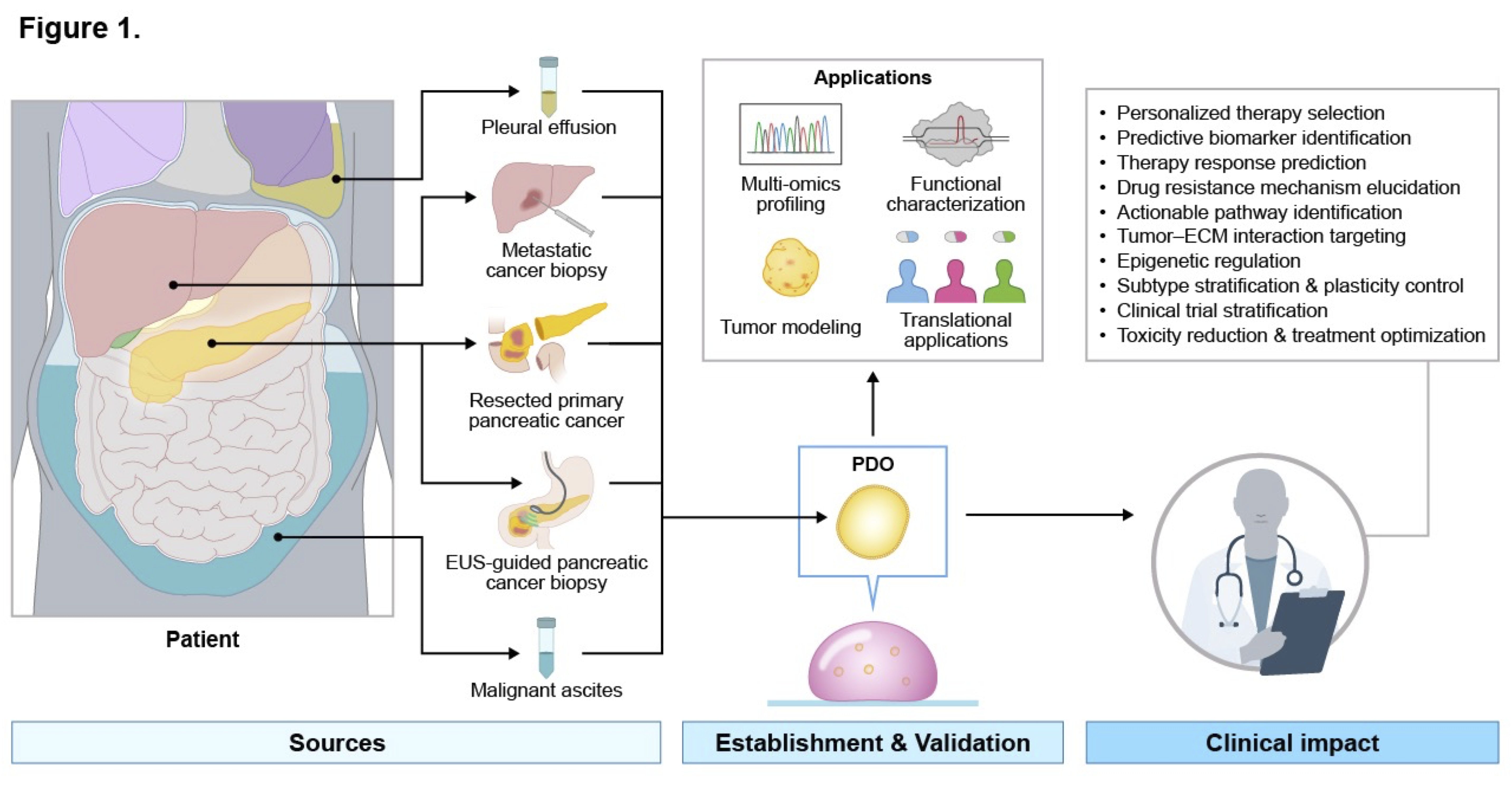
Pancreatic ductal adenocarcinoma (PDAC) remains one of the deadliest malignancies owing to late diagnosis, extensive intratumoral heterogeneity, a dense desmoplastic tumor microenvironment, and limited therapeutic responsiveness. Although current treatment regimens, including FOLFIRINOX and gemcitabine plus nab-paclitaxel, have modestly improved survival, chemoresistance and the lack of reliable predictive biomarkers continue to hinder precision oncology. Conventional two-dimensional cell lines and many in vivo models do not fully recapitulate the complex architecture, cellular interactions, and biological heterogeneity of human PDAC. Patient-derived organoids (PDOs) have emerged as physiologically relevant three-dimensional models that preserve the genetic, molecular, and phenotypic characteristics of the original tumor while enabling rapid ex vivo pharmacotyping and functional therapeutic evaluation. This review summarizes recent advances in PDAC organoid technology, including tissue acquisition, organoid establishment, molecular characterization, biobanking, and integration with cancer-associated fibroblasts, immune cells, endothelial cells, CRISPR/Cas9 genome editing, assembloid systems, and microfluidic organ-on-chip platforms. We further discuss the applications of PDOs in drug screening, molecular subtype characterization, modeling therapeutic resistance, and supporting precision treatment strategies, together with emerging evidence from prospective clinical studies. Finally, we critically examine the remaining translational challenges, including culture-induced phenotypic drift, limited microenvironmental complexity, interlaboratory variability, assay standardization, and regulatory implementation. Although PDOs represent promising platforms for functional precision oncology, widespread clinical adoption will require standardized methodologies, prospective multicenter validation, and regulatory qualification before routine integration into clinical decision-making.
References
1. Siegel RL, Giaquinto AN, Jemal A. Cancer statistics, 2024. CA Cancer J Clin. 2024;74(1):12-49. doi:10.3322/caac.21820
2. Rahib L, Smith BD, Aizenberg R, Rosenzweig AB, Fleshman JM, Matrisian LM. Projecting cancer incidence and deaths to 2030: the unexpected burden of thyroid, liver, and pancreas cancers in the United States. Cancer Res. 2014;74(11):2913-2921. doi:10.1158/0008-5472.CAN-14-0155
3. Dreyer SB, Beer P, Hingorani SR, Biankin AV. Improving outcomes of patients with pancreatic cancer. Nat Rev Clin Oncol. 2025;22(6):439-456. doi:10.1038/s41571-025-01019-9
4. Mizrahi JD, Surana R, Valle JW, Shroff RT. Pancreatic cancer. Lancet. 2020;395(10242):2008-2020. doi:10.1016/S0140-6736(20)30974-0
5. Conroy T, Desseigne F, Ychou M, Bouché O, Guimbaud R, Bécouarn Y, et al. FOLFIRINOX versus gemcitabine for metastatic pancreatic cancer. N Engl J Med. 2011;364(19):1817-1825. doi:10.1056/NEJMoa1011923
6. Von Hoff DD, Ervin T, Arena FP, Chiorean EG, Infante J, Moore M, et al. Increased survival in pancreatic cancer with nab-paclitaxel plus gemcitabine. N Engl J Med. 2013;369(18):1691-1703. doi:10.1056/NEJMoa1304369
7. Masters JR. Human cancer cell lines: fact and fantasy. Nat Rev Mol Cell Biol. 2000;1(3):233-236. doi:10.1038/35043102
8. Ben-David U, Siranosian B, Ha G, Tang H, Oren Y, Hinohara K, et al. Genetic and transcriptional evolution alters cancer cell line drug response. Nature. 2018;560(7718):325-330. doi:10.1038/s41586-018-0409-3
9. Feig C, Gopinathan A, Neesse A, Chan DS, Cook N, Tuveson DA. The pancreas cancer microenvironment. Clin Cancer Res. 2012;18(16):4266-4276. doi:10.1158/1078-0432.CCR-11-3114
10. Ho WJ, Jaffee EM, Zheng L. The tumour microenvironment in pancreatic cancer—clinical challenges and opportunities. Nat Rev Clin Oncol. 2020;17(9):527-540. doi:10.1038/s41571-020-0363-5
11. Hingorani SR, Wang L, Multani AS, Combs C, Deramaudt TB, Hruban RH, et al. Trp53R172H and KrasG12D cooperate to promote chromosomal instability and widely metastatic pancreatic ductal adenocarcinoma in mice. Cancer Cell. 2005;7(5):469-483. doi:10.1016/j.ccr.2005.04.023
12. Tentler JJ, Tan AC, Weekes CD, Jimeno A, Leong S, Pitts TM, et al. Patient-derived tumour xenografts as models for oncology drug development. Nat Rev Clin Oncol. 2012;9(6):338-350. doi:10.1038/nrclinonc.2012.61
13. Sato T, Vries RG, Snippert HJ, van de Wetering M, Barker N, Stange DE, et al. Single Lgr5 stem cells build crypt-villus structures in vitro without a mesenchymal niche. Nature. 2009;459(7244):262-265. doi:10.1038/nature07935
14. Lancaster MA, Knoblich JA. Organogenesis in a dish: modeling development and disease using organoid technologies. Science. 2014;345(6194):1247125. doi:10.1126/science.1247125
15. Boj SF, Hwang C-I, Baker LA, Chio IIC, Engle DD, Corbo V, et al. Organoid models of human and mouse ductal pancreatic cancer. Cell. 2015;160(1-2):324-338. doi:10.1016/j.cell.2014.12.021
16. Tiriac H, Belleau P, Engle DD, Plenker D, Deschênes A, Somerville TDD, et al. Organoid profiling identifies common responders to chemotherapy in pancreatic cancer. Cancer Discov. 2018;8(9):1112-1129. doi:10.1158/2159-8290.CD-18-0349
17. Hofer M, Lutolf MP. Engineering organoids. Nat Rev Mater. 2021;6(5):402-420. doi:10.1038/s41578-021-00279-y
18. Matano M, Date S, Shimokawa M, Takano A, Fujii M, Ohta Y, et al. Modeling colorectal cancer using CRISPR-Cas9-mediated engineering of human intestinal organoids. Nat Med. 2015;21(3):256-262. doi:10.1038/nm.3802
19. Seino T, Kawasaki S, Shimokawa M, Tamagawa H, Toshimitsu K, Fujii M, et al. Human pancreatic tumor organoids reveal loss of stem cell niche factor dependence during disease progression. Cell Stem Cell. 2018;22(3):454-467.e6. doi:10.1016/j.stem.2017.12.009
20. Lukonin I, Serra D, Challet Meylan L, Volkmann K, Baaten J, Zhao R, et al. Phenotypic landscape of intestinal organoid regeneration. Nature. 2020;586(7828):275-280. doi:10.1038/s41586-020-2776-9
21. Kim J, Koo B-K, Knoblich JA. Human organoids: model systems for human biology and medicine. Nat Rev Mol Cell Biol. 2020;21(10):571-584. doi:10.1038/s41580-020-0259-3
22. Huch M, Bonfanti P, Boj SF, Sato T, Loomans CJM, van de Wetering M, et al. Unlimited in vitro expansion of adult bi-potent pancreas progenitors through the Lgr5/R-spondin axis. EMBO J. 2013;32(20):2708-2721. doi:10.1038/emboj.2013.204
23. Driehuis E, van Hoeck A, Moore K, Kolders S, Francies HE, Gulersonmez MC, et al. Pancreatic cancer organoids recapitulate disease and allow personalized drug screening. Proc Natl Acad Sci U S A. 2019;116(52):26580-26590. doi:10.1073/pnas.1911273116
24. Wansch K, Schneider F, Dölvers F, Kühn A, Dragomir MP, Joosten M, et al. Identifying factors of organoid establishment in pancreatic cancer: A prospective observational study. Cancer Med. 2026;15(1):e71490. doi:10.1002/cam4.71490
25. Tsang CF, Patel H, Kouassi FM, Khandakar B, St Surin LG, Rouse JA, et al. Utility of pancreatic tumor scrapings for organoid development and precision medicine strategies. J Pathol. 2026;268(4):428-444. doi:10.1002/path.70025
26. Sljukic A, Green Jenkinson J, Niksic A, Prior N, Huch M. Advances in liver and pancreas organoids: how far we have come and where we go next. Nat Rev Gastroenterol Hepatol. 2026;23(1):44-64. doi:10.1038/s41575-025-01116-1
27. Demyan L, Habowski AN, Plenker D, King DA, Standring OJ, Tsang C, et al. Pancreatic cancer patient-derived organoids can predict response to neoadjuvant chemotherapy. Ann Surg. 2022;276(3):450-462. doi:10.1097/SLA.0000000000005558
28. Hennig A, Wolf L, Jahnke B, Polster H, Seidlitz T, Werner K, et al. CFTR expression analysis for subtyping of human pancreatic cancer organoids. Stem Cells Int. 2019;2019:1024614. doi:10.1155/2019/1024614
29. Matsumoto K, Fujimori N, Ichihara K, Takeno A, Murakami M, Ohno A, et al. Patient-derived organoids of pancreatic ductal adenocarcinoma for subtype determination and clinical outcome prediction. J Gastroenterol. 2024;59(7):629-640. doi:10.1007/s00535-024-02103-0
30. Beutel AK, Ekizce M, Ettrich TJ, Seufferlein T, Lindenmayer J, Gout J, et al. Organoid-based precision medicine in pancreatic cancer. United European Gastroenterol J. 2025;13(1):21-33. doi:10.1002/ueg2.12701
31. Tiriac H, Bucobo JC, Tzimas D, Grewel S, Lacomb JF, Rowehl LM, et al. Successful creation of pancreatic cancer organoids by means of EUS-guided fine-needle biopsy sampling for personalized cancer treatment. Gastrointest Endosc. 2018;87(6):1474-1480. doi:10.1016/j.gie.2017.12.032
32. Roe J-S, Hwang C-I, Somerville TDD, Milazzo JP, Lee EJ, Da Silva B, et al. Enhancer Reprogramming Promotes Pancreatic Cancer Metastasis. Cell. 2017;170(5):875-888.e20. doi:10.1016/j.cell.2017.07.007
33. Makohon-Moore AP, Zhang M, Reiter JG, Bozic I, Allen B, Kundu D, et al. Limited heterogeneity of known driver gene mutations among the metastases of individual patients with pancreatic cancer. Nat Genet. 2017;49(3):358-366. doi:10.1038/ng.3764
34. Choi W, Kim Y-H, Woo SM, Yu Y, Lee MR, Lee WJ, et al. Establishment of patient-derived organoids using ascitic or pleural fluid from cancer patients. Cancer Res Treat. 2023;55(4):1077-1086. doi:10.4143/crt.2022.1630
35. Seghers S, Le Compte M, Hendriks JMH, Van Schil P, Janssens A, Wener R, et al. A systematic review of patient-derived tumor organoids generation from malignant effusions. Crit Rev Oncol Hematol. 2024;195(104285):104285. doi:10.1016/j.critrevonc.2024.104285
36. D’Amour KA, Bang AG, Eliazer S, Kelly OG, Agulnick AD, Smart NG, et al. Production of pancreatic hormone-expressing endocrine cells from human embryonic stem cells. Nat Biotechnol. 2006;24(11):1392-1401. doi:10.1038/nbt1259
37. Takeuchi K, Tabe S, Takahashi K, Aoshima K, Matsuo M, Ueno Y, et al. Incorporation of human iPSC-derived stromal cells creates a pancreatic cancer organoid with heterogeneous cancer-associated fibroblasts. Cell Rep. 2023;42(11):113420. doi:10.1016/j.celrep.2023.113420
38. Huang L, Desai R, Conrad DN, Leite NC, Akshinthala D, Lim CM, et al. Commitment and oncogene-induced plasticity of human stem cell-derived pancreatic acinar and ductal organoids. Cell Stem Cell. 2021;28(6):1090-1104.e6. doi:10.1016/j.stem.2021.03.022
39. Takebe T, Wells JM. Organoids by design. Science. 2019;364(6444):956-959. doi:10.1126/science.aaw7567
40. Casamitjana J, Espinet E, Rovira M. Pancreatic organoids for regenerative medicine and cancer research. Front Cell Dev Biol. 2022;10:886153. doi:10.3389/fcell.2022.886153
41. Krieger TG, Le Blanc S, Jabs J, Ten FW, Ishaque N, Jechow K, et al. Single-cell analysis of patient-derived PDAC organoids reveals cell state heterogeneity and a conserved developmental hierarchy. Nat Commun. 2021;12(1):5826. doi:10.1038/s41467-021-26059-4
42. Seppälä TT, Zimmerman JW, Suri R, Zlomke H, Ivey GD, Szabolcs A, et al. Precision medicine in pancreatic cancer: patient-derived organoid pharmacotyping is a predictive biomarker of clinical treatment response. Clin Cancer Res. 2022;28(15):3296-3307. doi:10.1158/1078-0432.CCR-21-4165
43. Schuth S, Le Blanc S, Krieger TG, Jabs J, Schenk M, Giese NA, et al. Patient-specific modeling of stroma-mediated chemoresistance of pancreatic cancer using a three-dimensional organoid-fibroblast co-culture system. J Exp Clin Cancer Res. 2022;41(1):312. doi:10.1186/s13046-022-02519-7
44. Chew CA, Wun CM, Lee YF, Chee CE, Ho KY, Bonney GK. Functional precision in pancreatic cancer: redefining biomarkers with patient-derived organoids. Int J Mol Sci. 2025;26(18):9083. doi:10.3390/ijms26189083
45. Malik DA, Schmieder EAS, Genova G, Gaskins J, Martin RCG II. Organoids in translation: a bench-to-bedside framework for pancreatic cancer precision medicine. J Transl Med. 2026;24(1):136. doi:10.1186/s12967-025-07596-8
46. Ludwig TE, Andrews PW, Barbaric I, Benvenisty N, Bhattacharyya A, Crook JM, et al. ISSCR standards for the use of human stem cells in basic research. Stem Cell Reports. 2023;18(9):1744-1752. doi:10.1016/j.stemcr.2023.08.003
47. Farshadi EA, Wang W, Mohammad F, van der Oost E, Doukas M, van Eijck CHJ, et al. Tumor organoids improve mutation detection of pancreatic ductal adenocarcinoma. Sci Rep. 2024;14(1):25468. doi:10.1038/s41598-024-75888-y
48. Osorio-Vasquez V, Zhu J, Lumibao JC, Lande K, Peck KL, Stamp MK, et al. Patient-derived organoids reveal ductal dysfunction and CFTR-modulator responses in chronic pancreatitis. Cell Stem Cell. 2026 Jun 30. doi:10.1016/j.stem.2026.06.002
49. Raghavan S, Winter PS, Navia AW, Williams HL, DenAdel A, Lowder KE, et al. Microenvironment drives cell state, plasticity, and drug response in pancreatic cancer. Cell. 2021;184(25):6119-6137.e26. doi:10.1016/j.cell.2021.11.017
50. Huang W, Xu Z, Li S, Zhou J, Zhao B. Living biobanks of organoids: Valuable resource for translational research. Biopreserv Biobank. 2024;22(6):543-549. doi:10.1089/bio.2023.0142
51. Yao J, Yang M, Atteh L, Liu P, Mao Y, Meng W, et al. A pancreas tumor derived organoid study: from drug screen to precision medicine. Cancer Cell Int. 2021;21(1):398. doi:10.1186/s12935-021-02044-1
52. Hou S, Tiriac H, Sridharan BP, Scampavia L, Madoux F, Seldin J, et al. Advanced development of primary pancreatic organoid tumor models for high-throughput phenotypic drug screening. SLAS Discov. 2018;23(6):574-584. doi:10.1177/2472555218766842
53. Abouleila Y, Smabers LP, Voskuilen T, Doorn M, Verkerk R, Harada G, et al. Accelerating personalized medicine: miniaturized patient-derived organoid drug screening for predicting cancer treatment responses and beyond. NPJ Biomed Innov. 2026;3(1):16. doi:10.1038/s44385-026-00067-9
54. Song T, Zhang H, Luo Z, Shang L, Zhao Y. Primary human pancreatic cancer cells cultivation in microfluidic hydrogel microcapsules for drug evaluation. Adv Sci (Weinh). 2023;10(12):e2206004. doi:10.1002/advs.202206004
55. Lai Benjamin FL, Lu Rick X, Hu Y, Davenport HL, Dou W, Wang EY, et al. Recapitulating pancreatic tumor microenvironment through synergistic use of patient organoids and organ-on-a-chip vasculature. Adv Funct Mater. 2020;30(48):2000545. doi:10.1002/adfm.202000545
56. Wang M-J, Gao C, Huang X, Wang M, Zhang S, Gao X-P, et al. Establishing pancreatic cancer organoids from EUS-guided fine-needle biopsy specimens. Cancers (Basel). 2025;17(4):692. doi:10.3390/cancers17040692
57. Driehuis E, Gracanin A, Vries RGJ, Clevers H, Boj SF. Establishment of pancreatic organoids from normal tissue and tumors. STAR Protoc. 2020;1(3):100192. doi:10.1016/j.xpro.2020.100192
58. Broutier L, Andersson-Rolf A, Hindley CJ, Boj SF, Clevers H, Koo B-K, et al. Culture and establishment of self-renewing human and mouse adult liver and pancreas 3D organoids and their genetic manipulation. Nat Protoc. 2016;11(9):1724-1743. doi:10.1038/nprot.2016.097
59. Tamagawa H, Fujii M, Togasaki K, Seino T, Kawasaki S, Takano A, et al. Wnt-deficient and hypoxic environment orchestrates squamous reprogramming of human pancreatic ductal adenocarcinoma. Nat Cell Biol. 2024;26(10):1759-1772. doi:10.1038/s41556-024-01498-5
60. Seoane J, Gomis RR. TGF-β family signaling in tumor suppression and cancer progression. Cold Spring Harb Perspect Biol. 2017;9(12):a022277. doi:10.1101/cshperspect.a022277
61. Loza AJ, Koride S, Schimizzi GV, Li B, Sun SX, Longmore GD. Cell density and actomyosin contractility control the organization of migrating collectives within an epithelium. Mol Biol Cell. 2016;27(22):3459-3470. doi:10.1091/mbc.E16-05-0329
62. Watanabe K, Ueno M, Kamiya D, Nishiyama A, Matsumura M, Wataya T, et al. A ROCK inhibitor permits survival of dissociated human embryonic stem cells. Nat Biotechnol. 2007;25(6):681-686. doi:10.1038/nbt1310
63. Morceau F, El-Khoury V, Lee K, Berna MJ, Kwon Y-J. Pancreatic cancer organoids: modeling disease and guiding therapy. Cancers (Basel). 2025;17(23):3850. doi:10.3390/cancers17233850
64. Hogenson TL, Xie H, Phillips WJ, Toruner MD, Li JJ, Horn IP, et al. Culture media composition influences patient-derived organoid ability to predict therapeutic responses in gastrointestinal cancers. JCI Insight. 2022;7(22):e158060. doi:10.1172/jci.insight.158060
65. Papargyriou A, Najajreh M, Cook DP, Maurer CH, Bärthel S, Messal HA, et al. Heterogeneity-driven phenotypic plasticity and treatment response in branched-organoid models of pancreatic ductal adenocarcinoma. Nat Biomed Eng. 2025;9(6):836-864. doi:10.1038/s41551-024-01273-9
66. Shi X, Li Y, Yuan Q, Tang S, Guo S, Zhang Y, et al. Integrated profiling of human pancreatic cancer organoids reveals chromatin accessibility features associated with drug sensitivity. Nat Commun. 2022;13(1):2169. doi:10.1038/s41467-022-29857-6
67. Xu J, Pham MD, Corbo V, Ponz-Sarvise M, Oni T, Öhlund D, et al. Advancing pancreatic cancer research and therapeutics: the transformative role of organoid technology. Exp Mol Med. 2025;57(1):50-58. doi:10.1038/s12276-024-01378-w
68. Hanahan D. Hallmarks of cancer-Then and now, and beyond. Cell. 2026;189(8):2254-2277. doi:10.1016/j.cell.2025.12.049
69. Hanahan D, Weinberg RA. Hallmarks of cancer: the next generation. Cell. 2011;144(5):646-674. doi:10.1016/j.cell.2011.02.013
70. Polak R, Zhang ET, Kuo CJ. Cancer organoids 2.0: modelling the complexity of the tumour immune microenvironment. Nat Rev Cancer. 2024;24(8):523-539. doi:10.1038/s41568-024-00706-6
71. Bear AS, Vonderheide RH, O'Hara MH. Challenges and opportunities for pancreatic cancer immunotherapy. Cancer Cell. 2020;38(6):788-802. doi:10.1016/j.ccell.2020.08.004
72. Öhlund D, Handly-Santana A, Biffi G, Elyada E, Almeida AS, Ponz-Sarvise M, et al. Distinct populations of inflammatory fibroblasts and myofibroblasts in pancreatic cancer. J Exp Med. 2017;214(3):579-596. doi:10.1084/jem.20162024
73. Takeuchi K, Tabe S, Yamamoto Y, Takahashi K, Matsuo M, Ueno Y, et al. Protocol for generating a pancreatic cancer organoid associated with heterogeneous tumor microenvironment. STAR Protoc. 2025;6(1):103539. doi:10.1016/j.xpro.2024.103539
74. Neal JT, Li X, Zhu J, Giangarra V, Grzeskowiak CL, Ju J, et al. Organoid modeling of the tumor immune microenvironment. Cell. 2018;175(7):1972-1988.e16. doi:10.1016/j.cell.2018.11.021
75. Tsai S, McOlash L, Palen K, Johnson B, Duris C, Yang Q, et al. Development of primary human pancreatic cancer organoids, matched stromal and immune cells and 3D tumor microenvironment models. BMC Cancer. 2018;18(1):335. doi:10.1186/s12885-018-4238-4
76. Lahusen A, Cai J, Schirmbeck R, Wellstein A, Kleger A, Seufferlein T, et al. A pancreatic cancer organoid-in-matrix platform shows distinct sensitivities to T cell killing. Sci Rep. 2024;14(1):9377. doi:10.1038/s41598-024-60107-5
77. Zhou Z, Van der Jeught K, Li Y, Sharma S, Yu T, Moulana I, et al. A T cell-engaging tumor organoid platform for pancreatic cancer immunotherapy. Adv Sci (Weinh). 2023;10(23):e2300548. doi:10.1002/advs.202300548
78. Haque MR, Wessel CR, Leary DD, Wang C, Bhushan A, Bishehsari F. Patient-derived pancreatic cancer-on-a-chip recapitulates the tumor microenvironment. Microsyst Nanoeng. 2022;8(1):36. doi:10.1038/s41378-022-00370-6
79. Choi J-I, Jang SI, Hong J, Kim CH, Kwon SS, Park JS, et al. Cancer-initiating cells in human pancreatic cancer organoids are maintained by interactions with endothelial cells. Cancer Lett. 2021;498:42-53. doi:10.1016/j.canlet.2020.10.012
80. LeSavage BL, Zhang D, Huerta-López C, Gilchrist AE, Krajina BA, Karlsson K, et al. Engineered matrices reveal stiffness-mediated chemoresistance in patient-derived pancreatic cancer organoids. Nat Mater. 2024;23(8):1138-1149. doi:10.1038/s41563-024-01908-x
81. Randriamanantsoa S, Papargyriou A, Maurer HC, Peschke K, Schuster M, Zecchin G, et al. Spatiotemporal dynamics of self-organized branching in pancreas-derived organoids. Nat Commun. 2022;13(1):5219. doi:10.1038/s41467-022-32806-y
82. Wansch K, Pelzer U, Schneider F, Dölvers F, Kühn A, Dragomir MP, et al. Multi-drug pharmacotyping improves therapy prediction in pancreatic cancer organoids. Cancer Cell Int. 2025;25(1):321. doi:10.1186/s12935-025-03969-7
83. Hirt CK, Booij TH, Grob L, Simmler P, Toussaint NC, Keller D, et al. Drug screening and genome editing in human pancreatic cancer organoids identifies drug-gene interactions and candidates for off-label treatment. Cell Genom. 2022;2(2):100095. doi:10.1016/j.xgen.2022.100095
84. Duan X, Zhang T, Feng L, de Silva N, Greenspun B, Wang X, et al. A pancreatic cancer organoid platform identifies an inhibitor specific to mutant KRAS. Cell Stem Cell. 2024;31(1):71-88.e8. doi:10.1016/j.stem.2023.11.011
85. Gulay KCM, Zhang X, Pantazopoulou V, Patel J, Esparza E, Pran Babu DS, et al. Dual inhibition of KRASG12D and pan-ERBB is synergistic in pancreatic ductal adenocarcinoma. Cancer Res. 2023;83(18):3001-3012. doi:10.1158/0008-5472.CAN-23-1313
86. Zhou T, Xie Y, Hou X, Bai W, Li X, Liu Z, et al. Irbesartan overcomes gemcitabine resistance in pancreatic cancer by suppressing stemness and iron metabolism via inhibition of the Hippo/YAP1/c-Jun axis. J Exp Clin Cancer Res. 2023;42(1):111. doi:10.1186/s13046-023-02671-8
87. Hadj Bachir E, Poiraud C, Paget S, Stoup N, El Moghrabi S, Duchêne B, et al. A new pancreatic adenocarcinoma-derived organoid model of acquired chemoresistance to FOLFIRINOX: First insight of the underlying mechanisms. Biol Cell. 2022;114(1):32-55. doi:10.1111/boc.202100003
88. Le Compte M, De La Hoz EC, Peeters S, Fortes FR, Hermans C, Domen A, et al. Single-organoid analysis reveals clinically relevant treatment-resistant and invasive subclones in pancreatic cancer. NPJ Precis Oncol. 2023;7(1):128. doi:10.1038/s41698-023-00480-y
89. Knox JJ, O’Kane G, King D, Laheru D, Habowski AN, Yu K, et al. PASS-01: randomized phase II trial of modified FOLFIRINOX versus gemcitabine/nab-paclitaxel and molecular correlatives for previously untreated metastatic pancreatic cancer. J Clin Oncol. 2025;43(31):3355-3368. doi:10.1200/JCO-25-00436
90. Wang E, Xiang K, Zhang Y, Wang X-F. Patient-derived organoids (PDOs) and PDO-derived xenografts (PDOXs): new opportunities in establishing faithful pre-clinical cancer models. J Natl Cancer Cent. 2022;2(4):263-276. doi:10.1016/j.jncc.2022.10.001
91. Romero-Calvo I, Weber CR, Ray M, Brown M, Kirby K, Nandi RK, et al. Human organoids share structural and genetic features with primary pancreatic adenocarcinoma tumors. Mol Cancer Res. 2019;17(1):70-83. doi:10.1158/1541-7786.MCR-18-0531
92. Geyer M, Queiroz K. Microfluidic platforms for high-throughput pancreatic ductal adenocarcinoma organoid culture and drug screening. Front Cell Dev Biol. 2021;9:761807. doi:10.3389/fcell.2021.761807
93. Geyer M, Gaul L-M, D Agosto SL, Corbo V, Queiroz K. The tumor stroma influences immune cell distribution and recruitment in a PDAC-on-a-chip model. Front Immunol. 2023;14:1155085. doi:10.3389/fimmu.2023.1155085
94. Schuster B, Junkin M, Kashaf SS, Romero-Calvo I, Kirby K, Matthews J, et al. Automated microfluidic platform for dynamic and combinatorial drug screening of tumor organoids. Nat Commun. 2020;11(1):5271. doi:10.1038/s41467-020-19058-4
95. Jiao C, Karakaya OF, Dadgar N, Wehrle CJ, Massoud Z, Hong H, et al. Mastering organoid growth: a complete guide to overcoming methodological challenges. MedComm. 2026;7(1):e70571. doi:10.1002/mco2.70571
96. Boilève A, Cartry J, Goudarzi N, Bedja S, Mathieu JRR, Bani M-A, et al. Organoids for functional precision medicine in advanced pancreatic cancer. Gastroenterology. 2024;167(5):961-976.e13. doi:10.1053/j.gastro.2024.05.032
97. Sarno F, Tenorio J, Perea S, Medina L, Pazo-Cid R, Juez I, et al. A phase III randomized trial of integrated genomics and avatar models for personalized treatment of pancreatic cancer: the AVATAR trial. Clin Cancer Res. 2025;31(2):278-287. doi:10.1158/1078-0432.CCR-23-4026
Published
How to Cite
Issue
Section
License
Copyright (c) 2026 Hee Seung Lee, Bon-Kyoung Koo

This work is licensed under a Creative Commons Attribution 4.0 International License.
Copyright
Authors publishing in Cancer Biome and Targeted Therapy retain full copyright of their work. By submitting a manuscript, authors grant the publisher (GCINC Press) a non-exclusive license to publish, distribute, and archive the article, and to identify itself as the original publisher.
License
All articles are published open access under the terms of the Creative Commons Attribution 4.0 International License (CC BY 4.0).
https://creativecommons.org/licenses/by/4.0/. This license permits unrestricted use, distribution, reproduction, and adaptation in any medium, including for commercial purposes, provided that:
- Proper attribution is given to the original author(s) and source,
- A link to the license is provided, and
- Any changes made are clearly indicated.
Author Rights
Authors retain the right to:
- Use their article in future works (e.g., books, theses, lectures)
- Share and archive the final published version on institutional repositories or personal websites
- Adapt or translate their work, or authorize others to do so, with proper citation
Reuse by Third Parties
Content is licensed under the Creative Commons Attribution 4.0 International License (CC BY 4.0). Third parties may copy, redistribute, remix, transform, and build upon the material for any purpose, including commercial use, provided that appropriate credit is given to the original author(s).
Archiving and Preservation
All articles are made freely available immediately upon publication, without embargo. Cancer Biome and Targeted Therapy is hosted on the Open Journal Systems (OJS) platform, developed by the Public Knowledge Project (PKP). The journal participates in long-term digital preservation through the PKP Preservation Network (PKP PN) using the LOCKSS system. Authors are encouraged to self-archive in institutional repositories, disciplinary archives, and preprint servers in accordance with the license terms.




Funding data
-
National Research Foundation of Korea
Grant numbers RS-2024-00342475 -
Korea Health Industry Development Institute
Grant numbers RS-2025-25458830