Targeting Metabolic Heterogeneity in the Tumor Microenvironment: From Metabolic Plasticity to Therapeutic Vulnerability
DOI:
https://doi.org/10.66505/cbtt.v1i4.44Keywords:
Tumor microenvironment, Metabolic plasticity, Cancer metabolism, Therapy resistance, metabolic crosstalkAbstract
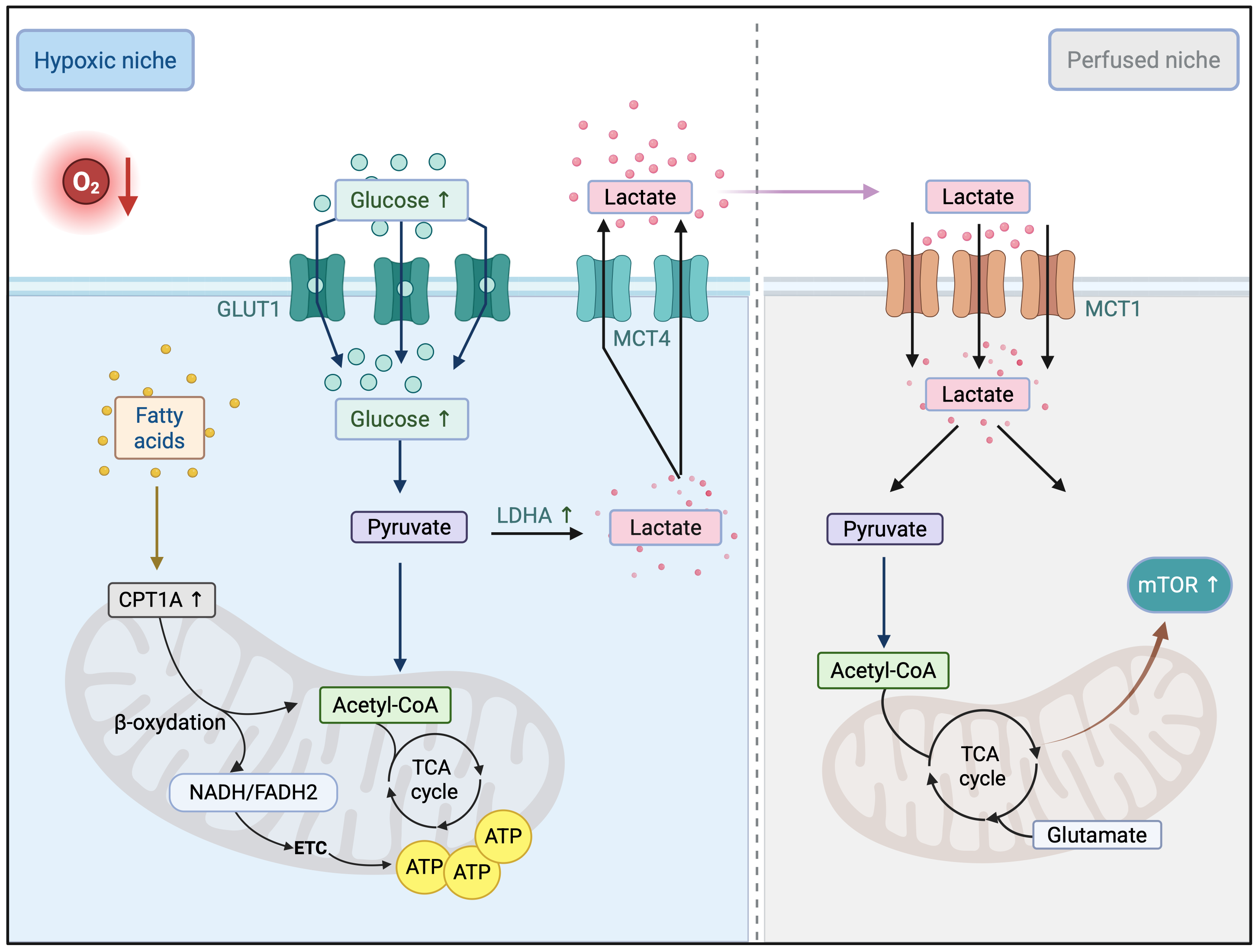
Metabolic heterogeneity has emerged as a defining feature of cancer, yet its origins and therapeutic implications are often considered in a cancer cell-centric manner. Here, we summarize evidence that metabolic diversity is instead dynamically co-regulated by cancer cells, stromal and immune compartments, and by the abnormal vasculature within the tumor microenvironment (TME). We discuss how spatial and temporal fluctuations in oxygen and nutrient availability generate distinct metabolic niches that select for phenotypic plasticity and adaptive cell states. Across these niches, cancer cells differentially engage glycolysis, oxidative phosphorylation (OXPHOS), glutamine and lipid metabolism, and stress-response pathways, generating metabolic states associated with proliferation, survival, metastatic capacity, and therapy resistance. Particular attention is given to tumor endothelial cells (TECs), whose metabolic states influence vascular function and nutrient distribution and may thereby contribute to intratumoral metabolic heterogeneity. In parallel, oncogenic mutations, tissue context, and treatment-induced stress remodel pathway usage and foster the emergence of metabolically adaptable, stem-like, and drug-tolerant populations. Thus, cancer metabolic heterogeneity is shaped by cellular and environmental crosstalk rather than as a static consequence of genetic variation alone. This framework has important translational implications: effective metabolic therapies will require context-aware strategies that target specific niche liabilities while accounting for vascular state, immune function, and adaptive rewiring. Defining when and where these metabolic states create selective dependencies will be essential for translating metabolic heterogeneity into therapeutically actionable vulnerabilities.
References
1. Warburg O. On the origin of cancer cells. Science. 1956;123(3191):309-314. doi:10.1126/science.123.3191.309
2. Hanahan D. Hallmarks of cancer-then and now, and beyond. Cell. 2026;189(8):2254-2277. doi:10.1016/j.cell.2025.12.049
3. Marusyk A, Almendro V, Polyak K. Intra-tumour heterogeneity: a looking glass for cancer? Nat Rev Cancer. 2012;12(5):323-334. doi:10.1038/nrc3261
4. Jamal-Hanjani M, Quezada SA, Larkin J, Swanton C. Translational implications of tumor heterogeneity. Clin Cancer Res. 2015;21(6):1258-1266. doi:10.1158/1078-0432.CCR-14-1429
5. Chen S, Jiang W, Du Y, Yang M, Pan Y, Li H, et al. Single-cell analysis technologies for cancer research: from tumor-specific single cell discovery to cancer therapy. Front Genet. 2023;14:1276959. doi:10.3389/fgene.2023.1276959
6. Lu P, Weaver VM, Werb Z. The extracellular matrix: a dynamic niche in cancer progression. J Cell Biol. 2012;196(4):395-406. doi:10.1083/jcb.201102147
7. Desgrosellier JS, Cheresh DA. Integrins in cancer: biological implications and therapeutic opportunities. Nat Rev Cancer. 2010;10(1):9-22. doi:10.1038/nrc2748
8. Lucchetti D, Ricciardi Tenore C, Colella F, Sgambato A. Extracellular vesicles and cancer: a focus on metabolism, cytokines, and immunity. Cancers (Basel). 2020;12(1):171. doi:10.3390/cancers12010171
9. Mun JY, Leem SH, Lee JH, Kim HS. Dual relationship between stromal cells and immune cells in the tumor microenvironment. Front Immunol. 2022;13:864739. doi:10.3389/fimmu.2022.864739
10. Zhao Y, Shen M, Wu L, Yang H, Yao Y, Yang Q, et al. Stromal cells in the tumor microenvironment: accomplices of tumor progression? Cell Death Dis. 2023;14(9):587. doi:10.1038/s41419-023-06110-6
11. Jain RK. Antiangiogenesis strategies revisited: from starving tumors to alleviating hypoxia. Cancer Cell. 2014;26(5):605-622. doi:10.1016/j.ccell.2014.10.006
12. Rohlenova K, Goveia J, García-Caballero M, Subramanian A, Kalucka J, Treps L, et al. Single-cell RNA sequencing maps endothelial metabolic plasticity in pathological angiogenesis. Cell Metab. 2020;31(4):862-877.e14. doi:10.1016/j.cmet.2020.03.009
13. Cantelmo AR, Conradi LC, Brajic A, Goveia J, Kalucka J, Pircher A, et al. Inhibition of the glycolytic activator PFKFB3 in endothelium induces tumor vessel normalization, impairs metastasis, and improves chemotherapy. Cancer Cell. 2016;30(6):968-985. doi:10.1016/j.ccell.2016.10.006
14. Hanahan D, Weinberg RA. Hallmarks of cancer: the next generation. Cell. 2011;144(5):646-674. doi:10.1016/j.cell.2011.02.013
15. Vander Heiden MG, DeBerardinis RJ. Understanding the intersections between metabolism and cancer biology. Cell. 2017;168(4):657-669. doi:10.1016/j.cell.2016.12.039
16. Haitzmann T, Thompson NB, Shah H, Schindlmaier K, Jelwan J, Eichmann TO, et al. Mannose supports lung cancer metabolism during glycolytic limitation. EMBO Rep. 2026;27(18):5365-5381. doi:10.1038/s44319-026-00874-6
17. Zheng Y, Cheng C, Cao Y, Cruz G, Zhang Y, Paturu R, et al. A stress-adaptive lipid kinase axis defines metabolic vulnerabilities in neuroendocrine prostate cancer. Cancer Cell. 2026;44(9):1761-1778.e12. doi:10.1016/j.ccell.2026.07.003
18. Tharp KM, Park S, Timblin GA, Richards AL, Berg JA, Twells NM, et al. The microenvironment dictates glyco-immune surveillance via HSF1-mediated metabolism. Sci Adv. 2026;12(32):eaeb1136. doi:10.1126/sciadv.aeb1136
19. Flint LE, Hamm G, Ready JD, Ling S, Duckett CJ, Cross NA, et al. Characterization of an aggregated three-dimensional cell culture model by multimodal mass spectrometry imaging. Anal Chem. 2020;92(18):12538-12547. doi:10.1021/acs.analchem.0c02389
20. Demicco M, Liu XZ, Leithner K, Fendt SM. Metabolic heterogeneity in cancer. Nat Metab. 2024;6(1):18-38. doi:10.1038/s42255-023-00963-z
21. Iqbal MA, Siddiqui S, Smith K, Singh P, Kumar B, Chouaib S, et al. Metabolic stratification of human breast tumors reveal subtypes of clinical and therapeutic relevance. iScience. 2023;26(10):108059. doi:10.1016/j.isci.2023.108059
22. Sun C, Wang A, Zhou Y, Chen P, Wang X, Huang J, et al. Spatially resolved multi-omics highlights cell-specific metabolic remodeling and interactions in gastric cancer. Nat Commun. 2023;14(1):2692. doi:10.1038/s41467-023-38360-5
23. Hsieh WC, Budiarto BR, Wang YF, Lin CY, Gwo MC, So DK, et al. Spatial multi-omics analyses of the tumor immune microenvironment. J Biomed Sci. 2022;29(1):96. doi:10.1186/s12929-022-00879-y
24. Andersson A, Larsson L, Stenbeck L, Salmén F, Ehinger A, Wu SZ, et al. Spatial deconvolution of HER2-positive breast cancer delineates tumor-associated cell type interactions. Nat Commun. 2021;12(1):6012. doi:10.1038/s41467-021-26271-2
25. Schmitt AM, Gätje FB, Tran MYR, Midelashvili T, Xu X, Fleischer JR, et al. Spatially-resolved subtype progression reveals metabolic vulnerabilities in pancreatic ductal adenocarcinoma. Mol Cancer. 2026;25(1):112. doi:10.1186/s12943-026-02628-3
26. Lee P, Chandel NS, Simon MC. Cellular adaptation to hypoxia through hypoxia inducible factors and beyond. Nat Rev Mol Cell Biol. 2020;21(5):268-283. doi:10.1038/s41580-020-0227-y
27. Kueckelhaus J, Frerich S, Kada-Benotmane J, Koupourtidou C, Ninkovic J, Dichgans M, et al. Inferring histology-associated gene expression gradients in spatial transcriptomic studies. Nat Commun. 2024;15(1):7280. doi:10.1038/s41467-024-50904-x
28. Miallot R, Galland F, Millet V, Blay JY, Naquet P. Metabolic landscapes in sarcomas. J Hematol Oncol. 2021;14(1):114. doi:10.1186/s13045-021-01125-y
29. Shen YA, Wang CY, Hsieh YT, Chen YJ, Wei YH. Metabolic reprogramming orchestrates cancer stem cell properties in nasopharyngeal carcinoma. Cell Cycle. 2015;14(1):86-98. doi:10.4161/15384101.2014.974419
30. Sancho P, Burgos-Ramos E, Tavera A, Bou Kheir T, Jagust P, Schoenhals M, et al. MYC/PGC-1α balance determines the metabolic phenotype and plasticity of pancreatic cancer stem cells. Cell Metab. 2015;22(4):590-605. doi:10.1016/j.cmet.2015.08.015
31. Lagadinou ED, Sach A, Callahan K, Rossi RM, Neering SJ, Minhajuddin M, et al. BCL-2 inhibition targets oxidative phosphorylation and selectively eradicates quiescent human leukemia stem cells. Cell Stem Cell. 2013;12(3):329-341. doi:10.1016/j.stem.2012.12.013
32. Vlashi E, Lagadec C, Vergnes L, Matsutani T, Masui K, Poulou M, et al. Metabolic state of glioma stem cells and nontumorigenic cells. Proc Natl Acad Sci U S A. 2011;108(38):16062-16067. doi:10.1073/pnas.1106704108
33. Vlashi E, Lagadec C, Vergnes L, Reue K, Frohnen P, Chan M, et al. Metabolic differences in breast cancer stem cells and differentiated progeny. Breast Cancer Res Treat. 2014;146(3):525-534. doi:10.1007/s10549-014-3051-2
34. Stevens BM, Jones CL, Pollyea DA, Culp-Hill R, D'Alessandro A, Winters A, et al. Fatty acid metabolism underlies venetoclax resistance in acute myeloid leukemia stem cells. Nat Cancer. 2020;1(12):1176-1187. doi:10.1038/s43018-020-00126-z
35. Jones CL, Stevens BM, D'Alessandro A, Reisz JA, Culp-Hill R, Nemkov T, et al. Inhibition of amino acid metabolism selectively targets human leukemia stem cells. Cancer Cell. 2018;34(5):724-740.e4. doi:10.1016/j.ccell.2018.10.005
36. Musella M, Guarracino A, Manduca N, Galassi C, Ruggiero E, Potenza A, et al. Type I IFNs promote cancer cell stemness by triggering the epigenetic regulator KDM1B. Nat Immunol. 2022;23(9):1379-1392. doi:10.1038/s41590-022-01290-3
37. Deng J, Li Y, Yin L, Liu S, Li Y, Liao W, et al. Histone lactylation enhances GCLC expression and thus promotes chemoresistance of colorectal cancer stem cells through inhibiting ferroptosis. Cell Death Dis. 2025;16(1):193. doi:10.1038/s41419-025-07498-z
38. Huang CK, Chang PH, Kuo WH, Chen CL, Jeng YM, Chang KJ, et al. Adipocytes promote malignant growth of breast tumours with monocarboxylate transporter 2 expression via β-hydroxybutyrate. Nat Commun. 2017;8:14706. doi:10.1038/ncomms14706
39. Ma L, Chen C, Zhao C, Li T, Ma L, Jiang J, et al. Targeting carnitine palmitoyl transferase 1A (CPT1A) induces ferroptosis and synergizes with immunotherapy in lung cancer. Signal Transduct Target Ther. 2024;9(1):64. doi:10.1038/s41392-024-01772-w
40. Bozgul SMK, Kurtulmus IA, Gunes A, Koymen G, Bozkurt D, Karaman ZT, et al. Lactate level is an independent predictor of mortality in patients with hematologic malignancy receiving urgent chemotherapy in intensive care unit. Curr Res Transl Med. 2024;72(4):103451. doi:10.1016/j.retram.2024.103451
41. Pan D, Zou B, Wang Y, Yu L. LDHA associated with telomerase-related genes promotes tumorigenesis and progression of lung adenocarcinoma. Sci Rep. 2025;15(1):41677. doi:10.1038/s41598-025-25626-9
42. Ban EJ, Kim D, Kim JK, Kang SW, Lee J, Jeong JJ, et al. Lactate dehydrogenase A as a potential new biomarker for thyroid cancer. Endocrinol Metab (Seoul). 2021;36(1):96-105. doi:10.3803/EnM.2020.819
43. Girgis H, Masui O, White NM, Scorilas A, Rotondo F, Seivwright A, et al. Lactate dehydrogenase A is a potential prognostic marker in clear cell renal cell carcinoma. Mol Cancer. 2014;13:101. doi:10.1186/1476-4598-13-101
44. Le A, Cooper CR, Gouw AM, Dinavahi R, Maitra A, Deck LM, et al. Inhibition of lactate dehydrogenase A induces oxidative stress and inhibits tumor progression. Proc Natl Acad Sci U S A. 2010;107(5):2037-2042. doi:10.1073/pnas.0914433107
45. Hui S, Ghergurovich JM, Morscher RJ, Jang C, Teng X, Lu W, et al. Glucose feeds the TCA cycle via circulating lactate. Nature. 2017;551(7678):115-118. doi:10.1038/nature24057
46. Sonveaux P, Copetti T, De Saedeleer CJ, Végran F, Verrax J, Kennedy KM, et al. Targeting the lactate transporter MCT1 in endothelial cells inhibits lactate-induced HIF-1 activation and tumor angiogenesis. PLoS One. 2012;7(3):e33418. doi:10.1371/journal.pone.0033418
47. Fiaschi T, Marini A, Giannoni E, Taddei ML, Gandellini P, De Donatis A, et al. Reciprocal metabolic reprogramming through lactate shuttle coordinately influences tumor-stroma interplay. Cancer Res. 2012;72(19):5130-5140. doi:10.1158/0008-5472.CAN-12-1949
48. Rauseo D, Contreras-Baeza Y, Salazar M, Galarza AJ, Holtheuer-Gallardo S, Faurand H, et al. Mitochondrial lactate venting limits oxidative stress. Cell Metab. 2026;38(6):1130-1140.e6. doi:10.1016/j.cmet.2026.02.020
49. Estrella V, Chen T, Lloyd M, Wojtkowiak J, Cornnell HH, Ibrahim-Hashim A, et al. Acidity generated by the tumor microenvironment drives local invasion. Cancer Res. 2013;73(5):1524-1535. doi:10.1158/0008-5472.CAN-12-2796
50. Colegio OR, Chu NQ, Szabo AL, Chu T, Rhebergen AM, Jairam V, et al. Functional polarization of tumour-associated macrophages by tumour-derived lactic acid. Nature. 2014;513(7519):559-563. doi:10.1038/nature13490
51. Brand A, Singer K, Koehl GE, Kolitzus M, Schoenhammer G, Thiel A, et al. LDHA-associated lactic acid production blunts tumor immunosurveillance by T and NK cells. Cell Metab. 2016;24(5):657-671. doi:10.1016/j.cmet.2016.08.011
52. Husain Z, Huang Y, Seth P, Sukhatme VP. Tumor-derived lactate modifies antitumor immune response: effect on myeloid-derived suppressor cells and NK cells. J Immunol. 2013;191(3):1486-1495. doi:10.4049/jimmunol.1202702
53. Lundø K, Dmytriyeva O, Spøhr L, Goncalves-Alves E, Yao J, Blasco LP, et al. Lactate receptor GPR81 drives breast cancer growth and invasiveness through regulation of ECM properties and Notch ligand DLL4. BMC Cancer. 2023;23(1):1136. doi:10.1186/s12885-023-11631-6
54. Liu C, Wu J, Zhu J, Kuei C, Yu J, Shelton J, et al. Lactate inhibits lipolysis in fat cells through activation of an orphan G-protein-coupled receptor, GPR81. J Biol Chem. 2009;284(5):2811-2822. doi:10.1074/jbc.M806409200
55. Ding R, Yuan Y, Xu T, Zhang J, Zhu Y, Yao B, et al. MCT4-mediated lactate efflux promotes STING-dependent dendritic cell antitumor immunity. Cell Rep. 2026;45(8):117778. doi:10.1016/j.celrep.2026.117778
56. Lu Y, Yang Y, Chang T, Jiang Q, Yang C, Fu C, et al. Lactate drives CD38 signaling to promote epithelial-mesenchymal transition through Snail induction in non-small cell lung cancer cells. J Cell Commun Signal. 2024;18(1):e12018. doi:10.1002/ccs3.12018
57. Zhang D, Tang Z, Huang H, Zhou G, Cui C, Weng Y, et al. Metabolic regulation of gene expression by histone lactylation. Nature. 2019;574(7779):575-580. doi:10.1038/s41586-019-1678-1
58. Deng X, Huang Y, Zhang J, Chen Y, Jiang F, Zhang Z, et al. Histone lactylation regulates PRKN-mediated mitophagy to promote M2 macrophage polarization in bladder cancer. Int Immunopharmacol. 2025;148:114119. doi:10.1016/j.intimp.2025.114119
59. Bhutia YD, Babu E, Ramachandran S, Ganapathy V. Amino acid transporters in cancer and their relevance to "glutamine addiction": novel targets for the design of a new class of anticancer drugs. Cancer Res. 2015;75(9):1782-1788. doi:10.1158/0008-5472.CAN-14-3745
60. Cluntun AA, Lukey MJ, Cerione RA, Locasale JW. Glutamine metabolism in cancer: understanding the heterogeneity. Trends Cancer. 2017;3(3):169-180. doi:10.1016/j.trecan.2017.01.005
61. Leone RD, Zhao L, Englert JM, Sun IM, Oh MH, Sun IH, et al. Glutamine blockade induces divergent metabolic programs to overcome tumor immune evasion. Science. 2019;366(6468):1013-1021. doi:10.1126/science.aav2588
62. Nguyen T, Kirsch BJ, Asaka R, Nabi K, Quinones A, Tan J, et al. Uncovering the role of N-acetyl-aspartyl-glutamate as a glutamate reservoir in cancer. Cell Rep. 2019;27(2):491-501.e6. doi:10.1016/j.celrep.2019.03.036
63. Udupa S, Nguyen S, Hoang G, Nguyen T, Quinones A, Pham K, et al. Upregulation of the glutaminase II pathway contributes to glutamate production upon glutaminase 1 inhibition in pancreatic cancer. Proteomics. 2019;19(21-22):e1800451. doi:10.1002/pmic.201800451
64. Reinfeld BI, Madden MZ, Wolf MM, Chytil A, Bader JE, Patterson AR, et al. Cell-programmed nutrient partitioning in the tumour microenvironment. Nature. 2021;593(7858):282-288. doi:10.1038/s41586-021-03442-1
65. Cruzat V, Rogero MM, Keane KN, Curi R, Newsholme P. Glutamine: metabolism and immune function, supplementation and clinical translation. Nutrients. 2018;10(11):1564. doi:10.3390/nu10111564
66. Guo C, You Z, Shi H, Sun Y, Du X, Palacios G, et al. SLC38A2 and glutamine signalling in cDC1s dictate anti-tumour immunity. Nature. 2023;620(7972):200-208. doi:10.1038/s41586-023-06299-8
67. Liu PS, Wang H, Li X, Chao T, Teav T, Christen S, et al. α-ketoglutarate orchestrates macrophage activation through metabolic and epigenetic reprogramming. Nat Immunol. 2017;18(9):985-994. doi:10.1038/ni.3796
68. Ju X, Putz EM, Liu Y, Yuan D, Sun G, Koda S, et al. Metabotropic glutamate receptor 4-mediated glutamatergic signaling reshapes the tumor microenvironment by regulating dendritic cell maturation. Nat Commun. 2025;16(1):5874. doi:10.1038/s41467-025-60922-y
69. Carr EL, Kelman A, Wu GS, Gopaul R, Senkevitch E, Aghvanyan A, et al. Glutamine uptake and metabolism are coordinately regulated by ERK/MAPK during T lymphocyte activation. J Immunol. 2010;185(2):1037-1044. doi:10.4049/jimmunol.0903586
70. Metzler B, Gfeller P, Guinet E. Restricting glutamine or glutamine-dependent purine and pyrimidine syntheses promotes human T cells with high FOXP3 expression and regulatory properties. J Immunol. 2016;196(9):3618-3630. doi:10.4049/jimmunol.1501756
71. Zhang H, Liu J, Yuan W, Zhang Q, Luo X, Li Y, et al. Ammonia-induced lysosomal and mitochondrial damage causes cell death of effector CD8+ T cells. Nat Cell Biol. 2024;26(11):1892-1902. doi:10.1038/s41556-024-01503-x
72. Munir R, Lisec J, Swinnen JV, Zaidi N. Lipid metabolism in cancer cells under metabolic stress. Br J Cancer. 2019;120(12):1090-1098. doi:10.1038/s41416-019-0451-4
73. Koizume S, Miyagi Y. Lipid droplets: a key cellular organelle associated with cancer cell survival under normoxia and hypoxia. Int J Mol Sci. 2016;17(9):1430. doi:10.3390/ijms17091430
74. Corn KC, Windham MA, Rafat M. Lipids in the tumor microenvironment: from cancer progression to treatment. Prog Lipid Res. 2020;80:101055. doi:10.1016/j.plipres.2020.101055
75. Gyamfi J, Yeo JH, Kwon D, Min BS, Cha YJ, Koo JS, et al. Interaction between CD36 and FABP4 modulates adipocyte-induced fatty acid import and metabolism in breast cancer. NPJ Breast Cancer. 2021;7(1):129. doi:10.1038/s41523-021-00324-7
76. Rysman E, Brusselmans K, Scheys K, Timmermans L, Derua R, Munck S, et al. De novo lipogenesis protects cancer cells from free radicals and chemotherapeutics by promoting membrane lipid saturation. Cancer Res. 2010;70(20):8117-8126. doi:10.1158/0008-5472.CAN-09-3871
77. Zhou Q, Meng Y, Li D, Yao L, Le J, Liu Y, et al. Ferroptosis in cancer: from molecular mechanisms to therapeutic strategies. Signal Transduct Target Ther. 2024;9(1):55. doi:10.1038/s41392-024-01769-5
78. Ubellacker JM, Tasdogan A, Ramesh V, Shen B, Mitchell EC, Martin-Sandoval M, et al. Lymph protects metastasizing melanoma cells from ferroptosis. Nature. 2020;585(7823):113-118. doi:10.1038/s41586-020-2623-z
79. Qiu B, Zandkarimi F, Bezjian CT, Reznik E, Soni RK, Gu W, et al. Phospholipids with two polyunsaturated fatty acyl tails promote ferroptosis. Cell. 2024;187(5):1177-1190.e18. doi:10.1016/j.cell.2024.01.030
80. Kagan VE, Mao G, Qu F, Angeli JP, Doll S, Croix CS, et al. Oxidized arachidonic and adrenic PEs navigate cells to ferroptosis. Nat Chem Biol. 2017;13(1):81-90. doi:10.1038/nchembio.2238
81. Doll S, Porto Freitas F, Shah R, Aldrovandi M, Costa da Silva M, Ingold I, et al. FSP1 is a glutathione-independent ferroptosis suppressor. Nature. 2019;575(7784):693-698. doi:10.1038/s41586-019-1707-0
82. Yang WS, SriRamaratnam R, Welsch ME, Shimada K, Skouta R, Viswanathan VS, et al. Regulation of ferroptotic cancer cell death by GPX4. Cell. 2014;156(1-2):317-331. doi:10.1016/j.cell.2013.12.010
83. Bersuker K, Hendricks JM, Li Z, Magtanong L, Ford B, Tang PH, et al. The CoQ oxidoreductase FSP1 acts parallel to GPX4 to inhibit ferroptosis. Nature. 2019;575(7784):688-692. doi:10.1038/s41586-019-1705-2
84. Meng Y, Zhou Q, Zhao D, Su H, Le J, Li D, et al. Microenvironmental prostaglandin F2α antagonizes FSP1 in cancer cells to sensitize tumors to ferroptosis and immunotherapy. Cancer Res. 2026. doi:10.1158/0008-5472.CAN-25-5697
85. Wu H, Han Y, Rodriguez Sillke Y, Deng H, Siddiqui S, Treese C, et al. Lipid droplet-dependent fatty acid metabolism controls the immune suppressive phenotype of tumor-associated macrophages. EMBO Mol Med. 2019;11(11):e10698. doi:10.15252/emmm.201910698
86. Pacella I, Procaccini C, Focaccetti C, Miacci S, Timperi E, Faicchia D, et al. Fatty acid metabolism complements glycolysis in the selective regulatory T cell expansion during tumor growth. Proc Natl Acad Sci U S A. 2018;115(28):E6546-E6555. doi:10.1073/pnas.1720113115
87. Wang H, Franco F, Tsui YC, Xie X, Trefny MP, Zappasodi R, et al. CD36-mediated metabolic adaptation supports regulatory T cell survival and function in tumors. Nat Immunol. 2020;21(3):298-308. doi:10.1038/s41590-019-0589-5
88. Vandekeere A, Fernández-García J, Peng-Winkler Y, Martín Pérez M, Liu M, Fernandes SI, et al. Palmitate promotes liver metastases by decreasing neutrophil antitumour behaviour. Nat Metab. 2026;8(8):1730-1750. doi:10.1038/s42255-026-01582-0
89. Xu S, Chaudhary O, Rodríguez-Morales P, Sun X, Chen D, Zappasodi R, et al. Uptake of oxidized lipids by the scavenger receptor CD36 promotes lipid peroxidation and dysfunction in CD8+ T cells in tumors. Immunity. 2021;54(7):1561-1577.e7. doi:10.1016/j.immuni.2021.05.003
90. Ma X, Xiao L, Liu L, Ye L, Su P, Bi E, et al. CD36-mediated ferroptosis dampens intratumoral CD8+ T cell effector function and impairs their antitumor ability. Cell Metab. 2021;33(5):1001-1012.e5. doi:10.1016/j.cmet.2021.02.015
91. Drijvers JM, Gillis JE, Muijlwijk T, Nguyen TH, Gaudiano EF, Harris IS, et al. Pharmacologic screening identifies metabolic vulnerabilities of CD8+ T cells. Cancer Immunol Res. 2021;9(2):184-199. doi:10.1158/2326-6066.CIR-20-0384
92. Chen S, Fan J, Xie P, Ahn J, Fernandez M, Billingham LK, et al. CD8+ T cells sustain antitumor response by mediating crosstalk between adenosine A2A receptor and glutathione/GPX4. J Clin Invest. 2024;134(8):e170071. doi:10.1172/JCI170071
93. Matsushita M, Freigang S, Schneider C, Conrad M, Bornkamm GW, Kopf M. T cell lipid peroxidation induces ferroptosis and prevents immunity to infection. J Exp Med. 2015;212(4):555-568. doi:10.1084/jem.20140857
94. Mullen NJ, Singh PK. Nucleotide metabolism: a pan-cancer metabolic dependency. Nat Rev Cancer. 2023;23(5):275-294. doi:10.1038/s41568-023-00557-7
95. Carmona-Fontaine C, Deforet M, Akkari L, Thompson CB, Joyce JA, Xavier JB. Metabolic origins of spatial organization in the tumor microenvironment. Proc Natl Acad Sci U S A. 2017;114(11):2934-2939. doi:10.1073/pnas.1700600114
96. Nisar H, Sanchidrián González PM, Brauny M, Labonté FM, Schmitz C, Roggan MD, et al. Hypoxia changes energy metabolism and growth rate in non-small cell lung cancer cells. Cancers (Basel). 2023;15(9):2472. doi:10.3390/cancers15092472
97. Martí JM, Fernández-Cortés M, Serrano-Sáenz S, Zamudio-Martinez E, Delgado-Bellido D, Garcia-Diaz A, et al. The Multifactorial Role of PARP-1 in Tumor Microenvironment. Cancers (Basel). 2020;12(3):739. doi:10.3390/cancers12030739
98. Vida A, Márton J, Mikó E, Bai P. Metabolic roles of poly(ADP-ribose) polymerases. Semin Cell Dev Biol. 2017;63:135-143. doi:10.1016/j.semcdb.2016.12.009
99. Jeong KY, Sim JJ, Park M, Kim HM. Accumulation of poly (adenosine diphosphate-ribose) by sustained supply of calcium inducing mitochondrial stress in pancreatic cancer cells. World J Gastroenterol. 2022;28(27):3422-3434. doi:10.3748/wjg.v28.i27.3422
100. Tanuma SI, Shibui Y, Oyama T, Uchiumi F, Abe H. Targeting poly(ADP-ribose) glycohydrolase to draw apoptosis codes in cancer. Biochem Pharmacol. 2019;167:163-172. doi:10.1016/j.bcp.2019.06.004
101. Demény MA, Virág L. The PARP enzyme family and the hallmarks of cancer part 1. cell intrinsic hallmarks. Cancers (Basel). 2021;13(9):2042. doi:10.3390/cancers13092042
102. Nagashima H, Lee CK, Tateishi K, Higuchi F, Subramanian M, Rafferty S, et al. Poly(ADP-ribose) glycohydrolase inhibition sequesters NAD+ to potentiate the metabolic lethality of alkylating chemotherapy in IDH-mutant tumor cells. Cancer Discov. 2020;10(11):1672-1689. doi:10.1158/2159-8290.CD-20-0226
103. Vultaggio-Poma V, Sarti AC, Di Virgilio F. Extracellular ATP: a feasible target for cancer therapy. Cells. 2020;9(11):2496. doi:10.3390/cells9112496
104. Yegutkin GG, Boison D. ATP and adenosine metabolism in cancer: exploitation for therapeutic gain. Pharmacol Rev. 2022;74(3):797-822. doi:10.1124/pharmrev.121.000528
105. Huang F, Huffman KE, Wang Z, Wang X, Li K, Cai F, et al. Guanosine triphosphate links MYC-dependent metabolic and ribosome programs in small-cell lung cancer. J Clin Invest. 2021;131(1):e139929. doi:10.1172/JCI139929
106. Pramono AA, Rather GM, Herman H, Lestari K, Bertino JR. NAD- and NADPH-contributing enzymes as therapeutic targets in cancer: an overview. Biomolecules. 2020;10(3):358. doi:10.3390/biom10030358
107. Ju HQ, Lin JF, Tian T, Xie D, Xu RH. NADPH homeostasis in cancer: functions, mechanisms and therapeutic implications. Signal Transduct Target Ther. 2020;5(1):231. doi:10.1038/s41392-020-00326-0
108. Ying M, You D, Zhu X, Cai L, Zeng S, Hu X. Lactate and glutamine support NADPH generation in cancer cells under glucose deprived conditions. Redox Biol. 2021;46:102065. doi:10.1016/j.redox.2021.102065
109. Zhang Y, Xu Y, Lu W, Li J, Yu S, Brown EJ, et al. G6PD-mediated increase in de novo NADP+ biosynthesis promotes antioxidant defense and tumor metastasis. Sci Adv. 2022;8(29):eabo0404. doi:10.1126/sciadv.abo0404
110. Martínez-Reyes I, Chandel NS. Mitochondrial TCA cycle metabolites control physiology and disease. Nat Commun. 2020;11(1):102. doi:10.1038/s41467-019-13668-3
111. Bhowmick R, Sarkar RR. Differential suitability of reactive oxygen species and the role of glutathione in regulating paradoxical behavior in gliomas: a mathematical perspective. PLoS One. 2020;15(6):e0235204. doi:10.1371/journal.pone.0235204
112. Sullivan MR, Danai LV, Lewis CA, Chan SH, Gui DY, Kunchok T, et al. Quantification of microenvironmental metabolites in murine cancers reveals determinants of tumor nutrient availability. Elife. 2019;8:e44235. doi:10.7554/eLife.44235
113. Ricoult SJH, Yecies JL, Ben-Sahra I, Manning BD. Oncogenic PI3K and K-Ras stimulate de novo lipid synthesis through mTORC1 and SREBP. Oncogene. 2016;35(10):1250-1260. doi:10.1038/onc.2015.179
114. Goncalves MD, Lu C, Tutnauer J, Hartman TE, Hwang SK, Murphy CJ, et al. High-fructose corn syrup enhances intestinal tumor growth in mice. Science. 2019;363(6433):1345-1349. doi:10.1126/science.aat8515
115. McIntyre CL, Temesgen A, Lynch L. Diet, nutrient supply, and tumor immune responses. Trends Cancer. 2023;9(9):752-763. doi:10.1016/j.trecan.2023.06.003
116. Albini A, Cantelmo AR, Mortara L, Noonan DM, Corso G. Cancer prevention and interception with antidiabetic and anti-obesity drugs: current and future perspectives. Semin Cancer Biol. 2025;115:40-52. doi:10.1016/j.semcancer.2025.07.008
117. Mei L, He L, Song Y, Lv Y, Zhang L, Hao F, et al. Association between obesity with disease-free survival and overall survival in triple-negative breast cancer: a meta-analysis. Medicine (Baltimore). 2018;97(19):e0719. doi:10.1097/MD.0000000000010719
118. Menyhárt O, Győrffy B. Dietary approaches for exploiting metabolic vulnerabilities in cancer. Biochim Biophys Acta Rev Cancer. 2024;1879(2):189062. doi:10.1016/j.bbcan.2023.189062
119. Hopkins BD, Pauli C, Du X, Wang DG, Li X, Wu D, et al. Suppression of insulin feedback enhances the efficacy of PI3K inhibitors. Nature. 2018;560(7719):499-503. doi:10.1038/s41586-018-0343-4
120. Dang CV. MYC on the path to cancer. Cell. 2012;149(1):22-35. doi:10.1016/j.cell.2012.03.003
121. Wu R, Zhu H, He Q, Yuan T, Yang B. Metabolic reprogramming in KRAS-mutant cancers: proven targetable vulnerabilities and potential therapeutic strategies. Drug Discov Today. 2024;29(12):104220. doi:10.1016/j.drudis.2024.104220
122. Liu H, Liang Z, Zhou C, Zeng Z, Wang F, Hu T, et al. Mutant KRAS triggers functional reprogramming of tumor-associated macrophages in colorectal cancer. Signal Transduct Target Ther. 2021;6(1):144. doi:10.1038/s41392-021-00534-2
123. Ying H, Kimmelman AC, Lyssiotis CA, Hua S, Chu GC, Fletcher-Sananikone E, et al. Oncogenic Kras maintains pancreatic tumors through regulation of anabolic glucose metabolism. Cell. 2012;149(3):656-670. doi:10.1016/j.cell.2012.01.058
124. Son J, Lyssiotis CA, Ying H, Wang X, Hua S, Ligorio M, et al. Glutamine supports pancreatic cancer growth through a KRAS-regulated metabolic pathway. Nature. 2013;496(7443):101-105. doi:10.1038/nature12040
125. Hao Y, Samuels Y, Li Q, Krokowski D, Guan BJ, Wang C, et al. Oncogenic PIK3CA mutations reprogram glutamine metabolism in colorectal cancer. Nat Commun. 2016;7:11971. doi:10.1038/ncomms11971
126. Kawauchi K, Araki K, Tobiume K, Tanaka N. p53 regulates glucose metabolism through an IKK-NF-kappaB pathway and inhibits cell transformation. Nat Cell Biol. 2008;10(5):611-618. doi:10.1038/ncb1724
127. Ou Y, Wang SJ, Jiang L, Zheng B, Gu W. p53 protein-mediated regulation of phosphoglycerate dehydrogenase (PHGDH) is crucial for the apoptotic response upon serine starvation. J Biol Chem. 2015;290(1):457-446. doi:10.1074/jbc.M114.616359
128. Liu T, Du J, Cheng X, Wei J. Integrative analysis of the role of TP53 in human pan-cancer. Curr Issues Mol Biol. 2023;45(12):9606-9633. doi:10.3390/cimb45120601
129. Laue K, Pozzi S, Zerbib J, Bertolio R, Eliezer Y, Cohen-Sharir Y, et al. p53 inactivation drives breast cancer metastasis to the brain through SCD1 upregulation and increased fatty acid metabolism. Nat Genet. 2026;58(1):116-131. doi:10.1038/s41588-025-02446-1
130. Cha PH, Hwang JH, Kwak DK, Koh E, Kim KS, Choi KY. APC loss induces Warburg effect via increased PKM2 transcription in colorectal cancer. Br J Cancer. 2021;124(3):634-644. doi:10.1038/s41416-020-01118-7
131. O'Malley C, Pidgeon GP. The mTOR pathway in obesity driven gastrointestinal cancers: potential targets and clinical trials. BBA Clin. 2015;5:29-40. doi:10.1016/j.bbacli.2015.11.003
132. Montoya T, Lee JV, Qiu L, Krall A, Matulionis N, Seo Y, et al. Alanine catabolism as a targetable vulnerability for MYC-driven liver cancer. Cell Rep. 2026;45(4):117107. doi:10.1016/j.celrep.2026.117107
133. Yuneva MO, Fan TWM, Allen TD, Higashi RM, Ferraris DV, Tsukamoto T, et al. The metabolic profile of tumors depends on both the responsible genetic lesion and tissue type. Cell Metab. 2012;15(2):157-170. doi:10.1016/j.cmet.2011.12.015
134. Xiao M, Yang H, Xu W, Ma S, Lin H, Zhu H, et al. Inhibition of α-KG-dependent histone and DNA demethylases by fumarate and succinate that are accumulated in mutations of FH and SDH tumor suppressors. Genes Dev. 2012;26(12):1326-1338. doi:10.1101/gad.191056.112
135. Sulkowski PL, Oeck S, Dow J, Economos NG, Mirfakhraie L, Liu Y, et al. Oncometabolites suppress DNA repair by disrupting local chromatin signalling. Nature. 2020;582(7813):586-591. doi:10.1038/s41586-020-2363-0
136. Masui K, Harachi M, Cavenee WK, Mischel PS, Shibata N. Codependency of metabolism and epigenetics drives cancer progression: a review. Acta Histochem Cytochem. 2020;53(1):1-10. doi:10.1267/ahc.20002
137. Dang L, White DW, Gross S, Bennett BD, Bittinger MA, Driggers EM, et al. Cancer-associated IDH1 mutations produce 2-hydroxyglutarate. Nature. 2009;462(7274):739-744. doi:10.1038/nature08617
138. Figueroa ME, Abdel-Wahab O, Lu C, Ward PS, Patel J, Shih A, et al. Leukemic IDH1 and IDH2 mutations result in a hypermethylation phenotype, disrupt TET2 function, and impair hematopoietic differentiation. Cancer Cell. 2010;18(6):553-567. doi:10.1016/j.ccr.2010.11.015
139. Elyada E, Bolisetty M, Laise P, Flynn WF, Courtois ET, Burkhart RA, et al. Cross-species single-cell analysis of pancreatic ductal adenocarcinoma reveals antigen-presenting cancer-associated fibroblasts. Cancer Discov. 2019;9(8):1102-1123. doi:10.1158/2159-8290.CD-19-0094
140. Guido C, Whitaker-Menezes D, Capparelli C, Balliet R, Lin Z, Pestell RG, et al. Metabolic reprogramming of cancer-associated fibroblasts by TGF-β drives tumor growth: connecting TGF-β signaling with "Warburg-like" cancer metabolism and L-lactate production. Cell Cycle. 2012;11(16):3019-3035. doi:10.4161/cc.21384
141. Yan W, Wu X, Zhou W, Fong MY, Cao M, Liu J, et al. Cancer-cell-secreted exosomal miR-105 promotes tumour growth through the MYC-dependent metabolic reprogramming of stromal cells. Nat Cell Biol. 2018;20(5):597-609. doi:10.1038/s41556-018-0083-6
142. Li X, Xu Q, Wu Y, Li J, Tang D, Han L, et al. A CCL2/ROS autoregulation loop is critical for cancer-associated fibroblasts-enhanced tumor growth of oral squamous cell carcinoma. Carcinogenesis. 2014;35(6):1362-1370. doi:10.1093/carcin/bgu046
143. Pavlides S, Whitaker-Menezes D, Castello-Cros R, Flomenberg N, Witkiewicz AK, Frank PG, et al. The reverse Warburg effect: aerobic glycolysis in cancer associated fibroblasts and the tumor stroma. Cell Cycle. 2009;8(23):3984-4001. doi:10.4161/cc.8.23.10238
144. Bertero T, Oldham WM, Grasset EM, Bourget I, Boulter E, Pisano S, et al. Tumor-stroma mechanics coordinate amino acid availability to sustain tumor growth and malignancy. Cell Metab. 2019;29(1):124-140.e10. doi:10.1016/j.cmet.2018.09.012
145. Cormerais Y, Massard PA, Vucetic M, Giuliano S, Tambutté E, Durivault J, et al. The glutamine transporter ASCT2 (SLC1A5) promotes tumor growth independently of the amino acid transporter LAT1 (SLC7A5). J Biol Chem. 2018;293(8):2877-2887. doi:10.1074/jbc.RA117.001342
146. Chen T, Xu Y, Yang F, Pan Y, Ji N, Li J, et al. Crosstalk of glutamine metabolism between cancer-associated fibroblasts and cancer cells. Cell Signal. 2025;133:111874. doi:10.1016/j.cellsig.2025.111874
147. Papavassiliou KA, Papavassiliou AG. Hungry for fat: metabolic crosstalk with lipid-rich CAFs fuels pancreatic cancer. Cell Metab. 2024;36(6):1172-1174. doi:10.1016/j.cmet.2024.05.007
148. Peng S, Li Y, Huang M, Tang G, Xie Y, Chen D, et al. Metabolomics reveals that CAF-derived lipids promote colorectal cancer peritoneal metastasis by enhancing membrane fluidity. Int J Biol Sci. 2022;18(5):1912-1932. doi:10.7150/ijbs.68484
149. Yang X, Zhang X, Heckmann BL, Lu X, Liu J. Relative contribution of adipose triglyceride lipase and hormone-sensitive lipase to tumor necrosis factor-α (TNF-α)-induced lipolysis in adipocytes. J Biol Chem. 2011;286(47):40477-40485. doi:10.1074/jbc.M111.257923
150. Cai Q, Yang J, Shen H, Xu W. Cancer-associated adipocytes in the ovarian cancer microenvironment. Am J Cancer Res. 2024;14(7):3259-3279. doi:10.62347/XZRI9189
151. Dirat B, Bochet L, Dabek M, Daviaud D, Dauvillier S, Majed B, et al. Cancer-associated adipocytes exhibit an activated phenotype and contribute to breast cancer invasion. Cancer Res. 2011;71(7):2455-2465. doi:10.1158/0008-5472.CAN-10-3323
152. Eelen G, de Zeeuw P, Treps L, Harjes U, Wong BW, Carmeliet P. Endothelial cell metabolism. Physiol Rev. 2018;98(1):3-58. doi:10.1152/physrev.00001.2017
153. Du W, Ren L, Hamblin MH, Fan Y. Endothelial cell glucose metabolism and angiogenesis. Biomedicines. 2021;9(2):147. doi:10.3390/biomedicines9020147
154. De Bock K, Georgiadou M, Schoors S, Kuchnio A, Wong BW, Cantelmo AR, et al. Role of PFKFB3-driven glycolysis in vessel sprouting. Cell. 2013;154(3):651-663. doi:10.1016/j.cell.2013.06.037
155. Goveia J, Rohlenova K, Taverna F, Treps L, Conradi LC, Pircher A, et al. An integrated gene expression landscape profiling approach to identify lung tumor endothelial cell heterogeneity and angiogenic candidates. Cancer Cell. 2020;37(1):21-36.e13. doi:10.1016/j.ccell.2019.12.001
156. Qian J, Olbrecht S, Boeckx B, Vos H, Laoui D, Etlioglu E, et al. A pan-cancer blueprint of the heterogeneous tumor microenvironment revealed by single-cell profiling. Cell Res. 2020;30(9):745-762. doi:10.1038/s41422-020-0355-0
157. Cruys B, Wong BW, Kuchnio A, Verdegem D, Cantelmo AR, Conradi LC, et al. Glycolytic regulation of cell rearrangement in angiogenesis. Nat Commun. 2016;7:12240. doi:10.1038/ncomms12240
158. Xu Z, Shi Y, Yang Y, Tang B, Zhao J, Xiao M, et al. Endothelial PDLIM5 promotes tip cell filopodia formation and tumor angiogenesis by regulating ACTN1/ACTN4-dependent actin bundling. Nat Commun. 2026;17(1):2103. doi:10.1038/s41467-026-68765-x
159. Conradi LC, Brajic A, Cantelmo AR, Bouché A, Kalucka J, Pircher A, et al. Tumor vessel disintegration by maximum tolerable PFKFB3 blockade. Angiogenesis. 2017;20(4):599-613. doi:10.1007/s10456-017-9573-6
160. Matsumoto K, Noda T, Kobayashi S, Sakano Y, Yokota Y, Iwagami Y, et al. Inhibition of glycolytic activator PFKFB3 suppresses tumor growth and induces tumor vessel normalization in hepatocellular carcinoma. Cancer Lett. 2021;500:29-40. doi:10.1016/j.canlet.2020.12.011
161. Edelmann M, Fan S, De Oliveira T, Goldhardt T, Sartorius D, Midelashvili T, et al. Tumor vessel normalization via PFKFB3 inhibition alleviates hypoxia and increases tumor necrosis in rectal cancer upon radiotherapy. Cancer Res Commun. 2024;4(8):2008-2024. doi:10.1158/2767-9764.CRC-24-0077
162. Schoors S, Bruning U, Missiaen R, Queiroz KC, Borgers G, Elia I, et al. Fatty acid carbon is essential for dNTP synthesis in endothelial cells. Nature. 2015;520(7546):192-197. doi:10.1038/nature14362
163. Hellström M, Phng LK, Hofmann JJ, Wallgard E, Coultas L, Lindblom P, et al. Dll4 signalling through Notch1 regulates formation of tip cells during angiogenesis. Nature. 2007;445(7129):776-780. doi:10.1038/nature05571
164. Suchting S, Freitas C, le Noble F, Benedito R, Bréant C, Duarte A, et al. The Notch ligand Delta-like 4 negatively regulates endothelial tip cell formation and vessel branching. Proc Natl Acad Sci U S A. 2007;104(9):3225-3230. doi:10.1073/pnas.0611177104
165. Vandekeere S, Dubois C, Kalucka J, Sullivan MR, García-Caballero M, Goveia J, et al. Serine synthesis via PHGDH is essential for heme production in endothelial cells. Cell Metab. 2018;28(4):573-587.e13. doi:10.1016/j.cmet.2018.06.009
166. Zhang D, Li AM, Hu G, Huang M, Yang F, Zhang L, et al. PHGDH-mediated endothelial metabolism drives glioblastoma resistance to chimeric antigen receptor T cell immunotherapy. Cell Metab. 2023;35(3):517-534.e8. doi:10.1016/j.cmet.2023.01.010
167. Wang X, Chen Z, Xu J, Tang S, An N, Jiang L, et al. SLC1A1-mediated cellular and mitochondrial influx of R-2-hydroxyglutarate in vascular endothelial cells promotes tumor angiogenesis in IDH1-mutant solid tumors. Cell Res. 2022;32(7):638-658. doi:10.1038/s41422-022-00650-w
168. Cao C, Zhang L, Sorensen MD, Reifenberger G, Kristensen BW, McIntyre TM, et al. D-2-hydroxyglutarate regulates human brain vascular endothelial cell proliferation and barrier function. J Neuropathol Exp Neurol. 2023;82(11):921-933. doi:10.1093/jnen/nlad072
169. Fang JH, Chen JY, Zheng JL, Zeng HX, Chen JG, Wu CH, et al. Fructose metabolism in tumor endothelial cells promotes angiogenesis by activating AMPK signaling and mitochondrial respiration. Cancer Res. 2023;83(8):1249-1263. doi:10.1158/0008-5472.CAN-22-1844
170. Végran F, Boidot R, Michiels C, Sonveaux P, Feron O. Lactate influx through the endothelial cell monocarboxylate transporter MCT1 supports an NF-κB/IL-8 pathway that drives tumor angiogenesis. Cancer Res. 2011;71(7):2550-2560. doi:10.1158/0008-5472.CAN-10-2828
171. Annan DA, Maishi N, Soga T, Dawood R, Li C, Kikuchi H, et al. Carbonic anhydrase 2 (CAII) supports tumor blood endothelial cell survival under lactic acidosis in the tumor microenvironment. Cell Commun Signal. 2019;17(1):169. doi:10.1186/s12964-019-0478-4
172. Zhao M, Qian Y, He L, Peng T, Wang H, Wang X, et al. Lactate-mediated histone lactylation promotes melanoma angiogenesis via IL-33/ST2 axis. Cell Death Dis. 2025;16(1):701. doi:10.1038/s41419-025-08023-y
173. Zeng T, Wang Q, Li L, Tan X, He J, Liu Y, et al. ENO1 lactylation drives bevacizumab resistance through metabolic reprogramming and angiogenesis in ovarian cancer. Drug Resist Updat. 2026;87:101413. doi:10.1016/j.drup.2026.101413
174. Kim B, Li J, Jang C, Arany Z. Glutamine fuels proliferation but not migration of endothelial cells. EMBO J. 2017;36(16):2321-2333. doi:10.15252/embj.201796436
175. Huang H, Vandekeere S, Kalucka J, Bierhansl L, Zecchin A, Brüning U, et al. Role of glutamine and interlinked asparagine metabolism in vessel formation. EMBO J. 2017;36(16):2334-2352. doi:10.15252/embj.201695518
176. Peyton KJ, Liu XM, Yu Y, Yates B, Behnammanesh G, Durante W. Glutaminase-1 stimulates the proliferation, migration, and survival of human endothelial cells. Biochem Pharmacol. 2018;156:204-214. doi:10.1016/j.bcp.2018.08.032
177. Schoonjans CA, Mathieu B, Joudiou N, Zampieri LX, Brusa D, Sonveaux P, et al. Targeting endothelial cell metabolism by inhibition of pyruvate dehydrogenase kinase and glutaminase-1. J Clin Med. 2020;9(10):3308. doi:10.3390/jcm9103308
178. Ngwa VM, Edwards DN, Hwang Y, Karno B, Wang X, Yan C, et al. Loss of vascular endothelial glutaminase inhibits tumor growth and metastasis, and increases sensitivity to chemotherapy. Cancer Res Commun. 2022;2(7):694-705. doi:10.1158/2767-9764.CRC-22-0048
179. Oberkersch RE, Pontarin G, Astone M, Spizzotin M, Arslanbaeva L, Tosi G, et al. Aspartate metabolism in endothelial cells activates the mTORC1 pathway to initiate translation during angiogenesis. Dev Cell. 2022;57(10):1241-1256.e8. doi:10.1016/j.devcel.2022.04.018
180. Lee G, Wong C, Cho A, West JJ, Crawford AJ, Russo GC, et al. E-cadherin induces serine synthesis to support progression and metastasis of breast cancer. Cancer Res. 2024;84(17):2820-2835. doi:10.1158/0008-5472.CAN-23-3082
181. Kalucka J, Bierhansl L, Vasconcelos Conchinha N, Missiaen R, Elia I, Brüning U, et al. Quiescent endothelial cells upregulate fatty acid β-oxidation for vasculoprotection via redox homeostasis. Cell Metab. 2018;28(6):881-894.e13. doi:10.1016/j.cmet.2018.07.016
182. Xiong J, Kawagishi H, Yan Y, Liu J, Wells QS, Edmunds LR, et al. A metabolic basis for endothelial-to-mesenchymal transition. Mol Cell. 2018;69(4):689-698.e7. doi:10.1016/j.molcel.2018.01.010
183. Brüning U, Morales-Rodriguez F, Kalucka J, Goveia J, Taverna F, Queiroz KCS, et al. Impairment of angiogenesis by fatty acid synthase inhibition involves mTOR malonylation. Cell Metab. 2018;28(6):866-880.e15. doi:10.1016/j.cmet.2018.07.019
184. Geldhof V, de Rooij LPMH, Sokol L, Amersfoort J, De Schepper M, Rohlenova K, et al. Single cell atlas identifies lipid-processing and immunomodulatory endothelial cells in healthy and malignant breast. Nat Commun. 2022;13(1):5511. doi:10.1038/s41467-022-33052-y
185. Huang N, Ren J, Deng X, Bao Q, Huang G, Zhi S, et al. Endothelial F3-mediated autolysosome and lipid metabolism promote resistance to anti-VEGFA therapy in metastatic colorectal cancer. Autophagy. 2025;21(12):3004-3023. doi:10.1080/15548627.2025.2551720
186. Iwamoto H, Abe M, Yang Y, Cui D, Seki T, Nakamura M, et al. Cancer lipid metabolism confers antiangiogenic drug resistance. Cell Metab. 2018;28(1):104-117.e5. doi:10.1016/j.cmet.2018.05.005
187. Zhang S, Fu Z, Zhu F, Gu X, Wang H, Cao M, et al. APOA2-mediated endothelial mesenchymal transition and cancer lipid metabolism reprogramming confers antiangiogenic drug resistance through TGF-β. Cell Death Discov. 2026;12(1):119. doi:10.1038/s41420-026-02984-5
188. Chaube B, Citrin KM, Sahraei M, Singh AK, Saenz de Urturi D, Ding W, et al. Suppression of angiopoietin-like 4 reprograms endothelial cell metabolism and inhibits angiogenesis. Nat Commun. 2023;14(1):8251. doi:10.1038/s41467-023-43900-0
189. Harjes U, Bridges E, Gharpure KM, Roxanis I, Sheldon H, Miranda F, et al. Antiangiogenic and tumour inhibitory effects of downregulating tumour endothelial FABP4. Oncogene. 2017;36(7):912-921. doi:10.1038/onc.2016.256
190. Fack F, Espedal H, Keunen O, Golebiewska A, Obad N, Harter PN, et al. Bevacizumab treatment induces metabolic adaptation toward anaerobic metabolism in glioblastomas. Acta Neuropathol. 2015;129(1):115-131. doi:10.1007/s00401-014-1352-5
191. Allen E, Miéville P, Warren CM, Saghafinia S, Li L, Peng MW, et al. Metabolic symbiosis enables adaptive resistance to anti-angiogenic therapy that is dependent on mTOR signaling. Cell Rep. 2016;15(6):1144-1160. doi:10.1016/j.celrep.2016.04.029
192. Pisarsky L, Bill R, Fagiani E, Dimeloe S, Goosen RW, Hagmann J, et al. Targeting metabolic symbiosis to overcome resistance to anti-angiogenic therapy. Cell Rep. 2016;15(6):1161-1174. doi:10.1016/j.celrep.2016.04.028
193. Jiménez-Valerio G, Martínez-Lozano M, Bassani N, Vidal A, Ochoa-de-Olza M, Suárez C, et al. Resistance to antiangiogenic therapies by metabolic symbiosis in renal cell carcinoma PDX models and patients. Cell Rep. 2016;15(6):1134-1143. doi:10.1016/j.celrep.2016.04.015
194. Wei L, Lee D, Law CT, Zhang MS, Shen J, Chin DWC, et al. Genome-wide CRISPR/Cas9 library screening identified PHGDH as a critical driver for sorafenib resistance in HCC. Nat Commun. 2019;10(1):4681. doi:10.1038/s41467-019-12606-7
195. Sounni NE, Cimino J, Blacher S, Primac I, Truong A, Mazzucchelli G, et al. Blocking lipid synthesis overcomes tumor regrowth and metastasis after antiangiogenic therapy withdrawal. Cell Metab. 2014;20(2):280-294. doi:10.1016/j.cmet.2014.05.022
196. Zeng Y, Huang Y, Tan Q, Peng L, Wang J, Tong F, et al. Influence of lactate in resistance to anti-PD-1/PD-L1 therapy: mechanisms and clinical applications (Review). Mol Med Rep. 2025;31(2):48. doi:10.3892/mmr.2024.13413
197. Chang CH, Qiu J, O'Sullivan D, Buck MD, Noguchi T, Curtis JD, et al. Metabolic competition in the tumor microenvironment is a driver of cancer progression. Cell. 2015;162(6):1229-1241. doi:10.1016/j.cell.2015.08.016
198. Platten M, Nollen EAA, Röhrig UF, Fallarino F, Opitz CA. Tryptophan metabolism as a common therapeutic target in cancer, neurodegeneration and beyond. Nat Rev Drug Discov. 2019;18(5):379-401. doi:10.1038/s41573-019-0016-5
199. Jin D, Fan J, Wang L, Thompson LF, Liu A, Daniel BJ, et al. CD73 on tumor cells impairs antitumor T-cell responses: a novel mechanism of tumor-induced immune suppression. Cancer Res. 2010;70(6):2245-2255. doi:10.1158/0008-5472.CAN-09-3109
200. Desbats MA, Giacomini I, Prayer-Galetti T, Montopoli M. Metabolic plasticity in chemotherapy resistance. Front Oncol. 2020;10:281. doi:10.3389/fonc.2020.00281
201. Cruz-Bermúdez A, Laza-Briviesca R, Vicente-Blanco RJ, García-Grande A, Coronado MJ, Laine-Menéndez S, et al. Cisplatin resistance involves a metabolic reprogramming through ROS and PGC-1α in NSCLC which can be overcome by OXPHOS inhibition. Free Radic Biol Med. 2019;135:167-181. doi:10.1016/j.freeradbiomed.2019.03.009
202. Soussi M, Hasselsweiller A, Gordienko D, Courmont E, Nazıroğlu A, Nazıroğlu M, et al. TRPM2 channel increases cell viability of triple negative breast cancer cells following chemotherapy through altered mitochondrial calcium homeostasis. Cancer Cell Int. 2026. doi:10.1186/s12935-026-04427-8
203. Yamawaki K, Mori Y, Sakai H, Kanda Y, Shiokawa D, Ueda H, et al. Integrative analyses of gene expression and chemosensitivity of patient-derived ovarian cancer spheroids link G6PD-driven redox metabolism to cisplatin chemoresistance. Cancer Lett. 2021;521:29-38. doi:10.1016/j.canlet.2021.08.018
204. Hong W, Cai P, Xu C, Cao D, Yu W, Zhao Z, et al. Inhibition of glucose-6-phosphate dehydrogenase reverses cisplatin resistance in lung cancer cells via the redox system. Front Pharmacol. 2018;9:43. doi:10.3389/fphar.2018.00043
205. Lewis JE, Forshaw TE, Boothman DA, Furdui CM, Kemp ML. Personalized genome-scale metabolic models identify targets of redox metabolism in radiation-resistant tumors. Cell Syst. 2021;12(1):68-81.e11. doi:10.1016/j.cels.2020.12.001
206. Cruz-Gregorio A, Martínez-Ramírez I, Pedraza-Chaverri J, Lizano M. Reprogramming of energy metabolism in response to radiotherapy in head and neck squamous cell carcinoma. Cancers (Basel). 2019;11(2):182. doi:10.3390/cancers11020182
207. Peiris-Pagès M, Martinez-Outschoorn UE, Pestell RG, Sotgia F, Lisanti MP. Cancer stem cell metabolism. Breast Cancer Res. 2016;18(1):55. doi:10.1186/s13058-016-0712-6
208. Valle S, Alcalá S, Martin-Hijano L, Cabezas-Sáinz P, Navarro D, Muñoz ER, et al. Exploiting oxidative phosphorylation to promote the stem and immunoevasive properties of pancreatic cancer stem cells. Nat Commun. 2020;11(1):5265. doi:10.1038/s41467-020-18954-z
209. Pollyea DA, Stevens BM, Jones CL, Winters A, Pei S, Minhajuddin M, et al. Venetoclax with azacitidine disrupts energy metabolism and targets leukemia stem cells in patients with acute myeloid leukemia. Nat Med. 2018;24(12):1859-1866. doi:10.1038/s41591-018-0233-1
210. Diehn M, Cho RW, Lobo NA, Kalisky T, Dorie MJ, Kulp AN, et al. Association of reactive oxygen species levels and radioresistance in cancer stem cells. Nature. 2009;458(7239):780-783. doi:10.1038/nature07733
211. Bort A, Sánchez BG, de Miguel I, Mateos-Gómez PA, Diaz-Laviada I. Dysregulated lipid metabolism in hepatocellular carcinoma cancer stem cells. Mol Biol Rep. 2020;47(4):2635-2647. doi:10.1007/s11033-020-05352-3
212. Roesch A, Vultur A, Bogeski I, Wang H, Zimmermann KM, Speicher D, et al. Overcoming intrinsic multidrug resistance in melanoma by blocking the mitochondrial respiratory chain of slow-cycling JARID1B(high) cells. Cancer Cell. 2013;23(6):811-825. doi:10.1016/j.ccr.2013.05.003
213. Mimeault M, Batra SK. Hypoxia-inducing factors as master regulators of stemness properties and altered metabolism of cancer- and metastasis-initiating cells. J Cell Mol Med. 2013;17(1):30-54. doi:10.1111/jcmm.12004
214. De Francesco EM, Sotgia F, Lisanti MP. Cancer stem cells (CSCs): metabolic strategies for their identification and eradication. Biochem J. 2018;475(9):1611-1634. doi:10.1042/BCJ20170164
215. Papargyriou A, Najajreh M, Cook DP, Maurer CH, Bärthel S, Messal HA, et al. Heterogeneity-driven phenotypic plasticity and treatment response in branched-organoid models of pancreatic ductal adenocarcinoma. Nat Biomed Eng. 2025;9(6):836-864. doi:10.1038/s41551-024-01273-9
216. Park JH, Hothi P, de Lomana ALG, Pan M, Calder R, Turkarslan S, et al. Gene regulatory network topology governs resistance and treatment escape in glioma stem-like cells. Sci Adv. 2024;10(23):eadj7706. doi:10.1126/sciadv.adj7706
217. Dang L, Jin S, Su SM. IDH mutations in glioma and acute myeloid leukemia. Trends Mol Med. 2010;16(9):387-397. doi:10.1016/j.molmed.2010.07.002
218. DiNardo CD, Stein EM, de Botton S, Roboz GJ, Altman JK, Mims AS, et al. Durable remissions with ivosidenib in IDH1-mutated relapsed or refractory AML. N Engl J Med. 2018;378(25):2386-2398. doi:10.1056/NEJMoa1716984
219. Mellinghoff IK, van den Bent MJ, Blumenthal DT, Touat M, Peters KB, Clarke J, et al. Vorasidenib in IDH1- or IDH2-mutant low-grade glioma. N Engl J Med. 2023;389(7):589-601. doi:10.1056/NEJMoa2304194
220. Shi DD, Calvo Fernández E, Puliyappadamba VT, Lanman TA, Xiao Y, Wen Z, et al. Vorasidenib improves response to subsequent chemoradiation in a genetically engineered mouse model of IDH-mutant glioma. Sci Transl Med. 2026;18(861):eaee5876. doi:10.1126/scitranslmed.aee5876
221. Chen W, Hill H, Christie A, Kim MS, Holloman E, Pavia-Jimenez A, et al. Targeting renal cell carcinoma with a HIF-2 antagonist. Nature. 2016;539(7627):112-117. doi:10.1038/nature19796
222. Jonasch E, Donskov F, Iliopoulos O, Rathmell WK, Narayan VK, Maughan BL, et al. Belzutifan for renal cell carcinoma in von Hippel-Lindau disease. N Engl J Med. 2021;385(22):2036-2046. doi:10.1056/NEJMoa2103425
223. Gounder M, Johnson M, Heist RS, Shapiro GI, Postel-Vinay S, Wilson FH, et al. MAT2A inhibitor AG-270/S095033 in patients with advanced malignancies: a phase I trial. Nat Commun. 2025;16(1):423. doi:10.1038/s41467-024-55316-5
224. Jia A, Zhang X, Zhou JH, Ma Y, Wang J, Gong Y, et al. Dual targeting of SLC25A51 and succinate dehydrogenase selectively depletes mitochondrial NAD+ to eradicate KRAS-driven AML. Cell Metab. 2026;38(6):1113-1129.e12. doi:10.1016/j.cmet.2026.01.001
225. Tannir NM, Agarwal N, Porta C, Lawrence NJ, Motzer R, McGregor B, et al. Efficacy and safety of telaglenastat plus cabozantinib vs placebo plus cabozantinib in patients with advanced renal cell carcinoma: the CANTATA randomized clinical trial. JAMA Oncol. 2022;8(10):1411-1418. doi:10.1001/jamaoncol.2022.3511
226. Halford S, Veal GJ, Wedge SR, Payne GS, Bacon CM, Sloan P, et al. A phase I dose-escalation study of AZD3965, an oral monocarboxylate transporter 1 inhibitor, in patients with advanced cancer. Clin Cancer Res. 2023;29(8):1429-1439. doi:10.1158/1078-0432.CCR-22-2263
227. Molina JR, Sun Y, Protopopova M, Gera S, Bandi M, Bristow C, et al. An inhibitor of oxidative phosphorylation exploits cancer vulnerability. Nat Med. 2018;24(7):1036-1046. doi:10.1038/s41591-018-0052-4
228. Yap TA, Daver N, Mahendra M, Zhang J, Kamiya-Matsuoka C, Meric-Bernstam F, et al. Complex I inhibitor of oxidative phosphorylation in advanced solid tumors and acute myeloid leukemia: phase I trials. Nat Med. 2023;29(1):115-126. doi:10.1038/s41591-022-02103-8
229. Fontana S, Belisario DC, Giannotta C, Alessandri L, Digiovanni S, Meoli A, et al. Targeting a novel metabolic vulnerability of non-small cell lung cancer to fatty acid oxidation surmounts chemoresistance. Drug Resist Updat. 2026;89:101462. doi:10.1016/j.drup.2026.101462
230. Yokoyama Y, Estok TM, Wild R. Sirpiglenastat (DRP-104) induces antitumor efficacy through direct, broad antagonism of glutamine metabolism and stimulation of the innate and adaptive immune systems. Mol Cancer Ther. 2022;21(10):1561-1572. doi:10.1158/1535-7163.MCT-22-0282
231. Encarnación-Rosado J, Sohn ASW, Biancur DE, Lin EY, Osorio-Vasquez V, Rodrick T, et al. Targeting pancreatic cancer metabolic dependencies through glutamine antagonism. Nat Cancer. 2024;5(1):85-99. doi:10.1038/s43018-023-00647-3
232. Fang X, Zhao P, Gao S, Liu D, Zhang S, Shan M, et al. Lactate induces tumor-associated macrophage polarization independent of mitochondrial pyruvate carrier-mediated metabolism. Int J Biol Macromol. 2023;237:123810. doi:10.1016/j.ijbiomac.2023.123810
233. Yang L, Achreja A, Yeung TL, Mangala LS, Jiang D, Han C, et al. Targeting stromal glutamine synthetase in tumors disrupts tumor microenvironment-regulated cancer cell growth. Cell Metab. 2016;24(5):685-700. doi:10.1016/j.cmet.2016.10.011
234. Long GV, Dummer R, Hamid O, Gajewski TF, Caglevic C, Dalle S, et al. Epacadostat plus pembrolizumab versus placebo plus pembrolizumab in patients with unresectable or metastatic melanoma (ECHO-301/KEYNOTE-252): a phase 3, randomised, double-blind study. Lancet Oncol. 2019;20(8):1083-1097. doi:10.1016/S1470-2045(19)30274-8
235. Bendell J, LoRusso P, Overman M, Noonan AM, Kim DW, Strickler JH, et al. First-in-human study of oleclumab, a potent, selective anti-CD73 monoclonal antibody, alone or in combination with durvalumab in patients with advanced solid tumors. Cancer Immunol Immunother. 2023;72(7):2443-2458. doi:10.1007/s00262-023-03430-6
236. Allard B, Allard D, Buisseret L, Stagg J. The adenosine pathway in immuno-oncology. Nat Rev Clin Oncol. 2020;17(10):611-629. doi:10.1038/s41571-020-0382-2
237. Cascone T, Bonanno L, Guisier F, Insa A, Liberman M, Bylicki O, et al. Perioperative durvalumab plus chemotherapy plus new agents for resectable non-small-cell lung cancer: the platform phase 2 NeoCOAST-2 trial. Nat Med. 2025;31(8):2788-2796. doi:10.1038/s41591-025-03746-z
238. Cascone T, Kar G, Spicer J, García-Campelo R, Weder W, Daniel DB, et al. Neoadjuvant durvalumab alone or combined with novel immuno-oncology agents in resectable lung cancer: the phase II NeoCOAST platform trial. Cancer Discov. 2023;13(11):2394-2411. doi:10.1158/2159-8290.CD-23-0436
239. McPhedran SJ, Carleton GA, Lum JJ. Metabolic engineering for optimized CAR-T cell therapy. Nat Metab. 2024;6(3):396-408. doi:10.1038/s42255-024-00976-2
240. Lin QX, Song W-W, Xie W-X, Deng Y-T, Gong Y-N, Liu Y-R, et al. Sequential treatment of anti-PD-L1 therapy prior to anti-VEGFR2 therapy contributes to more significant clinical benefits in non-small cell lung cancer. Neoplasia. 2025;59:101077. doi:10.1016/j.neo.2024.101077
241. Pan X, Li X, Dong L, Liu T, Zhang M, Zhang L, et al. Tumour vasculature at single-cell resolution. Nature. 2024;632(8024):429-436. doi:10.1038/s41586-024-07698-1
242. Hellkamp M, Gertken S, Buchloh J, Hellwig JL, Kowitzke LB, Duan N, et al. Targeting metabolic dependencies to reverse chemoradiotherapy resistance in colorectal cancer. J Exp Clin Cancer Res. 2026;45(1):143. doi:10.1186/s13046-026-03755-x
243. Scully JM, Sun MJ, Das S, Arias NJ, Kapelczak ED, Robinson TD, et al. Illuminating spatial dynamics of glutamine metabolism with a sensitive genetically encoded biosensor. RSC Chem Biol. 2026;7(9):1839-1855. doi:10.1039/d6cb00164e
244. Bartman CR, Faubert B, Rabinowitz JD, DeBerardinis RJ. Metabolic pathway analysis using stable isotopes in patients with cancer. Nat Rev Cancer. 2023;23(12):863-878. doi:10.1038/s41568-023-00632-z
245. De Palma M, Hanahan D. Milestones in tumor vascularization and its therapeutic targeting. Nat Cancer. 2024;5(6):827-843. doi:10.1038/s43018-024-00780-7
246. Kuo HY, Khan KA, Kerbel RS. Antiangiogenic-immune-checkpoint inhibitor combinations: lessons from phase III clinical trials. Nat Rev Clin Oncol. 2024;21(6):468-482. doi:10.1038/s41571-024-00886-y
Published
How to Cite
Issue
Section
License
Copyright (c) 2026 Louay Bettaieb, Corina Birzoi, Evan Courmont, Alina Errerd, Anna Rita Cantelmo

This work is licensed under a Creative Commons Attribution 4.0 International License.
Copyright
Authors publishing in Cancer Biome and Targeted Therapy retain full copyright of their work. By submitting a manuscript, authors grant the publisher (GCINC Press) a non-exclusive license to publish, distribute, and archive the article, and to identify itself as the original publisher.
License
All articles are published open access under the terms of the Creative Commons Attribution 4.0 International License (CC BY 4.0).
https://creativecommons.org/licenses/by/4.0/. This license permits unrestricted use, distribution, reproduction, and adaptation in any medium, including for commercial purposes, provided that:
- Proper attribution is given to the original author(s) and source,
- A link to the license is provided, and
- Any changes made are clearly indicated.
Author Rights
Authors retain the right to:
- Use their article in future works (e.g., books, theses, lectures)
- Share and archive the final published version on institutional repositories or personal websites
- Adapt or translate their work, or authorize others to do so, with proper citation
Reuse by Third Parties
Content is licensed under the Creative Commons Attribution 4.0 International License (CC BY 4.0). Third parties may copy, redistribute, remix, transform, and build upon the material for any purpose, including commercial use, provided that appropriate credit is given to the original author(s).
Archiving and Preservation
All articles are made freely available immediately upon publication, without embargo. Cancer Biome and Targeted Therapy is hosted on the Open Journal Systems (OJS) platform, developed by the Public Knowledge Project (PKP). The journal participates in long-term digital preservation through the PKP Preservation Network (PKP PN) using the LOCKSS system. Authors are encouraged to self-archive in institutional repositories, disciplinary archives, and preprint servers in accordance with the license terms.