The Role and Mechanistic Effects of Gut Microbiota Metabolites in Immunotherapy for Hepatocellular Carcinoma
DOI:
https://doi.org/10.66505/cbtt.v1i3.42Keywords:
Hepatocellular carcinoma, Gut microbiota, Microbiota-derived metabolites, Tumor immune microenvironment, Immune checkpoint inhibitors, Gut-liver axisAbstract
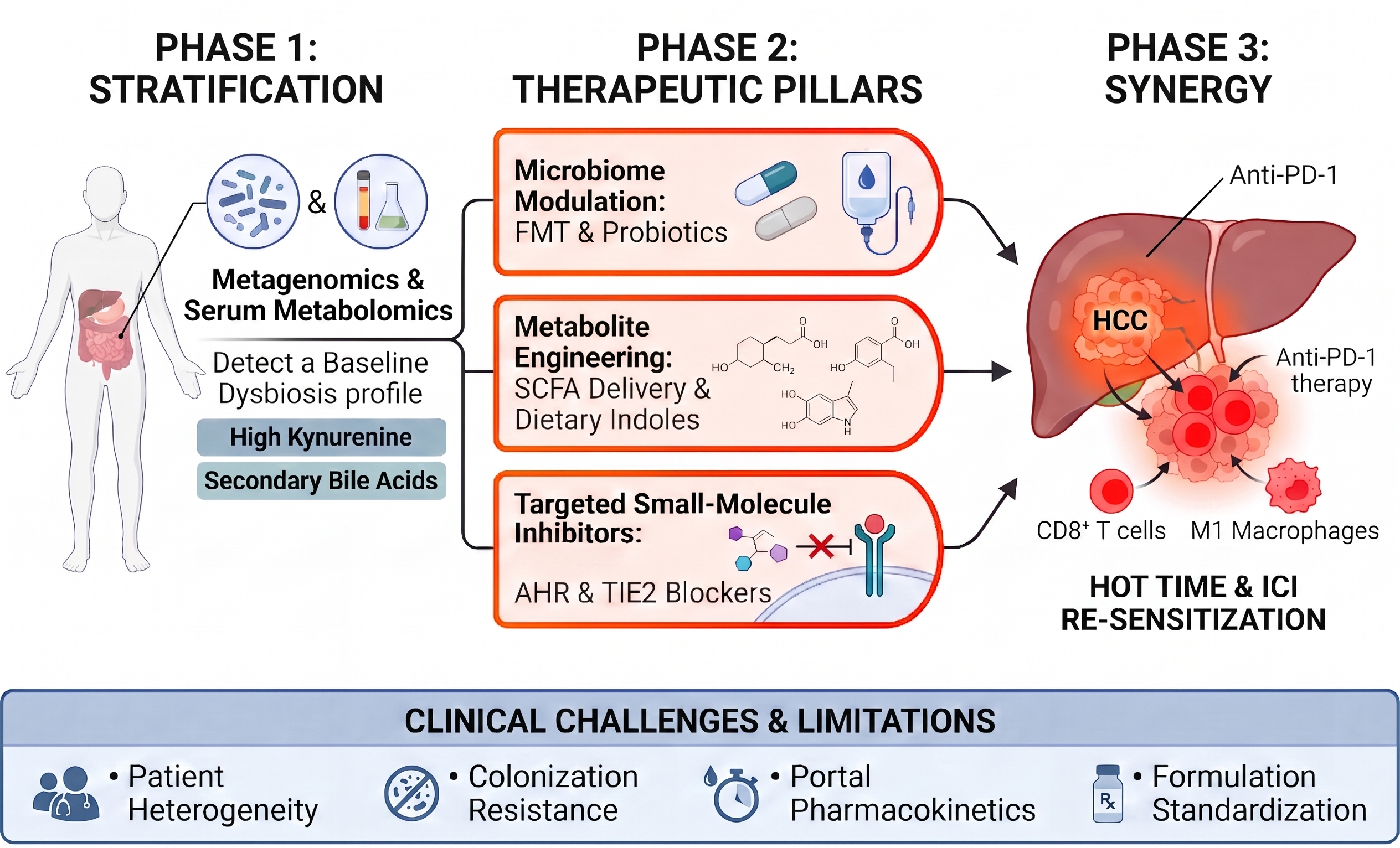
Immune checkpoint inhibitors (ICIs) have revolutionized the treatment of advanced hepatocellular carcinoma (HCC), but low response rates and drug resistance remain major clinical challenges. Recent data underscore the gut-liver axis as a major determinant of therapeutic outcomes, particularly amid an epidemiological transition towards chronic liver diseases. In this review, we summarize the effects of gut microbiota-derived metabolites on the hepatic tumor immune microenvironment (TIME) and the efficacy of ICIs. Beneficial metabolites such as short-chain fatty acids and primary bile acids promote anti-tumor immunity by enhancing the infiltration and cytotoxicity of CD8+ T cells, NK cells, and NKT cells. On the contrary, immunosuppressive metabolites such as secondary bile acids and kynurenine promote exhausted TIME, induce M2 polarization of macrophages, and immune evasion. In addition, structural differences between lipopolysaccharides and tryptophan-derived indoles directly modulate toll-like receptor activation and signaling pathways, including NF-κB, PI3K/Akt, and JAK/STAT3. Elucidation of these complex metabolic networks provides critical insights into mechanisms of ICI responsiveness. Collectively, current evidence supports gut-derived metabolites as promising candidates for predictive biomarkers and therapeutic modulation; however, prospective validation, mechanistic confirmation in humans, and standardized microbiome profiling remain necessary before routine clinical implementation.
References
1. Bray F, Laversanne M, Sung H, Ferlay J, Siegel RL, Soerjomataram I, et al. Global cancer statistics 2022: GLOBOCAN estimates of incidence and mortality worldwide for 36 cancers in 185 countries. CA Cancer J Clin. 2024;74(3):229-263. doi:10.3322/caac.21834
2. Vogel A, Meyer T, Sapisochin G, Salem R, Saborowski A. Hepatocellular carcinoma. Lancet. 2022;400(10360):1345-1362. doi:10.1016/S0140-6736(22)01200-4
3. Singal AG, Kanwal F, Llovet JM. Global trends in hepatocellular carcinoma epidemiology: implications for screening, prevention and therapy. Nat Rev Clin Oncol. 2023;20(12):864-884. doi:10.1038/s41571-023-00825-3
4. Mak LY, Liu K, Chirapongsathorn S, Yew KC, Tamaki N, Rajaram RB, et al. Liver diseases and hepatocellular carcinoma in the Asia-Pacific region: burden, trends, challenges and future directions. Nat Rev Gastroenterol Hepatol. 2024;21(12):834-851. doi:10.1038/s41575-024-00967-4
5. de Martel C, Georges D, Bray F, Ferlay J, Clifford GM. Global burden of cancer attributable to infections in 2018: a worldwide incidence analysis. Lancet Glob Health. 2020;8(2):e180-e190. doi:10.1016/S2214-109X(19)30488-7
6. Hwang SY, Danpanichkul P, Agopian V, Mehta N, Parikh ND, Abou-Alfa GK, et al. Hepatocellular carcinoma: updates on epidemiology, surveillance, diagnosis and treatment. Clin Mol Hepatol. 2025;31(Suppl):S228-S254. doi:10.3350/cmh.2024.0824
7. Estes C, Anstee QM, Arias-Loste MT, Bantel H, Bellentani S, Caballeria J, et al. Modeling NAFLD disease burden in China, France, Germany, Italy, Japan, Spain, United Kingdom, and United States for the period 2016-2030. J Hepatol. 2018;69(4):896-904. doi:10.1016/j.jhep.2018.05.036
8. Cui T, Guan C, Song K, Yu J. Global trends and forecasts of nonalcoholic steatohepatitis causing liver cancer incidence and deaths. Front Oncol. 2026;15:1623789. doi:10.3389/fonc.2025.1623789
9. El-Khoueiry AB, Trojan J, Meyer T, Yau T, Melero I, Kudo M, et al. Nivolumab in sorafenib-naive and sorafenib-experienced patients with advanced hepatocellular carcinoma: 5-year follow-up from CheckMate 040. Ann Oncol. 2024;35(4):381-391. doi:10.1016/j.annonc.2023.12.008
10. Rimassa L, Chan SL, Sangro B, Lau G, Kudo M, Reig M, et al. Five-year overall survival update from the HIMALAYA study of tremelimumab plus durvalumab in unresectable HCC. J Hepatol. 2025;83(4):899-908. doi:10.1016/j.jhep.2025.03.033
11. Wang Y, Li Y, Lin Y, Cao C, Chen D, Huang X, et al. Roles of the gut microbiota in hepatocellular carcinoma: from the gut dysbiosis to the intratumoral microbiota. Cell Death Discov. 2025;11(1):140. doi:10.1038/s41420-025-02413-z
12. Llovet JM, Castet F, Heikenwalder M, Maini MK, Mazzaferro V, Pinato DJ, et al. Immunotherapies for hepatocellular carcinoma. Nat Rev Clin Oncol. 2022;19(3):151-172. doi:10.1038/s41571-021-00573-2
13. Yau T, Park JW, Finn RS, Cheng AL, Mathurin P, Edeline J, et al. Nivolumab versus sorafenib in advanced hepatocellular carcinoma (CheckMate 459): a randomised, multicentre, open-label, phase 3 trial. Lancet Oncol. 2022;23(1):77-90. doi:10.1016/S1470-2045(21)00604-5
14. De Martin E, Fulgenzi CAM, Celsa C, Laurent-Bellue A, Torkpour A, Lombardi P, et al. Immune checkpoint inhibitors and the liver: balancing therapeutic benefit and adverse events. Gut. 2025;74(7):1165-1177. doi:10.1136/gutjnl-2024-332125
15. Cheng AL, Qin S, Ikeda M, Galle PR, Ducreux M, Kim TY, et al. Updated efficacy and safety data from IMbrave150: Atezolizumab plus bevacizumab vs. sorafenib for unresectable hepatocellular carcinoma. J Hepatol. 2022;76(4):862-873. doi:10.1016/j.jhep.2021.11.030
16. Ohara M, Suda G, Kohya R, Yasui Y, Tsuchiya K, Kurosaki M, et al. Three-year overall survival in unresectable hepatocellular carcinoma treated with atezolizumab plus bevacizumab. Hepatol Int. 2025;19(6):1371-1381. doi:10.1007/s12072-025-10875-7
17. Ladd AD, Duarte S, Sahin I, Zarrinpar A. Mechanisms of drug resistance in HCC. Hepatology. 2024;79(4):926-940. doi:10.1097/HEP.0000000000000237
18. Wang Z, Wang Y, Gao P, Ding J. Immune checkpoint inhibitor resistance in hepatocellular carcinoma. Cancer Lett. 2023;555:216038. doi:10.1016/j.canlet.2022.216038
19. Chan YT, Zhang C, Wu J, Lu P, Xu L, Yuan H, et al. Biomarkers for diagnosis and therapeutic options in hepatocellular carcinoma. Mol Cancer. 2024;23(1):189. doi:10.1186/s12943-024-02101-z
20. Davar D, Zarour HM. Facts and Hopes for Gut Microbiota Interventions in Cancer Immunotherapy. Clin Cancer Res. 2022;28(20):4370-4384. doi:10.1158/1078-0432.CCR-21-1129
21. Xu J, Song J, Fu Z, Zhou H, Zhang Y, Shi C. Unraveling gut microbiome interferences in cancer immunotherapy: a meta-analysis of diverse drug effects. BMC Cancer. 2025;25(1):1776. doi:10.1186/s12885-025-15094-9
22. Tilg H, Adolph TE, Trauner M. Gut-liver axis: Pathophysiological concepts and clinical implications. Cell Metab. 2022;34(11):1700-1718. doi:10.1016/j.cmet.2022.09.017
23. Brandl K, Kumar V, Eckmann L. Gut-liver axis at the frontier of host-microbial interactions. Am J Physiol Gastrointest Liver Physiol. 2017;312(5):G413-G419. doi:10.1152/ajpgi.00361.2016
24. Albillos A, de Gottardi A, Rescigno M. The gut-liver axis in liver disease: Pathophysiological basis for therapy. J Hepatol. 2020;72(3):558-577. doi:10.1016/j.jhep.2019.10.003
25. Chopyk DM, Grakoui A. Contribution of the Intestinal Microbiome and Gut Barrier to Hepatic Disorders. Gastroenterology. 2020;159(3):849-863. doi:10.1053/j.gastro.2020.04.077
26. Zhang Y, Liu Y, Liang X, Wen Y, Zhao J, He Y, et al. Intestinal barrier in chronic gut and liver diseases: Pathogenesis and therapeutic targets. Acta Pharm Sin B. 2025;15(11):5515-5536. doi:10.1016/j.apsb.2025.08.028
27. Yu J, Yang YN, Chen W, Hu J, Jin Z, Wu C, et al. Role of gut microbiota and derived metabolites in cardiovascular diseases. iScience. 2025;28(9):113247. doi:10.1016/j.isci.2025.113247
28. Foley NM, Wang J, Redmond HP, Wang JH. Current knowledge and future directions of TLR and NOD signaling in sepsis. Mil Med Res. 2015;2:1. doi:10.1186/s40779-014-0029-7
29. Żeromski J, Kierepa A, Brzezicha B, Kowala-Piaskowska A, Mozer-Lisewska I. Pattern Recognition Receptors: Significance of Expression in the Liver. Arch Immunol Ther Exp (Warsz). 2020;68(5):29. doi:10.1007/s00005-020-00595-1
30. Min L, Wang H, Qi H. Astragaloside IV inhibits the progression of liver cancer by modulating macrophage polarization through the TLR4/NF-κB/STAT3 signaling pathway. Am J Transl Res. 2022;14(3):1551-1566. PMID: 35422920
31. Ma N, Xie X, Wang J, Zheng Z, Jin H, Chen X, et al. Enterococcus faecalis extracellular vesicles deliver the bacterial GTPase Obg to hijack mTOR signalling in hepatocellular carcinoma. J Extracell Vesicles. 2026;15(6):e70323. doi:10.1002/jev2.70323
32. Goyal H, Fatima K, Kaur J. Understanding crosstalk between the gut and liver microbiome: pathogenesis to therapeutic approaches in liver cancer. Cancer Cell Int. 2025;25(1):291. doi:10.1186/s12935-025-03840-9
33. Ma C, Han M, Heinrich B, Fu Q, Zhang Q, Sandhu M, et al. Gut microbiome-mediated bile acid metabolism regulates liver cancer via NKT cells. Science. 2018;360(6391):eaan5931. doi:10.1126/science.aan5931
34. Kim Y, Kim G, Kim S, Cho B, Kim SY, Do EJ, et al. Fecal microbiota transplantation improves anti-PD-1 inhibitor efficacy in unresectable or metastatic solid cancers refractory to anti-PD-1 inhibitor. Cell Host Microbe. 2024;32(8):1380-1393.e9. doi:10.1016/j.chom.2024.06.010
35. Lee PC, Wu CJ, Hung YW, Lee CJ, Mon HC, Chi CT, et al. Distinct gut microbiota but common metabolomic signatures between viral and MASLD HCC contribute to outcomes of combination immunotherapy. Hepatology. 2026;84(2):411-423. doi:10.1097/HEP.0000000000001446
36. Yu Y, Liu H, Liu K, Zhao M, Zhang Y, Jiang R, et al. Multi-omics identification of a polyamine metabolism related signature for hepatocellular carcinoma and revealing tumor microenvironment characteristics. Front Immunol. 2025;16:1570378. doi:10.3389/fimmu.2025.1570378
37. Fujisaka S, Watanabe Y, Tobe K. The gut microbiome: a core regulator of metabolism. J Endocrinol. 2023;256(3):e220111. doi:10.1530/JOE-22-0111
38. Zhuang M, Shang W, Ma Q, Strappe P, Zhou Z. Abundance of Probiotics and Butyrate-Production Microbiome Manages Constipation via Short-Chain Fatty Acids Production and Hormones Secretion. Mol Nutr Food Res. 2019;63(23):e1801187. doi:10.1002/mnfr.201801187
39. Caetano MAF, Castelucci P. Role of short chain fatty acids in gut health and possible therapeutic approaches in inflammatory bowel diseases. World J Clin Cases. 2022;10(28):9985-10003. doi:10.12998/wjcc.v10.i28.9985
40. Mayorga-Ramos A, Barba-Ostria C, Simancas-Racines D, Guamán LP. Protective role of butyrate in obesity and diabetes: New insights. Front Nutr. 2022;9:1067647. doi:10.3389/fnut.2022.1067647
41. Zhang CY, Liu S, Sui YX, Yang M. Roles of short-chain fatty acids in metabolic dysfunction-associated steatotic liver disease and metabolic dysfunction-associated steatohepatitis. World J Hepatol. 2025;17(11):113756. doi:10.4254/wjh.v17.i11.113756
42. Donkin SS, Armentano LE. Regulation of gluconeogenesis by insulin and glucagon in the neonatal bovine. Am J Physiol. 1994;266(4 Pt 2):R1229-R1237. doi:10.1152/ajpregu.1994.266.4.R1229
43. Carroll KK. Acetate incorporation into cholesterol and fatty acids by liver slices from rats fed commercial or semisynthetic diets: The effect of dietary fats. Can J Biochem. 1964;42(1):79-86. doi:10.1139/o64-007
44. Zhang M, Huang X, Zhang Y, Yu M, Yuan X, Xu Y, et al. Gut microbial metabolite butyrate suppresses hepatocellular carcinoma growth via CXCL11-dependent enhancement of natural killer cell infiltration. Gut Microbes. 2025;17(1):2519706. doi:10.1080/19490976.2025.2519706
45. Kumar M, Kaur R, Kanthaje S, Dhiman RK, Chakraborti A. Bacterial metabolite butyrate in modulating sorafenib-targeted microRNAs to curtail its resistance in hepatocellular carcinoma. J Cancer Res Clin Oncol. 2023;149(9):5823-5839. doi:10.1007/s00432-022-04544-7
46. Ren S, Zhang Y, Wang X, Su J, Wang X, Yuan Z, et al. Emerging insights into the gut microbiota as a key regulator of immunity and response to immunotherapy in hepatocellular carcinoma. Front Immunol. 2025;16:1526967. doi:10.3389/fimmu.2025.1526967
47. Maslowski KM, Vieira AT, Ng A, Kranich J, Sierro F, Yu D, et al. Regulation of inflammatory responses by gut microbiota and chemoattractant receptor GPR43. Nature. 2009;461(7268):1282-1286. doi:10.1038/nature08530
48. Arpaia N, Campbell C, Fan X, Dikiy S, van der Veeken J, deRoos P, et al. Metabolites produced by commensal bacteria promote peripheral regulatory T-cell generation. Nature. 2013;504(7480):451-455. doi:10.1038/nature12726
49. Mann ER, Lam YK, Uhlig HH. Short-chain fatty acids: linking diet, the microbiome and immunity. Nat Rev Immunol. 2024;24(8):577-595. doi:10.1038/s41577-024-01014-8
50. Danne C, Sokol H. Butyrate, a new microbiota-dependent player in CD8+ T cells immunity and cancer therapy? Cell Rep Med. 2021;2(7):100328. doi:10.1016/j.xcrm.2021.100328
51. Macia L, Tan J, Vieira AT, Leach K, Stanley D, Luong S, et al. Metabolite-sensing receptors GPR43 and GPR109A facilitate dietary fibre-induced gut homeostasis through regulation of the inflammasome. Nat Commun. 2015;6(1):6734. doi:10.1038/ncomms7734
52. Li C, Zhang H, Liu Y, Zhang T, Gu F. Gpr109A in TAMs promoted hepatocellular carcinoma via increasing PKA/PPARγ/MerTK/IL-10/TGFβ induced M2c polarization. Sci Rep. 2025;15(1):18820. doi:10.1038/s41598-025-02447-4
53. Ma H, Yang L, Liang Y, Liu F, Hu J, Zhang R, et al. B. thetaiotaomicron-derived acetic acid modulate immune microenvironment and tumor growth in hepatocellular carcinoma. Gut Microbes. 2024;16(1):2297846. doi:10.1080/19490976.2023.2297846
54. Cook KJ, Coulter A, Keenan M, Greenway F, Losso JN. Sodium propionate or sodium butyrate promotes fatty acid oxidation in HepG2 cells under oxidative stress. J Med Food. 2023;26(1):74-79. doi:10.1089/jmf.2021.0120
55. McBrearty N, Arzumanyan A, Bichenkov E, Merali S, Merali C, Feitelson M. Short chain fatty acids delay the development of hepatocellular carcinoma in HBx transgenic mice. Neoplasia. 2021;23(5):529-538. doi:10.1016/j.neo.2021.04.004
56. Luo W, Li R, Pan C, Luo C. Gut microbiota-derived metabolites in immunomodulation and gastrointestinal cancer immunotherapy. Front Immunol. 2025;16:1710880. doi:10.3389/fimmu.2025.1710880
57. Zhang X, Shi L, Lu X, Zheng W, Shi J, Yu S, et al. Bile Acids and Liver Cancer: Molecular Mechanism and Therapeutic Prospects. Pharmaceuticals (Basel). 2024;17(9):1142. doi:10.3390/ph17091142
58. Yang J, Dai Y, Li J. Gut microbiota-immunity cascade in hepatocellular carcinoma: mechanisms and therapeutic opportunities. Oncol Rev. 2025;19:1687901. doi:10.3389/or.2025.1687901
59. Varanasi SK, Chen D, Liu Y, Johnson MA, Miller CM, Ganguly S, et al. Bile acid synthesis impedes tumor-specific T cell responses during liver cancer. Science. 2025;387(6730):192-201. doi:10.1126/science.adl4100
60. Thomas CE, Luu HN, Wang R, Xie G, Adams-Haduch J, Jin A, et al. Association between pre-diagnostic serum bile acids and hepatocellular carcinoma: The Singapore Chinese Health Study. Cancers (Basel). 2021;13(11):2648. doi:10.3390/cancers13112648
61. Nguyen PT, Kanno K, Pham QT, Kikuchi Y, Kakimoto M, Kobayashi T, et al. Senescent hepatic stellate cells caused by deoxycholic acid modulates malignant behavior of hepatocellular carcinoma. J Cancer Res Clin Oncol. 2020;146(12):3255-3268. doi:10.1007/s00432-020-03374-9
62. Xu K, Dong X, Qu H, Hu J, Jiao J, Chen R, et al. AF6 knockout-induced upregulation of bile acid production promotes CXCL14-mediated antitumor immunity in HCC. J Hepatol. 2026;84(5):976-992. doi:10.1016/j.jhep.2025.12.029
63. Tong Y, Lou X. Interplay between bile acids, gut microbiota, and the tumor immune microenvironment: mechanistic insights and therapeutic strategies. Front Immunol. 2025;16:1638352. doi:10.3389/fimmu.2025.1638352
64. Deng Z, Ouyang Z, Mei S, Zhang X, Li Q, Meng F, et al. Enhancing NKT cell-mediated immunity against hepatocellular carcinoma: Role of XYXD in promoting primary bile acid synthesis and improving gut microbiota. J Ethnopharmacol. 2024;318(Pt B):116945. doi:10.1016/j.jep.2023.116945
65. Wu J, Zheng W, Ding XZ, Jin QP, Ding MX. Deoxycholic acid and lipoteichoic acid cooperatively drive macrophage M2/M1 polarization via TGR5/STAT3 and TLR2/NF-κB to fuel HCC progression in obesity. Metabol Open. 2025;28:100420. doi:10.1016/j.metop.2025.100420
66. Chu H, Shan Y, Jiang C, Zhong Y, Liu Z, Fang X, et al. PNMA1 is a novel immune modulator and therapeutic target in hepatocellular carcinoma linked to bile acid metabolism. Sci Rep. 2025;15(1):738. doi:10.1038/s41598-024-84368-2
67. Jing G, Xu W, Ma W, Yu Q, Zhu H, Liu C, et al. Echinacea purpurea polysaccharide intervene in hepatocellular carcinoma via modulation of gut microbiota to inhibit TLR4/NF-κB pathway. Int J Biol Macromol. 2024;261(Pt 2):129917. doi:10.1016/j.ijbiomac.2024.129917
68. Gupta MK, Vadde R. TLR-based therapeutic strategies for hepatocellular carcinoma. Cytokine Growth Factor Rev. 2025;85:179-189. doi:10.1016/j.cytogfr.2025.08.002
69. Yang J, Zhang JX, Wang H, Wang GL, Hu QG, Zheng QC. Hepatocellular carcinoma and macrophage interaction induced tumor immunosuppression via Treg requires TLR4 signaling. World J Gastroenterol. 2012;18(23):2938-2947. doi:10.3748/wjg.v18.i23.2938
70. Song M, Yang T, He M, Cao G. Lipopolysaccharide-induced M1-type macrophages enhance T cell activity and promote the apoptosis of hepatocellular carcinoma cells. Curr Top Med Chem. 2026;26(3):270-281. doi:10.2174/0115680266394539250707102011
71. Yu M, Yu H, Wang H, Xu X, Sun Z, Chen W, et al. Tumor-associated macrophages activated in the tumor environment of hepatocellular carcinoma: characterization and treatment. Int J Oncol. 2024;65(4):100. doi:10.3892/ijo.2024.5688
72. Sardar P, Beresford-Jones BS, Xia W, Shabana O, Suyama S, Ramos RJF, et al. Gut microbiota-derived hexa-acylated lipopolysaccharides enhance cancer immunotherapy responses. Nat Microbiol. 2025;10(3):795-807. doi:10.1038/s41564-025-01930-y
73. Perl M, Fante MA, Herfeld K, Scherer JN, Poeck H, Orberg ET. Microbiota-derived metabolites: Key modulators of cancer immunotherapies. Med. 2025;6(8):100773. doi:10.1016/j.medj.2025.100773
74. Venkateswaran N, Garcia R, Lafita-Navarro MC, Hao YH, Perez-Castro L, Nogueira PAS, et al. Tryptophan fuels MYC-dependent liver tumorigenesis through indole 3-pyruvate synthesis. Nat Commun. 2024;15(1):4266. doi:10.1038/s41467-024-47868-3
75. Yu C, Rao D, Zhu H, Liu Q, Huang W, Zhang L, et al. TDO2 was downregulated in hepatocellular carcinoma and inhibited cell proliferation by upregulating the expression of p21 and p27. Biomed Res Int. 2021;2021:4708439. doi:10.1155/2021/4708439
76. Opitz CA, Litzenburger UM, Sahm F, Ott M, Tritschler I, Trump S, et al. An endogenous tumour-promoting ligand of the human aryl hydrocarbon receptor. Nature. 2011;478(7368):197-203. doi:10.1038/nature10491
77. Park JH, Lee JM, Lee EJ, Kim DJ, Hwang WB. Kynurenine promotes the goblet cell differentiation of HT-29 colon carcinoma cells by modulating Wnt, Notch and AhR signals. Oncol Rep. 2018;39(4):1930-1938. doi:10.3892/or.2018.6266
78. Shi Z, Gan G, Xu X, Zhang J, Yuan Y, Bi B, et al. Kynurenine derivative 3-HAA is an agonist ligand for transcription factor YY1. J Hematol Oncol. 2021;14(1):153. doi:10.1186/s13045-021-01165-4
79. Zuo X, Chen Z, Cai J, Gao W, Zhang Y, Han G, et al. 5-Hydroxytryptamine receptor 1D aggravates hepatocellular carcinoma progression through FoxO6 in AKT-dependent and independent manners. Hepatology. 2019;69(5):2031-2047. doi:10.1002/hep.30430
80. Wu Y, Tao Q, Xie J, Liu X, Zhou Y, Wei C, et al. Indole-3-carbinol inhibits PD-L1-mediated immune evasion in hepatocellular carcinoma via suppressing NF-κB p105 ubiquitination. Phytomedicine. 2025;141:156692. doi:10.1016/j.phymed.2025.156692
81. Jia D, Kuang Z, Wang L. The role of microbial indole metabolites in tumor. Gut Microbes. 2024;16(1):2409209. doi:10.1080/19490976.2024.2409209
82. Wu M, Zhang Y, Yu J. How the gut microbiome affects the immunotherapy response in hepatocellular carcinoma. Cancer Biol Med. 2026;23(5):561-579. doi:10.20892/j.issn.2095-3941.2025.0761
83. Sadik A, Somarribas Patterson LF, Öztürk S, Mohapatra SR, Panitz V, Secker PF, et al. IL4I1 is a metabolic immune checkpoint that activates the AHR and promotes tumor progression. Cell. 2020;182(5):1252-1270.e34. doi:10.1016/j.cell.2020.07.038
84. Ye G, Zhang H, Feng Q, Xiao J, Wang J, Liu J. Important role of bacterial metabolites in development and adjuvant therapy for hepatocellular carcinoma. Curr Oncol. 2025;32(12):673. doi:10.3390/curroncol32120673
85. Xiao K, Li K, Xiao K, Yang J, Zhou L. Gut microbiota and hepatocellular carcinoma: metabolic products and immunotherapy modulation. Cancer Med. 2025;14(9):e70914. doi:10.1002/cam4.70914
86. Postler TS, Ghosh S. Understanding the holobiont: how microbial metabolites affect human health and shape the immune system. Cell Metab. 2017;26(1):110-130. doi:10.1016/j.cmet.2017.05.008
87. Levy M, Thaiss CA, Zeevi D, Dohnalová L, Zilberman-Schapira G, Mahdi JA, et al. Microbiota-modulated metabolites shape the intestinal microenvironment by regulating NLRP6 inflammasome signaling. Cell. 2015;163(6):1428-1443. doi:10.1016/j.cell.2015.10.048
88. Ide Y, Zhang H, Hamajima H, Kawaguchi Y, Eguchi Y, Mizuta T, et al. Inhibition of matrix metalloproteinase expression by menatetrenone, a vitamin K2 analogue. Oncol Rep. 2009;22(3):599-604. doi:10.3892/or_00000478
89. Fang ZK, Xiao YT, Feng X, Shi ZJ, Liu SY, Yu Y, et al. Early PIVKA-II response associated with treatment efficacy and survival outcomes for patients with advanced hepatocellular carcinoma receiving immune checkpoint inhibitors and targeted therapy. J Hepatocell Carcinoma. 2025;12:2235-2246. doi:10.2147/JHC.S552528
90. Cheng SB, Lin PT, Liu HT, Peng YS, Huang SC, Huang YC. Vitamin B-6 supplementation could mediate antioxidant capacity by reducing plasma homocysteine concentration in patients with hepatocellular carcinoma after tumor resection. Biomed Res Int. 2016;2016:7658981. doi:10.1155/2016/7658981
91. Ezzine C, Loison L, Montbrion N, Bôle-Feysot C, Déchelotte P, Coëffier M, et al. Fatty acids produced by the gut microbiota dampen host inflammatory responses by modulating intestinal SUMOylation. Gut Microbes. 2022;14(1):2108280. doi:10.1080/19490976.2022.2108280
92. Wen B, Huang Y, Deng G, Yan Q, Jia L. Gut microbiota analysis and LC-MS-based metabolomics to investigate AMPK/NF-κB regulated by Clostridium butyricum in the treatment of acute pancreatitis. J Transl Med. 2024;22(1):1072. doi:10.1186/s12967-024-05764-w
93. Zanoni I, Ostuni R, Marek LR, Barresi S, Barbalat R, Barton GM, et al. CD14 controls the LPS-induced endocytosis of Toll-like receptor 4. Cell. 2011;147(4):868-880. doi:10.1016/j.cell.2011.09.051
94. Mao H, Zhao X, Sun SC. NF-κB in inflammation and cancer. Cell Mol Immunol. 2025;22(8):811-839. doi:10.1038/s41423-025-01310-w
95. Fruman DA, Chiu H, Hopkins BD, Bagrodia S, Cantley LC, Abraham RT. The PI3K pathway in human disease. Cell. 2017;170(4):605-635. doi:10.1016/j.cell.2017.07.029
96. Zhang Y, Liu W, Wong CC, Song Q, Zhang X, Zhou Q, et al. Catenibacterium mitsuokai promotes hepatocellular carcinogenesis by binding to hepatocytes and generating quinolinic acid. Cell Metab. 2025;37(10):1998-2013.e7. doi:10.1016/j.cmet.2025.09.001
97. He J, Zhang P, Shen L, Niu L, Tan Y, Chen L, et al. Short-chain fatty acids and their association with signalling pathways in inflammation, glucose and lipid metabolism. Int J Mol Sci. 2020;21(17):6356. doi:10.3390/ijms21176356
98. Xue M, Yu W, Zhang K, Chen Y, Zhang L, Zhang H, et al. GCDCA promotes hepatocellular carcinoma progression through S1PR2/PI3K/AKT-mediated polarization of M2-type macrophages. Front Immunol. 2026;17:1640450. doi:10.3389/fimmu.2026.1640450
99. Zhu Z, Zuo S, Zhu Z, Wang C, Du Y, Chen F. THSWD upregulates the LTF/AMPK/mTOR/Becn1 axis and promotes lysosomal autophagy in hepatocellular carcinoma cells by regulating gut flora and metabolic reprogramming. Int Immunopharmacol. 2025;148:114091. doi:10.1016/j.intimp.2025.114091
100. Xiang H, Xiang H, Wang S, Wu P, Luo Z, Zhang J. The role of bile acid-activated receptor TGR5 in inflammation and liver diseases. Front Physiol. 2026;17:1747341. doi:10.3389/fphys.2026.1747341
101. Pathak P, Liu H, Boehme S, Xie C, Krausz KW, Gonzalez F, et al. Farnesoid X receptor induces Takeda G-protein receptor 5 cross-talk to regulate bile acid synthesis and hepatic metabolism. J Biol Chem. 2017;292(26):11055-11069. doi:10.1074/jbc.M117.784322
102. Xu Y, Zhu Y, Wu X, Peng W, Zhong Y, Cai Y, et al. Gut microbiota-derived acetate ameliorates endometriosis via JAK1/STAT3-mediated M1 macrophage polarisation. Microb Biotechnol. 2025;18(8):e70202. doi:10.1111/1751-7915.70202
103. Huo R, Xu QG, You YQ, Chen YL, Su GJ, Yang KR, et al. Bifidobacterium boosts anti-PD-1 effectiveness through JAK pathway in hepatocellular carcinoma. NPJ Precis Oncol. 2025;9(1):251. doi:10.1038/s41698-025-00960-3
104. Ding M, Li B, Chen H, Ross RP, Stanton C, Jiang S, et al. Bifidobacterium longum subsp. infantis regulates Th1/Th2 balance through the JAK-STAT pathway in growing mice. Microbiome Res Rep. 2024;3(2):16. doi:10.20517/mrr.2023.64
105. Lee PC, Wu CJ, Hung YW, Lee CJ, Chi CT, Lee IC, et al. Gut microbiota and metabolites associate with outcomes of immune checkpoint inhibitor-treated unresectable hepatocellular carcinoma. J Immunother Cancer. 2022;10(6):e004779. doi:10.1136/jitc-2022-004779
106. Lyu S, Wang E, Lyu J, Xu H, Zhang D, Fang Z, et al. CDCA3 Regulates Tumor-Associated Macrophages Polarize to Promote the Malignant Progression of Hepatocellular Carcinoma. J Hepatocell Carcinoma. 2025;12:3029-3047. doi:10.2147/JHC.S559772
107. Wu D, Fan Y, Zhang M, Wang X, He X, Guo X, et al. Tumor-suppressing multi-enterobacteria and PD-1/PD-L1 immune checkpoint inhibitor combination improves the outcome of hepatocellular carcinoma therapy. Front Immunol. 2025;16:1598436. doi:10.3389/fimmu.2025.1598436
108. Ai J, Du Y, Xue Q, Peng W, Zhou Q. Metabolic Checkpoints in CD8+ T Cells within the Tumor Microenvironment: A Comprehensive Review and Emerging Insights. Int J Biol Sci. 2026;22(4):1950-1973. doi:10.7150/ijbs.125206
109. Zhang Q, Ma C, Duan Y, Heinrich B, Rosato U, Diggs LP, et al. Gut Microbiome Directs Hepatocytes to Recruit MDSCs and Promote Cholangiocarcinoma. Cancer Discov. 2021;11(5):1248-1267. doi:10.1158/2159-8290.CD-20-0304
110. Chen PJ, Devkota S, Shiao S, Hendifar A, Yang JD. Gut microbiome, a novel precision medicine biomarker for hepatocellular carcinoma. Front Immunol. 2025;16:1568962. doi:10.3389/fimmu.2025.1568962
111. Huang M, Ji Q, Huang H, Wang X, Wang L. Gut microbiota in hepatocellular carcinoma immunotherapy: immune microenvironment remodeling and gut microbiota modification. Gut Microbes. 2025;17(1):2486519. doi:10.1080/19490976.2025.2486519
112. Liu X, Lu B, Tang H, Jia X, Zhou Q, Zeng Y, et al. Gut microbiome metabolites, molecular mimicry, and species-level variation drive long-term efficacy and adverse event outcomes in lung cancer survivors. EBioMedicine. 2024;109:105427. doi:10.1016/j.ebiom.2024.105427
113. Zhu C, Zhang C, Wang S, Xun Z, Zhang D, Lan Z, et al. Characterizations of multi-kingdom gut microbiota in immune checkpoint inhibitor-treated hepatocellular carcinoma. J Immunother Cancer. 2024;12(6):e008686. doi:10.1136/jitc-2023-008686
114. Ma J, Cheng M, Jin L, Wang Y, Feng Z, Shen Y, et al. Comprehensive multi-omics analysis of bile acid metabolism in hepatocellular carcinoma: implications for prognosis, immune microenvironment, and therapeutic resistance. Clin Transl Oncol. 2025;27(12):4430-4449. doi:10.1007/s12094-025-03963-5
115. Rauber C, Roberti MP, Vehreschild MJGT, Tsakmaklis A, Springfeld C, Teufel A, et al. Protocol: Faecal microbiota transfer in liver cancer to overcome resistance to atezolizumab/bevacizumab - a multicentre, randomised, placebo-controlled, double-blind phase II trial (the FLORA trial). BMJ Open. 2025;15(9):e097802. doi:10.1136/bmjopen-2024-097802
116. Pomej K, Frick A, Scheiner B, Balcar L, Pajancic L, Klotz A, et al. Study protocol: Fecal Microbiota Transplant combined with Atezolizumab/Bevacizumab in Patients with Hepatocellular Carcinoma who failed to achieve or maintain objective response to Atezolizumab/Bevacizumab - the FAB-HCC pilot study. PLoS One. 2025;20(4):e0321189. doi:10.1371/journal.pone.0321189
117. Yu J, Zhu P, Shi L, Gao N, Li Y, Shu C, et al. Bifidobacterium longum promotes postoperative liver function recovery in patients with hepatocellular carcinoma. Cell Host Microbe. 2024;32(1):131-144.e6. doi:10.1016/j.chom.2023.11.011
118. Zhou Y, Yang L, Nan Y, Liver Related Digestive Diseases Group, Chinese Society of Hepatology, Chinese Medical Association. Expert Consensus on Clinical Applications of Fecal Microbiota Transplantation for Chronic Liver Disease (2025 edition). J Clin Transl Hepatol. 2025;13(12):1107-1116. doi:10.14218/JCTH.2025.00456
Published
How to Cite
Issue
Section
License
Copyright (c) 2026 Yau-Tuen Chan, Pengde Lu, Jiaqi Zou, Zhuofeng Jiang, Lin Xu, Ning Wang

This work is licensed under a Creative Commons Attribution 4.0 International License.
Copyright
Authors publishing in Cancer Biome and Targeted Therapy retain full copyright of their work. By submitting a manuscript, authors grant the publisher (GCINC Press) a non-exclusive license to publish, distribute, and archive the article, and to identify itself as the original publisher.
License
All articles are published open access under the terms of the Creative Commons Attribution 4.0 International License (CC BY 4.0).
https://creativecommons.org/licenses/by/4.0/. This license permits unrestricted use, distribution, reproduction, and adaptation in any medium, including for commercial purposes, provided that:
- Proper attribution is given to the original author(s) and source,
- A link to the license is provided, and
- Any changes made are clearly indicated.
Author Rights
Authors retain the right to:
- Use their article in future works (e.g., books, theses, lectures)
- Share and archive the final published version on institutional repositories or personal websites
- Adapt or translate their work, or authorize others to do so, with proper citation
Reuse by Third Parties
Content is licensed under the Creative Commons Attribution 4.0 International License (CC BY 4.0). Third parties may copy, redistribute, remix, transform, and build upon the material for any purpose, including commercial use, provided that appropriate credit is given to the original author(s).
Archiving and Preservation
All articles are made freely available immediately upon publication, without embargo. Cancer Biome and Targeted Therapy is hosted on the Open Journal Systems (OJS) platform, developed by the Public Knowledge Project (PKP). The journal participates in long-term digital preservation through the PKP Preservation Network (PKP PN) using the LOCKSS system. Authors are encouraged to self-archive in institutional repositories, disciplinary archives, and preprint servers in accordance with the license terms.




Funding data
-
Natural Science Foundation of Shenzhen Municipality
Grant numbers JCYJ20240813113007011 -
Health and Medical Research Fund
Grant numbers 21222151, 19201591