Human pluripotent stem cell-derived organoids as translational platforms for drug discovery and regenerative medicine
DOI:
https://doi.org/10.66505/cbtt.v1i2.37Keywords:
human pluripotent stem cells, stem cells, organoids, disease modeling, drug development, regenerative medicine, 3D culture, organ-on-chip, stem cell engineeringAbstract
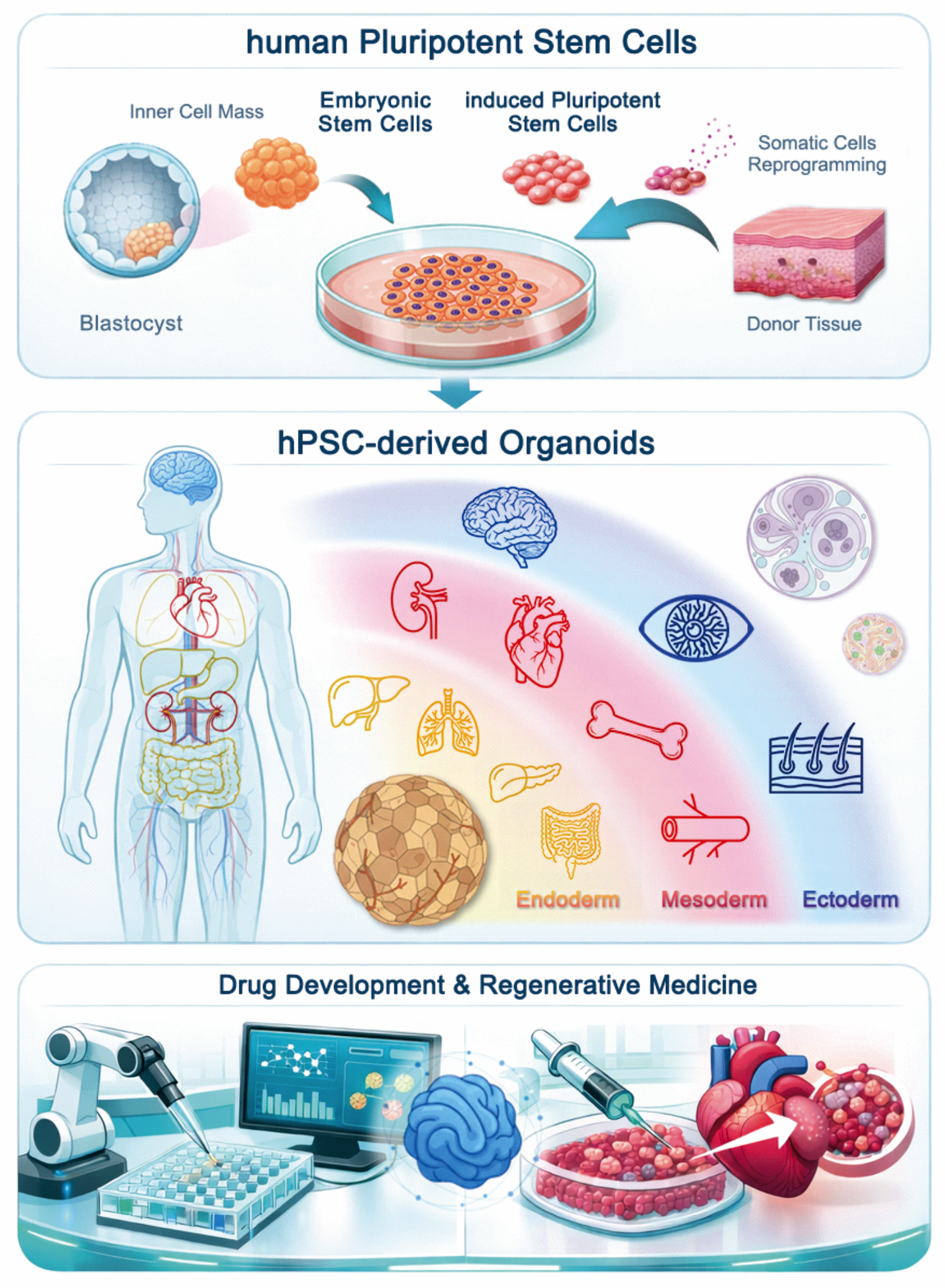
Organoid technologies have quickly become vital experimental systems for modeling human tissues in vitro. These three-dimensional structures can reproduce aspects of tissue architecture, cellular diversity, and functional organization that are difficult to capture in traditional two-dimensional cultures. Advances in lineage-specification protocols and synthetic matrix engineering have substantially improved the reproducibility and maturity of hPSC-derived organoids. As a result, hPSC-derived organoids are being used more widely across biomedical research, including developmental studies, disease modeling, drug testing, and regenerative medicine. In this review, we analyze major hPSC-derived organoid systems across various organ types and discuss their growing importance in translational research. We focus on three emerging areas. First, organoids are increasingly used as human-relevant platforms for drug discovery, enabling assessment of therapeutic efficacy, mechanisms of action, and potential toxicity in physiologically relevant settings. Second, these systems are being studied as experimental foundations for regenerative medicine, supporting research on tissue repair, gene correction, and cell-based therapies. Third, advances in engineering, such as organoid-on-chip technologies, vascularization strategies, and multi-organoid culture systems, are enhancing the reproducibility, scalability, and functional maturity of organoid models. Despite rapid progress, several challenges remain. Organoid cultures can display variability, incomplete maturation, and limited representation of the full in vivo microenvironment. Continued integration of stem cell biology, biomaterials engineering, and computational analysis will be important for overcoming these limitations. With these advancements, hPSC-derived organoids are poised to become increasingly valuable platforms linking basic developmental biology with predictive pharmacology and regenerative medicine.
References
1. Lancaster MA, Knoblich JA. Organogenesis in a dish: modeling development and disease using organoid technologies. Science. 2014;345(6194):1247125. doi:10.1126/science.1247125
2. Prior N, Inacio P, Huch M. Liver organoids: from basic research to therapeutic applications. Gut. 2019;68(12):2228-2237. doi:10.1136/gutjnl-2019-319256
3. Baker BM, Chen CS. Deconstructing the third dimension: how 3D culture microenvironments alter cellular cues. J Cell Sci. 2012;125(15):3015-3024. doi:10.1242/jcs.079509
4. Method of the Year 2017: Organoids. Nat Methods. 2018;15(1):1. doi:10.1038/nmeth.4575
5. Miller AJ, Dye BR, Ferrer-Torres D, Hill DR, Overeem AW, Shea LD, et al. Generation of lung organoids from human pluripotent stem cells in vitro. Nat Protoc. 2019;14(2):518-540. doi:10.1038/s41596-018-0104-8
6. Aurora M, Spence JR. hPSC-derived lung and intestinal organoids as models of human fetal tissue. Dev Biol. 2016;420(2):230-238. doi:10.1016/j.ydbio.2016.06.006
7. Han Y, Duan X, Yang L, Nilsson-Payant BE, Wang P, Duan F, et al. Identification of SARS-CoV-2 inhibitors using lung and colonic organoids. Nature. 2021;589(7841):270-275. doi:10.1038/s41586-020-2901-9
8. Guan Y, Xu D, Garfin PM, Ehmer U, Hurwitz M, Enns G, et al. Human hepatic organoids for the analysis of human genetic diseases. JCI Insight. 2017;2(17):e94954. doi:10.1172/jci.insight.94954
9. Jiang S, Xu F, Jin M, Wang Z, Xu X, Zhou Y, et al. Development of a high-throughput micropatterned agarose scaffold for consistent and reproducible hPSC-derived liver organoids. Biofabrication. 2023;15(1):015006. doi:10.1088/1758-5090/ac933c
10. Li MQ, Xu YP, Li K, Zhou C, Fan XX, Wang H, et al. Recapitulating dengue virus infection with human pluripotent stem cell-derived liver organoids for antiviral screening. Nat Commun. 2025;16(1):8069. doi:10.1038/s41467-025-63323-3
11. Pedraza-Arevalo S, Cujba AM, Alvarez-Fallas ME, Sancho R. Differentiation of beta-like cells from human induced pluripotent stem cell-derived pancreatic progenitor organoids. STAR Protoc. 2022;3(4):101656. doi:10.1016/j.xpro.2022.101656
12. Yang L, Han Y, Zhang T, Dong X, Ge J, Roy A, et al. Human vascularized macrophage-islet organoids to model immune-mediated pancreatic β cell pyroptosis upon viral infection. Cell Stem Cell. 2024;31(11):1612-1629.e8. doi:10.1016/j.stem.2024.08.007
13. Pitstick AL, Poling HM, Sundaram N, Lewis PL, Kechele DO, Sanchez JG, et al. Aggregation of cryopreserved mid-hindgut endoderm for more reliable and reproducible hPSC-derived small intestinal organoid generation. Stem Cell Reports. 2022;17(8):1889-1902. doi:10.1016/j.stemcr.2022.06.011
14. Vanslambrouck JM, Tan KS, Mah S, Little MH. Generation of proximal tubule-enhanced kidney organoids from human pluripotent stem cells. Nat Protoc. 2023;18(12):3229-3252. doi:10.1038/s41596-023-00880-1
15. Garreta E, Moya-Rull D, Marco A, Amato G, Ullate-Agote A, Tarantino C, et al. Natural hydrogels support kidney organoid generation and promote in vitro angiogenesis. Adv Mater. 2024;36(24):2400306. doi:10.1002/adma.202400306
16. Sander V, Przepiorski A, Hukriede NA, Davidson AJ. Large-scale production of kidney organoids from human pluripotent stem cells. Methods Mol Biol. 2023;2664:69-83. doi:10.1007/978-1-0716-3179-9_6
17. Frenz-Wiessner S, Fairley SD, Buser M, Goek I, Salewskij K, Jonsson G, et al. Generation of complex bone marrow organoids from human induced pluripotent stem cells. Nat Methods. 2024;21(5):868-881. doi:10.1038/s41592-024-02172-2
18. Werschler N, Penninger J. Generation of human blood vessel organoids from pluripotent stem cells. J Vis Exp. 2023;(190):64715. doi:10.3791/64715
19. Wimmer RA, Leopoldi A, Aichinger M, Kerjaschki D, Penninger JM. Generation of blood vessel organoids from human pluripotent stem cells. Nat Protoc. 2019;14(11):3082-3100. doi:10.1038/s41596-019-0213-z
20. Drakhlis L, Devadas SB, Zweigerdt R. Generation of heart-forming organoids from human pluripotent stem cells. Nat Protoc. 2021;16(12):5652-5672. doi:10.1038/s41596-021-00629-8
21. Venkateshappa R, Yildirim Z, Zhao SR, Wu MA, Vacante F, Abilez OJ, et al. Protocol to study electrophysiological properties of hPSC-derived 3D cardiac organoids using MEA and sharp electrode techniques. STAR Protoc. 2024;5(4):103406. doi:10.1016/j.xpro.2024.103406
22. Harkin J, Peña KH, Gomes C, Meyer JS. A highly reproducible and efficient method for retinal organoid differentiation from human pluripotent stem cells. Proc Natl Acad Sci U S A. 2024;121(25):e2317285121. doi:10.1073/pnas.2317285121
23. Sridhar A, Hoshino A, Finkbeiner CR, Chitsazan A, Dai L, Haugan AK, et al. Single-cell transcriptomic comparison of human fetal retina, hPSC-derived retinal organoids, and long-term retinal cultures. Cell Rep. 2020;30(5):1644-1659.e4. doi:10.1016/j.celrep.2020.01.007
24. Hergenreder E, Minotti AP, Zorina Y, Oberst P, Zhao Z, Munguba H, et al. Combined small-molecule treatment accelerates maturation of human pluripotent stem cell-derived neurons. Nat Biotechnol. 2024;42(11):1515-1525. doi:10.1038/s41587-023-02031-z
25. Walsh RM, Luongo R, Giacomelli E, Ciceri G, Rittenhouse C, Verrillo A, et al. Generation of human cerebral organoids with a structured outer subventricular zone. Cell Rep. 2024;43(4):114031. doi:10.1016/j.celrep.2024.114031
26. Xiang Y, Tanaka Y, Patterson B, Kang YJ, Govindaiah G, Roselaar N, et al. Fusion of regionally specified hPSC-derived organoids models human brain development and interneuron migration. Cell Stem Cell. 2017;21(3):383-398.e7. doi:10.1016/j.stem.2017.07.007
27. Lee J, Rabbani CC, Gao H, Steinhart MR, Woodruff BM, Pflum ZE, et al. Hair-bearing human skin generated entirely from pluripotent stem cells. Nature. 2020;582(7812):399-404. doi:10.1038/s41586-020-2352-3
28. Shafiee A, Sun J, Ahmed IA, Phua F, Rossi GR, Lin C-Y, et al. Development of physiologically relevant skin organoids from human induced pluripotent stem cells. Small. 2023;20(1):e2304879. doi:10.1002/smll.202304879
29. Vandana JJ, Manrique C, Lacko LA, Chen S. Human pluripotent stem cell-derived organoids for drug discovery and evaluation. Cell Stem Cell. 2023;30(5):571-591. doi:10.1016/j.stem.2023.04.011
30. Kim J, Koo BK, Knoblich JA. Human organoids: model systems for human biology and medicine. Nat Rev Mol Cell Biol. 2020;21(10):571-584. doi:10.1038/s41580-020-0259-3
31. Dye BR, Hill DR, Ferguson MAH, Tsai YH, Nagy MS, Dyal R, et al. In vitro generation of human pluripotent stem cell-derived lung organoids. eLife. 2015;4:e05098. doi:10.7554/elife.05098
32. Sachs N, Papaspyropoulos A, Zomer-van Ommen DD, Heo I, Böttinger L, Klay D, et al. Long-term expanding human airway organoids for disease modeling. EMBO J. 2019;38(4):e100300. doi:10.15252/embj.2018100300
33. Nikolić MZ, Caritg O, Jeng Q, Johnson JA, Sun D, Howell KJ, et al. Human embryonic lung epithelial tips are multipotent progenitors that can be expanded in vitro as long-term self-renewing organoids. eLife. 2017;6:e26575. doi:10.7554/elife.26575
34. Dekkers JF, Wiegerinck CL, de Jonge HR, Bronsveld I, Janssens HM, de Winter-de Groot KM, et al. A functional CFTR assay using primary cystic fibrosis intestinal organoids. Nat Med. 2013;19(7):939-945. doi:10.1038/nm.3201
35. Chen YW, Huang SX, Rodrigues Toste de Carvalho AL, Ho SH, Islam MN, Volpi S, et al. A three-dimensional model of human lung development and disease from pluripotent stem cells. Nat Cell Biol. 2017;19(5):542-549. doi:10.1038/ncb3510
36. Tindle C, Fuller M, Fonseca A, Taheri S, Ibeawuchi SR, Beutler N, et al. Adult stem cell-derived complete lung organoid models emulate lung disease in COVID-19. eLife. 2021;10:e66417. doi:10.7554/elife.66417
37. Youk J, Kim T, Evans KV, Jeong YI, Hur Y, Hong SP, et al. Three-dimensional human alveolar stem cell culture models reveal infection response to SARS-CoV-2. Cell Stem Cell. 2020;27(6):905-919.e10. doi:10.1016/j.stem.2020.10.004
38. Salahudeen AA, Choi SS, Rustagi A, Zhu J, van Unen V, de la O SM, et al. Progenitor identification and SARS-CoV-2 infection in human distal lung organoids. Nature. 2020;588(7839):670-675. doi:10.1038/s41586-020-3014-1
39. Wu Y, Li Y, Feng F, Chen H. Air pollutants and lung regeneration: impact on the fate of lung stem cells. Environ Int. 2025;199:109525. doi:10.1016/j.envint.2025.109525
40. Wang J, Li X, Chen H. Organoid models in lung regeneration and cancer. Cancer Lett. 2020;475:129-135. doi:10.1016/j.canlet.2020.01.030
41. Kim W, Lee Y, Kang D, Kwak T, Lee H-R, Jung S. 3D inkjet-bioprinted lung-on-a-chip. ACS Biomater Sci Eng. 2023;9(5):1295-1305. doi:10.1021/acsbiomaterials.3c00089
42. Kim H, Park HJ. Current hPSC-derived liver organoids for toxicity testing: Cytochrome P450 enzymes and drug metabolism. Toxicol Res. 2025;41(2):105-121. doi:10.1007/s43188-024-00275-8
43. Takebe T, Sekine K, Enomura M, Koike H, Kimura M, Ogaeri T, et al. Vascularized and functional human liver from an iPSC-derived organ bud transplant. Nature. 2013;499(7459):481-484. doi:10.1038/nature12271
44. Lee G, Kim H, Park JY, Kim G, Han J, Chung S, et al. Generation of uniform liver spheroids from human pluripotent stem cells for imaging-based drug toxicity analysis. Biomaterials. 2021;269:120529. doi:10.1016/j.biomaterials.2020.120529
45. Kim H, Im I, Jeon JS, Kang EH, Lee HA, Jo S, et al. Development of human pluripotent stem cell-derived hepatic organoids as an alternative model for drug safety assessment. Biomaterials. 2022;286:121575. doi:10.1016/j.biomaterials.2022.121575
46. Liu S, Wang Z, Zhu L, Wang L, Zhao T, Han P, et al. Generation and applications of an expandable and mature hiPSC-derived liver organoid. Acta Pharm Sin B. 2025;15(12):6382-6398. doi:10.1016/j.apsb.2025.09.029
47. Lucchetti M, Aina KO, Grandmougin L, Jäger C, Pérez Escriva P, Letellier E, et al. An organ-on-chip platform for simulating drug metabolism along the gut-liver axis. Adv Healthc Mater. 2024;13(20):e2303943. doi:10.1002/adhm.202303943
48. Theobald J, Ghanem A, Wallisch P, Banaeiyan AA, Andrade-Navarro MA, Taškova K, et al. Liver-kidney-on-chip to study toxicity of drug metabolites. ACS Biomater Sci Eng. 2018;4(1):188-199. doi:10.1021/acsbiomaterials.7b00417
49. Huch M, Dorrell C, Boj SF, van Es JH, Li VSW, van de Wetering M, et al. In vitro expansion of single Lgr5+ liver stem cells induced by Wnt-driven regeneration. Nature. 2013;494(7436):247-250. doi:10.1038/nature11826
50. Carolina E, Kuse Y, Okumura A, Aoshima K, Tadokoro T, Matsumoto S, et al. Generation of human iPSC-derived 3D bile duct within liver organoid by incorporating human iPSC-derived blood vessel. Nat Commun. 2024;15(1):7424. doi:10.1038/s41467-024-51487-3
51. Li Y, Yang X, Plummer R, Hayashi Y, Deng XS, Nie YZ, et al. Human pluripotent stem cell-derived hepatocyte-like cells and organoids for liver disease and therapy. Int J Mol Sci. 2021;22(19):10471. doi:10.3390/ijms221910471
52. Shin DS, Yang JY, Jeong HN, Mun SJ, Kim H, Son MJ, et al. Hepatotoxicity evaluation method through multiple-factor analysis using human pluripotent stem cell-derived hepatic organoids. Sci Rep. 2025;15(1):10804. doi:10.1038/s41598-025-95071-1
53. Moon HR, Mun SJ, Kim TH, Kim H, Kang D, Kim S, et al. Guidelines for manufacturing and application of organoids: liver. Int J Stem Cells. 2024;17(2):120-129. doi:10.15283/ijsc24044
54. Beydag-Tasoz BS, Yennek S, Grapin-Botton A. Towards a better understanding of diabetes mellitus using organoid models. Nat Rev Endocrinol. 2023;19(4):232-248. doi:10.1038/s41574-022-00797-x
55. Pagliuca FW, Millman JR, Gürtler M, Segel M, Van Dervort A, Ryu JH, et al. Generation of functional human pancreatic β cells in vitro. Cell. 2014;159(2):428-439. doi:10.1016/j.cell.2014.09.040
56. Rezania A, Bruin JE, Arora P, Rubin A, Batushansky I, Asadi A, et al. Reversal of diabetes with insulin-producing cells derived in vitro from human pluripotent stem cells. Nat Biotechnol. 2014;32(11):1121-1133. doi:10.1038/nbt.3033
57. Nair GG, Liu JS, Russ HA, Tran S, Saxton MS, Chen R, et al. Recapitulating endocrine cell clustering in culture promotes maturation of human stem-cell-derived β cells. Nat Cell Biol. 2019;21(2):263-274. doi:10.1038/s41556-018-0271-4
58. Veres A, Faust AL, Bushnell HL, Engquist EN, Kenty JH-R, Harb G, et al. Charting cellular identity during human in vitro β-cell differentiation. Nature. 2019;569(7756):368-373. doi:10.1038/s41586-019-1168-5
59. Balboa D, Barsby T, Lithovius V, Saarimäki-Vire J, Omar-Hmeadi M, Dyachok O, et al. Functional, metabolic and transcriptional maturation of human pancreatic islets derived from stem cells. Nat Biotechnol. 2022;40(7):1042-1055. doi:10.1038/s41587-022-01219-z
60. Augsornworawat P, Hogrebe NJ, Ishahak M, Schmidt MD, Marquez E, Maestas MM, et al. Single-nucleus multi-omics of human stem cell-derived islets identifies deficiencies in lineage specification. Nat Cell Biol. 2023;25(6):904-916. doi:10.1038/s41556-023-01150-8
61. Amin S, Cook B, Zhou T, Ghazizadeh Z, Lis R, Zhang T, et al. Discovery of a drug candidate for GLIS3-associated diabetes. Nat Commun. 2018;9(1):2681. doi:10.1038/s41467-018-04918-x
62. Millman JR, Xie C, Van Dervort A, Gürtler M, Pagliuca FW, Melton DA, et al. Generation of stem cell-derived β-cells from patients with type 1 diabetes. Nat Commun. 2016;7:11463. doi:10.1038/ncomms11463
63. Tsakmaki A, Fonseca Pedro P, Bewick GA. Diabetes through a 3D lens: organoid models. Diabetologia. 2020;63(6):1093-1102. doi:10.1007/s00125-020-05126-3
64. Tao T, Deng P, Wang Y, Zhang X, Guo Y, Chen W, et al. Microengineered multi-organoid system from hiPSCs to recapitulate human liver-islet axis in normal and type 2 diabetes. Adv Sci. 2022;9(5):e2103495. doi:10.1002/advs.202103495
65. Yoshihara E, O’Connor C, Gasser E, Wei Z, Oh TG, Tseng TW, et al. Immune-evasive human islet-like organoids ameliorate diabetes. Nature. 2020;586(7830):606-611. doi:10.1038/s41586-020-2631-z
66. Du Y, Liang Z, Wang S, Sun D, Wang X, Liew SY, et al. Human pluripotent stem-cell-derived islets ameliorate diabetes in non-human primates. Nat Med. 2022;28(2):272-282. doi:10.1038/s41591-021-01645-7
67. Liang Z, Sun D, Lu S, Lei Z, Wang S, Luo Z, et al. Implantation underneath the abdominal anterior rectus sheath enables effective and functional engraftment of stem-cell-derived islets. Nat Metab. 2023;5(1):29-40. doi:10.1038/s42255-022-00713-7
68. Wang S, Du Y, Zhang B, Meng G, Liu Z, Liew SY, et al. Transplantation of chemically induced pluripotent stem-cell-derived islets under abdominal anterior rectus sheath in a type 1 diabetes patient. Cell. 2024;187(22):6152-6164.e18. doi:10.1016/j.cell.2024.09.004
69. Meng G, Gu J, Liew SY, Cao J, Wang Z, Ma C, et al. Reconstruction of endocrine subtype-complete human pluripotent stem cell-derived islets with capacity for hypoglycemia protection in vivo. Cell Stem Cell. 2025;32(9):1438-1456.e7. doi:10.1016/j.stem.2025.07.006
70. Loh KM, Chen A, Koh PW, Deng TZ, Sinha R, Tsai JM, et al. Mapping the pairwise choices leading from pluripotency to human bone, heart, and other mesoderm cell types. Cell. 2016;166(2):451-467. doi:10.1016/j.cell.2016.06.011
71. Baccin C, Al-Sabah J, Velten L, Helbling PM, Grünschläger F, Hernández-Malmierca P, et al. Combined single-cell and spatial transcriptomics reveal the molecular, cellular and spatial bone marrow niche organization. Nat Cell Biol. 2020;22(1):38-48. doi:10.1038/s41556-019-0439-6
72. Olijnik A-A, Rodriguez-Romera A, Wong ZC, Shen Y, Reyat JS, Jooss NJ, et al. Generating human bone marrow organoids for disease modeling and drug discovery. Nat Protoc. 2024;19(7):2117-2146. doi:10.1038/s41596-024-00971-7
73. Panoskaltsis N, Mantalaris A. The promise of human bone marrow organoids for drug discovery and testing in myeloid and lymphoid cancers. Expert Opin Drug Discov. 2026;21(2):143-146. doi:10.1080/17460441.2025.2601109
74. Zamorano M, Aguilar-Gallardo C, Lugo A, Jimenez L, Farias JG, Mantalaris A. Engineering an integrated bioprocess to produce human dental pulp stem cell-alginate-based bone organoids. Int J Mol Sci. 2025;26(9):4348. doi:10.3390/ijms26094348
75. Negishi Y, Adili A, de Vega S, Momoeda M, Kaneko H, Cilek MZ, et al. IL-6 reduces spheroid sizes of osteophytic cells derived from osteoarthritis knee joint via induction of apoptosis. Am J Pathol. 2024;194(1):135-149. doi:10.1016/j.ajpath.2023.10.005
76. Khan AO, Rodriguez-Romera A, Reyat JS, Olijnik AA, Colombo M, Wang G, et al. Human bone marrow organoids for disease modeling, discovery, and validation of therapeutic targets in hematologic malignancies. Cancer Discov. 2023;13(2):364-385. doi:10.1158/2159-8290.cd-22-0199
77. Chou DB, Frismantas V, Milton Y, David R, Pop-Damkov P, Ferguson D, et al. On-chip recapitulation of clinical bone marrow toxicities and patient-specific pathophysiology. Nat Biomed Eng. 2020;4(4):606-611. doi:10.1038/s41551-019-0495-z
78. Koenig L, Juglair L, Tao TP, Fischer S, Clausen I, Imhof-Jung S, et al. A microfluidic bone marrow chip for the safety profiling of biologics in pre-clinical drug development. Commun Biol. 2025;8(1):754. doi:10.1038/s42003-025-08137-1
79. Abraham DM, Herman C, Witek L, Cronstein BN, Flores RL, Coelho PG. Self-assembling human skeletal organoids for disease modeling and drug testing. J Biomed Mater Res B Appl Biomater. 2021;109(12):2700-2710. doi:10.1002/jbm.b.34968
80. Hong Y, Li R, Sheng S, Zhou F, Bai L, Su J. Bone organoid construction and evolution. J Orthop Transl. 2025;53:260-273. doi:10.1016/j.jot.2025.06.011
81. Kong Y, Yang Y, Hou Y, Wang Y, Li W, Song Y. Advance in the application of organoids in bone diseases. Front Cell Dev Biol. 2024;12:1459891. doi:10.3389/fcell.2024.1459891
82. Tam WL, Mendes LF, Chen X, Lesage R, Van Hoven I, Leysen E, et al. Human pluripotent stem cell-derived cartilaginous organoids promote scaffold-free healing of critical size long bone defects. Stem Cell Res Ther. 2021;12(1):513. doi:10.1186/s13287-021-02580-7
83. Zhang L, Zhang Y, Wan Z, Yuan X, Gao Y, Song R, et al. Piezo1 mediated scaffold-free rapid generation of self-mineralized bone organoids via activating Wnt signaling. Mater Today Bio. 2026;36:102620. doi:10.1016/j.mtbio.2025.102620
84. Carmeliet P, Jain RK. Molecular mechanisms and clinical applications of angiogenesis. Nature. 2011;473(7347):298-307. doi:10.1038/nature10144
85. Bautch VL. Stem cells and the vasculature. Nat Med. 2011;17(11):1437-1443. doi:10.1038/nm.2539
86. Brunmaier LAE, Ozdemir T, Walker TW. Angiogenesis: biological mechanisms and in vitro models. Ann Biomed Eng. 2025;53(7):1543-1574. doi:10.1007/s10439-025-03721-2
87. Gao Q, Wang J, Zhang H, Wang J, Jing Y, Su J. Organoid vascularization: strategies and applications. Adv Healthc Mater. 2025;14(20):e2500301. doi:10.1002/adhm.202500301
88. Naderi-Meshkin H, Cornelius VA, Eleftheriadou M, Potel KN, Setyaningsih WA, Margariti A. Vascular organoids: unveiling advantages, applications, challenges, and disease modelling strategies. Stem Cell Res Ther. 2023;14(1):292. doi:10.1186/s13287-023-03521-2
89. Rossi G, Manfrin A, Lutolf MP. Progress and potential in organoid research. Nat Rev Genet. 2018;19(11):671-687. doi:10.1038/s41576-018-0051-9
90. Wimmer RA, Leopoldi A, Aichinger M, Wick N, Hantusch B, Novatchkova M, et al. Human blood vessel organoids as a model of diabetic vasculopathy. Nature. 2019;565(7740):505-510. doi:10.1038/s41586-018-0858-8
91. Liu C, Niu K, Xiao Q. Updated perspectives on vascular cell specification and pluripotent stem cell-derived vascular organoids for studying vasculopathies. Cardiovasc Res. 2022;118(1):97-114. doi:10.1093/cvr/cvaa313
92. Gong L, Zhang Y, Zhu Y, Lee U, Luo AC, Li X, et al. Rapid generation of functional vascular organoids via simultaneous transcription factor activation of endothelial and mural lineages. Cell Stem Cell. 2025;32(8):1200-1217.e6. doi:10.1016/j.stem.2025.05.014
93. Cakir B, Xiang Y, Tanaka Y, Kural MH, Parent M, Kang YJ, et al. Engineering of human brain organoids with a functional vascular-like system. Nat Methods. 2019;16(11):1169-1175. doi:10.1038/s41592-019-0586-5
94. Shao Y, Fu J. Engineering multiscale structural orders for high-fidelity embryoids and organoids. Cell Stem Cell. 2022;29(5):722-743. doi:10.1016/j.stem.2022.04.003
95. Jun Y, Nguyen-Ngoc KV, Sai S, Bender RHF, Gong W, Kravets V, et al. Engineered vasculature induces functional maturation of pluripotent stem cell-derived islet organoids. Dev Cell. 2025;60(18):2455-2469.e7. doi:10.1016/j.devcel.2025.04.024
96. Quintard C, Tubbs E, Jonsson G, Jiao J, Wang J, Werschler N, et al. A microfluidic platform integrating functional vascularized organoids-on-chip. Nat Commun. 2024;15(1):1452. doi:10.1038/s41467-024-45710-4
97. Salmon I, Grebenyuk S, Abdel Fattah AR, Rustandi G, Pilkington T, Verfaillie C, et al. Engineering neurovascular organoids with 3D printed microfluidic chips. Lab Chip. 2022;22(8):1615-1629. doi:10.1039/d1lc00535a
98. Jeong E, Choi S, Cho SW. Recent advances in brain organoid technology for human brain research. ACS Appl Mater Interfaces. 2022;15(1):200-219. doi:10.1021/acsami.2c17467
99. Trujillo CA, Muotri AR. Brain organoids and the study of neurodevelopment. Trends Mol Med. 2018;24(12):982-990. doi:10.1016/j.molmed.2018.09.005
100. Lancaster MA, Renner M, Martin CA, Wenzel D, Bicknell LS, Hurles ME, et al. Cerebral organoids model human brain development and microcephaly. Nature. 2013;501(7467):373-379. doi:10.1038/nature12517
101. Li C, Fleck JS, Martins-Costa C, Burkard TR, Themann J, Stuempflen M, et al. Single-cell brain organoid screening identifies developmental defects in autism. Nature. 2023;621(7978):373-380. doi:10.1038/s41586-023-06473-y
102. Kanton S, Boyle MJ, He Z, Santel M, Weigert A, Sanchís-Calleja F, et al. Organoid single-cell genomic atlas uncovers human-specific features of brain development. Nature. 2019;574(7778):418-422. doi:10.1038/s41586-019-1654-9
103. Qian X, Nguyen HN, Song MM, Hadiono C, Ogden SC, Hammack C, et al. Brain-region-specific organoids using mini-bioreactors for modeling ZIKV exposure. Cell. 2016;165(5):1238-1254. doi:10.1016/j.cell.2016.04.032
104. Lancaster MA, Knoblich JA. Generation of cerebral organoids from human pluripotent stem cells. Nat Protoc. 2014;9(10):2329-2340. doi:10.1038/nprot.2014.158
105. Yoon SJ, Elahi LS, Pașca AM, Marton RM, Gordon A, Revah O, et al. Reliability of human cortical organoid generation. Nat Methods. 2019;16(1):75-78. doi:10.1038/s41592-018-0255-0
106. Szebényi K, Wenger LMD, Sun Y, Dunn AWE, Limegrover CA, Gibbons GM, et al. Human ALS/FTD brain organoid slice cultures display distinct early astrocyte and targetable neuronal pathology. Nat Neurosci. 2021;24(11):1542-1554. doi:10.1038/s41593-021-00923-4
107. Pranty AI, Shumka S, Adjaye J. Bilirubin-induced neurological damage: current and emerging iPSC-derived brain organoid models. Cells. 2022;11(17):2647. doi:10.3390/cells11172647
108. Chen X, Sun G, Tian E, Zhang M, Davtyan H, Beach TG, et al. Modeling sporadic Alzheimer's disease in human brain organoids under serum exposure. Adv Sci. 2021;8(15):e2100371. doi:10.1002/advs.202101462
109. Mansour AA, Gonçalves JT, Bloyd CW, Li H, Fernandes S, Quang D, et al. An in vivo model of functional and vascularized human brain organoids. Nat Biotechnol. 2018;36(5):432-441. doi:10.1038/nbt.4127
110. Giandomenico SL, Sutcliffe M, Lancaster MA. Generation and long-term culture of advanced cerebral organoids for studying later stages of neural development. Nat Protoc. 2020;16(2):579-602. doi:10.1038/s41596-020-00433-w
111. Pașca AM, Sloan SA, Clarke LE, Tian Y, Makinson CD, Huber N, et al. Functional cortical neurons and astrocytes from human pluripotent stem cells in 3D culture. Nat Methods. 2015;12(7):671-678. doi:10.1038/nmeth.3415
112. Pham MT, Pollock KM, Rose MD, Cary WA, Stewart HR, Zhou P, et al. Generation of human vascularized brain organoids. Neuroreport. 2018;29(7):588-593. doi:10.1097/wnr.0000000000001014
113. Kirwan P, Turner-Bridger B, Peter M, Momoh A, Arambepola D, Robinson HPC, et al. Development and function of human cerebral cortex neural networks from pluripotent stem cells in vitro. Development. 2015;142(18):3178-3187. doi:10.1242/dev.123851
114. Trujillo CA, Gao R, Negraes PD, Gu J, Buchanan J, Preissl S, et al. Complex oscillatory waves emerging from cortical organoids model early human brain network development. Cell Stem Cell. 2019;25(4):558-569.e7. doi:10.1016/j.stem.2019.08.002
115. Quadrato G, Nguyen T, Macosko EZ, Sherwood JL, Yang SM, Berger DR, et al. Cell diversity and network dynamics in photosensitive human brain organoids. Nature. 2017;545(7652):48-53. doi:10.1038/nature22047
116. Birtele M, Lancaster M, Quadrato G. Modelling human brain development and disease with organoids. Nat Rev Mol Cell Biol. 2024;26(5):389-412. doi:10.1038/s41580-024-00804-1
117. Wu H, Feng E, Yin H, Zhang Y, Chen G, Zhu B, et al. Biomaterials for neuroengineering: applications and challenges. Regen Biomater. 2025;12:rbae137. doi:10.1093/rb/rbae137
118. Martin M, Gähwiler EKN, Generali M, Hoerstrup SP, Emmert MY. Advances in 3D organoid models for stem cell-based cardiac regeneration. Int J Mol Sci. 2023;24(6):5188. doi:10.3390/ijms24065188
119. Hyams NA, Kerr CM, Arhontoulis DC, Ruddy JM, Mei Y. Improving human cardiac organoid design using transcriptomics. Sci Rep. 2024;14(1):20147. doi:10.1038/s41598-024-61554-w
120. Mills RJ, Parker BL, Quaife-Ryan GA, Voges HK, Needham EJ, Bornot A, et al. Drug screening in human PSC-cardiac organoids identifies pro-proliferative compounds acting via the mevalonate pathway. Cell Stem Cell. 2019;24(6):895-907.e6. doi:10.1016/j.stem.2019.03.009
121. Giacomelli E, Meraviglia V, Campostrini G, Cochrane A, Cao X, van Helden RWJ, et al. Human-iPSC-derived cardiac stromal cells enhance maturation in 3D cardiac microtissues and reveal non-cardiomyocyte contributions to heart disease. Cell Stem Cell. 2020;26(6):862-879.e11. doi:10.1016/j.stem.2020.05.004
122. Filippo Buono M, von Boehmer L, Strang J, Hoerstrup SP, Emmert MY, Nugraha B. Human cardiac organoids for modeling genetic cardiomyopathy. Cells. 2020;9(7):1733. doi:10.3390/cells9071733
123. Richards DJ, Li Y, Kerr CM, Yao J, Beeson GC, Coyle RC, et al. Human cardiac organoids for the modelling of myocardial infarction and drug cardiotoxicity. Nat Biomed Eng. 2020;4(4):446-462. doi:10.1038/s41551-020-0539-4
124. Beck TC, Arhontoulis DC, Morningstar JE, Hyams N, Stoddard A, Springs K, et al. Cellular and molecular mechanisms of MEK1 inhibitor-induced cardiotoxicity. JACC CardioOncol. 2022;4(4):535-548. doi:10.1016/j.jaccao.2022.07.009
125. Hoang P, Kowalczewski A, Sun S, Winston TS, Archilla AM, Lemus SM, et al. Engineering spatial-organized cardiac organoids for developmental toxicity testing. Stem Cell Reports. 2021;16(5):1228-1244. doi:10.1016/j.stemcr.2021.03.013
126. Chen X, Lu N, Huang S, Zhang Y, Liu Z, Wang X, et al. Assessment of doxorubicin toxicity using human cardiac organoids: a novel model for evaluating drug cardiotoxicity. Chem Biol Interact. 2023;386:110777. doi:10.1016/j.cbi.2023.110777
127. Zhao D, Lei W, Hu S. Cardiac organoid - a promising perspective of preclinical model. Stem Cell Res Ther. 2021;12(1):272. doi:10.1186/s13287-021-02340-7
128. Ronaldson-Bouchard K, Ma SP, Yeager K, Chen T, Song L, Sirabella D, et al. Advanced maturation of human cardiac tissue grown from pluripotent stem cells. Nature. 2018;556(7700):239-243. doi:10.1038/s41586-018-0016-3
129. Tiburcy M, Hudson JE, Balfanz P, Schlick S, Meyer T, Liao MC, et al. Defined engineered human myocardium with advanced maturation for applications in heart failure modeling and repair. Circulation. 2017;135(19):1832-1847. doi:10.1161/circulationaha.116.024145
130. Yang KC, Breitbart A, De Lange WJ, Hofsteen P, Futakuchi-Tsuchida A, Xu J, et al. Novel adult-onset systolic cardiomyopathy due to MYH7 E848G mutation in patient-derived induced pluripotent stem cells. JACC Basic Transl Sci. 2018;3(6):728-740. doi:10.1016/j.jacbts.2018.08.008
131. Voges HK, Mills RJ, Elliott DA, Parton RG, Porrello ER, Hudson JE, et al. Development of a human cardiac organoid injury model reveals innate regenerative potential. Development. 2017;144(6):1118-1127. doi:10.1242/dev.143966
132. Oleaga C, Riu A, Rothemund S, Lavado A, McAleer CW, Long CJ, et al. Investigation of the effect of hepatic metabolism on off-target cardiotoxicity in a multi-organ human-on-a-chip system. Biomaterials. 2018;182:176-190. doi:10.1016/j.biomaterials.2018.07.062
133. Lee J, Mehrotra S, Zare-Eelanjegh E, Rodrigues RO, Akbarinejad A, Ge D, et al. A heart-breast cancer-on-a-chip platform for disease modeling and monitoring of cardiotoxicity induced by cancer chemotherapy. Small. 2021;17(15):2004258. doi:10.1002/smll.202004258
134. Yin F, Zhang X, Wang L, Wang Y, Zhu Y, Li Z, et al. HiPSC-derived multi-organoids-on-chip system for safety assessment of antidepressant drugs. Lab Chip. 2021;21(3):3361-3373. doi:10.1039/d0lc00921k
135. Lee J, van der Valk WH, Serdy SA, Deakin C, Kim J, Le AP, et al. Generation and characterization of hair-bearing skin organoids from human pluripotent stem cells. Nat Protoc. 2022;17(5):1266-1305. doi:10.1038/s41596-022-00681-y
136. Yang R, Liu F, Wang J, Chen X, Xie J, Xiong K. Epidermal stem cells in wound healing and their clinical applications. Stem Cell Res Ther. 2019;10(1):229. doi:10.1186/s13287-019-1312-z
137. Gurtner GC, Werner S, Barrandon Y, Longaker MT. Wound repair and regeneration. Nature. 2008;453(7193):314-321. doi:10.1038/nature07039
138. Sorg H, Tilkorn DJ, Hager S, Hauser J, Mirastschijski U. Skin wound healing: an update on the current knowledge and concepts. Eur Surg Res. 2017;58(1-2):81-94. doi:10.1159/000454919
139. Harding KG, Morris HL, Patel GK. Science, medicine and the future: healing chronic wounds. BMJ. 2002;324(7330):160-163. doi:10.1136/bmj.324.7330.160
140. Herndon DN, Barrow RE, Rutan RL, Rutan TC, Desai MH, Abston S, et al. A comparison of conservative versus early excision therapies in severely burned patients. Ann Surg. 1989;209(5):547-553. doi:10.1097/00000658-198905000-00006
141. Wu H, Wang G, Shang Y, Liu N, Zhen Y, Chen L, et al. Organoids and their research progress in plastic and reconstructive surgery. Aesthetic Plast Surg. 2023;47(2):880-891. doi:10.1007/s00266-022-03129-6
142. Brohem CA, da Silva Cardeal LB, Tiago M, Soengas MS, de Moraes Barros SB, Maria-Engler SS. Artificial skin in perspective: concepts and applications. Pigment Cell Melanoma Res. 2010;23(5):539-549. doi:10.1111/j.1755-148X.2010.00786.x
143. Takagi R, Ishimaru J, Sugawara A, Toyoshima KE, Ishida K, Ogawa M, et al. Bioengineering a 3D integumentary organ system from iPS cells using an in vivo transplantation model. Sci Adv. 2016;2(4):e1500887. doi:10.1126/sciadv.1500887
144. Lei M, Schumacher LJ, Lai YC, Juan WT, Yeh CY, Wu P, et al. Self-organization process in newborn skin organoid formation inspires strategy to restore hair regeneration of adult cells. Proc Natl Acad Sci U S A. 2017;114(34):E7101-E7110. doi:10.1073/pnas.1700475114
145. Lee J, Koehler KR. Skin organoids: a new human model for developmental and translational research. Exp Dermatol. 2021;30(4):613-620. doi:10.1111/exd.14292
146. Ebner-Peking P, Krisch L, Wolf M, Hochmann S, Hoog A, Vári B, et al. Self-assembly of differentiated progenitor cells facilitates spheroid human skin organoid formation and planar skin regeneration. Theranostics. 2021;11(17):8430-8447. doi:10.7150/thno.59661
147. Breitkreutz D, Koxholt I, Thiemann K, Nischt R. Skin basement membrane: the foundation of epidermal integrity—BM functions and diverse roles of bridging molecules nidogen and perlecan. Biomed Res Int. 2013;2013:179784. doi:10.1155/2013/179784
148. Tan SH, Ngo ZH, Sci DB, Leavesley D, Liang K. Recent advances in the design of three-dimensional and bioprinted scaffolds for full-thickness wound healing. Tissue Eng Part B Rev. 2022;28(1):160-181. doi:10.1089/ten.teb.2020.0339
149. Ntshingila S, Khumalo NP, Engel M, Arowolo AT. An appraisal of laboratory models of androgenetic alopecia: a systematic review. Skin Health Dis. 2021;1(2):e15. doi:10.1002/ski2.15
150. de Groot SC, Ulrich MMW, Gho CG, Huisman MA. Back to the future: from appendage development toward future human hair follicle neogenesis. Front Cell Dev Biol. 2021;9:661787. doi:10.3389/fcell.2021.661787
151. Wang W, Liu P, Zhu W, Li T, Wang Y, Wang Y, et al. Skin organoid transplantation promotes tissue repair with scarless healing in frostbite. Protein Cell. 2025;16(4):239-258. doi:10.1093/procel/pwae055
152. Xie X, Tong X, Li Z, Cheng Q, Wang X, Long Y, et al. Use of mouse primary epidermal organoids for USA300 infection modeling and drug screening. Cell Death Dis. 2023;14(1):15. doi:10.1038/s41419-022-05525-x
153. Li J, Ma J, Cao R, Zhang Q, Li M, Wang W, et al. A skin organoid-based infection platform identifies an inhibitor specific for HFMD. Nat Commun. 2025;16(1):2513. doi:10.1038/s41467-025-57610-2
154. Chen KG, Mallon BS, McKay RDG, Robey PG. Human pluripotent stem cell culture: considerations for maintenance, expansion, and therapeutics. Cell Stem Cell. 2014;14(1):13-26. doi:10.1016/j.stem.2013.12.005
155. Dedhia PH, Bertaux-Skeirik N, Zavros Y, Spence JR. Organoid models of human gastrointestinal development and disease. Gastroenterology. 2016;150(5):1098-1112. doi:10.1053/j.gastro.2015.12.042
156. Durczak PM, Fair KL, Jinks N, Cuevas Ocaña S, Sainz Zuñiga CB, Hannan NRF. Generation of hiPSC-derived intestinal organoids for developmental and disease modelling applications. J Vis Exp. 2024;(205):e61199. doi:10.3791/61199
157. McCracken KW, Catá EM, Crawford CM, Sinagoga KL, Schumacher M, Rockich BE, et al. Modelling human development and disease in pluripotent stem-cell-derived gastric organoids. Nature. 2014;516(7531):400-404. doi:10.1038/nature13863
158. Tsuruta S, Uchida H, Akutsu H. Intestinal organoids generated from human pluripotent stem cells. JMA J. 2019;2(1):3. doi:10.31662/jmaj.2019-0027
159. Xu X, Zhang Y, Huang G, Perekatt A, Wang Y, Chen L. Advances and applications of gut organoids: modeling intestinal diseases and therapeutic development. Life Med. 2025;4(2):lnaf012. doi:10.1093/lifemedi/lnaf012
160. Jeon EY, Sorrells L, Abaci HE. Biomaterials and bioengineering to guide tissue morphogenesis in epithelial organoids. Front Bioeng Biotechnol. 2022;10:1038277. doi:10.3389/fbioe.2022.1038277
161. Spence JR, Mayhew CN, Rankin SA, Kuhar MF, Vallance JE, Tolle K, et al. Directed differentiation of human pluripotent stem cells into intestinal tissue in vitro. Nature. 2011;470(7332):105-109. doi:10.1038/nature09691
162. Múnera JO, Sundaram N, Rankin SA, Hill D, Watson C, Mahe M, et al. Differentiation of human pluripotent stem cells into colonic organoids via transient activation of BMP signaling. Cell Stem Cell. 2017;21(1):51-64.e6. doi:10.1016/j.stem.2017.05.020
163. Crespo M, Vilar E, Tsai SY, Chang K, Amin S, Srinivasan T, et al. Colonic organoids derived from human induced pluripotent stem cells for modeling colorectal cancer and drug testing. Nat Med. 2017;23(7):878-884. doi:10.1038/nm.4355
164. Mithal A, Capilla A, Heinze D, Berical A, Villacorta-Martin C, Vedaie M, et al. Generation of mesenchyme-free intestinal organoids from human induced pluripotent stem cells. Nat Commun. 2020;11(1):215. doi:10.1038/s41467-019-13916-6
165. Berkers G, van Mourik P, Vonk AM, Kruisselbrink E, Dekkers JF, de Winter-de Groot KM, et al. Rectal organoids enable personalized treatment of cystic fibrosis. Clin Transl Gastroenterol. 2019;26(7):1701-1708.e3. doi:10.1016/j.celrep.2019.01.068
166. Zhou J, Li C, Liu X, Chiu MC, Zhao X, Wang D, et al. Infection of bat and human intestinal organoids by SARS-CoV-2. Nat Med. 2020;26(7):1077-1083. doi:10.1038/s41591-020-0912-6
167. Krüger J, Groß R, Conzelmann C, Müller JA, Koepke L, Sparrer KMJ, et al. Drug inhibition of SARS-CoV-2 replication in human pluripotent stem cell-derived intestinal organoids. Cell Mol Gastroenterol Hepatol. 2021;11(4):935-948. doi:10.1016/j.jcmgh.2020.11.003
168. Singh A, Poling HM, Spence JR, Wells JM, Helmrath MA. Gastrointestinal organoids: a next-generation tool for modeling human development. Am J Physiol Gastrointest Liver Physiol. 2020;319(3):G375-G381. doi:10.1152/ajpgi.00199.2020
169. Sato T, Clevers H. Growing self-organizing mini-guts from a single intestinal stem cell: mechanism and applications. Science. 2013;340(6137):1190-1194. doi:10.1126/science.1234852
170. Yui S, Nakamura T, Sato T, Nemoto Y, Mizutani T, Zheng X, et al. Functional engraftment of colon epithelium expanded in vitro from a single adult Lgr5+ stem cell. Nat Med. 2012;18(4):618-623. doi:10.1038/nm.2695
171. Kamada T, Satoh K, Itoh T, Ito M, Iwamoto J, Okimoto T, et al. Evidence-based clinical practice guidelines for peptic ulcer disease 2020. J Gastroenterol. 2021;56(4):303-322. doi:10.1007/s00535-021-01769-0
172. Elmentaite R, Ross ADB, Roberts K, James KR, Ortmann D, Gomes T, et al. Single-cell sequencing of developing human gut reveals transcriptional links to childhood Crohn’s disease. Dev Cell. 2020;55(6):771-783.e5. doi:10.1016/j.devcel.2020.11.010
173. Poling HM, Sundaram N, Fisher GW, Singh A, Shiley JR, Nattamai K, et al. Human pluripotent stem cell-derived organoids repair damaged bowel in vivo. Cell Stem Cell. 2024;31(10):1513-1523.e7. doi:10.1016/j.stem.2024.08.009
174. Kwon O, Lee H, Jung J, Son YS, Jeon S, Yoo WD, et al. Chemically-defined and scalable culture system for intestinal stem cells derived from human intestinal organoids. Nat Commun. 2024;15(1):799. doi:10.1038/s41467-024-45103-7
175. Chen KG, Mallon BS, Park K, Robey PG, McKay RDG, Gottesman MM, et al. Pluripotent stem cell platforms for drug discovery. Trends Mol Med. 2018;24(9):805-820. doi:10.1016/j.molmed.2018.06.009
176. Kumar D, Gupta S, Gupta V, Tanwar R, Chandel A. Engineering the future of regenerative medicines in gut health with stem cell-derived intestinal organoids. Stem Cell Rev Rep. 2025;21(5):1449-1470. doi:10.1007/s12015-025-10893-w
177. Takebe T, Zhang B, Radisic M. Synergistic engineering: organoids meet organs-on-a-chip. Cell Stem Cell. 2017;21(3):297-300. doi:10.1016/j.stem.2017.08.016
Published
How to Cite
Issue
Section
License
Copyright (c) 2026 Mingliang You, Chongyang Shen, Yawei Wang, Yuqi Wang, Zahra Nozhat, Tong Duan, Siyuan Chen, Yinhua Ni

This work is licensed under a Creative Commons Attribution 4.0 International License.
Copyright
Authors publishing in Cancer Biome and Targeted Therapy retain full copyright of their work. By submitting a manuscript, authors grant the publisher (GCINC Press) a non-exclusive license to publish, distribute, and archive the article, and to identify itself as the original publisher.
License
All articles are published open access under the terms of the Creative Commons Attribution 4.0 International License (CC BY 4.0).
https://creativecommons.org/licenses/by/4.0/. This license permits unrestricted use, distribution, reproduction, and adaptation in any medium, including for commercial purposes, provided that:
- Proper attribution is given to the original author(s) and source,
- A link to the license is provided, and
- Any changes made are clearly indicated.
Author Rights
Authors retain the right to:
- Use their article in future works (e.g., books, theses, lectures)
- Share and archive the final published version on institutional repositories or personal websites
- Adapt or translate their work, or authorize others to do so, with proper citation
Reuse by Third Parties
Content is licensed under the Creative Commons Attribution 4.0 International License (CC BY 4.0). Third parties may copy, redistribute, remix, transform, and build upon the material for any purpose, including commercial use, provided that appropriate credit is given to the original author(s).
Archiving and Preservation
All articles are made freely available immediately upon publication, without embargo. Cancer Biome and Targeted Therapy is hosted on the Open Journal Systems (OJS) platform, developed by the Public Knowledge Project (PKP). The journal participates in long-term digital preservation through the PKP Preservation Network (PKP PN) using the LOCKSS system. Authors are encouraged to self-archive in institutional repositories, disciplinary archives, and preprint servers in accordance with the license terms.