Oncogenic KRAS in Cancer Immunotherapy: From Oncogenic Signaling to Tumor-Immune Ecosystem Regulation
DOI:
https://doi.org/10.66505/cbtt.v1i3.36Keywords:
KRAS, Tumor immune microenvironment, cancer immunotherapy, immune evasion, immune checkpoint blockade, KRAS inhibitors, adaptive resistance, neoantigens, precision immuno-oncologyAbstract
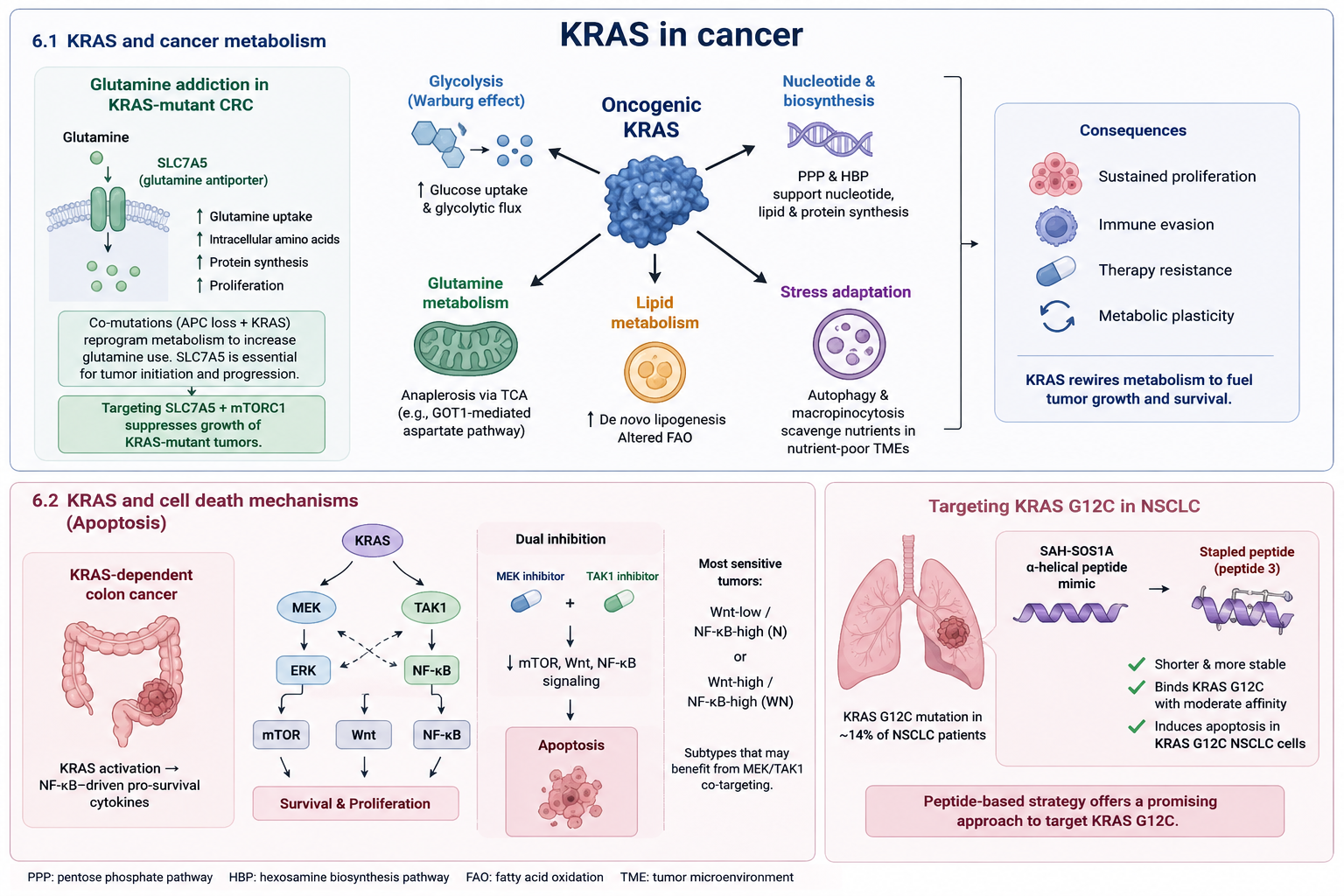
KRAS mutations are among the most prevalent oncogenic drivers in human malignancies and are increasingly recognized as critical determinants of tumor progression, immune evasion, and therapeutic resistance. Beyond its canonical role in promoting oncogenic signaling, accumulating evidence indicates that KRAS functions as a regulator of the tumor immune microenvironment, influencing antigen presentation, inflammatory signaling, metabolic adaptation, stromal remodeling, and responsiveness to immunotherapy. This review synthesizes current knowledge regarding the biological and immunological consequences of oncogenic KRAS across major cancer types, including non-small cell lung cancer, colorectal cancer, and pancreatic ductal adenocarcinoma, with emphasis on the mechanisms by which KRAS-driven tumors establish and maintain immunosuppressive microenvironments. Recent advances in immunopeptidomics and precision immuno-oncology have identified KRAS-derived neoantigens that can be targeted through T-cell receptor-engineered therapies, bispecific antibodies, and therapeutic vaccines. Concurrently, the clinical development of direct KRAS inhibitors, including sotorasib and adagrasib, has demonstrated meaningful antitumor activity while revealing adaptive resistance mechanisms that frequently limit durable responses. Emerging evidence suggests that effective therapeutic strategies will require integrating KRAS-targeted therapies with immune checkpoint blockade and other immunomodulatory approaches to overcome tumor-intrinsic and microenvironment-mediated resistance. Collectively, current evidence supports a paradigm in which KRAS functions not only as an oncogenic driver but also as a regulator of tumor-immune interactions, shaping therapeutic responsiveness and providing opportunities for biomarker-guided and combination-based immunotherapy in KRAS-mutant cancers.
References
1. Lesterhuis WJ, Haanen JBAG, Punt CJA. Cancer immunotherapy—revisited. Nat Rev Drug Discov. 2011;10(8):591-600. doi:10.1038/nrd3500
2. Mellman I, Coukos G, Dranoff G. Cancer immunotherapy comes of age. Nature. 2011;480(7378):480-489. doi:10.1038/nature10673
3. Goldberg MS. Improving cancer immunotherapy through nanotechnology. Nat Rev Cancer. 2019;19(10):587-602. doi:10.1038/s41568-019-0186-9
4. Linette GP, Bear AS, Carreno BM. Facts and hopes in immunotherapy strategies targeting antigens derived from KRAS mutations. Clin Cancer Res. 2024;30(10):2017-2024. doi:10.1158/1078-0432.CCR-23-1212
5. Parikh K, Banna G, Liu SV, Friedlaender A, Desai A, Subbiah V, et al. Drugging KRAS: current perspectives and state-of-art review. J Hematol Oncol. 2022;15(1):152. doi:10.1186/s13045-022-01375-4
6. Jančík S, Drábek J, Radzioch D, Hajdúch M. Clinical relevance of KRAS in human cancers. J Biomed Biotechnol. 2010;2010:150960. doi:10.1155/2010/150960
7. Westcott PMK, To MD. The genetics and biology of KRAS in lung cancer. Chin J Cancer. 2013;32(2):63-70. doi:10.5732/cjc.012.10098
8. Huang L, Guo Z, Wang F, Fu L. KRAS mutation: from undruggable to druggable in cancer. Signal Transduct Target Ther. 2021;6(1):386. doi:10.1038/s41392-021-00780-4
9. Jinesh GG, Sambandam V, Vijayaraghavan S, Balaji K, Mukherjee S. Molecular genetics and cellular events of K-Ras-driven tumorigenesis. Oncogene. 2018;37(7):839-846. doi:10.1038/onc.2017.377
10. Liu P, Wang Y, Li X. Targeting the untargetable KRAS in cancer therapy. Acta Pharm Sin B. 2019;9(5):871-879. doi:10.1016/j.apsb.2019.03.002
11. Singhal A, Li BT, O'Reilly EM. Targeting KRAS in cancer. Nat Med. 2024;30(4):969-983. doi:10.1038/s41591-024-02903-0
12. Krupa K, Fudalej M, Włoszek E, Miski H, Badowska-Kozakiewicz AM, Mękal D, et al. Treatment of KRAS-mutated pancreatic cancer: new hope for the patients? Cancers (Basel). 2025;17(15):2453. doi:10.3390/cancers17152453
13. Yang Y, Zhang H, Huang S, Chu Q. KRAS mutations in solid tumors: characteristics, current therapeutic strategy, and potential treatment exploration. J Clin Med. 2023;12(2):709. doi:10.3390/jcm12020709
14. Zhu C, Guan X, Zhang X, Luan X, Song Z, Cheng X, et al. Targeting KRAS mutant cancers: from druggable therapy to drug resistance. Mol Cancer. 2022;21(1):159. doi:10.1186/s12943-022-01629-2
15. Timar J, Kashofer K. Molecular epidemiology and diagnostics of KRAS mutations in human cancer. Cancer Metastasis Rev. 2020;39(4):1029-1038. doi:10.1007/s10555-020-09915-5
16. Noordhof AL, Swart EM, Damhuis RAM, Hendriks LEL, Kunst PWA, Aarts MJ, et al. Prognostic implication of KRAS G12C mutation in a real-world KRAS-mutated stage IV NSCLC cohort treated with immunotherapy in The Netherlands. JTO Clin Res Rep. 2023;4(9):100543. doi:10.1016/j.jtocrr.2023.100543
17. Amanam I, Mambetsariev I, Gupta R, Achuthan S, Wang Y, Pharaon R, et al. Role of immunotherapy and co-mutations on KRAS-mutant non-small cell lung cancer survival. J Thorac Dis. 2020;12(9):5086-5095. doi:10.21037/jtd.2020.04.18
18. Stickler S, Rath B, Hamilton G. Targeting KRAS in pancreatic cancer. Oncol Res. 2024;32(5):799-805. doi:10.32604/or.2024.045356
19. Kumarasamy V, Wang J, Frangou C, Wan Y, Dynka A, Rosenheck H, et al. The extracellular niche and tumor microenvironment enhance KRAS inhibitor efficacy in pancreatic cancer. Cancer Res. 2024;84(7):1115-1132. doi:10.1158/0008-5472.CAN-23-2504
20. Mahadevan KK, LeBleu VS, Ramirez EV, Chen Y, Li B, Sockwell AM, et al. Elimination of oncogenic KRAS in genetic mouse models eradicates pancreatic cancer by inducing FAS-dependent apoptosis by CD8+ T cells. Dev Cell. 2023;58(17):1562-1577.e8. doi:10.1016/j.devcel.2023.07.025
21. Eser S, Schnieke A, Schneider G, Saur D. Oncogenic KRAS signalling in pancreatic cancer. Br J Cancer. 2014;111(5):817-822. doi:10.1038/bjc.2014.215
22. Misale S, Yaeger R, Hobor S, Scala E, Janakiraman M, Liska D, et al. Emergence of KRAS mutations and acquired resistance to anti-EGFR therapy in colorectal cancer. Nature. 2012;486(7404):532-536. doi:10.1038/nature11156
23. Liu H, Liang Z, Cheng S, Huang L, Li W, Zhou C, et al. Mutant KRAS drives immune evasion by sensitizing cytotoxic T-cells to activation-induced cell death in colorectal cancer. Adv Sci (Weinh). 2023;10(6):e2203757. doi:10.1002/advs.202203757
24. Liao W, Overman MJ, Boutin AT, Shang X, Zhao D, Dey P, et al. KRAS-IRF2 axis drives immune suppression and immune therapy resistance in colorectal cancer. Cancer Cell. 2019;35(4):559-572.e7. doi:10.1016/j.ccell.2019.02.008
25. Hu T, Shukla SK, Vernucci E, He C, Wang D, King RJ, et al. Metabolic rewiring by loss of Sirt5 promotes Kras-induced pancreatic cancer progression. Gastroenterology. 2021;161(5):1584-1600. doi:10.1053/j.gastro.2021.06.045
26. Najumudeen AK, Ceteci F, Fey SK, Hamm G, Steven RT, Hall H, et al. The amino acid transporter SLC7A5 is required for efficient growth of KRAS-mutant colorectal cancer. Nat Genet. 2021;53(1):16-26. doi:10.1038/s41588-020-00753-3
27. McNew KL, Whipple WJ, Mehta AK, Grant TJ, Ray L, Kenny C, et al. MEK and TAK1 regulate apoptosis in colon cancer cells with KRAS-dependent activation of proinflammatory signaling. Mol Cancer Res. 2016;14(12):1204-1216. doi:10.1158/1541-7786.MCR-16-0173
28. Li C, Zhao N, An L, Dai Z, Chen X, Yang F, et al. Apoptosis-inducing activity of synthetic hydrocarbon-stapled peptides in H358 cancer cells expressing KRASG12C. Acta Pharm Sin B. 2021;11(9):2670-2684. doi:10.1016/j.apsb.2021.06.013
29. Han JH, Kim YK, Kim H, Lee J, Oh MJ, Kim SB, et al. Snail acetylation by autophagy-derived acetyl-coenzyme A promotes invasion and metastasis of KRAS-LKB1 co-mutated lung cancer cells. Cancer Commun (Lond). 2022;42(8):716-749. doi:10.1002/cac2.12332
30. Li M, Yu X, Liu Y, Ouyang S, Wu L, Chen X, et al. KRAS/ABHD17C/ALOX15B axis promotes pancreatic cancer progression via ferroptosis evasion. Adv Sci (Weinh). 2025;12(35):e04470. doi:10.1002/advs.202504470
31. Yan H, Talty R, Jain A, Cai Y, Zheng J, Shen X, et al. Discovery of decreased ferroptosis in male colorectal cancer patients with KRAS mutations. Redox Biol. 2023;62:102699. doi:10.1016/j.redox.2023.102699
32. Shin DH, Choi M, Han CY, Kim SS. Targeting TGF-β-Smad2/3-JNK1-mediated SIRT1 activity overcomes the chemoresistance of KRAS mutation lung cancer. Exp Mol Med. 2025;57(9):2022-2039. doi:10.1038/s12276-025-01536-8
33. Jeong SH, Wu HG, Park WY. LIN28B confers radio-resistance through the posttranscriptional control of KRAS. Exp Mol Med. 2009;41(12):912-918. doi:10.3858/emm.2009.41.12.097
34. Minjgee M, Toulany M, Kehlbach R, Giehl K, Rodemann HP. K-RAS(V12) induces autocrine production of EGFR ligands and mediates radioresistance through EGFR-dependent Akt signaling and activation of DNA-PKcs. Int J Radiat Oncol Biol Phys. 2011;81(5):1506-1514. doi:10.1016/j.ijrobp.2011.05.057
35. Johnson L, Mercer K, Greenbaum D, Bronson RT, Crowley D, Tuveson DA, et al. Somatic activation of the K-ras oncogene causes early onset lung cancer in mice. Nature. 2001;410(6832):1111-1116. doi:10.1038/35074129
36. Mainardi S, Mulero-Sánchez A, Prahallad A, Germano G, Bosma A, Krimpenfort P, et al. SHP2 is required for growth of KRAS-mutant non-small-cell lung cancer in vivo. Nat Med. 2018;24(7):961-967. doi:10.1038/s41591-018-0023-9
37. Haigis KM, Kendall KR, Wang Y, Cheung A, Haigis MC, Glickman JN, et al. Differential effects of oncogenic K-Ras and N-Ras on proliferation, differentiation and tumor progression in the colon. Nat Genet. 2008;40(5):600-608. doi:10.1038/ng.115
38. Li Y, He Y, Peng J, Su Z, Li Z, Zhang B, et al. Mutant Kras co-opts a proto-oncogenic enhancer network in inflammation-induced metaplastic progenitor cells to initiate pancreatic cancer. Nat Cancer. 2021;2(1):49-65. doi:10.1038/s43018-020-00134-z
39. Bery N, Miller A, Rabbitts T. A potent KRAS macromolecule degrader specifically targeting tumours with mutant KRAS. Nat Commun. 2020;11(1):3233. doi:10.1038/s41467-020-17022-w
40. Ruess DA, Heynen GJ, Ciecielski KJ, Ai J, Berninger A, Kabacaoglu D, et al. Mutant KRAS-driven cancers depend on PTPN11/SHP2 phosphatase. Nat Med. 2018;24(7):954-960. doi:10.1038/s41591-018-0024-8
41. Cook JH, Melloni GEM, Gulhan DC, Park PJ, Haigis KM. The origins and genetic interactions of KRAS mutations are allele- and tissue-specific. Nat Commun. 2021;12(1):1808. doi:10.1038/s41467-021-22125-z
42. Santana-Codina N, Roeth AA, Zhang Y, Yang A, Mashadova O, Asara JM, et al. Oncogenic KRAS supports pancreatic cancer through regulation of nucleotide synthesis. Nat Commun. 2018;9(1):4945. doi:10.1038/s41467-018-07472-8
43. Muzumdar MD, Chen PY, Dorans KJ, Chung KM, Bhutkar A, Hong E, et al. Survival of pancreatic cancer cells lacking KRAS function. Nat Commun. 2017;8(1):1090. doi:10.1038/s41467-017-00942-5
44. Canon J, Rex K, Saiki AY, Mohr C, Cooke K, Bagal D, et al. The clinical KRAS(G12C) inhibitor AMG 510 drives anti-tumour immunity. Nature. 2019;575(7781):217-223. doi:10.1038/s41586-019-1694-1
45. Kim D, Herdeis L, Rudolph D, Zhao Y, Böttcher J, Vides A, et al. Pan-KRAS inhibitor disables oncogenic signalling and tumour growth. Nature. 2023;619(7968):160-166. doi:10.1038/s41586-023-06123-3
46. Mueller S, Engleitner T, Maresch R, Zukowska M, Lange S, Kaltenbacher T, et al. Evolutionary routes and KRAS dosage define pancreatic cancer phenotypes. Nature. 2018;554(7690):62-68. doi:10.1038/nature25459
47. Kerr EM, Gaude E, Turrell FK, Frezza C, Martins CP. Mutant Kras copy number defines metabolic reprogramming and therapeutic susceptibilities. Nature. 2016;531(7592):110-113. doi:10.1038/nature16967
48. Wang J, Hu K, Guo J, Cheng F, Lv J, Jiang W, et al. Suppression of KRas-mutant cancer through the combined inhibition of KRAS with PLK1 and ROCK. Nat Commun. 2016;7:11363. doi:10.1038/ncomms11363
49. Boumelha J, de Castro A, Bah N, Cha H, de Carné Trécesson S, Rana S, et al. CRISPR-Cas9 screening identifies KRAS-induced COX2 as a driver of immunotherapy resistance in lung cancer. Cancer Res. 2024;84(14):2231-2246. doi:10.1158/0008-5472.CAN-23-2627
50. Uniyal P, Kashyap VK, Behl T, Parashar D, Rawat R. KRAS mutations in cancer: understanding signaling pathways to immune regulation and the potential of immunotherapy. Cancers (Basel). 2025;17(5):785. doi:10.3390/cancers17050785
51. Hamarsheh S, Groß O, Brummer T, Zeiser R. Immune modulatory effects of oncogenic KRAS in cancer. Nat Commun. 2020;11(1):5439. doi:10.1038/s41467-020-19288-6
52. Boumelha J, de Carné Trécesson S, Law EK, Romero-Clavijo P, Coelho MA, Ng KW, et al. An immunogenic model of KRAS-mutant lung cancer enables evaluation of targeted therapy and immunotherapy combinations. Cancer Res. 2022;82(19):3435-3448. doi:10.1158/0008-5472.CAN-22-0325
53. Pinto R, Petriella D, Lacalamita R, Montrone M, Catino A, Pizzutilo P, et al. KRAS-driven lung adenocarcinoma and B cell infiltration: novel insights for immunotherapy. Cancers (Basel). 2019;11(8):1145. doi:10.3390/cancers11081145
54. Hosein AN, Dangol G, Okumura T, Roszik J, Rajapakshe K, Siemann M, et al. Loss of Rnf43 accelerates Kras-mediated neoplasia and remodels the tumor immune microenvironment in pancreatic adenocarcinoma. Gastroenterology. 2022;162(4):1303-1318.e18. doi:10.1053/j.gastro.2021.12.273
55. Di Federico A, Hong L, Elkrief A, Thummalapalli R, Cooper AJ, Ricciuti B, et al. Lung adenocarcinomas with mucinous histology: clinical, genomic, and immune microenvironment characterization and outcomes to immunotherapy-based treatments and KRASG12C inhibitors. Ann Oncol. 2025;36(3):297-308. doi:10.1016/j.annonc.2024.11.014
56. Knetki-Wróblewska M, Wojas-Krawczyk K, Krawczyk P, Krzakowski M. Emerging insights into STK11, KEAP1 and KRAS mutations: implications for immunotherapy in patients with advanced non-small cell lung cancer. Transl Lung Cancer Res. 2024;13(12):3718-3730. doi:10.21037/tlcr-24-552
57. Zhu Z, Chen H, Feng C, Chen L, Ma C, Liu Z, et al. Specific inhibitor to KRASG12C induces tumor-specific immunity and synergizes with oncolytic virus for enhanced cancer immunotherapy. J Immunother Cancer. 2025;13(7):e010514. doi:10.1136/jitc-2024-010514
58. Liu H, Qiang M, Zhang Y, Wang H, Xing Y, Guo R. Intersecting evidence: bibliometric analysis and clinical trials illuminate immunotherapy in KRAS-mutation cancer: a review. Medicine (Baltimore). 2024;103(36):e39334. doi:10.1097/MD.0000000000039334
59. Glorieux C, Xia X, You X, Wang Z, Han Y, Yang J, et al. Cisplatin and gemcitabine exert opposite effects on immunotherapy with PD-1 antibody in K-ras-driven cancer. J Adv Res. 2022;40:109-124. doi:10.1016/j.jare.2021.12.005
60. Almotlak AA, Farooqui M, Soloff AC, Siegfried JM, Stabile LP. Targeting the ERβ/HER oncogenic network in KRAS mutant lung cancer modulates the tumor microenvironment and is synergistic with sequential immunotherapy. Int J Mol Sci. 2021;23(1):81. doi:10.3390/ijms23010081
61. Liu C, Zheng S, Jin R, Wang X, Wang F, Zang R, et al. The superior efficacy of anti-PD-1/PD-L1 immunotherapy in KRAS-mutant non-small cell lung cancer that correlates with an inflammatory phenotype and increased immunogenicity. Cancer Lett. 2020;470:95-105. doi:10.1016/j.canlet.2019.10.027
62. Christenson ES, Yu R, Gai J, Wang H, Lei M, Zheng L. The impact of KRAS mutations on the clinical outcome and immune response following immunotherapy for pancreatic cancer. Ann Pancreat Cancer. 2024;7:6. doi:10.21037/apc-24-2
63. Hashimoto A, Handa H, Hata S, Tsutaho A, Yoshida T, Hirano S, et al. Inhibition of mutant KRAS-driven overexpression of ARF6 and MYC by an eIF4A inhibitor drug improves the effects of anti-PD-1 immunotherapy for pancreatic cancer. Cell Commun Signal. 2021;19(1):54. doi:10.1186/s12964-021-00733-y
64. Norgard RJ, Budhani P, O'Brien SA, Xia Y, Egan JN, Flynn B, et al. Reshaping the tumor microenvironment of KRASG12D pancreatic ductal adenocarcinoma with combined SOS1 and MEK inhibition for improved immunotherapy response. Cancer Res Commun. 2024;4(6):1548-1560. doi:10.1158/2767-9764.CRC-24-0172
65. Ai Q, Li F, Zou S, Zhang Z, Jin Y, Jiang L, et al. Targeting KRASG12V mutations with HLA class II-restricted TCR for the immunotherapy in solid tumors. Front Immunol. 2023;14:1161538. doi:10.3389/fimmu.2023.1161538
66. Bear AS, Vonderheide RH, O'Hara MH. Challenges and opportunities for pancreatic cancer immunotherapy. Cancer Cell. 2020;38(6):788-802. doi:10.1016/j.ccell.2020.08.004
67. Hu S, Yang J, Shangguan J, Eresen A, Li Y, Ma Q, et al. Natural killer cell-based adoptive transfer immunotherapy for pancreatic ductal adenocarcinoma in a KrasLSL-G12D p53LSL-R172H Pdx1-Cre mouse model. Am J Cancer Res. 2019;9(8):1757-1765. PMID: 31497356
68. Ricciuti B, Arbour KC, Lin JJ, Vajdi A, Vokes N, Hong L, et al. Diminished efficacy of programmed death-(ligand)1 inhibition in STK11- and KEAP1-mutant lung adenocarcinoma is affected by KRAS mutation status. J Thorac Oncol. 2022;17(3):399-410. doi:10.1016/j.jtho.2021.10.013
69. Tran E, Robbins PF, Lu YC, Prickett TD, Gartner JJ, Jia L, et al. T-cell transfer therapy targeting mutant KRAS in cancer. N Engl J Med. 2016;375(23):2255-2262. doi:10.1056/NEJMoa1609279
70. Goloudina A, Le Chevalier F, Authié P, Ciret S, Nemirov K, Fert I, et al. A lentiviral vector targeting a KRAS neoepitope for cancer immunotherapy. Sci Rep. 2025;15(1):23171. doi:10.1038/s41598-025-05134-6
71. Abdel Mouti M, Pauklin S. Chemically modified neoantigen-based immunotherapy for targeting KRASG12C-driven tumors. Trends Pharmacol Sci. 2023;44(5):255-257. doi:10.1016/j.tips.2023.02.004
72. Shen H, Li C. Global research trends in immunotherapy for non-small cell lung cancer patients with KRAS mutations: a bibliometric analysis. Front Oncol. 2024;14:1385761. doi:10.3389/fonc.2024.1385761
73. Dong ZY, Zhong WZ, Zhang XC, Su J, Xie Z, Liu SY, et al. Potential predictive value of TP53 and KRAS mutation status for response to PD-1 blockade immunotherapy in lung adenocarcinoma. Clin Cancer Res. 2017;23(12):3012-3024. doi:10.1158/1078-0432.CCR-16-2554
74. Cefalì M, Epistolio S, Ramelli G, Mangan D, Molinari F, Martin V, et al. Correlation of KRAS G12C mutation and high PD-L1 expression with clinical outcome in NSCLC patients treated with anti-PD1 immunotherapy. J Clin Med. 2022;11(6):1627. doi:10.3390/jcm11061627
75. Hastings K, Yu HA, Wei W, Sanchez-Vega F, DeVeaux M, Choi J, et al. EGFR mutation subtypes and response to immune checkpoint blockade treatment in non-small-cell lung cancer. Ann Oncol. 2019;30(8):1311-1320. doi:10.1093/annonc/mdz141
76. Hu J, Wang Z, Chen Z, Li A, Sun J, Zheng M, et al. DKK2 blockage-mediated immunotherapy enhances anti-angiogenic therapy of KRAS mutated colorectal cancer. Biomed Pharmacother. 2020;127:110229. doi:10.1016/j.biopha.2020.110229
77. Geçgel A, Şahin Çelik B, Peker P, Gökdere ZS, Koca D, Karaca B, et al. KRAS G12C mutation predicts improved survival in NSCLC patients receiving immunotherapy: insights from a real-world cohort. J Clin Med. 2025;14(19):6826. doi:10.3390/jcm14196826
78. Budczies J, Romanovsky E, Kirchner M, Neumann O, Blasi M, Schnorbach J, et al. KRAS and TP53 co-mutation predicts benefit of immune checkpoint blockade in lung adenocarcinoma. Br J Cancer. 2024;131(3):524-533. doi:10.1038/s41416-024-02746-z
79. Hu H, Cheng R, Wang Y, Wang X, Wu J, Kong Y, et al. Oncogenic KRAS signaling drives evasion of innate immune surveillance in lung adenocarcinoma by activating CD47. J Clin Invest. 2023;133(2):e153470. doi:10.1172/JCI153470
80. Wang C-A, Hou Y-C, Hong Y-K, Tai Y-J, Shen C, Hou P-C, et al. Intercellular TIMP-1-CD63 signaling directs the evolution of immune escape and metastasis in KRAS-mutated pancreatic cancer cells. Mol Cancer. 2025;24(1):25. doi:10.1186/s12943-024-02207-4
81. Principe DR, Xiong R, Li Y, Pham TND, Kamath SD, Dubrovskyi O, et al. XP-524 is a dual-BET/EP300 inhibitor that represses oncogenic KRAS and potentiates immune checkpoint inhibition in pancreatic cancer. Proc Natl Acad Sci U S A. 2022;119(4):e2116764119. doi:10.1073/pnas.2116764119
82. Fernández-García F, Fernández-Rodríguez A, Fustero-Torre C, Piñeiro-Yáñez E, Wang H, Lechuga CG, et al. Type I interferon signaling pathway enhances immune-checkpoint inhibition in KRAS mutant lung tumors. Proc Natl Acad Sci U S A. 2024;121(36):e2402913121. doi:10.1073/pnas.2402913121
83. Datta J, Bianchi A, De Castro Silva I, Deshpande NU, Cao LL, Mehra S, et al. Distinct mechanisms of innate and adaptive immune regulation underlie poor oncologic outcomes associated with KRAS-TP53 co-alteration in pancreatic cancer. Oncogene. 2022;41(28):3640-3654. doi:10.1038/s41388-022-02368-w
84. Liang H, Zhou G, Lv L, Lu J, Peng J. KRAS expression is a prognostic indicator and associated with immune infiltration in breast cancer. Breast Cancer. 2021;28(2):379-386. doi:10.1007/s12282-020-01170-4
85. Zhang W, Quan Y, Ma X, Zeng L, Li J, Chen S, et al. Synergistic effect of glutathione and IgG4 in immune evasion and the implication for cancer immunotherapy. Redox Biol. 2023;60:102608. doi:10.1016/j.redox.2023.102608
86. Hirade K, Tanaka N, Kajino T, Adachi Y, Kimura R, Kasuya H, et al. Inhibiting KRAS with CD47 and immune checkpoint overcomes intrinsic resistance to combined KRAS and immune checkpoint inhibitor therapy. Cell Rep Med. 2025;6(9):102317. doi:10.1016/j.xcrm.2025.102317
87. Ischenko I, D'Amico SD, Rao M, Li J, Hayman MJ, Powers S, et al. KRAS drives immune evasion in a genetic model of pancreatic cancer. Nat Commun. 2021;12(1):1482. doi:10.1038/s41467-021-21736-w
88. Cole M, Anastasiou P, Lee C, Yu X, de Castro A, Roelink J, et al. Spatial multiplex analysis of lung cancer reveals that regulatory T cells attenuate KRAS-G12C inhibitor-induced immune responses. Sci Adv. 2024;10(44):eadl6464. doi:10.1126/sciadv.adl6464
89. Hashimoto S, Furukawa S, Hashimoto A, Tsutaho A, Fukao A, Sakamura Y, et al. ARF6 and AMAP1 are major targets of KRAS and TP53 mutations to promote invasion, PD-L1 dynamics, and immune evasion of pancreatic cancer. Proc Natl Acad Sci U S A. 2019;116(35):17450-17459. doi:10.1073/pnas.1901765116
90. Brand A, Singer K, Koehl GE, Kolitzus M, Schoenhammer G, Thiel A, et al. LDHA-associated lactic acid production blunts tumor immunosurveillance by T and NK cells. Cell Metab. 2016;24(5):657-671. doi:10.1016/j.cmet.2016.08.011
91. Schabath MB, Welsh EA, Fulp WJ, Chen L, Teer JK, Thompson ZJ, et al. Differential association of STK11 and TP53 with KRAS mutation-associated gene expression, proliferation and immune surveillance in lung adenocarcinoma. Oncogene. 2016;35(24):3209-3216. doi:10.1038/onc.2015.375
92. Alias NAR, Hoo WPY, Siak PY, Othman SS, Mohammed Alitheen NB, In LLA, et al. Effect of secretion efficiency of mutant KRAS neoantigen by Lactococcus lactis on the immune response of a mucosal vaccine delivery vehicle targeting colorectal cancer. Int J Mol Sci. 2023;24(10):8928. doi:10.3390/ijms24108928
93. Lal N, White BS, Goussous G, Pickles O, Mason MJ, Beggs AD, et al. KRAS mutation and consensus molecular subtypes 2 and 3 are independently associated with reduced immune infiltration and reactivity in colorectal cancer. Clin Cancer Res. 2018;24(1):224-233. doi:10.1158/1078-0432.CCR-17-1090
94. Khosravi N, Caetano MS, Cumpian AM, Unver N, De la Garza Ramos C, Noble O, et al. IL22 promotes KRAS-mutant lung cancer by induction of a protumor immune response and protection of stemness properties. Cancer Immunol Res. 2018;6(7):788-797. doi:10.1158/2326-6066.CIR-17-0655
95. Kitajima S, Asahina H, Chen T, Guo S, Gutierrez Quiceno L, Cavanaugh JD, et al. Overcoming resistance to dual innate immune and MEK inhibition downstream of KRAS. Cancer Cell. 2018;34(3):439-452.e6. doi:10.1016/j.ccell.2018.08.009
96. Tokumaru Y, Oshi M, Katsuta E, Yan L, Satyananda V, Matsuhashi N, et al. KRAS signaling enriched triple negative breast cancer is associated with favorable tumor immune microenvironment and better survival. Am J Cancer Res. 2020;10(3):897-907. PMID: 32266098
97. Briere DM, Li S, Calinisan A, Sudhakar N, Aranda R, Hargis L, et al. The KRASG12C inhibitor MRTX849 reconditions the tumor immune microenvironment and sensitizes tumors to checkpoint inhibitor therapy. Mol Cancer Ther. 2021;20(6):975-985. doi:10.1158/1535-7163.MCT-20-0462
98. Zhang L, Chen W, Wei H, Yu J. Efficacy of immune checkpoint inhibitors in advanced non-small cell lung cancer patients with KRAS mutations: A network meta-analysis. Clin Respir J. 2024;18(4):e13745. doi:10.1111/crj.13745
99. Qiao M, Zhou F, Liu X, Jiang T, Wang H, Li X, et al. Targeting focal adhesion kinase boosts immune response in KRAS/LKB1 co-mutated lung adenocarcinoma via remodeling the tumor microenvironment. Exp Hematol Oncol. 2024;13(1):11. doi:10.1186/s40164-023-00471-6
100. Boumelha J, Molina-Arcas M, Downward J. Facts and hopes on RAS inhibitors and cancer immunotherapy. Clin Cancer Res. 2023;29(24):5012-5020. doi:10.1158/1078-0432.CCR-22-3655
101. Nagasaka M, Potugari B, Nguyen A, Sukari A, Azmi AS, Ou SI, et al. KRAS inhibitors—yes but what next? Direct targeting of KRAS—vaccines, adoptive T cell therapy and beyond. Cancer Treat Rev. 2021;101:102309. doi:10.1016/j.ctrv.2021.102309
102. Isermann T, Sers C, Der CJ, Papke B. KRAS inhibitors: resistance drivers and combinatorial strategies. Trends Cancer. 2025;11(2):91-116. doi:10.1016/j.trecan.2024.11.009
103. Nusrat M, Yaeger R. KRAS inhibition in metastatic colorectal cancer: an update. Curr Opin Pharmacol. 2023;68:102343. doi:10.1016/j.coph.2022.102343
104. Roberts PJ, Stinchcombe TE. KRAS mutation: should we test for it, and does it matter? J Clin Oncol. 2013;31(8):1112-1121. doi:10.1200/JCO.2012.43.0454
105. Liu J, Gao J. Efficacy of immunotherapy as second-line or later-line therapy and prognostic significance of KRAS or TP53 mutations in advanced non-small cell lung cancer patients. Eur J Cancer Prev. 2023;32(6):590-599. doi:10.1097/CEJ.0000000000000799
106. Peng L, Guo J, Kong L, Huang Y, Tang N, Zhang J, et al. Efficacy of immunotherapy in KRAS-mutant advanced NSCLC: A real-world study in a Chinese population. Front Oncol. 2023;12:1070761. doi:10.3389/fonc.2022.1070761
107. Swart EM, Noordhof AL, Damhuis RAM, Kunst PWA, De Ruysscher DKM, Hendriks LEL, et al. Survival of patients with KRAS G12C mutated stage IV non-small cell lung cancer with and without brain metastases treated with immune checkpoint inhibitors. Lung Cancer. 2023;182:107290. doi:10.1016/j.lungcan.2023.107290
108. Urtecho SB, Provenzano L, Spagnoletti A, Bottiglieri A, Pircher C, Massa G, et al. Decoding KRAS mutation in non-small cell lung cancer patients receiving immunotherapy: a retrospective institutional comparison and literature review. Lung Cancer. 2025;199:108051. doi:10.1016/j.lungcan.2024.108051
109. Gao G, Liao W, Ma Q, Zhang B, Chen Y, Wang Y. KRAS G12D mutation predicts lower TMB and drives immune suppression in lung adenocarcinoma. Lung Cancer. 2020;149:41-45. doi:10.1016/j.lungcan.2020.09.004
110. Tsiouda T, Domvri K, Boutsikou E, Bikos V, Kyrka K, Papadaki K, et al. Prognostic value of KRAS mutations in relation to PDL1 expression and immunotherapy treatment in adenocarcinoma and squamous cell carcinoma patients: a Greek cohort study. J Pers Med. 2024;14(5):457. doi:10.3390/jpm14050457
111. Wu SG, Liao WY, Su KY, Yu SL, Huang YL, Yu CJ, et al. Prognostic characteristics and immunotherapy response of patients with nonsquamous NSCLC with KRAS mutation in East Asian populations: a single-center cohort study in Taiwan. JTO Clin Res Rep. 2020;2(2):100140. doi:10.1016/j.jtocrr.2020.100140
112. Eklund EA, Svensson J, Stauber Näslund L, Yhr M, Sayin SI, Wiel C, et al. Comprehensive genetic variant analysis reveals combination of KRAS and LRP1B as a predictive biomarker of response to immunotherapy in patients with non-small cell lung cancer. J Exp Clin Cancer Res. 2025;44(1):75. doi:10.1186/s13046-025-03342-6
113. Erhart CC, Cefalì M, Mangan D, Kasenda B, Wannesson L. Prognostic value of KRAS G12C in advanced non-small cell lung cancer with high PD-L1 expression treated with upfront immunotherapy: a systematic review and meta-analysis. Swiss Med Wkly. 2024;154:3695. doi:10.57187/s.3695
114. Zhao R, Shu Y, Xu W, Jiang F, Ran P, Pan L, et al. The efficacy of immunotherapy in non-small cell lung cancer with KRAS mutation: a systematic review and meta-analysis. Cancer Cell Int. 2024;24(1):361. doi:10.1186/s12935-024-03498-9
115. Edin S, Gylling B, Li X, Stenberg Å, Löfgren-Burström A, Zingmark C, et al. Opposing roles by KRAS and BRAF mutation on immune cell infiltration in colorectal cancer - possible implications for immunotherapy. Br J Cancer. 2024;130(1):143-150. doi:10.1038/s41416-023-02483-9
116. Jiang H, Li Y, Wang Y, Zou B, Chen Y, Zhang Y, et al. Efficacy of immune checkpoint inhibitors in advanced non-small cell lung cancer patients with rare KRAS mutations: a real-world retrospective study. Transl Lung Cancer Res. 2024;13(7):1672-1684. doi:10.21037/tlcr-24-372
117. Olsen A, Lebedeva A, Nosova P, Nikulin V, Sharova M, Ignatova E, et al. Impact of the STK11/KRAS co-mutation on the response to immunotherapy in a real-world pan-cancer cohort. Tumori. 2024;110(2):146-152. doi:10.1177/03008916231204441
118. Bironzo P, Cani M, Jacobs F, Napoli VM, Listì A, Passiglia F, et al. Real-world retrospective study of KRAS mutations in advanced non-small cell lung cancer in the era of immunotherapy. Cancer. 2023;129(11):1662-1671. doi:10.1002/cncr.34731
119. Gu G, Yu B, Wan H, Lu S, Zhu X, Zhao Y, et al. Molecular characteristics and the effect of KRAS mutation on the prognosis of immunotherapy in non-small cell lung cancer in Xinjiang, China. Onco Targets Ther. 2022;15:1021-1032. doi:10.2147/OTT.S381825
120. Wu JJ, Lee PH, Zheng ZR, Huang YH, Tseng JS, Hsu KH, et al. Characteristics and immune checkpoint inhibitor effects on non-smoking non-small cell lung cancer with KRAS mutation: a single center cohort (STROBE-compliant). Medicine (Baltimore). 2022;101(24):e29381. doi:10.1097/MD.0000000000029381
121. Pavan A, Boscolo Bragadin A, Calvetti L, Ferro A, Zulato E, Attili I, et al. Role of next generation sequencing-based liquid biopsy in advanced non-small cell lung cancer patients treated with immune checkpoint inhibitors: impact of STK11, KRAS and TP53 mutations and co-mutations on outcome. Transl Lung Cancer Res. 2021;10(1):202-220. doi:10.21037/tlcr-20-674
122. Gu X, Si J, Guan Y, Xu Y, Shao L, Zhang Y, et al. Efficacy of immune checkpoint inhibitors in patients with KRAS-mutant advanced non-small cell lung cancer: a retrospective analysis. Open Med (Wars). 2023;18(1):20230653. doi:10.1515/med-2023-0653
123. Liu C, Zheng S, Wang Z, Wang S, Wang X, Yang L, et al. KRAS-G12D mutation drives immune suppression and the primary resistance of anti-PD-1/PD-L1 immunotherapy in non-small cell lung cancer. Cancer Commun (Lond). 2022;42(9):828-847. doi:10.1002/cac2.12327
124. Sciortino C, Viglialoro V, Nucci M, Polito MG, Cortesi E, Gelibter A, et al. Response to immunotherapy in KRAS G12C mutated NSCLC: a single-centre retrospective observational study. Oncotarget. 2022;13:686-693. doi:10.18632/oncotarget.28230
125. Kartolo A, Feilotter H, Hopman W, Fung AS, Robinson A. A single institution study evaluating outcomes of PD-L1 high KRAS-mutant advanced non-small cell lung cancer (NSCLC) patients treated with first line immune checkpoint inhibitors. Cancer Treat Res Commun. 2021;27:100330. doi:10.1016/j.ctarc.2021.100330
126. Barghout SH, Zhan LJ, Raptis S, Al-Agha F, Esfahanian N, Popovacki A, et al. Treatment patterns and outcomes in KRASG12C-positive advanced NSCLC patients previously treated with immune checkpoint inhibitors: a Canada-wide real-world, multi-center, retrospective cohort study. Lung Cancer. 2024;194:107898. doi:10.1016/j.lungcan.2024.107898
127. Molina-Arcas M, Downward J. Exploiting the therapeutic implications of KRAS inhibition on tumor immunity. Cancer Cell. 2024;42(3):338-357. doi:10.1016/j.ccell.2024.02.012
128. Jeanson A, Tomasini P, Souquet-Bressand M, Brandone N, Boucekine M, Grangeon M, et al. Efficacy of immune checkpoint inhibitors in KRAS-mutant non-small cell lung cancer (NSCLC). J Thorac Oncol. 2019;14(6):1095-1101. doi:10.1016/j.jtho.2019.01.011
129. Aredo JV, Padda SK, Kunder CA, Han SS, Neal JW, Shrager JB, et al. Impact of KRAS mutation subtype and concurrent pathogenic mutations on non-small cell lung cancer outcomes. Lung Cancer. 2019;133:144-150. doi:10.1016/j.lungcan.2019.05.025
130. Wang X, Wang W, Zou S, Xu Z, Cao D, Zhang S, et al. Combination therapy of KRAS G12V mRNA vaccine and pembrolizumab: clinical benefit in patients with advanced solid tumors. Cell Res. 2024;34(9):661-664. doi:10.1038/s41422-024-00990-9
131. Skoulidis F, Byers LA, Diao L, Papadimitrakopoulou VA, Tong P, Izzo J, et al. Co-occurring genomic alterations define major subsets of KRAS-mutant lung adenocarcinoma with distinct biology, immune profiles, and therapeutic vulnerabilities. Cancer Discov. 2015;5(8):860-877. doi:10.1158/2159-8290.CD-14-1236
132. Muthalagu N, Monteverde T, Raffo-Iraolagoitia X, Wiesheu R, Whyte D, Hedley A, et al. Repression of the type I interferon pathway underlies MYC- and KRAS-dependent evasion of NK and B cells in pancreatic ductal adenocarcinoma. Cancer Discov. 2020;10(6):872-887. doi:10.1158/2159-8290.CD-19-0620
Published
How to Cite
Issue
Section
License
Copyright (c) 2026 Milad Ashrafizadeh, Noushin Nabavi, Yifei Xu

This work is licensed under a Creative Commons Attribution 4.0 International License.
Copyright
Authors publishing in Cancer Biome and Targeted Therapy retain full copyright of their work. By submitting a manuscript, authors grant the publisher (GCINC Press) a non-exclusive license to publish, distribute, and archive the article, and to identify itself as the original publisher.
License
All articles are published open access under the terms of the Creative Commons Attribution 4.0 International License (CC BY 4.0).
https://creativecommons.org/licenses/by/4.0/. This license permits unrestricted use, distribution, reproduction, and adaptation in any medium, including for commercial purposes, provided that:
- Proper attribution is given to the original author(s) and source,
- A link to the license is provided, and
- Any changes made are clearly indicated.
Author Rights
Authors retain the right to:
- Use their article in future works (e.g., books, theses, lectures)
- Share and archive the final published version on institutional repositories or personal websites
- Adapt or translate their work, or authorize others to do so, with proper citation
Reuse by Third Parties
Content is licensed under the Creative Commons Attribution 4.0 International License (CC BY 4.0). Third parties may copy, redistribute, remix, transform, and build upon the material for any purpose, including commercial use, provided that appropriate credit is given to the original author(s).
Archiving and Preservation
All articles are made freely available immediately upon publication, without embargo. Cancer Biome and Targeted Therapy is hosted on the Open Journal Systems (OJS) platform, developed by the Public Knowledge Project (PKP). The journal participates in long-term digital preservation through the PKP Preservation Network (PKP PN) using the LOCKSS system. Authors are encouraged to self-archive in institutional repositories, disciplinary archives, and preprint servers in accordance with the license terms.