Metal-Dependent Cell Death Networks Under Therapeutic Pressure: Ferroptosis-Cuproptosis Crosstalk in Drug-Resistant Cancer
DOI:
https://doi.org/10.66505/cbtt.v1i2.34Keywords:
ferroptosis, cuproptosis, therapy resistance, cancer therapeutics, metabolic reprogramming, tumor microenvironment, metabolic plasticityAbstract
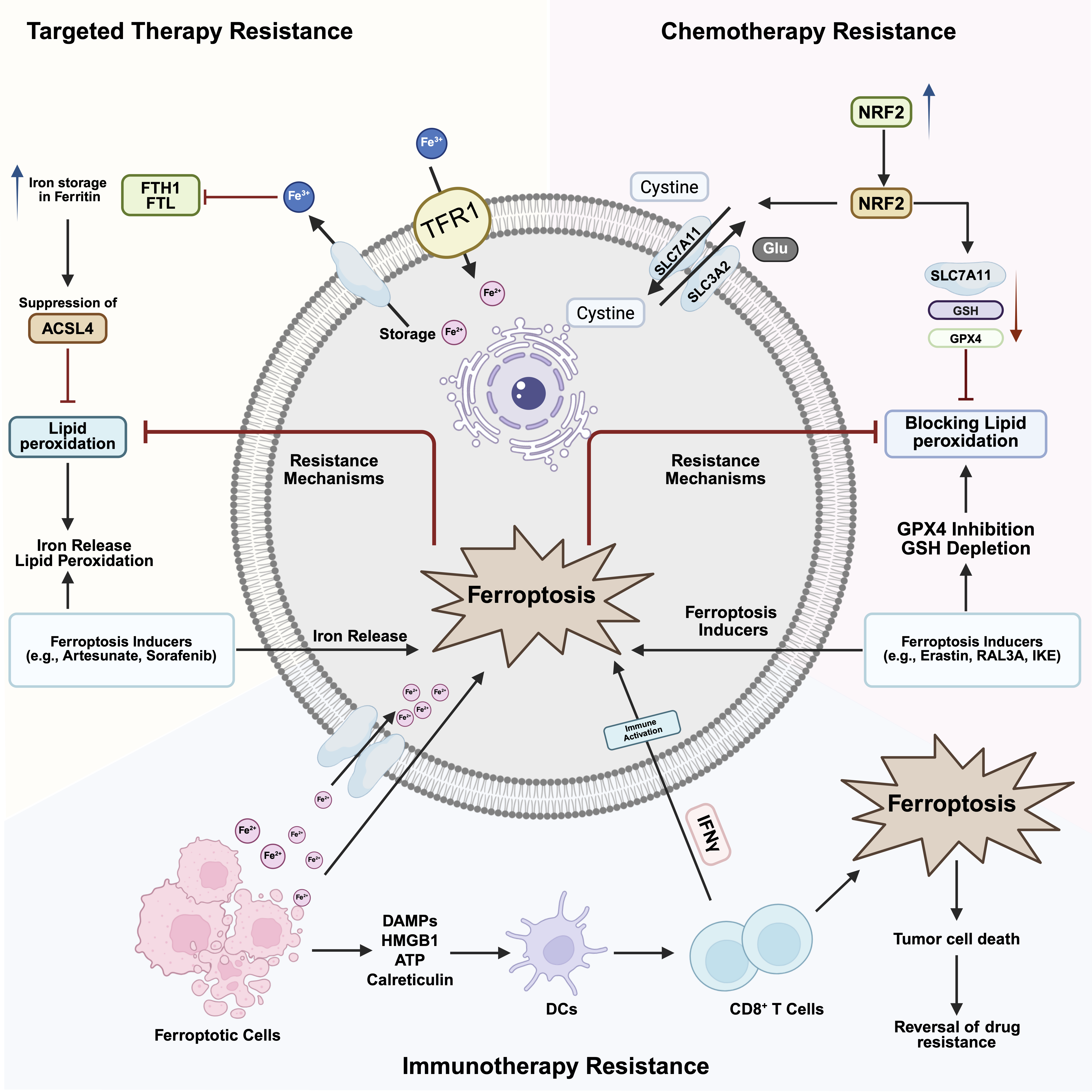
Therapy resistance remains a principal cause of cancer relapse and mortality, reflecting the ability of tumor cells to remodel metabolic, redox, and stress-adaptation networks under therapeutic pressure. Ferroptosis is executed by iron-driven peroxidation of polyunsaturated phospholipids, whereas cuproptosis arises from copper-triggered mitochondrial proteotoxic stress centered on lipoylated TCA cycle proteins and Fe-S cluster disruption. Although mechanistically distinct, these programs converge through shared transition-metal redox chemistry, mitochondrial metabolism, and metabolic plasticity. Drug-selected tumor states frequently acquire a dual-shielded phenotype that couples reinforced antioxidant buffering, exemplified by NRF2 activation and SLC7A11-GSH-GPX4 maintenance, with copper-trafficking adaptations, such as upregulation of ATP7A and ATP7B and enhanced copper sequestration, thereby suppressing both lipid peroxidation and copper-induced proteotoxicity. This integrated view highlights metabolic state as a gatekeeper, with OXPHOS dependence, lipoylation capacity, and metal transport profiles shaping sensitivity windows and informing biomarker-guided stratification. We discuss actionable nodes across iron and copper handling, redox defense, and mitochondrial metabolism, and outline combination strategies that pair ferroptosis inducers with copper ionophores or copper chelators, integrate metabolic interventions, and leverage nanotechnology-enabled delivery to improve selectivity. Together, these findings support a unified model in which metal-dependent death pathways represent exploitable vulnerabilities in therapy-resistant tumors and provide a mechanistic foundation for rational resensitization strategies.
References
1. Tang Y, Zang H, Wen Q, Fan S. AXL in cancer: a modulator of drug resistance and therapeutic target. J Exp Clin Cancer Res. 2023;42(1):148. doi:10.1186/s13046-023-02726-w
2. Cai M, Song XL, Li XA, Chen M, Guo J, Yang DH, et al. Current therapy and drug resistance in metastatic castration-resistant prostate cancer. Drug Resist Updat. 2023;68:100962. doi:10.1016/j.drup.2023.100962
3. Kaur P, Shankar E, Gupta S. EZH2-mediated development of therapeutic resistance in cancer. Cancer Lett. 2024;586:216706. doi:10.1016/j.canlet.2024.216706
4. Lee J, Kida K, Koh J, Liu H, Manyam GC, Gi YJ, et al. The DNA repair pathway as a therapeutic target to synergize with trastuzumab deruxtecan in HER2-targeted antibody-drug conjugate-resistant HER2-overexpressing breast cancer. J Exp Clin Cancer Res. 2024;43(1):236. doi:10.1186/s13046-024-03143-3
5. Robey RW, Pluchino KM, Hall MD, Fojo AT, Bates SE, Gottesman MM. Revisiting the role of ABC transporters in multidrug-resistant cancer. Nat Rev Cancer. 2018;18(7):452-464. doi:10.1038/s41568-018-0005-8
6. Zhou J, Wang X, Li Z, Wang F, Cao L, Chen X, et al. PIM1 kinase promotes EMT-associated osimertinib resistance via regulating GSK3β signaling pathway in EGFR-mutant non-small cell lung cancer. Cell Death Dis. 2024;15(9):644. doi:10.1038/s41419-024-07039-0
7. Jin H, He Y, Zhao P, Hu Y, Tao J, Chen J, et al. Targeting lipid metabolism to overcome EMT-associated drug resistance via integrin β3/FAK pathway and tumor-associated macrophage repolarization using legumain-activatable delivery. Theranostics. 2019;9(1):265-278. doi:10.7150/thno.27246
8. Liu S, Zhang X, Wang W, Li X, Sun X, Zhao Y, et al. Metabolic reprogramming and therapeutic resistance in primary and metastatic breast cancer. Mol Cancer. 2024;23(1):261. doi:10.1186/s12943-024-02165-x
9. Chhabra Y, Fane ME, Pramod S, Hüser L, Zabransky DJ, Wang V, et al. Sex-dependent effects in the aged melanoma tumor microenvironment influence invasion and resistance to targeted therapy. Cell. 2024;187(21):6016-6034.e25. doi:10.1016/j.cell.2024.08.013
10. Peng F, Liao M, Qin R, Zhu S, Peng C, Fu L, et al. Regulated cell death (RCD) in cancer: key pathways and targeted therapies. Signal Transduct Target Ther. 2022;7(1):286. doi:10.1038/s41392-022-01110-y
11. Dixon SJ, Lemberg KM, Lamprecht MR, Skouta R, Zaitsev EM, Gleason CE, et al. Ferroptosis: an iron-dependent form of nonapoptotic cell death. Cell. 2012;149(5):1060-1072. doi:10.1016/j.cell.2012.03.042
12. Wei R, Zhao Y, Wang J, Yang X, Li S, Wang Y, et al. Tagitinin C induces ferroptosis through PERK-Nrf2-HO-1 signaling pathway in colorectal cancer cells. Int J Biol Sci. 2021;17(11):2703-2717. doi:10.7150/ijbs.59404
13. Weiss-Sadan T, Ge M, Hayashi M, Gohar M, Yao CH, de Groot A, et al. NRF2 activation induces NADH-reductive stress, providing a metabolic vulnerability in lung cancer. Cell Metab. 2023;35(3):487-503.e7. doi:10.1016/j.cmet.2023.01.012
14. Yang J, Zhou Y, Xie S, Wang J, Li Z, Chen L, et al. Metformin induces ferroptosis by inhibiting UFMylation of SLC7A11 in breast cancer. J Exp Clin Cancer Res. 2021;40(1):206. doi:10.1186/s13046-021-02012-7
15. Shen L, Zhang J, Zheng Z, Yang F, Liu S, Wu Y, et al. PHGDH inhibits ferroptosis and promotes malignant progression by upregulating SLC7A11 in bladder cancer. Int J Biol Sci. 2022;18(14):5459-5474. doi:10.7150/ijbs.74546
16. Liu X, Nie L, Zhang Y, Yan Y, Wang C, Colic M, et al. Actin cytoskeleton vulnerability to disulfide stress mediates disulfidptosis. Nat Cell Biol. 2023;25(3):404-414. doi:10.1038/s41556-023-01091-2
17. Wang G, Qiu M, Xing X, Zhou J, Yao H, Li M, et al. Lung cancer scRNA-seq and lipidomics reveal aberrant lipid metabolism for early-stage diagnosis. Sci Transl Med. 2022;14(630):eabk2756. doi:10.1126/scitranslmed.abk2756
18. Ouyang S, Li H, Lou L, Huang Q, Zhang Z, Mo J, et al. Inhibition of STAT3-ferroptosis negative regulatory axis suppresses tumor growth and alleviates chemoresistance in gastric cancer. Redox Biol. 2022;52:102317. doi:10.1016/j.redox.2022.102317
19. Li J, Liu J, Zhou Z, Wu R, Chen X, Yu C, et al. Tumor-specific GPX4 degradation enhances ferroptosis-initiated antitumor immune response in mouse models of pancreatic cancer. Sci Transl Med. 2023;15(720):eadg3049. doi:10.1126/scitranslmed.adg3049
20. Tsvetkov P, Coy S, Petrova B, Dreishpoon M, Verma A, Abdusamad M, et al. Copper induces cell death by targeting lipoylated TCA cycle proteins. Science. 2022;375(6586):1254-1261. doi:10.1126/science.abf0529
21. Li ZH, Zheng R, Chen JT, Jia J, Qiu M. The role of copper transporter ATP7A in platinum-resistance of esophageal squamous cell cancer (ESCC). J Cancer. 2016;7(14):2085-2092. doi:10.7150/jca.16117
22. Safaei R. Role of copper transporters in the uptake and efflux of platinum containing drugs. Cancer Lett. 2006;234(1):34-39. doi:10.1016/j.canlet.2005.07.046
23. Feng L, Wu TZ, Guo XR, Wang YJ, Wang XJ, Liu SX, et al. Discovery of natural resorcylic acid lactones as novel potent copper ionophores covalently targeting PRDX1 to induce cuproptosis for triple-negative breast cancer therapy. ACS Cent Sci. 2025;11(2):357-370. doi:10.1021/acscentsci.4c02188
24. Wang W, Lu K, Jiang X, Wei Q, Zhu L, Wang X, et al. Ferroptosis inducers enhanced cuproptosis induced by copper ionophores in primary liver cancer. J Exp Clin Cancer Res. 2023;42(1):142. doi:10.1186/s13046-023-02720-2
25. Viswanathan VS, Ryan MJ, Dhruv HD, Gill S, Eichhoff OM, Seashore-Ludlow B, et al. Dependency of a therapy-resistant cancer state on the lipid peroxidase pathway. Nature. 2017;547(7664):453-457. doi:10.1038/nature23007
26. Dixon SJ, Olzmann JA. The cell biology of ferroptosis. Nat Rev Mol Cell Biol. 2024;25(6):424-442. doi:10.1038/s41580-024-00703-5
27. Yang WS, Stockwell BR. Ferroptosis: death by lipid peroxidation. Trends Cell Biol. 2016;26(3):165-176. doi:10.1016/j.tcb.2015.10.014
28. Yang WS, SriRamaratnam R, Welsch ME, Shimada K, Skouta R, Viswanathan VS, et al. Regulation of ferroptotic cancer cell death by GPX4. Cell. 2014;156(1):317-331. doi:10.1016/j.cell.2013.12.010
29. Conrad M, Friedmann Angeli JP. Glutathione peroxidase 4 (GPX4) and ferroptosis: what’s so special about it? Mol Cell Oncol. 2015;2(3):e995047. doi:10.4161/23723556.2014.995047
30. Bersuker K, Hendricks JM, Li Z, Magtanong L, Ford B, Tang PH, et al. The CoQ oxidoreductase FSP1 acts parallel to GPX4 to inhibit ferroptosis. Nature. 2019;575(7784):688-692. doi:10.1038/s41586-019-1705-2
31. Doll S, Freitas FP, Shah R, Aldrovandi M, da Silva MC, Ingold I, et al. FSP1 is a glutathione-independent ferroptosis suppressor. Nature. 2019;575(7784):693-698. doi:10.1038/s41586-019-1707-0
32. Mao C, Liu X, Zhang Y, Lei G, Yan Y, Lee H, et al. DHODH-mediated ferroptosis defence is a targetable vulnerability in cancer. Nature. 2021;593(7860):586-590. doi:10.1038/s41586-021-03539-7
33. Fang Y, Chen X, Tan Q, Zhou H, Xu J, Gu Q. Inhibiting ferroptosis through disrupting the NCOA4-FTH1 interaction: a new mechanism of action. ACS Cent Sci. 2021;7(6):980-989. doi:10.1021/acscentsci.0c01592
34. Huang G, Cai Y, Ren M, Zhang X, Fu Y, Cheng R, et al. Salidroside sensitizes triple-negative breast cancer to ferroptosis by SCD1-mediated lipogenesis and NCOA4-mediated ferritinophagy. J Adv Res. 2025;74:589-607. doi:10.1016/j.jare.2024.09.027
35. Zhao P, Yin S, Qiu Y, Sun C, Yu H. Ferroptosis and pyroptosis are connected through autophagy: a new perspective of overcoming drug resistance. Mol Cancer. 2025;24(1):23. doi:10.1186/s12943-024-02217-2
36. Doll S, Proneth B, Tyurina YY, Panzilius E, Kobayashi S, Ingold I, et al. ACSL4 dictates ferroptosis sensitivity by shaping cellular lipid composition. Nat Chem Biol. 2017;13(1):91-98. doi:10.1038/nchembio.2239
37. Hangauer MJ, Viswanathan VS, Ryan MJ, Bole D, Eaton JK, Matov A, et al. Drug-tolerant persister cancer cells are vulnerable to GPX4 inhibition. Nature. 2017;551(7679):247-250. doi:10.1038/nature24297
38. Wang B, Jin Y, Liu J, Liu Q, Shen Y, Zuo S, et al. EP1 activation inhibits doxorubicin-cardiomyocyte ferroptosis via Nrf2. Redox Biol. 2023;65:102825. doi:10.1016/j.redox.2023.102825
39. Xu J, Wang B, Liu Q, Guo S, Chen C, Wu J, et al. MVP-LCN2 axis triggers evasion of ferroptosis to drive hepatocarcinogenesis and sorafenib resistance. Drug Resist Updat. 2025;81:101246. doi:10.1016/j.drup.2025.101246
40. Zeng K, Li W, Wang Y, Zhang Z, Zhang L, Zhang W, et al. Inhibition of CDK1 overcomes oxaliplatin resistance by regulating ACSL4-mediated ferroptosis in colorectal cancer. Adv Sci (Weinh). 2023;10(25):e2301088. doi:10.1002/advs.202301088
41. Rochette L, Dogon G, Rigal E, Zeller M, Cottin Y, Vergely C. Lipid peroxidation and iron metabolism: two corner stones in the homeostasis control of ferroptosis. Int J Mol Sci. 2022;24(1):449. doi:10.3390/ijms24010449
42. Anandhan A, Dodson M, Shakya A, Chen J, Liu P, Wei Y, et al. NRF2 controls iron homeostasis and ferroptosis through HERC2 and VAMP8. Sci Adv. 2023;9(5):eade9585. doi:10.1126/sciadv.ade9585
43. Yi J, Zhu J, Wu J, Thompson CB, Jiang X. Oncogenic activation of PI3K-AKT-mTOR signaling suppresses ferroptosis via SREBP-mediated lipogenesis. Proc Natl Acad Sci U S A. 2020;117(49):31189-31197. doi:10.1073/pnas.2017152117
44. Cheng Q, Chen M, Liu M, Chen X, Zhu L, Xu J, et al. Semaphorin 5A suppresses ferroptosis through activation of PI3K-AKT-mTOR signaling in rheumatoid arthritis. Cell Death Dis. 2022;13(7):608. doi:10.1038/s41419-022-05065-4
45. Wang W, Green M, Choi JE, Gijón M, Kennedy PD, Johnson JK, et al. CD8+ T cells regulate tumour ferroptosis during cancer immunotherapy. Nature. 2019;569(7755):270-274. doi:10.1038/s41586-019-1170-y
46. Wan J, Shi JH, Shi M, Huang H, Zhang Z, Li W, et al. Lactate dehydrogenase B facilitates disulfidptosis and exhaustion of tumour-infiltrating CD8+ T cells. Nat Cell Biol. 2025;27(6):972-982. doi:10.1038/s41556-025-01673-2
47. Han C, Ge M, Xing P, Xia T, Zhang C, Ma K, et al. Cystine deprivation triggers CD36-mediated ferroptosis and dysfunction of tumor infiltrating CD8+ T cells. Cell Death Dis. 2024;15(2):145. doi:10.1038/s41419-024-06503-1
48. Lin H, Zhu S, Chen Y, Lu J, Xie C, Liao C, et al. Targeting cTRIP12 counteracts ferroptosis resistance and augments sensitivity to immunotherapy in pancreatic cancer. Drug Resist Updat. 2025;81:101240. doi:10.1016/j.drup.2025.101240
49. Yang Y, Luo M, Zhang K, Zhang J, Gao T, O'Connell D, et al. Nedd4 ubiquitylates VDAC2/3 to suppress erastin-induced ferroptosis in melanoma. Nat Commun. 2020;11(1):433. doi:10.1038/s41467-020-14324-x
50. Costa I, Barbosa DJ, Benfeito S, Silva V, Chavarria D, Borges F, et al. Molecular mechanisms of ferroptosis and their involvement in brain diseases. Pharmacol Ther. 2023;244:108373. doi:10.1016/j.pharmthera.2023.108373
51. Lv D, Zhong C, Dixit D, Yang K, Wu Q, Godugu B, et al. EGFR promotes ALKBH5 nuclear retention to attenuate N6-methyladenosine and protect against ferroptosis in glioblastoma. Mol Cell. 2023;83(23):4334-4351.e7. doi:10.1016/j.molcel.2023.10.025
52. Yang F, Xiao Y, Ding JH, Jin X, Ma D, Li DQ, et al. Ferroptosis heterogeneity in triple-negative breast cancer reveals an innovative immunotherapy combination strategy. Cell Metab. 2023;35(1):84-100.e8. doi:10.1016/j.cmet.2022.09.021
53. Friedmann Angeli JP, Schneider M, Proneth B, Tyurina YY, Tyurin VA, Hammond VJ, et al. Inactivation of the ferroptosis regulator Gpx4 triggers acute renal failure in mice. Nat Cell Biol. 2014;16(12):1180-1191. doi:10.1038/ncb3064
54. Xue C, Zhang H, Wang X, Du H, Lu L, Fei Y, et al. Bio-inspired engineered ferritin-albumin nanocomplexes for targeted ferroptosis therapy. J Control Release. 2022;351:581-596. doi:10.1016/j.jconrel.2022.09.051
55. Wang S, Zhang C, Zhou S, Liu S, Li Q, Cheng X, et al. RNF217-KEAP1-NRF2 feedback loop confers therapeutic resistance by inhibiting ferroptosis in esophageal squamous cell carcinoma. Drug Resist Updat. 2025;83:101296. doi:10.1016/j.drup.2025.101296
56. Yang L, Wang H, Yang X, Wu Q, An P, Jin X, et al. Auranofin mitigates systemic iron overload and induces ferroptosis via distinct mechanisms. Signal Transduct Target Ther. 2020;5(1):138. doi:10.1038/s41392-020-00253-0
57. Wu J, Minikes AM, Gao M, Bian H, Li Y, Stockwell BR, et al. Intercellular interaction dictates cancer cell ferroptosis via NF2-YAP signalling. Nature. 2019;572(7769):402-406. doi:10.1038/s41586-019-1426-6
58. Yao D, Bao L, Wang S, Tan M, Xu Y, Wu T, et al. Isoliquiritigenin alleviates myocardial ischemia-reperfusion injury by regulating the Nrf2/HO-1/SLC7a11/GPX4 axis in mice. Free Radic Biol Med. 2024;221:1-12. doi:10.1016/j.freeradbiomed.2024.05.012
59. Li R, Wang X, Zhang J, Hu Y, Yang Y, Zhang Y, et al. HIF-1α/HO-1-mediated ferroptosis participates in polystyrene nanoplastics-induced intergenerational cardiotoxicity. Nano Lett. 2025;25(6):2226-2235. doi:10.1021/acs.nanolett.4c05372
60. Zhang Y, Swanda RV, Nie L, Liu X, Wang C, Lee H, et al. mTORC1 couples cyst(e)ine availability with GPX4 protein synthesis and ferroptosis regulation. Nat Commun. 2021;12(1):1589. doi:10.1038/s41467-021-21841-w
61. Xue Q, Kang R, Klionsky DJ, Tang D, Liu J, Chen X. Copper metabolism in cell death and autophagy. Autophagy. 2023;19(8):2175-2195. doi:10.1080/15548627.2023.2200554
62. Tsvetkov P, Detappe A, Cai K, Keys HR, Brune Z, Ying W, et al. Mitochondrial metabolism promotes adaptation to proteotoxic stress. Nat Chem Biol. 2019;15(7):681-689. doi:10.1038/s41589-019-0291-9
63. Zulkifli M, Spelbring AN, Zhang Y, Soma S, Chen S, Li L, et al. FDX1-dependent and independent mechanisms of elesclomol-mediated intracellular copper delivery. Proc Natl Acad Sci U S A. 2023;120(10):e2216722120. doi:10.1073/pnas.2216722120
64. Chen L, Min J, Wang F. Copper homeostasis and cuproptosis in health and disease. Signal Transduct Target Ther. 2022;7(1):378. doi:10.1038/s41392-022-01229-y
65. Lei G, Sun M, Cheng J, Ye R, Lu Z, Horbath A, et al. Radiotherapy promotes cuproptosis and synergizes with cuproptosis inducers to overcome tumor radioresistance. Cancer Cell. 2025;43(6):1076-1092.e5. doi:10.1016/j.ccell.2025.03.031
66. Long S, Wang Y, Chen Y, Fang T, Yao Y, Fu K. Pan-cancer analysis of cuproptosis regulation patterns and identification of mTOR-target responder in clear cell renal cell carcinoma. Biol Direct. 2022;17(1):28. doi:10.1186/s13062-022-00340-y
67. Wu Z, Lv G, Xing F, Xiang W, Ma Y, Feng Q, et al. Copper in hepatocellular carcinoma: a double-edged sword with therapeutic potentials. Cancer Lett. 2023;571:216348. doi:10.1016/j.canlet.2023.216348
68. Li Y, Wang X. A metabolic perspective on cuproptosis. Trends Endocrinol Metab. 2026;37(3):277-287. doi:10.1016/j.tem.2025.06.007
69. Chen Y, Li C, Li M, Han B. Roles of copper transport systems members in breast cancer. Cancer Med. 2024;13(24):e70498. doi:10.1002/cam4.70498
70. Chen Y, Nan Y, Xu L, Dai A, Orteg RMM, Ma M, et al. Polystyrene nanoplastics exposure induces cognitive impairment in mice via induction of oxidative stress and ERK/MAPK-mediated neuronal cuproptosis. Part Fibre Toxicol. 2025;22(1):13. doi:10.1186/s12989-025-00633-w
71. Zhang X, Su Y, Yang W, Song Z, Sun Z, Wu X, et al. Disruption of NF-κB-mediated copper homeostasis sensitizes breast cancer to cuproptosis. Adv Sci (Weinh). 2025;12(47):e06201. doi:10.1002/advs.202506201
72. Sun Z, Xu H, Lu G, Yang C, Gao X, Zhang J, et al. AKT1 phosphorylates FDX1 to promote cuproptosis resistance in triple-negative breast cancer. Adv Sci (Weinh). 2025;12(17):e2408106. doi:10.1002/advs.202408106
73. Li Y, Qi P, Song SY, Wang Y, Wang H, Cao P, et al. Elucidating cuproptosis in metabolic dysfunction-associated steatotic liver disease. Biomed Pharmacother. 2024;174:116585. doi:10.1016/j.biopha.2024.116585
74. Jin Y, Wu Q, Pan S, Zhou Q, Liu H, Zhang Q, et al. Baicalein enhances cisplatin sensitivity in cervical cancer cells by promoting cuproptosis through the Akt pathway. Biomed Pharmacother. 2024;179:117415. doi:10.1016/j.biopha.2024.117415
75. Samimi G, Safaei R, Katano K, Holzer AK, Rochdi M, Tomioka M, et al. Increased expression of the copper efflux transporter ATP7A mediates resistance to cisplatin, carboplatin, and oxaliplatin in ovarian cancer cells. Clin Cancer Res. 2004;10(14):4661-4669. doi:10.1158/1078-0432.ccr-04-0137
76. Liu YT, Chen L, Li SJ, Wang WY, Wang YY, Yang QC, et al. Dysregulated Wnt/β-catenin signaling confers resistance to cuproptosis in cancer cells. Cell Death Differ. 2024;31(11):1452-1466. doi:10.1038/s41418-024-01341-2
77. Olaizola I, Odriozola-Gimeno M, Olaizola P, Caballero-Camino FJ, Pastor-Toyos N, Tena-Garitaonaindia M, et al. New platinum derivatives selectively cause double-strand DNA breaks and death in naïve and cisplatin-resistant cholangiocarcinomas. J Hepatol. 2025;83(5):1077-1091. doi:10.1016/j.jhep.2025.04.034
78. Liao Q, Deng J, Tong J, Gan Y, Hong W, Dong H, et al. P53 induces circFRMD4A to suppress cancer development through glycolytic reprogramming and cuproptosis. Mol Cell. 2025;85(1):132-149.e7. doi:10.1016/j.molcel.2024.11.013
79. Zhang R, Li Y, Fu H, Zhao C, Li X, Wang Y, et al. Nanomedicine strategies for cuproptosis: metabolic reprogramming and tumor immunotherapy. Acta Pharm Sin B. 2025;15(9):4582-4613. doi:10.1016/j.apsb.2025.07.007
80. Solier S, Müller S, Cañeque T, Versini A, Mansart A, Sindikubwabo F, et al. A druggable copper-signalling pathway that drives inflammation. Nature. 2023;617(7960):386-394. doi:10.1038/s41586-023-06017-4
81. Sun L, Zhang Y, Yang B, Sun S, Zhang P, Luo Z, et al. Lactylation of METTL16 promotes cuproptosis via m6A-modification on FDX1 mRNA in gastric cancer. Nat Commun. 2023;14(1):6523. doi:10.1038/s41467-023-42025-8
82. Qiu S, Zhong X, Meng X, Li S, Qian X, Lu H, et al. Mitochondria-localized cGAS suppresses ferroptosis to promote cancer progression. Cell Res. 2023;33(4):299-311. doi:10.1038/s41422-023-00788-1
83. Zhong S, Chen W, Wang B, Gao C, Liu X, Song Y, et al. Energy stress modulation of AMPK/FoxO3 signaling inhibits mitochondria-associated ferroptosis. Redox Biol. 2023;63:102760. doi:10.1016/j.redox.2023.102760
84. Gao X, Zhao H, Liu J, Wang M, Dai Z, Hao W, et al. Enzalutamide sensitizes castration-resistant prostate cancer to copper-mediated cell death. Adv Sci (Weinh). 2024;11(30):e2401396. doi:10.1002/advs.202401396
85. Wei J, Lan G, Zhang W, Ran W, Wei Y, Liu X, et al. Targeting FDX1 by trilobatin to inhibit cuproptosis in doxorubicin-induced cardiotoxicity. Br J Pharmacol. 2025;182(11):2409-2425. doi:10.1111/bph.17468
86. Huang Y, Wan X, Su Q, Zhao C, Cao J, Yue Y, et al. Ultrasound-activated piezo-hot carriers trigger tandem catalysis coordinating cuproptosis-like bacterial death against implant infections. Nat Commun. 2024;15(1):1643. doi:10.1038/s41467-024-45619-y
87. Liu WQ, Lin WR, Yan L, Xu WH, Yang J. Copper homeostasis and cuproptosis in cancer immunity and therapy. Immunol Rev. 2024;321(1):211-227. doi:10.1111/imr.13276
88. Sailer J, Nagel J, Akdogan B, Jauch AT, Engler J, Knolle PA, et al. Deadly excess copper. Redox Biol. 2024;75:103256. doi:10.1016/j.redox.2024.103256
89. Guo Z, Chen D, Yao L, Sun Y, Li D, Le J, et al. The molecular mechanism and therapeutic landscape of copper and cuproptosis in cancer. Signal Transduct Target Ther. 2025;10(1):149. doi:10.1038/s41392-025-02192-0
90. Tong X, Tang R, Xiao M, Xu J, Wang W, Zhang B, et al. Targeting cell death pathways for cancer therapy: recent developments in necroptosis, pyroptosis, ferroptosis, and cuproptosis research. J Hematol Oncol. 2022;15(1):174. doi:10.1186/s13045-022-01392-3
91. Cobine PA, Brady DC. Cuproptosis: cellular and molecular mechanisms underlying copper-induced cell death. Mol Cell. 2022;82(10):1786-1787. doi:10.1016/j.molcel.2022.05.001
92. Meng Y, Chen Q, Zhou Z, Li M. Regulated cell death in cancer: mechanisms, crosstalk, and opportunities for therapy. Cancer Lett. 2025;635:218077. doi:10.1016/j.canlet.2025.218077
93. Sies H, Jones DP. Reactive oxygen species (ROS) as pleiotropic physiological signalling agents. Nat Rev Mol Cell Biol. 2020;21(7):363-383. doi:10.1038/s41580-020-0230-3
94. Zhao C, Wang T, Lu Y, Zhou Y, Chen J, Ju R. Copper-overload promotes ferroptosis in cervical cancer cells by upregulating HMOX1 expression. Discov Oncol. 2025;16(1):1549. doi:10.1007/s12672-025-03421-2
95. Blockhuys S, Celauro E, Hildesjö C, Feizi A, Stål O, Fierro-González JC, et al. Defining the human copper proteome and analysis of its expression variation in cancers. Metallomics. 2017;9(2):112-123. doi:10.1039/c6mt00244k
96. Mao C, Wang M, Zhuang L, Gan B. Metabolic cell death in cancer: ferroptosis, cuproptosis, disulfidptosis, and beyond. Protein Cell. 2024;15(9):642-660. doi:10.1093/procel/pwae003
97. Cho S, Tam E, Nguyen K, Lei Y, Fillebeen C, Pantopoulos K, et al. ω-6 PUFA-enriched membrane phospholipid composition of cardiomyocytes increases the susceptibility to iron-induced ferroptosis and inflammation. Apoptosis. 2025;30(5-6):1614-1627. doi:10.1007/s10495-025-02121-0
98. de Beauchamp L, Himonas E, Helgason GV. Mitochondrial metabolism as a potential therapeutic target in myeloid leukaemia. Leukemia. 2022;36(1):1-12. doi:10.1038/s41375-021-01416-w
99. Sainero-Alcolado L, Liaño-Pons J, Ruiz-Pérez MV, Arsenian-Henriksson M. Targeting mitochondrial metabolism for precision medicine in cancer. Cell Death Differ. 2022;29(7):1304-1317. doi:10.1038/s41418-022-01022-y
100. Mao Y, Zhang J, Zhou Q, He X, Zheng Z, Wei Y, et al. Hypoxia induces mitochondrial protein lactylation to limit oxidative phosphorylation. Cell Res. 2024;34(1):13-30. doi:10.1038/s41422-023-00864-6
101. Jia G, Wu W, Chen L, Yu Y, Tang Q, Liu H, et al. HSF1 is a novel prognostic biomarker in high-risk prostate cancer that correlates with ferroptosis. Discov Oncol. 2023;14(1):107. doi:10.1007/s12672-023-00715-1
102. Liang FG, Zandkarimi F, Lee J, Axelrod JL, Pekson R, Yoon Y, et al. OPA1 promotes ferroptosis by augmenting mitochondrial ROS and suppressing an integrated stress response. Mol Cell. 2024;84(16):3098-3114.e6. doi:10.1016/j.molcel.2024.07.020
103. Wang Y, Lu J, Carisey AF, Chadchan SB, Lee HW, Malireddi RKS, et al. Innate immune and metabolic signals induce mitochondria-dependent membrane lysis via mitoxyperiosis. Cell. 2025;188(25):7155-7174.e25. doi:10.1016/j.cell.2025.11.002
104. Wu Y, Li H, Yue K, Jing C, Duan Y. Ferroptosis in cancer: metabolism, mechanisms and therapeutic prospects. Mol Cancer. 2025;24(1):303. doi:10.1186/s12943-025-02520-6
105. Jomova K, Alomar SY, Valko R, Nepovimova E, Kuca K, Valko M. The role of redox-active iron, copper, manganese, and redox-inactive zinc in toxicity, oxidative stress, and human diseases. EXCLI J. 2025;24:880-954. doi:10.17179/excli2025-8449
106. Wang L, Chen L, Liu Z, Wang D, Tang D. Cross-talks of GSH, mitochondria, RNA m6A modification, NRF2, and P53 between ferroptosis and cuproptosis in HCC: a review. Int J Biol Macromol. 2025;302:140523. doi:10.1016/j.ijbiomac.2025.140523
107. Jiang L, Kon N, Li T, Wang SJ, Su T, Hibshoosh H, et al. Ferroptosis as a P53-mediated activity during tumour suppression. Nature. 2015;520(7545):57-62. doi:10.1038/nature14344
108. Zhou Y, Su W, Wei X, Pan Y, Xing M, Niu L, et al. Hypoxia inducible factor 1α drives cancer resistance to cuproptosis. Cancer Cell. 2025;43(5):937-954.e9. doi:10.1016/j.ccell.2025.02.015
109. Bhandari V, Hoey C, Liu LY, Lalonde E, Ray J, Livingstone J, et al. Molecular landmarks of tumor hypoxia across cancer types. Nat Genet. 2019;51(2):308-318. doi:10.1038/s41588-018-0318-2
110. Zhan X, Xiao H, Zhang X, Li S, Zhang W, Ma L, et al. A metallic metabolic nano-regulator reprograms the PKM2/HIF-1α/DLAT axis to amplify tumor-specific cuproptosis. Biomaterials. 2026;325:123626. doi:10.1016/j.biomaterials.2025.123626
111. Yaniv D, Mattson B, Talbot S, Gleber-Netto FO, Amit M. Targeting the peripheral neural-tumour microenvironment for cancer therapy. Nat Rev Drug Discov. 2024;23(10):780-796. doi:10.1038/s41573-024-01017-z
112. Ren S, Zhou X, Wang Z, Yuan K. Amino acids metabolism: a potential target for cancer treatment. Mol Cancer. 2025;24(1):307. doi:10.1186/s12943-025-02523-3
113. Ma L, Chen C, Zhao C, Li T, Ma L, Jiang J, et al. Targeting carnitine palmitoyl transferase 1A (CPT1A) induces ferroptosis and synergizes with immunotherapy in lung cancer. Signal Transduct Target Ther. 2024;9(1):64. doi:10.1038/s41392-024-01772-w
114. Zhou S, Liu J, Wan A, Zhang Y, Qi X. Epigenetic regulation of diverse cell death modalities in cancer: a focus on pyroptosis, ferroptosis, cuproptosis, and disulfidptosis. J Hematol Oncol. 2024;17(1):22. doi:10.1186/s13045-024-01545-6
115. Tang D, Chen X, Kroemer G. Cuproptosis: a copper-triggered modality of mitochondrial cell death. Cell Res. 2022;32(5):417-418. doi:10.1038/s41422-022-00653-7
116. Gao Y, Jin F, Zhang P, Zheng C, Zheng X, Xie J, et al. Elesclomol-copper synergizes with imidazole ketone erastin by promoting cuproptosis and ferroptosis in myelodysplastic syndromes. Biomed Pharmacother. 2024;175:116727. doi:10.1016/j.biopha.2024.116727
117. Li H, Li Y, Yu Y, Ren X, Yang C, Jin W, et al. GSH exhaustion via inhibition of xCT-GSH-GPX4 pathway synergistically enhanced DSF/Cu-induced cuproptosis in myelodysplastic syndromes. Free Radic Biol Med. 2024;222:130-148. doi:10.1016/j.freeradbiomed.2024.06.006
118. Jiang C, Li X, Wan S, Ji S, Wang Q, Hu S, et al. Copper-doped polydopamine nanoparticles-mediated GSH/GPX4-depleted ferroptosis and cuproptosis sensitizes lung tumor to checkpoint blockade immunotherapy. Small. 2025;21(23):e2503208. doi:10.1002/smll.202503208
119. Jiang X, Stockwell BR, Conrad M. Ferroptosis: mechanisms, biology and role in disease. Nat Rev Mol Cell Biol. 2021;22(4):266-282. doi:10.1038/s41580-020-00324-8
120. Ge EJ, Bush AI, Casini A, Cobine PA, Cross JR, DeNicola GM, et al. Connecting copper and cancer: from transition metal signalling to metalloplasia. Nat Rev Cancer. 2022;22(2):102-113. doi:10.1038/s41568-021-00417-2
121. Conrad M, Pratt DA. The chemical basis of ferroptosis. Nat Chem Biol. 2019;15(12):1137-1147. doi:10.1038/s41589-019-0408-1
122. Zhou Q, Meng Y, Li D, Yao L, Le J, Liu Y, et al. Ferroptosis in cancer: from molecular mechanisms to therapeutic strategies. Signal Transduct Target Ther. 2024;9(1):55. doi:10.1038/s41392-024-01769-5
123. O’Day SJ, Eggermont AMM, Chiarion-Sileni V, Kefford R, Grob JJ, Mortier L, et al. Final results of phase III SYMMETRY study: randomized, double-blind trial of elesclomol plus paclitaxel versus paclitaxel alone as treatment for chemotherapy-naive patients with advanced melanoma. J Clin Oncol. 2013;31(9):1211-1218. doi:10.1200/jco.2012.44.5585
124. O’Day S, Gonzalez R, Lawson D, Weber R, Hutchins L, Anderson C, et al. Phase II, randomized, controlled, double-blinded trial of weekly elesclomol plus paclitaxel versus paclitaxel alone for stage IV metastatic melanoma. J Clin Oncol. 2009;27(32):5452-5458. doi:10.1200/jco.2008.17.1579
125. Huang J, Chaudhary R, Cohen AL, Fink K, Goldlust S, Boockvar J, et al. A multicenter phase II study of temozolomide plus disulfiram and copper for recurrent temozolomide-resistant glioblastoma. J Neurooncol. 2019;142(3):537-544. doi:10.1007/s11060-019-03125-y
126. Chen T, Leng J, Tan J, Zhao Y, Xie S, Zhao S, et al. Discovery of novel potent covalent glutathione peroxidase 4 inhibitors as highly selective ferroptosis inducers for the treatment of triple-negative breast cancer. J Med Chem. 2023;66(14):10036-10059. doi:10.1021/acs.jmedchem.3c00967
127. Gu Y, Wang H, Xue W, Zhu L, Fu C, Zhang W, et al. Endoplasmic reticulum stress related super-enhancers suppress cuproptosis via glycolysis reprogramming in lung adenocarcinoma. Cell Death Dis. 2025;16(1):316. doi:10.1038/s41419-025-07613-0
128. Lai K, Chen Z, Lin S, Ye K, Yuan Y, Li G, et al. The IDH1-R132H mutation aggravates cisplatin-induced acute kidney injury by promoting ferroptosis through disrupting NDUFA1 and FSP1 interaction. Cell Death Differ. 2025;32(2):242-255. doi:10.1038/s41418-024-01381-8
129. Wu J, He J, Liu Z, Zhu X, Li Z, Chen A, et al. Cuproptosis: mechanism, role, and advances in urological malignancies. Med Res Rev. 2024;44(4):1662-1682. doi:10.1002/med.22025
130. Liu J, Huang H, Zhang X, Shen Y, Jiang D, Hu S, et al. Unveiling the cuproptosis in colitis and colitis-related carcinogenesis: a multifaceted player and immune moderator. Research (Wash D C). 2025;8:0698. doi:10.34133/research.0698
131. Pu Y, Li L, Peng H, Liu L, Heymann D, Robert C, et al. Drug-tolerant persister cells in cancer: the cutting edges and future directions. Nat Rev Clin Oncol. 2023;20(11):799-813. doi:10.1038/s41571-023-00815-5
132. Tolbatov I, Marrone A. Ferroptosis and cuproptosis in cancer and neurodegeneration: a comprehensive review of modulation by iron and copper chelators and related agents. Biomolecules. 2026;16(3):348. doi:10.3390/biom16030348
133. Xue Q, Yan D, Chen X, Li X, Kang R, Klionsky DJ, et al. Copper-dependent autophagic degradation of GPX4 drives ferroptosis. Autophagy. 2023;19(7):1982-1996. doi:10.1080/15548627.2023.2165323
134. Bae T, Hallis SP, Kwak MK. Hypoxia, oxidative stress, and the interplay of HIFs and NRF2 signaling in cancer. Exp Mol Med. 2024;56(3):501-514. doi:10.1038/s12276-024-01180-8
135. Reuter S, Gupta SC, Chaturvedi MM, Aggarwal BB. Oxidative stress, inflammation, and cancer: how are they linked? Free Radic Biol Med. 2010;49(11):1603-1616. doi:10.1016/j.freeradbiomed.2010.09.006
136. Tang D, Chen X, Kang R, Kroemer G. Ferroptosis: molecular mechanisms and health implications. Cell Res. 2021;31(2):107-125. doi:10.1038/s41422-020-00441-1
137. Tang D, Kroemer G, Kang R. Targeting cuproplasia and cuproptosis in cancer. Nat Rev Clin Oncol. 2024;21(5):370-388. doi:10.1038/s41571-024-00876-0
138. Wang Y, Hu M, Cao J, Wang F, Han JR, Wu TW, et al. ACSL4 and polyunsaturated lipids support metastatic extravasation and colonization. Cell. 2025;188(2):412-429.e27. doi:10.1016/j.cell.2024.10.047
139. Liu Y, Gu W. The complexity of p53-mediated metabolic regulation in tumor suppression. Semin Cancer Biol. 2022;85:4-32. doi:10.1016/j.semcancer.2021.03.010
140. Gentric G, Kieffer Y, Mieulet V, Goundiam O, Bonneau C, Nemati F, et al. PML-regulated mitochondrial metabolism enhances chemosensitivity in human ovarian cancers. Cell Metab. 2019;29(1):156-173.e10. doi:10.1016/j.cmet.2018.09.002
141. Paredes F, Williams HC, San Martin A. Metabolic adaptation in hypoxia and cancer. Cancer Lett. 2021;502:133-142. doi:10.1016/j.canlet.2020.12.020
142. Martin-Perez M, Urdiroz-Urricelqui U, Bigas C, Benitah SA. The role of lipids in cancer progression and metastasis. Cell Metab. 2022;34(11):1675-1699. doi:10.1016/j.cmet.2022.09.023
143. Nakazawa MS, Keith B, Simon MC. Oxygen availability and metabolic adaptations. Nat Rev Cancer. 2016;16(10):663-673. doi:10.1038/nrc.2016.84
144. Wang J, Li J, Liu J, Chan KY, Lee HS, Lin KN, et al. Interplay of ferroptosis and cuproptosis in cancer: dissecting metal driven mechanisms for therapeutic potentials. Cancers (Basel). 2024;16(3):512. doi:10.3390/cancers16030512
Published
How to Cite
Issue
Section
License
Copyright (c) 2026 Huazhen Xu, Yani Chen, Jia Li, Yuchi Xu, Yuchen Liu, Leli Zeng, Yihang Pan

This work is licensed under a Creative Commons Attribution 4.0 International License.
Copyright
Authors publishing in Cancer Biome and Targeted Therapy retain full copyright of their work. By submitting a manuscript, authors grant the publisher (GCINC Press) a non-exclusive license to publish, distribute, and archive the article, and to identify itself as the original publisher.
License
All articles are published open access under the terms of the Creative Commons Attribution 4.0 International License (CC BY 4.0).
https://creativecommons.org/licenses/by/4.0/. This license permits unrestricted use, distribution, reproduction, and adaptation in any medium, including for commercial purposes, provided that:
- Proper attribution is given to the original author(s) and source,
- A link to the license is provided, and
- Any changes made are clearly indicated.
Author Rights
Authors retain the right to:
- Use their article in future works (e.g., books, theses, lectures)
- Share and archive the final published version on institutional repositories or personal websites
- Adapt or translate their work, or authorize others to do so, with proper citation
Reuse by Third Parties
Content is licensed under the Creative Commons Attribution 4.0 International License (CC BY 4.0). Third parties may copy, redistribute, remix, transform, and build upon the material for any purpose, including commercial use, provided that appropriate credit is given to the original author(s).
Archiving and Preservation
All articles are made freely available immediately upon publication, without embargo. Cancer Biome and Targeted Therapy is hosted on the Open Journal Systems (OJS) platform, developed by the Public Knowledge Project (PKP). The journal participates in long-term digital preservation through the PKP Preservation Network (PKP PN) using the LOCKSS system. Authors are encouraged to self-archive in institutional repositories, disciplinary archives, and preprint servers in accordance with the license terms.




Funding data
-
National Natural Science Foundation of China
Grant numbers 32270815, 82472137, 22477150, 22307151, 32270815 -
Basic and Applied Basic Research Foundation of Guangdong Province
Grant numbers 2025B1515020001